When Home Climate Control Became a Product Design Problem
The trajectory from iPhone to thermostat reveals how consumer-grade industrial design reshaped a category no one thought needed reshaping.
From Mobile to Wall-Mounted
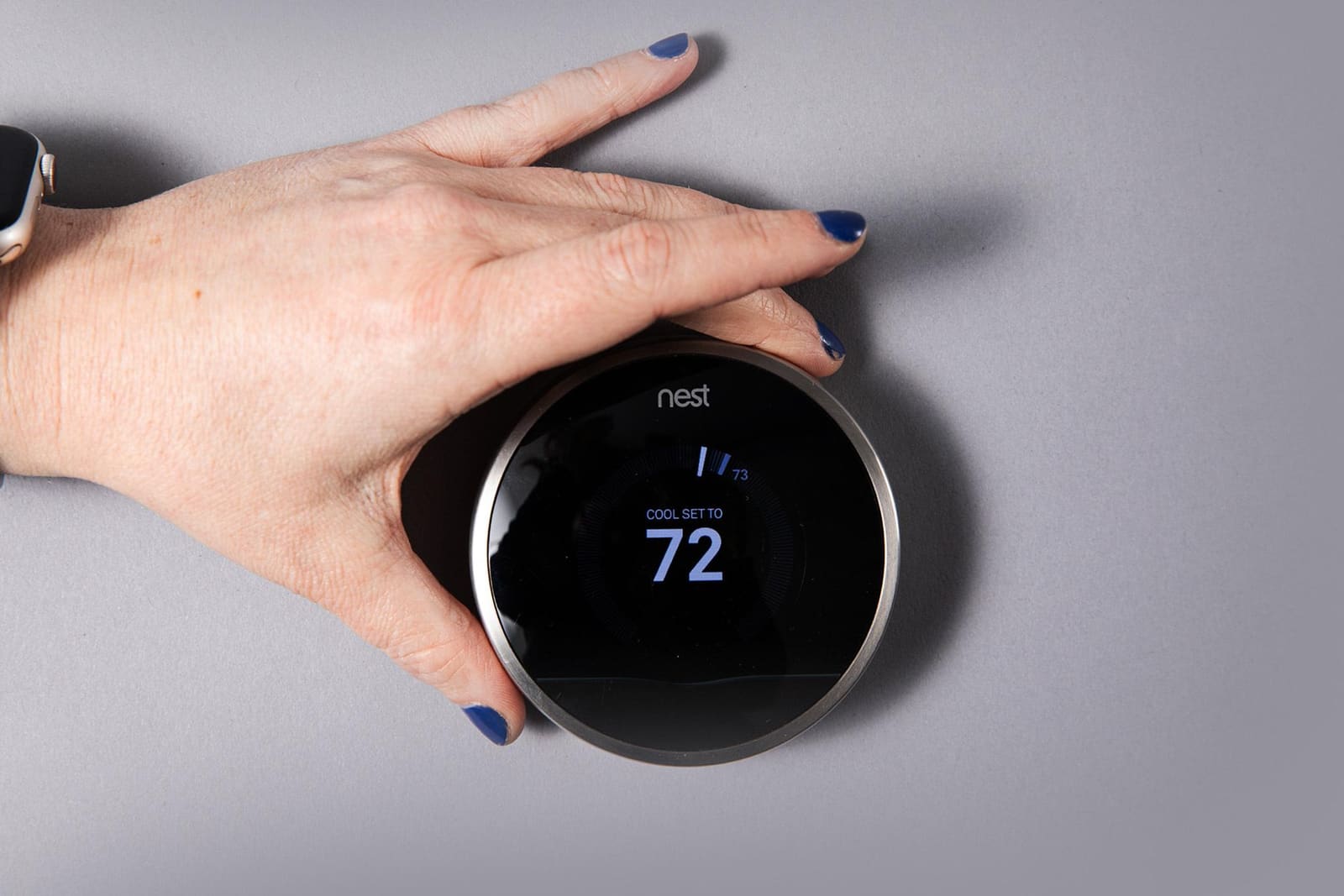
The path that led one of Apple's senior product architects to abandon retirement and focus on residential temperature control is less about midlife crisis and more about industrial-design blind spots. After spending years refining handheld devices that millions would touch daily, the gap between smartphone fit-and-finish and the beige plastic boxes bolted to hallway walls became impossible to ignore.
At DailyTechWire, we've tracked enough pivots from consumer electronics into IoT infrastructure to recognize the pattern: a designer steeped in high-volume manufacturing notices an unloved category, applies mobile-era tooling (capacitive touch, connectivity, over-the-air updates), and attempts to bootstrap a platform. What distinguishes the thermostat experiment from dozens of failed smart-home plays is timing. By the early 2010s, wireless chipsets had shrunk and cheapened enough that embedding radios in wall-powered devices no longer blew the bill of materials, and App Store distribution had trained consumers to expect software updates for physical goods.
The thermostat presented a peculiar design constraint: it had to appeal to homeowners who might interact with it twice a year during season changes, yet justify a price point three to five times higher than incumbent models. Solving that equation required rethinking the value proposition entirely. Instead of marketing programmability (a feature most users found tedious), the pitch became learning - sensors and algorithms that inferred occupancy patterns and adjusted set points autonomously. The hardware became the hook; the software became the moat.
Why Climate Hardware Mattered in Asia's Building Stock
While North American single-family homes dominated early adoption, the thermostat-as-platform concept found unexpected traction in parts of Asia where residential construction was moving faster than HVAC standards. In markets like South Korea and urban China, developers building mid-rise condominiums in the 2010s were eager to differentiate units with "smart" amenities, and a recognizable brand name in climate control offered cachet without requiring full building-management-system integration.
The value proposition shifted in denser housing. Occupancy learning mattered less when apartments were continuously occupied; energy reporting and remote access (checking that air conditioning was off before a holiday, or warming a unit thirty minutes before arrival) became the killer features. Component suppliers in Shenzhen quickly reverse-engineered the sensor stack - PIR motion detectors, temperature and humidity ICs, and Wi-Fi modules - spawning a cottage industry of white-label smart thermostats that undercut Western prices by sixty percent or more.
That commoditization cycle previewed what would happen across connected-home categories: a high-margin innovator establishes the interaction model, Asian ODMs iterate on the electronics, and within eighteen months the feature set becomes table stakes at a fraction of the cost. For thermostat incumbents - mostly HVAC conglomerates used to selling through distributors - the speed of that shift was disorienting.
The Acquisition and the Retreat
When a search giant acquired the thermostat maker for $3.2 billion in early 2014, the deal looked like validation that home automation would be the next major computing platform. The acquirer gained a foothold in physical spaces beyond the data center and the pocket; the startup gained distribution muscle and integration with a widely deployed voice assistant.
In practice, the marriage surfaced tensions that still shape smart-home strategy today. Hardware margin structures (even at premium pricing) looked anemic next to ad-supported services. Product development cycles measured in twelve to eighteen months clashed with software teams shipping weekly. Privacy concerns that were theoretical for a standalone thermostat became acute when the device fed occupancy data into a broader ecosystem built on behavioral targeting. By 2018, the brand had been folded into the parent's hardware division, its founding team largely departed, and the original thesis - thermostat as hub - had given way to a hub-and-spoke model anchored by smart speakers.
Yet the technical and market-education work done in those early years created durable infrastructure. The thermostat's C-wire controversy (many older HVAC systems lacked a common wire for continuous low-voltage power) forced installers and homeowners to understand wiring in ways that paved the ground for video doorbells, smart locks, and connected lighting. The notion that a wall-mounted device could receive software updates became unremarkable. And the pricing ceiling was permanently raised: consumers accepted that a well-designed, connected climate interface could cost $200 to $300, not $40.
What the Thermostat Taught the Industry
Three lessons from the thermostat era still echo in hardware-startup pitch decks across Bengaluru, Taipei, and Singapore.
First, interface can be the entire innovation. The underlying climate-control logic - PID loops, hysteresis bands, setback schedules - was textbook HVAC engineering. What changed was making that logic accessible and, crucially, invisible. Users never needed to program seven-day schedules because the system observed and adapted. The innovation was subtractive: removing friction, not adding features.
Second, the first-mover advantage in IoT is fragile. Connectivity and cloud backends are replicable; brand and design language are not. Within three years of the first thermostat's launch, credible alternatives appeared from established HVAC brands, each offering similar connectivity at lower prices and tighter integration with their own equipment. The startup's lead narrowed to industrial design and early-adopter loyalty - valuable, but not insurmountable.
Third, home automation remains stubbornly fragmented. Despite a decade of consolidation and the emergence of interoperability standards like Matter, most connected-home devices still operate in silos. The dream of the thermostat talking to the door lock, which signals the lighting system, which adjusts the shades, remains more marketing fiction than daily reality for the majority of users. Thermostats control temperature; everything else is still optional and often painful to configure.
Where Climate Control Goes Next
The current frontier is integration with time-of-use electricity pricing and grid-responsive demand management. In markets like Singapore and parts of Australia, utilities are piloting programs that allow smart thermostats to shift cooling loads by thirty to sixty minutes in response to wholesale price spikes or renewable-generation dips. The thermostat becomes not just a comfort device but a grid-edge asset, aggregating flexibility across thousands of homes.
Battery-powered heat pumps and variable-refrigerant-flow systems add another layer of complexity and opportunity. These systems can modulate output far more granularly than traditional on/off compressors, and they benefit from predictive algorithms that anticipate occupancy and weather. The companies best positioned to capture that value are increasingly the HVAC manufacturers themselves, who control the equipment and can bundle connectivity as a standard feature rather than an aftermarket add-on.
For hardware startups eyeing the smart-home space today, the thermostat story is both cautionary and instructive. It proved that thoughtful design and connectivity could command a premium in a category assumed to be commoditized. It also demonstrated that hardware alone is not a defensible business - without control of the underlying infrastructure (the HVAC system, the utility relationship, the broader platform) margins compress and differentiation fades. The wall-mounted interface was never the end game; it was the opening move in a longer contest for the operating system of the home, a contest that remains unresolved.