Apple Pushes Through Sweeping Hardware Price Increases Amid Memory Supply Crunch
MacBooks, iPads, and accessories see hikes ranging from $50 to $1,300 as Tim Cook's warning on component costs materializes into sticker shock across the product line.
The Bill Comes Due
Apple implemented price increases across nearly its entire hardware catalog on June 25, affecting MacBooks, iPads, desktop Macs, and home accessories. The adjustments mark one of the most comprehensive pricing overhauls in recent memory and follow public acknowledgment from CEO Tim Cook that the company could no longer absorb rising memory component costs.
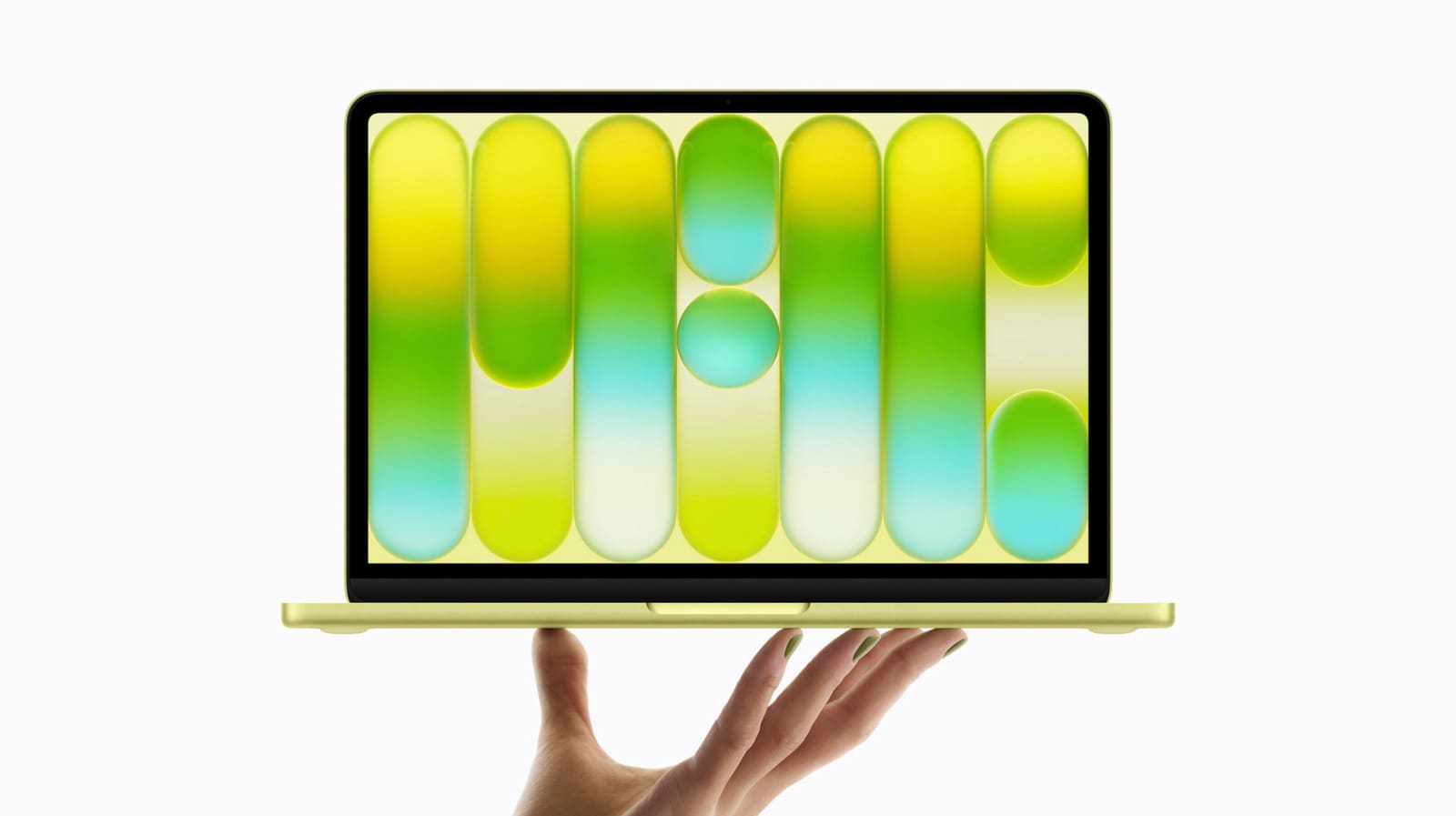
The entry-level MacBook Neo, positioned as Apple's most accessible laptop, now starts at $699 rather than $599. The 13-inch MacBook Air with 512GB storage jumped $200 to $1,299, while the 1TB M5 MacBook Pro climbed $300 to $1,999. At the workstation tier, the M3 Ultra Mac Studio absorbed a $1,300 increase, bringing its new price to $5,299.
iPad pricing followed a similar trajectory. The base iPad rose $100 to $449, while all iPad Pro configurations increased by $200. The 13-inch iPad Pro now enters at $1,499, a threshold that positions it squarely against premium Windows convertibles and Samsung's Galaxy Tab flagship devices. Mid-tier iPad Air models saw hikes between $150 and $200 depending on screen size.
Memory Economics and the Supply Chain Reality
The pricing shift reflects broader semiconductor dynamics that have squeezed margins across consumer electronics. Memory chips, particularly high-bandwidth DRAM and NAND flash, have seen sustained price inflation through early 2026 as fabrication capacity struggles to match demand from AI infrastructure buildouts, data center expansions, and traditional device manufacturing.
Apple has historically used its procurement scale and long-term supplier agreements to insulate customers from component volatility. The company often locks in pricing quarters in advance and maintains buffer inventory to smooth out cost spikes. That this increase has materialized suggests the magnitude and duration of memory price escalation have exceeded Apple's hedging capacity.
At DailyTechWire, we have tracked similar cost pressures rippling through Asia's electronics manufacturing hubs. NAND flash contract prices climbed roughly 30 percent year-over-year in the first half of 2026, according to industry data, while high-performance DRAM modules used in laptops and tablets saw gains approaching 25 percent. Those wholesale shifts inevitably propagate to retail pricing when sustained over multiple quarters.
Strategic Calculations and Product Segmentation
Apple's decision to spare the iPhone from price adjustments is a calculated preservation of its highest-volume, highest-margin product line. iPhones account for more than half of Apple's revenue and serve as the gateway device that pulls customers into the broader ecosystem. Raising iPhone prices risks dampening unit sales in price-sensitive markets across Asia, Latin America, and parts of Europe, where flagship smartphone competition from Samsung, Xiaomi, and local brands remains intense.
AirPods also remain untouched, likely for similar reasons. The audio accessory category has become a meaningful revenue contributor and a low-friction upsell for iPhone buyers. Keeping AirPods pricing stable protects attach rates and preserves a halo effect around the brand's perceived value proposition.
By contrast, Macs and iPads serve more specialized, less price-elastic customer segments: creative professionals, enterprise buyers with refresh budgets, and affluent consumers for whom a $200 increase represents an annoyance rather than a dealbreaker. Apple's internal models likely indicate that demand elasticity in these categories can absorb the hikes without triggering significant unit volume declines.
The increases also create new segmentation opportunities. The widening price gap between the MacBook Neo at $699 and the 13-inch Air at $1,299 carves out clearer differentiation and may nudge budget-conscious buyers toward the entry tier, preserving overall laptop unit sales even as average selling prices rise.
Home and Emerging Categories Feel the Pressure
Apple TV 4K experienced one of the steepest proportional increases, rising from $129 to $199, a 54 percent jump. The set-top box category has long been a low-margin, strategically defensive product for Apple, designed to extend Services revenue through tvOS rather than drive hardware profit. The sharp hike suggests Apple is reconsidering the subsidy model it has historically applied to Apple TV, potentially signaling a broader retreat from loss-leader hardware strategies.
HomePod climbed $50 to $349, reinforcing its position as a premium smart speaker in a market where Amazon and Google anchor pricing closer to $100 for comparable voice assistants. Apple has struggled to gain meaningful share in smart home audio, and the price increase may reflect a decision to optimize margin over volume in a category where the company has limited competitive traction.
Vision Pro, still in its early lifecycle, saw a $200 increase to $3,699. The spatial computing headset was already positioned as a developer and early-adopter device, and the hike underscores Apple's willingness to prioritize margin and brand positioning over rapid market penetration. At nearly $3,700, Vision Pro remains a niche product, and the pricing suggests Apple is content to let the category mature slowly while refining hardware and software for a future, more accessible iteration.
Regional Implications and Competitive Dynamics
The price increases arrive at a moment when Apple faces intensifying competition in key Asian markets. In China, domestic brands such as Huawei, Xiaomi, and Oppo have gained share in tablets and wearables, while Lenovo and Asus continue to pressure Apple in premium laptop segments with Windows devices offering comparable performance at lower price points. Higher iPad and MacBook prices may accelerate share losses in markets where Apple's brand premium is less durable.
In India, where Apple has invested heavily in local manufacturing and retail expansion, the price hikes could complicate efforts to broaden the customer base beyond the urban affluent. The entry-level iPad, previously positioned as an accessible education and general-use device at $349, now sits at $449, a threshold that invites more direct comparison with Android tablets and Chromebooks that dominate volume sales in the region.
Southeast Asian markets, where DailyTechWire closely follows consumer electronics adoption, present a similar challenge. Rising middle-class demand for premium devices has been a growth driver for Apple, but price sensitivity remains high. A $200 increase on a MacBook Air or iPad Pro may push buyers toward Samsung, Microsoft Surface, or local brands that offer competitive specifications without the Apple ecosystem lock-in.
What This Signals About Apple's Cost Structure
Apple's willingness to push through such broad increases, despite the risk of volume headwinds, reflects confidence in brand loyalty and ecosystem stickiness. The company likely calculates that existing Mac and iPad users, already invested in apps, iCloud storage, and cross-device workflows, will tolerate higher prices rather than switch platforms.
It also suggests Apple sees the memory supply situation as structural rather than transient. If the company believed component costs would normalize within a quarter or two, it might have chosen to absorb the margin hit temporarily. The decision to reprice the entire lineup indicates an expectation that elevated memory costs will persist through at least the next product cycle, possibly into 2027.
Competitors will watch closely. If Apple can sustain demand at these new price levels, other premium hardware makers may follow with their own increases. If, however, Apple experiences a meaningful slowdown in Mac or iPad unit sales, it could embolden rivals to hold pricing steady and compete on value, potentially forcing Apple into selective promotions or revised configurations to defend share.
The Broader Hardware Economics Shift
Apple's move is part of a broader recalibration in consumer electronics pricing. For more than a decade, the industry benefited from steady declines in component costs, driven by Moore's Law scaling, manufacturing efficiency, and fierce competition among semiconductor suppliers. That deflationary tailwind has reversed as chip fabrication becomes more capital-intensive, geopolitical factors constrain supply chains, and demand from AI and data center applications competes with consumer device procurement.
We are entering a phase where hardware buyers, particularly in the premium segment, should expect price stability at best and periodic increases as the norm. The era of annual spec bumps without price changes, or even occasional price cuts, may be ending. For Apple, whose brand is built on premium positioning, this environment is manageable. For competitors operating on thinner margins, the new cost reality presents a more difficult strategic puzzle.
The iPhone's exemption from this round of increases will not last indefinitely if memory and component costs continue their upward march. Apple may be buying time to re-engineer supply agreements, adjust product configurations, or prepare the market for a future iPhone price adjustment. For now, the company has chosen to absorb the pain where it believes customer tolerance is highest, preserving the crown jewel of its product line while extracting higher margins from categories where switching costs and brand loyalty run deepest.
The revised pricing is now live on Apple's online store, and the company has not issued a formal statement beyond Cook's earlier remarks on component cost pressures. How the market responds in the coming quarters will reveal whether Apple's confidence in its pricing power is justified or whether the increases mark the beginning of a more contested phase in the premium hardware market.