Prescription Smart Glasses Hit a $700 Reality Check
Meta's Optics line trades sunglasses convenience for all-day wearability, but custom lenses and premium fit push the bill past what most people will pay for frames that talk back.
The All-Day Wearable Bet
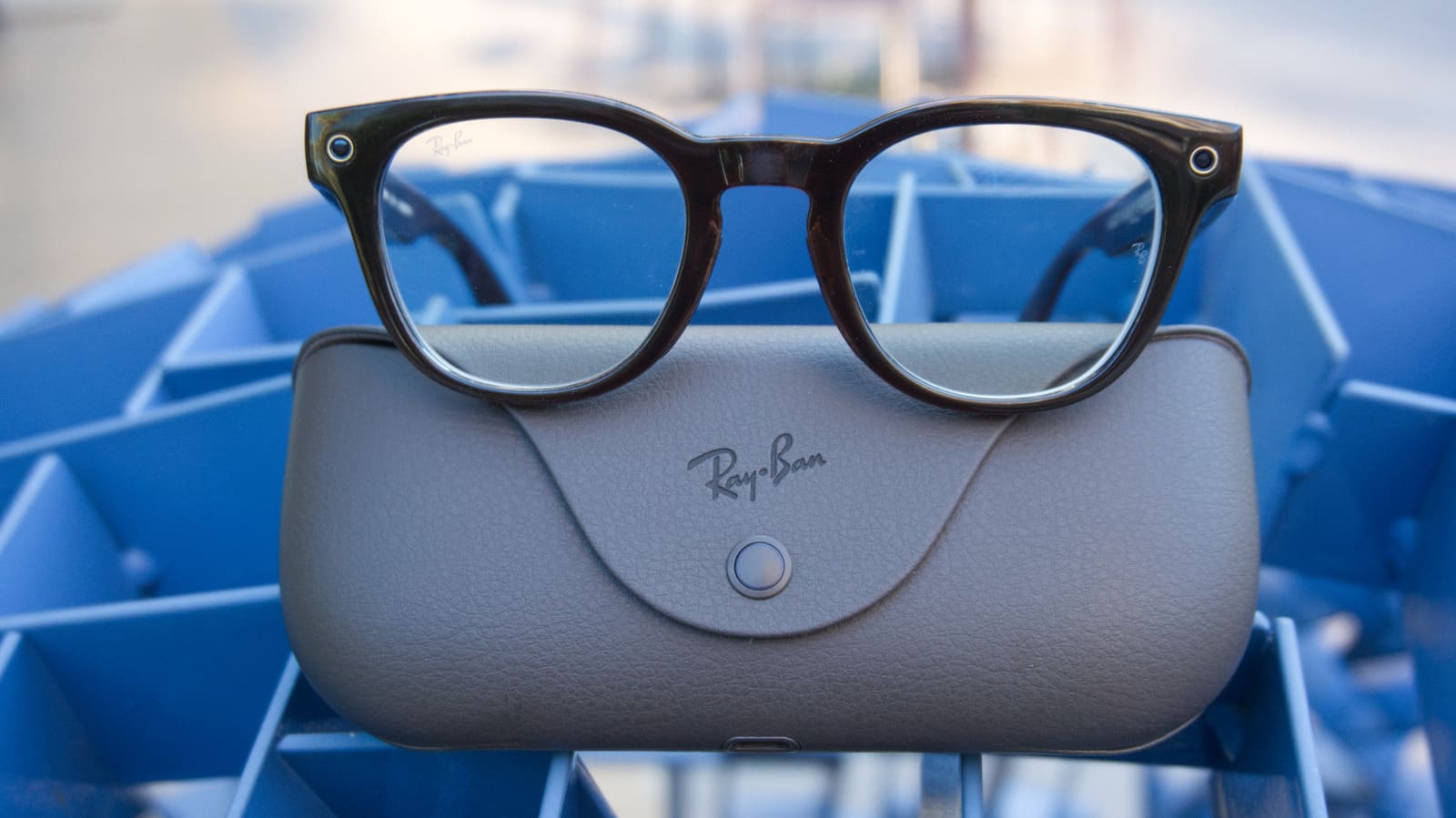
Meta's latest smart glasses push centers on a simple wager: people who need corrective lenses will pay more for frames engineered to stay on their face all day. The Optics line, built around prescription-ready variants of the company's second-generation Ray-Ban frames, starts at $499 before lenses. Add a moderate prescription, blue-light coating, and scratch resistance, and the total climbs past $700. That price point separates casual experimenters from committed users in a product category still searching for its baseline.
At DailyTechWire, we've tracked smart eyewear since Google Glass stumbled over social norms a decade ago. The current wave from Meta, Snap, and smaller entrants has focused on embedding cameras and audio into frames people might actually wear in public. Meta's partnership with EssilorLuxottica gave it distribution muscle and design credibility, but it also inherited the cost structure of premium optical retail. The Optics line leans into that reality rather than fighting it.
The frames ship with swappable nose pads in three bridge heights, moldable temple tips for optician adjustment, and overextension hinges that reduce pressure around the ears. These are standard features on mid-tier prescription frames sold at optometry chains, but novel in a smart glasses context where most designs prioritize tech integration over anatomical variance. The Scriber and Blayzer styles in the Optics range look closer to conventional eyewear than previous Meta releases, which skewed toward oversized or heavily branded silhouettes that advertised their embedded hardware.
Battery Life and the Action Button
Meta rates the Optics frames for "more than 8 hours" of mixed use, a modest bump from the "up to 8 hours" claim on earlier Gen 2 models. Real-world endurance depends heavily on audio playback and assistant queries. Testing with intermittent open-ear speaker use and occasional voice commands yielded 10-plus hours before the charging case became necessary. That margin matters for users who want to avoid mid-day top-ups, a friction point that has dogged competing devices.
The second hardware addition is an action button, a tiny control embedded in the main capture switch. Meta introduced the concept on its Oakley Vanguard sunglasses, where the button sat on the underside of the frame. The Optics placement is less obtrusive but requires muscle memory to locate by touch. The button can trigger custom prompts configured through Meta's companion app.
One practical use case: reading the most recent text message on demand. Meta AI can announce incoming texts automatically, similar to Siri's behavior with AirPods, but that mode interrupts conversations and focus windows. A single button press retrieves the message without voice activation or pulling out a phone. It's a narrow feature, but it addresses a specific pain point in ambient computing, where always-on notifications often overstep.
Muse Spark and the Listening Window
Meta AI on the Optics frames now runs on Muse Spark, the company's latest multimodal model. The practical impact shows up in two areas: faster response latency and extended conversational context. The assistant permits mid-sentence interruptions and accepts follow-up questions without repeating the wake phrase. These refinements smooth interactions that previously felt stilted and transactional.
The trade-off is a 20-second microphone window after each query. An indicator light inside the frame signals when the mic is active, but most users won't notice it unless they're looking for it. That duration creates awkward moments when nearby speakers inadvertently trigger responses or when the wearer forgets the mic is still open. Meta allows users to disable the extended listening mode, but it defaults to on. A graduated timeout option, letting users choose 5, 10, or 15 seconds, would give more control without forcing an all-or-nothing choice.
Meta's push into health and nutrition queries through vision analysis remains inconsistent. Asking for calorie counts or macros on visible food sometimes triggers the camera and returns estimates; other times, the assistant stalls and requests verbal clarification. Phrasing matters more than it should. "Tell me the nutrition info for this" works more reliably than "how many calories is this," even though both requests convey the same intent. Accuracy also varies. A small avocado was assessed as medium, and a Sicilian-style pizza was correctly identified by type but misread on slice count and toppings. These errors are minor in isolation but accumulate into a pattern that undermines trust in the feature.
Privacy Posture and Data Flow
Meta no longer permits users in the United States to opt out of cloud storage for voice recordings captured through its glasses. Every voice query is retained on company servers, where it feeds training pipelines for future models. Multimodal requests add another layer: when Meta AI analyzes an image to answer a question about nutrition or surroundings, that image becomes training data. EssilorLuxottica has confirmed that outside labeling contractors may view these snapshots, though the company states that video and photos saved to the device's camera roll are excluded from training sets.
Facial recognition remains a live question. Researchers uncovered code for an unreleased feature called "name tag" in a beta firmware build earlier this month. Meta removed the code after it was reported and stated no final decision had been made on deployment. The feature would theoretically allow wearers to identify strangers by matching faces to public profiles or social graphs. The company's reluctance to rule it out entirely keeps the possibility in play, which has intensified scrutiny from privacy advocates and regulators in multiple jurisdictions.
These data practices shape the social calculus around wearing Meta-branded eyewear in public. Some observers treat any pair as a walking surveillance node; others see them as iterative steps toward ambient computing. The gap between those perspectives is wide, and it affects how wearers are perceived in workplaces, social settings, and public spaces. Spending $700 on frames that provoke suspicion or hostility is a non-trivial consideration, especially for users who plan to wear them daily.
The Vision Insurance Equation
Prescription lenses amplify the cost problem. The base $499 frame price is already higher than most standalone smart audio glasses or entry-level AR prototypes. Custom lenses add $200 to $300 depending on prescription strength, coatings, and lens type. Transition lenses push the upper end further. For users whose prescriptions change annually, that expense recurs or forces continued use of outdated correction.
Vision insurance could offset some cost, but coverage depends on whether a local optician stocks Ray-Ban Meta frames or can order them through EssilorLuxottica's distribution network. Many plans limit reimbursement to in-network providers or cap frame allowances below $500. That leaves a significant out-of-pocket gap even with coverage.
The economics work differently for people with stable prescriptions who already spend heavily on premium frames and who see value in consolidating eyewear and smart features into a single device. For that subset, the Optics line eliminates the need to swap between prescription glasses and smart sunglasses throughout the day. The swappable nose pads and moldable tips deliver a fit quality closer to custom frames than off-the-shelf consumer electronics.
Market Position and Use Case Discipline
Meta's Optics line is not attempting to convert skeptics or expand the smart glasses category into new demographics. It's a retention play aimed at existing Ray-Ban Meta users who want prescription integration without compromising on comfort or aesthetics. The product assumes familiarity with Meta AI's capabilities and tolerance for its limitations.
Competitors in the prescription smart glasses space remain scarce. Snap's Spectacles have focused on AR overlays and developer audiences rather than corrective lenses. Smaller entrants like Viture and Rokid target niche use cases such as private displays for media consumption. Meta's partnership with EssilorLuxottica gives it unique access to optical supply chains and retail footprints, an advantage that's hard to replicate but also locks it into a pricing structure driven by traditional eyewear margins.
The Optics line refines what Meta already does well: audio quality, battery endurance, and industrial design that doesn't scream "prototype." The action button and improved fit address real friction points. Muse Spark makes the assistant more responsive, though the extended listening window and inconsistent vision features introduce new friction. The privacy posture remains unchanged and controversial.
For users who already see value in Meta's smart glasses and want prescription lenses, the Optics line is the most comfortable and feature-complete option available. The question is whether that value justifies $700, the social cost of wearing surveillance-adjacent hardware, and the recurring expense of lens updates. The market for that intersection is real but narrow, and Meta is betting it's large enough to sustain a premium tier.