The Invisible Ceiling: Why Waymo's Self-Driving Cars Can't Yet Reach Level 5
The gap between Level 4 and Level 5 autonomy isn't about what a vehicle can do - it's about where it can do it. Geography and conditions remain the hard constraint.
The Paradox of Full Autonomy
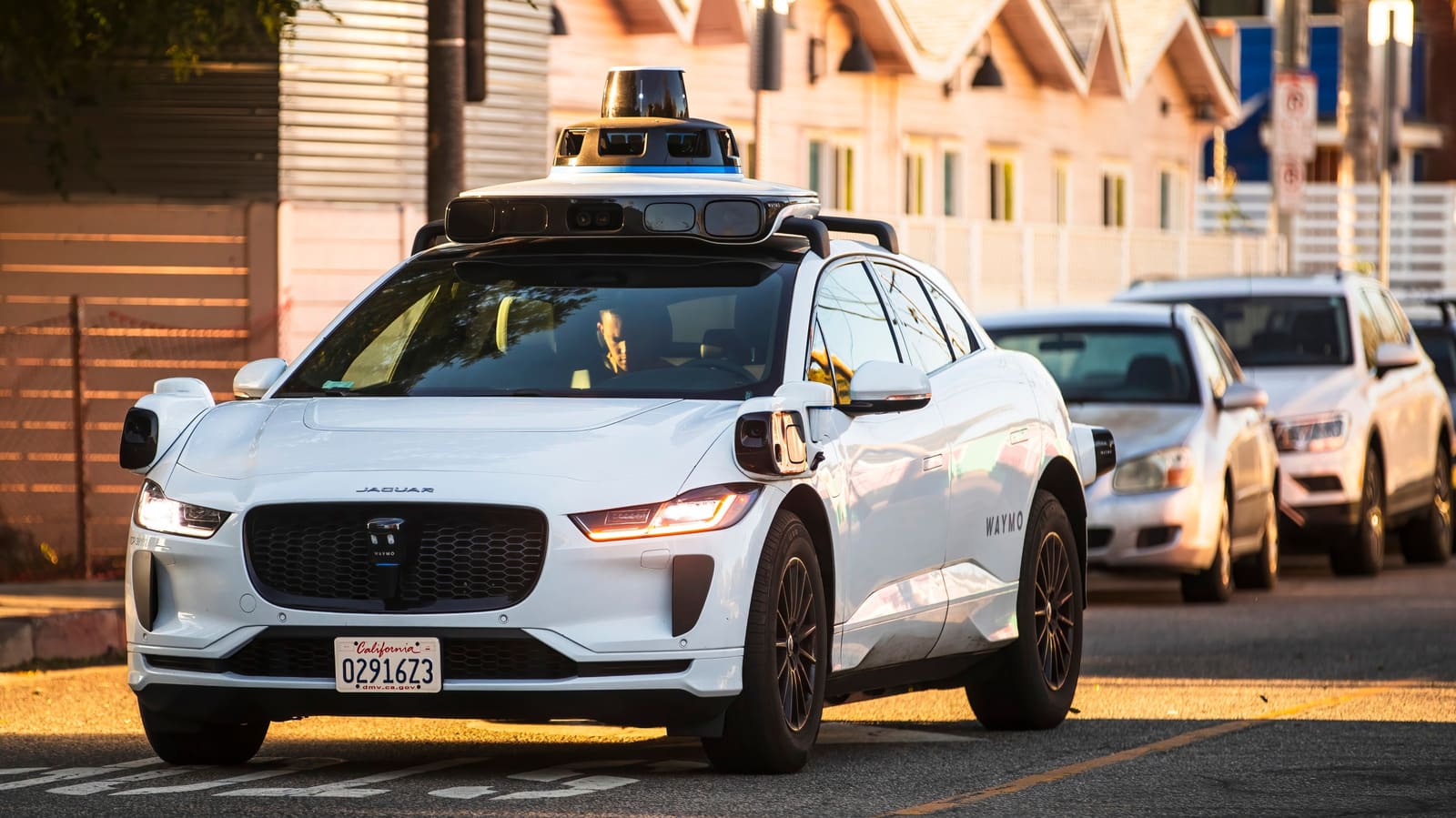
A Waymo vehicle navigating downtown San Francisco with an empty driver's seat looks like the future arrived. No steering wheel intervention, no human monitoring, no emergency takeover. Yet according to the Society of Automotive Engineers' taxonomy, this is still Level 4 automation, not the theoretical ceiling of Level 5. The distinction puzzles observers who see a car operating entirely on its own. If passengers can read, sleep, or ignore the road completely, what's left to achieve?
The answer lies not in the vehicle's capabilities during any single trip, but in the invisible boundaries that define where those capabilities apply. At DailyTechWire, we've tracked autonomous vehicle development across three continents, and the Level 4 to Level 5 gap represents one of the industry's most misunderstood technical challenges. It's a problem of scope, not skill.
Understanding the Automation Ladder
The SAE framework divides driving automation into six levels, from 0 to 5. At Level 0, the human controls everything, even if collision-avoidance systems can momentarily brake. Level 1 systems provide continuous assistance with either steering or speed control. Level 2 combines both, but the driver remains legally and practically responsible.
Level 3 marks the first shift in accountability. The system can manage the entire driving task under specific conditions, though a human must be ready to resume control when the system requests it. This handoff requirement creates complex liability questions and explains why Level 3 deployment has been limited.
Level 4 eliminates the handoff problem. When operating within its designed parameters, the system needs no human backup. Occupants are passengers, not standby drivers. Waymo's service in San Francisco, Phoenix, Los Angeles, and Austin operates at this level. The company's published safety documentation explicitly describes the Waymo Driver as an SAE Level 4 system.
Level 5, by contrast, would operate universally. No geographic limits, no weather restrictions, no road-type constraints. The National Highway Traffic Safety Administration describes it as functioning anywhere a human driver could go, under any conditions a human could navigate.
The Operational Design Domain Wall
The technical term for Level 4's boundaries is "operational design domain," or ODD. This framework defines the complete set of conditions under which an automated system is designed to function: specific cities or regions, road types (highways versus residential streets versus unpaved rural routes), weather parameters, and even time-of-day considerations.
Waymo's sixth-generation Driver, introduced in 2025, expanded the company's ODD to include more challenging weather scenarios, including winter conditions. But expanding an ODD is fundamentally different from eliminating it. Each expansion requires comprehensive testing, scenario modeling, and validation. The company can add Detroit in winter or Jakarta in monsoon season, but each addition is a discrete engineering effort, not a step toward boundless operation.
When Waymo vehicles encountered flooding in Atlanta and San Antonio in May 2026, the company suspended or curtailed operations in affected areas while engineers developed responses to the new scenarios. The incident illustrated ODD boundaries in practice: conditions outside the tested parameters require system updates, not just more sensor data.
Why Testing Becomes Exponentially Harder
Validating a Level 4 system within a defined ODD is already formidable. Waymo's 2026 research on collision avoidance testing noted that even within operational boundaries, the number of potentially hazardous scenarios is enormous. The company's methodology combines real-world human driving data, automated test-fleet data, and expert analysis to identify situations the system must handle safely.
Removing the ODD expands that challenge geometrically. A Level 5 system would need to navigate not just San Francisco fog and Phoenix heat, but also Bangalore's chaotic intersections where lane markings are suggestions, Seoul's narrow alleyways with pedestrian traffic, Hokkaido's black-ice roads, and rural Thailand's unmarked dirt paths shared with livestock. Each environment introduces edge cases that interact with others in unpredictable ways.
Weather presents a concrete illustration. Waymo has demonstrated operation in rain and has expanded into winter testing. But a truly universal system would need to handle freezing rain on a steep grade with no GPS signal, or sandstorms that obscure visibility and clog sensors, or tropical downpours that create instant flooding. These aren't rare anomalies in a global context; they're routine conditions in specific regions.
The Economics of Bounded Autonomy
From a business perspective, Level 4 is sufficient for sustainable operations. Waymo doesn't need to operate in Siberia or the Australian Outback to build a profitable robotaxi service. Focusing on high-density urban markets with favorable weather allows the company to refine its system within manageable parameters while generating revenue.
This economic reality shapes development priorities across the industry. Companies can improve Level 4 systems incrementally - adding cities, expanding service hours, handling more weather types - without confronting the existential complexity of Level 5. Each improvement delivers measurable value to customers and investors.
The funding environment reinforces this approach. Venture capital and corporate investors have poured billions into autonomous vehicle development, but those investments are predicated on defined deployment timelines and addressable markets. A Level 5 moonshot with no clear timeline offers less compelling returns than steady Level 4 expansion.
What Level 5 Would Actually Require
Achieving true Level 5 autonomy would demand breakthroughs beyond current sensor and compute architectures. Vehicles would need redundant systems capable of handling sensor failures in environments with no fallback infrastructure. They would need to navigate roads with no digital maps, interpret hand signals from traffic police in contexts they've never encountered, and make split-second decisions in scenarios that have no training-data analogs.
The regulatory framework would also need reinvention. Current autonomous vehicle regulations are built around defined operational domains, with permits granted for specific geographic areas and conditions. A Level 5 vehicle would need a fundamentally different approval process, one that trusts the system to encounter and handle situations regulators haven't explicitly tested.
Liability structures would shift as well. At Level 4, manufacturers can point to ODD boundaries when incidents occur outside tested parameters. At Level 5, there's no such defense. The system would need to be demonstrably safe in every scenario a human might face, a bar that no human driver actually meets but that autonomous systems are expected to exceed.
Why the Timeline Remains Opaque
NHTSA's current position is straightforward: Level 5 technology is not available for consumer purchase. The agency's statement reflects the industry's reality. No manufacturer has publicly announced a credible Level 5 development timeline, and most have stopped predicting when such a system might arrive.
This reticence marks a shift from the optimism of the late 2010s, when some executives projected full autonomy within a few years. A decade of real-world testing has clarified the gap between controlled demonstrations and universal operation. Edge cases proliferate faster than solutions, and each solved problem reveals adjacent challenges.
The path forward likely involves expanding Level 4 capabilities until the remaining gaps become narrow enough to address systematically. Waymo's approach - steady geographic expansion, incremental weather capability improvements, and rigorous testing - represents the industry's consensus strategy. Whether this leads to Level 5 or simply to very broad Level 4 remains an open question.
Living with Bounded Autonomy
For passengers in a Waymo robotaxi, the Level 4 versus Level 5 distinction is academic. The ride feels fully autonomous because within the operational domain, it is. The vehicle handles every aspect of the journey without human input. The boundaries only become visible when you ask the car to drive somewhere it hasn't been certified to operate.
This gap between perception and technical classification matters more for industry analysis than daily experience. Understanding that Waymo operates at Level 4 clarifies why geographic expansion is measured in cities rather than continents, and why weather events can still disrupt service. It also explains why competitors focus on specific markets rather than attempting universal deployment from day one.
The Level 5 vision - a vehicle that can drive anywhere, anytime, under any conditions - remains a compelling North Star for the industry. But the engineering path to get there looks less like a single breakthrough and more like an asymptotic approach, with each expansion of Level 4 capabilities narrowing the gap without necessarily eliminating it. For now, the future of autonomy is being built one operational design domain at a time.