Walmart Reverses Decade-Long Hold on Contactless Payments
The world's largest retailer will roll out tap-to-pay across stores by year-end, marking the end of a standoff that once saw it back a rival payment consortium.
A Rare Strategic Retreat
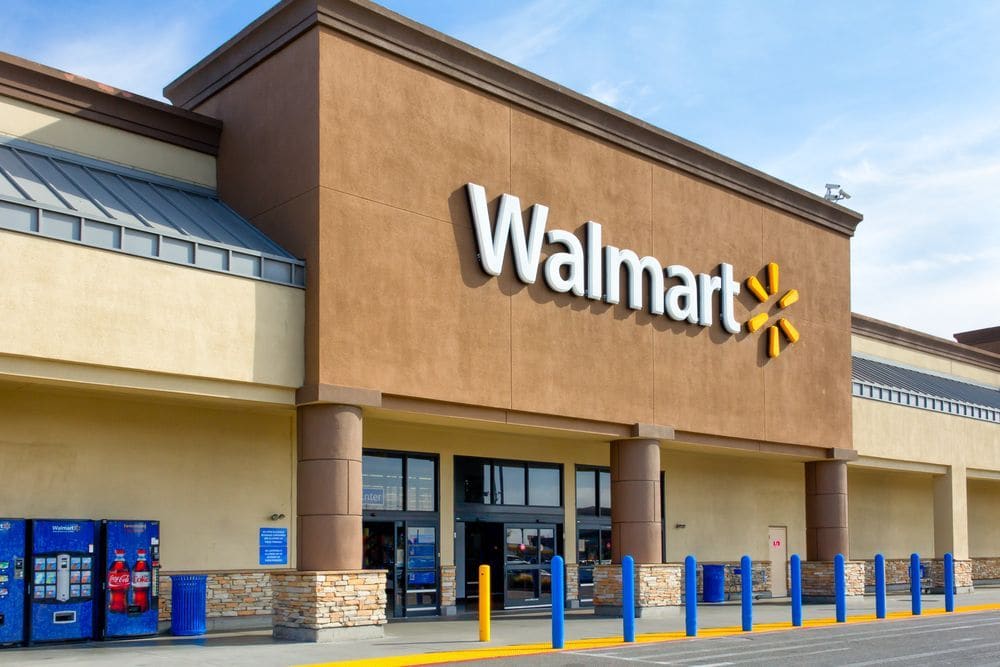
Walmart announced it will accept Apple Pay and Google Pay at checkout, a reversal that closes one of the longest holdouts in U.S. retail. Beginning August 24, the company will introduce tap-to-pay terminals at select Walmart and Sam's Club locations, with full deployment expected by year-end. Fuel stations will follow in mid-2027.
The move ends a standoff that dates back nearly a decade. Walmart had long resisted contactless payment systems, instead channeling customers toward its own digital wallet, Walmart Pay, and in-store scanning tools. The company even co-founded CurrentC in 2014, a merchant-backed consortium designed to bypass card networks and mobile wallets altogether. That effort collapsed two years later, yet Walmart continued to withhold support for third-party tap systems.
At DailyTechWire, we've tracked similar merchant pushback across Asia and North America. The pattern is consistent: large retailers with scale believe they can shape payment behavior, only to discover that convenience trumps proprietary ecosystems. Walmart's announcement, framed as "giving customers and members more choice," reads less like an expansion and more like an acknowledgment that its earlier bet failed.
The Economics of Payment Control
Walmart's resistance was never about technology. Contactless terminals have been commodity hardware for years. The friction was economic. Every Apple Pay or Google Pay transaction routes through card networks, which take interchange fees from merchants. Walmart Pay, by contrast, links directly to a customer's bank account or Walmart-branded card, sidestepping those fees or redirecting them inward.
For a retailer operating on thin margins, that difference compounds. Walmart's net margin hovers around 2.5%, according to recent filings. Even a 1.5% to 2.5% interchange fee on a $50 basket adds up across billions of transactions. The company's push for Walmart Pay was, in effect, a bid to reclaim that margin and own the customer relationship at the point of sale.
But scale cuts both ways. While Walmart has roughly 240 million weekly shoppers in the U.S., Apple Pay has penetrated 85% of U.S. retailers, creating a default expectation. Shoppers no longer carry physical wallets as a matter of routine. When a checkout line doesn't support the tap they expect, the friction shifts from the card network to the merchant. Walmart appears to have calculated that the cost of lost sales or diminished experience now outweighs the interchange savings.
What Changed the Calculation
Three forces likely converged to push Walmart over the edge. First, younger cohorts have made contactless the baseline. Gen Z and millennial shoppers, who represent a growing share of Walmart's customer base, treat tap-to-pay as table stakes. Second, competitors have leaned in. Target, Kroger, and even discount chains like Dollar General support Apple Pay. Walmart's holdout became a differentiator in the wrong direction.
Third, the company's own digital initiatives have matured. Walmart Pay has found a niche among existing app users, but it never achieved the ubiquity needed to justify exclusivity. Scan-and-Go, the company's app-based checkout tool, remains popular in certain formats but hasn't scaled to replace traditional lanes. By opening the door to Apple Pay and Google Pay, Walmart can hedge: it keeps its proprietary tools for high-engagement customers while removing friction for everyone else.
The timing also reflects broader shifts in retail infrastructure. Over the past two years, Walmart has invested heavily in checkout automation, self-service kiosks, and mobile-first experiences. Adding tap-to-pay slots into that broader modernization effort is a lower marginal cost than it would have been in 2016, when the company was still defending CurrentC.
Regional Context and Parallel Moves
Walmart's reversal mirrors dynamics playing out across Asia, where super-apps and merchant wallets have similarly struggled to displace open payment rails. In Southeast Asia, platforms like Grab and Gojek built closed-loop wallets with strong early adoption, only to later integrate third-party cards and QR interoperability as growth slowed. In China, Alipay and WeChat Pay dominate, but even there, regulators have forced interoperability to prevent lock-in.
The lesson is consistent: closed ecosystems work when the platform controls a unique service or inventory. For payments, which are inherently commoditized, the winner is usually the system with the widest acceptance. Walmart sells groceries and general merchandise, not a proprietary service that justifies payment exclusivity. The company's attempt to leverage foot traffic into wallet adoption assumed that shoppers valued Walmart's app enough to change behavior. They didn't.
Implementation and Rollout
Walmart's phased rollout begins with a subset of stores on August 24. The company did not specify which locations will go live first, but the pattern in past infrastructure upgrades suggests higher-volume urban stores and flagship Sam's Club locations will lead. Full deployment by year-end implies roughly 4,500 U.S. Walmart stores and 600 Sam's Club locations will need terminal updates or software patches.
Fuel stations, which represent a separate point-of-sale environment, will lag until mid-2027. That delay likely reflects the complexity of upgrading outdoor payment terminals, which require different hardware certifications and often involve third-party operators. Walmart operates more than 2,000 fuel stations across the U.S., many co-located with stores but managed under separate systems.
The company's announcement did not address international markets. Walmart has significant operations in Mexico, Canada, and Central America, where contactless payment adoption varies widely. In Canada, tap-to-pay is near-universal; in Mexico, cash and QR codes still dominate outside major cities. Whether Walmart extends this policy globally or treats it as a U.S.-specific concession remains unclear.
What It Means for Merchants and Platforms
Walmart's capitulation removes the last major symbolic holdout in U.S. retail. For Apple and Google, the win is more about completeness than revenue. Neither company takes a direct cut of tap-to-pay transactions; the value lies in ecosystem stickiness. When users can pay with their phone everywhere, they're less likely to switch platforms. Walmart's adoption reinforces that moat.
For other merchants still holding out, the signal is unambiguous: if Walmart couldn't make a proprietary wallet work at scale, few others can. The remaining exceptions are either verticals with captive customers like Costco, which still restricts card networks, or markets where regulatory or infrastructure conditions differ. In the U.S., the window for merchant-led payment alternatives has effectively closed.
The broader trend points toward modularity. Retailers are unbundling payments from loyalty, inventory, and fulfillment. Rather than owning the entire stack, they're integrating best-in-class components and competing on assortment, price, and experience. Walmart's decision to add tap-to-pay while keeping Walmart Pay and Scan-and-Go reflects that shift. The company is no longer trying to control the payment layer; it's trying to remove friction so customers spend more time and money in-store.
Unanswered Questions
One variable Walmart hasn't addressed is how it will balance promotion of its own tools against the new options. Will cashiers prompt customers to download Walmart Pay, or will tap-to-pay quietly become the default? The company's app has 160 million users, a significant base, but many of those users don't actively use Walmart Pay. If the app experience doesn't offer clear advantages like faster checkout or exclusive discounts, adoption may plateau.
Another question is whether Walmart negotiated different interchange terms as part of the rollout. Large merchants sometimes secure lower rates in exchange for volume commitments or co-marketing. If Walmart struck such a deal, it would soften the margin impact and make the reversal easier to justify internally. Neither Walmart nor the card networks have commented on commercial terms.
Finally, the move raises questions about Walmart's broader platform strategy. The company has invested in advertising, fulfillment services, and data analytics as higher-margin revenue streams. Owning the payment layer would have given Walmart richer transaction data and a potential entry point for financial services. By ceding that layer to Apple and Google, Walmart is implicitly betting that scale and operational efficiency matter more than vertical integration. That's a defensible bet, but it represents a different vision of retail than the one the company pursued five years ago.
For now, the takeaway is simple: even the world's largest retailer couldn't bend payment behavior to fit its own infrastructure. Convenience, ubiquity, and customer expectation won. The rest of the industry has already moved on. Walmart is finally catching up.