Apple's Camera-Equipped AirPods Process Images On-Device With Dual-Lens Synchronization
Code from an early macOS build reveals low-resolution RGB capture, motion compensation, and peripheral inference for Visual Intelligence integration.
Dual Cameras, Synchronized Capture
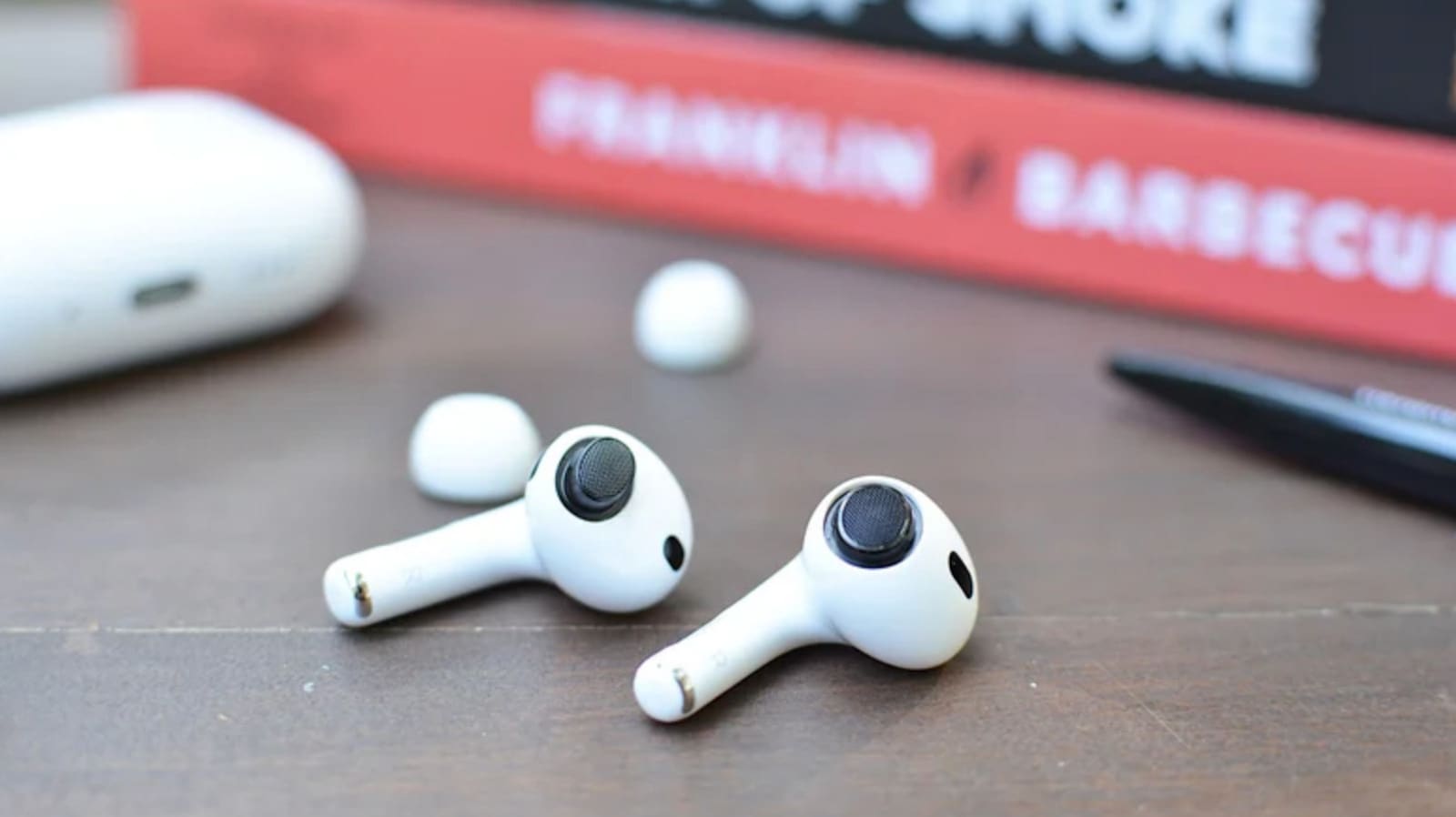
Code strings buried inside macOS Tahoe 26.7, an early test build that briefly surfaced online, offer the clearest technical picture yet of how Apple intends to build cameras into earbuds. Each AirPod will house its own imaging sensor, and the Visual Intelligence software layer will synchronize the two separate captures into a unified feed. The cameras themselves are modest: RGB stills capped at one megapixel, with no video recording capability. Instead, the earbuds support periodic image capture, a mode that Apple apparently believes provides enough contextual data for its multimodal assistant to parse the wearer's environment.
The resolution ceiling is deliberate. At DailyTechWire, we've tracked the trade-offs inherent in wearable compute: power, thermal headroom, and the social signaling that comes with visible lenses. A one-megapixel sensor consumes less energy than the modules Meta embeds in its Ray-Ban frames, and it produces smaller data payloads. That matters when processing happens on the earbud itself, which the code suggests through references to "peripheral inference." If the AirPods can run lightweight computer-vision models locally, latency drops and the system becomes less dependent on network conditions. It also means Apple can pitch privacy: your surroundings stay on your hardware until you explicitly invoke a cloud-backed function.
Motion Compensation and Occlusion Filtering
Earbuds move. Heads turn, shoulders shift, and any camera mounted near the ear will capture a jittery, unstable view of the world. Apple's implementation addresses this with accelerometer data, which the company's earbuds already collect for spatial audio and head tracking. The new code indicates a software layer that evaluates motion magnitude and discards frames deemed too blurry or obstructed. This is not optical image stabilization in the traditional sense. It is frame selection: the system takes multiple low-resolution snapshots, scores each for clarity and completeness, then passes only the usable images downstream to Visual Intelligence.
Occlusion filtering is equally important. An earbud camera has a narrow field of view and sits at an odd angle relative to the wearer's gaze. Hair, collars, and hands can easily block the lens. The code mentions rejection logic for occluded views, which suggests Apple is building a pre-filter that stops garbage frames from ever reaching the inference pipeline. This kind of gating is common in mobile computer vision, but implementing it on a device with the power budget of an earbud is a meaningful engineering step.
Active and Passive Modes
The leaked strings describe two capture modes. Active mode appears to produce higher-quality images, likely by increasing exposure time, applying noise reduction, or using a less aggressive compression algorithm. Passive mode presumably runs in the background, sampling the environment at lower fidelity to reduce power draw. The exact trigger conditions for each mode remain unclear, but the pattern mirrors what Apple has done with always-on display technology and raise-to-wake: balance utility against battery life by toggling between low-power surveillance and full-fidelity capture when the user signals intent.
This dual-mode architecture also aligns with how Apple is positioning Visual Intelligence. The system is not designed to be a lifelogging camera or a content-creation tool. It is an ambient sensor array that feeds context to Siri. Passive mode would let the assistant build a rough map of the wearer's surroundings without draining the battery in two hours. Active mode would fire when the user asks a direct question, like "What book am I looking at?" or "Remind me to buy this later."
Indicator Lights and the Privacy Calculus
Each earbud will reportedly include a capture indicator light. This is Apple's standard playbook: make recording visible to bystanders. The company learned from the social backlash against Google Glass, and it has consistently built hardware indicators into devices that can surveil. The iPhone's camera LED, the orange dot in iOS when the microphone is active, the green light on a Mac's FaceTime camera are all part of the same design philosophy. An earbud indicator light is harder to spot than a glowing ring on a pair of glasses, but it signals that Apple is at least attempting to address the ambient-surveillance problem.
Still, the privacy calculus here is different from Meta's approach. Meta's Ray-Ban frames let users capture photos and video for personal use, with AI features layered on top. Apple's earbuds, according to the code and the leaked demo video, do not save images for the user. The captures exist solely to feed Visual Intelligence. That narrows the threat model: the risk is not surreptitious recording for later distribution, but rather the ambient data collection that trains and powers Apple's AI. Whether users and bystanders will parse that distinction is an open question.
Visual Intelligence as the Real Product
The earbuds are a sensor. Visual Intelligence is the product. Apple's long-delayed upgrade to Siri is built around multimodal input: text, voice, images, and eventually real-time environmental context. The demo video that surfaced alongside the macOS code shows a user asking Siri to remember a book. A voiceover explains, "With Visual Intelligence, your world becomes saveable. See something you like? Just ask me to save it for later." The phrasing is telling. Apple is not selling a camera. It is selling persistent, queryable memory, mediated by an AI that watches what you watch.
This is the same pitch that startup founders have been making for wearable AI since the first wave of lifelogging experiments a decade ago. The difference is ecosystem lock-in. Apple controls the hardware, the operating system, the assistant, and the cloud services that store your "saved" objects. If Visual Intelligence works reliably, it becomes another moat around the Apple platform. If it fails, it joins the long list of half-baked AI features that companies shipped before the models were ready.
The Accuracy Problem
One-megapixel images are not much to work with. Modern smartphone cameras capture 12, 48, even 200 megapixels, and even those high-resolution feeds can confuse computer-vision models when lighting is poor, angles are oblique, or objects are partially occluded. Apple's earbud cameras will operate under all of those constraints simultaneously. The lenses sit off-axis from the wearer's line of sight, they capture low-resolution frames, and they rely on motion-compensated frame selection to avoid blur. Feeding that data into a multimodal AI model and expecting accurate object recognition, text extraction, or scene understanding is ambitious.
AI models are already prone to hallucination when processing clean, high-resolution input. The risk multiplies when the input is noisy, low-fidelity, and captured from an unstable platform. Apple's advantage is vertical integration: the company can co-design the sensor, the on-device inference pipeline, and the cloud models to account for the specific failure modes of earbud-mounted cameras. But that co-design process takes time, and it requires real-world testing at scale. The gap between a controlled demo video and a product that works reliably in a subway, a grocery store, or a dimly lit restaurant is wide.
Timeline and the iPhone 18 Event
Apple is expected to hold its annual iPhone event in September. The iPhone 18 line will anchor the presentation, but the presence of Visual Intelligence assets in macOS 26.7 suggests the feature set will be part of the narrative. Whether Apple formally announces the camera-equipped AirPods at that event is less certain. Industry observers note that the company often previews technologies months before shipping them, especially when those technologies require developer adoption or ecosystem preparation. Visual Intelligence will need both.
Hardware availability is another variable. Reports indicate the camera AirPods may not ship until 2027, even if Apple discusses them publicly this fall. That timeline would give the company room to refine the on-device inference models, train Visual Intelligence on a broader dataset, and work through the industrial-design challenges of embedding cameras, indicator lights, and additional processing silicon into a form factor that already struggles with battery life. It would also let Apple gauge public reaction before committing to mass production. If the privacy concerns prove too loud, or if early beta feedback shows the feature is unreliable, the company can quietly delay or cancel the product without damaging its flagship iPhone launch.
What This Means for Wearable AI
Apple is not the first to put cameras on wearables, but it is the first to pair them with an assistant that runs across a billion-device installed base. That scale changes the equation. If Visual Intelligence works well enough to be useful, millions of users will start feeding environmental images into Apple's AI infrastructure. The company will accumulate a dataset that no competitor can match, and it will use that dataset to improve the models, which will make the feature more useful, which will drive more adoption. This is the classic platform flywheel, applied to ambient computer vision.
The risk is that the feature launches half-baked and users ignore it. Siri has been the punchline of voice-assistant jokes for years, and Apple's AI efforts have lagged behind Google and OpenAI in public perception. Camera-equipped AirPods are a bold hardware bet, but they are only valuable if the software delivers. If Visual Intelligence cannot reliably identify objects, extract text, or understand context from one-megapixel images captured at odd angles, the cameras become expensive, battery-draining sensors that no one turns on. Apple has the resources to iterate, but it does not have infinite patience from its user base. This product will need to work on day one, or it will join the graveyard of ambitious wearable experiments that never found product-market fit.