Sleep Tracking Under Fire: Oura Accused of Overstating Ring Accuracy
A class action lawsuit claims the Finnish wearables company marketed AI-driven estimates as clinical-grade sleep measurement, raising questions about the limits of finger-worn biosensors.
The Core Allegation
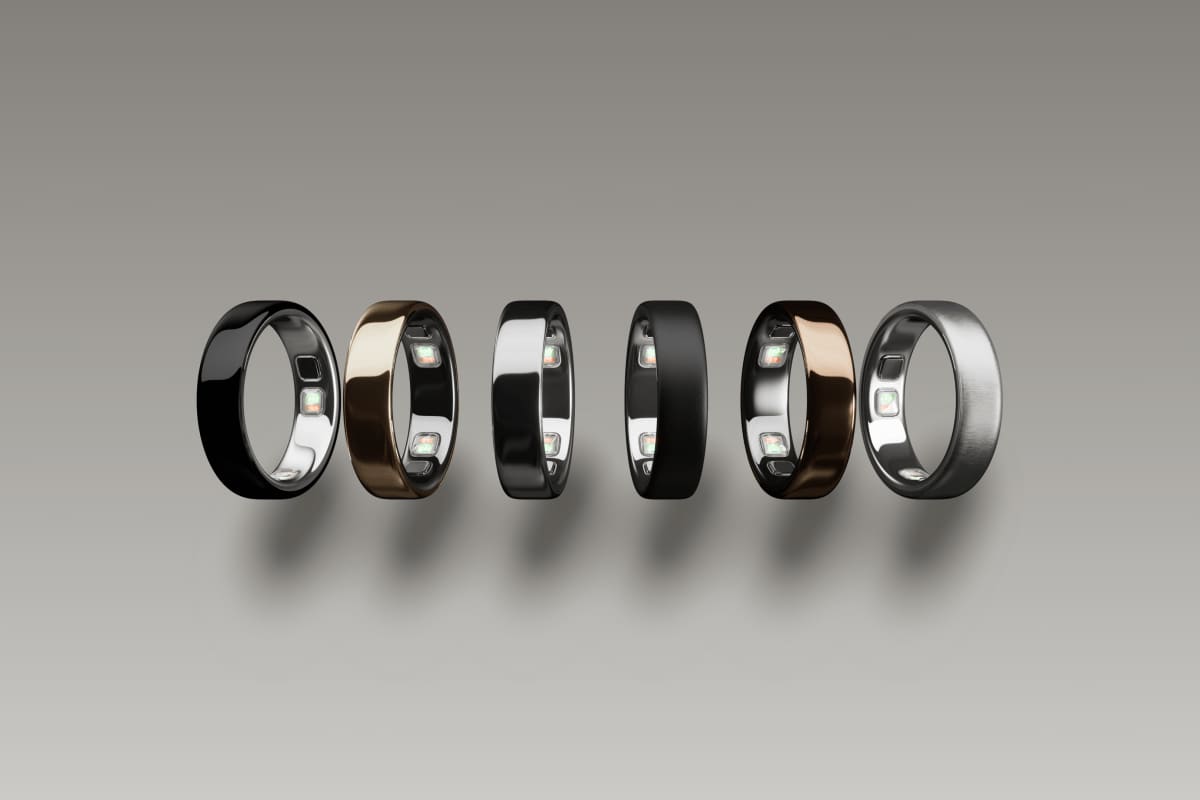
Oura, the Finnish maker of premium health-tracking rings, is now defending itself in a proposed class action suit that strikes at the heart of its value proposition. Filed in San Francisco this week, the complaint argues that Oura's hardware cannot physically measure the physiological signals required to determine sleep stages, and that the data users see each morning amounts to algorithmic guesswork with accuracy comparable to a coin toss.
The legal challenge centers on a technical reality: sleep staging, as practiced in clinical polysomnography, relies on electroencephalography (EEG) electrodes placed on the scalp and electrooculography sensors around the eyes. Oura's ring, worn on the finger, measures heart rate variability, skin temperature, and movement. The lawsuit contends that no amount of machine learning can bridge that sensor gap, and that marketing the device as achieving clinical-level accuracy misleads buyers who are making health decisions based on flawed data.
At DailyTechWire, we've tracked the explosion of consumer sleep tech across Asia and the West over the past five years. The sector has attracted billions in venture funding, with investors betting that wearables can democratize insights once reserved for hospital labs. Oura itself raised over $200 million and was valued north of $2 billion in its most recent funding round. But as adoption scales, so does scrutiny of the science underpinning these devices.
What Oura Promised
According to the complaint, Oura marketed its rings, priced from $300 upward, with language emphasizing precision. The company claimed its hardware was "built for accuracy" and offered "unparalleled" fidelity in tracking sleep. Early marketing materials cited 79 percent accuracy; more recently, Oura has stated that its sleep-staging algorithm achieves 95 percent agreement with polysomnography in controlled validation studies.
The lawsuit takes issue with both the framing of those numbers and the underlying methodology. It alleges that Oura presented these figures in ways that suggested the ring could "see" sleep stages directly, rather than inferring them from indirect proxies. For users structuring their routines around recovery scores and REM percentages, that distinction matters. If the device is fundamentally estimating rather than measuring, then even a high correlation with lab results may not translate to reliable individual guidance on any given night.
User Frustration and the Forum Trail
Long before the lawsuit arrived, dissatisfaction had been brewing in Oura's online communities. Forum threads and subreddit posts document a recurring pattern: users report nights they remember as restless or fragmented, only to receive morning summaries indicating optimal sleep and high recovery. Conversely, some describe waking refreshed yet seeing scores that suggest poor rest. The dissonance has led a vocal subset of customers to question whether the ring's output reflects their actual physiology or an algorithmic artifact.
These anecdotes, while not scientific evidence, point to a broader tension in the wearables market. As devices become more sophisticated in their data presentation, with granular breakdowns of light, deep, and REM sleep, users assume a corresponding increase in measurement precision. When subjective experience diverges sharply from the numbers, trust erodes.
The complaint argues that this erosion has real consequences. People adjust their bedtimes, experiment with supplements, or seek medical advice based on data they believe to be accurate. If that data is systematically unreliable, the feedback loop breaks, and interventions may be misguided.
The Physiology Problem
Sleep staging in a clinical setting involves multiple data streams. EEG captures brain wave patterns that distinguish wakefulness, light sleep (N1 and N2), slow-wave sleep (N3), and REM. Eye movement sensors detect the rapid saccades characteristic of REM. Muscle tone sensors on the chin help confirm transitions. Together, these signals allow trained technicians to score sleep in 30-second epochs with high inter-rater reliability.
Oura's ring, by contrast, sits on the finger and measures peripheral signals: photoplethysmography (PPG) for heart rate, accelerometry for movement, and temperature sensors for skin warmth. These metrics correlate with sleep stages to varying degrees. Heart rate variability tends to increase during deep sleep, and movement decreases. But the correlation is probabilistic, not deterministic. A low heart rate and stillness might indicate deep sleep, or it might indicate quiet wakefulness while reading.
Machine learning models trained on large datasets can learn these probabilistic mappings and, in aggregate, achieve respectable accuracy when compared to lab-scored polysomnography. But "respectable accuracy" in a validation study, conducted under controlled conditions with a selected cohort, does not guarantee precision for an individual user on a given night. The lawsuit hinges on whether Oura's marketing adequately communicated that distinction.
What the Plaintiffs Want
The complaint seeks several forms of relief. First, it calls for an injunction preventing Oura from continuing to advertise its rings with claims of clinical-grade accuracy or the ability to measure sleep stages directly. Second, it requests restitution for consumers who purchased the devices based on those representations. Third, it asks for corrective disclosures that clarify the inferential nature of the ring's sleep data.
Ryan Clarkson, co-founder of the firm bringing the suit, framed the case in terms of consumer trust and health decision-making. He argued that when people structure their lives around data they believe to be precise, inaccuracies are not merely disappointing but potentially harmful. The statement accompanying the filing emphasized that health-tracking devices occupy a unique category: they influence behavior in ways that entertainment or productivity gadgets do not, and thus warrant a higher standard of truth in advertising.
Implications for the Wearables Sector
Oura has not yet responded publicly to the lawsuit. The company's silence, while typical in early litigation, leaves open questions about how it will defend its validation studies and marketing language. If the case proceeds, discovery could surface internal communications about the gap between algorithmic performance in labs and real-world reliability. It could also prompt other wearables makers to revisit their own claims.
Across the industry, sleep tracking has become a flagship feature. Apple, Samsung, Fitbit, and Garmin all offer some form of sleep staging in their devices, typically using similar peripheral sensors and machine learning pipelines. None rely on EEG. If a court finds Oura's marketing misleading, the precedent could ripple outward, forcing competitors to adopt more cautious language or invest in validation transparency.
For investors and startups in the Asia-Pacific health-tech space, the lawsuit is a reminder that regulatory and legal scrutiny will follow consumer adoption. Markets like South Korea and Singapore have seen rapid uptake of wearable health devices, often with less stringent advertising oversight than in the United States or European Union. As these markets mature, expect similar challenges around claims versus capabilities, particularly in categories like glucose monitoring, blood pressure estimation, and mental health tracking, where the gap between sensor physics and marketed outcomes remains wide.
The Broader Context
The Oura lawsuit arrives amid a broader reckoning with AI-augmented health claims. Regulators in multiple jurisdictions are grappling with how to classify devices that use algorithmic inference to present clinical-sounding metrics without meeting the evidentiary bar of medical devices. In the U.S., the FDA has thus far taken a light-touch approach to wellness wearables, distinguishing them from diagnostic tools. But as these devices become more central to users' health routines, and as their makers raise valuations on the strength of those use cases, the line between wellness and medical blurs.
At DailyTechWire, we've observed that the venture capital flowing into digital health often rewards ambitious product narratives over rigorous validation. Founders pitch "clinical accuracy" to differentiate in crowded markets, and investors, many without deep domain expertise, take those claims at face value. When litigation or regulatory action eventually tests those claims, the cost is borne by both shareholders and users.
The outcome of the Oura case will hinge on whether a jury or judge finds the company's marketing language materially misleading. That determination will turn on specific ads, website copy, and validation study disclosures. But regardless of the verdict, the case signals a maturation of the wearables market. Consumers are no longer content to treat these devices as novelties. They expect accountability, and they are willing to litigate when they feel misled.
For Oura, the immediate challenge is reputational. The company built its brand on the promise of superior accuracy and a focus on sleep, differentiating itself from general-purpose fitness trackers. A prolonged legal battle, even if ultimately won, risks undermining that narrative. For the industry, the challenge is definitional: how to communicate the value of probabilistic, sensor-limited health insights without overpromising precision that the physics cannot deliver.