LinkedIn's AI Slop Filter Sees Over a Million Uses in Three Weeks
As synthetic content floods professional networks, the platform's new reporting mechanism reveals user frustration with machine-generated posts
A Flood of Synthetic Content
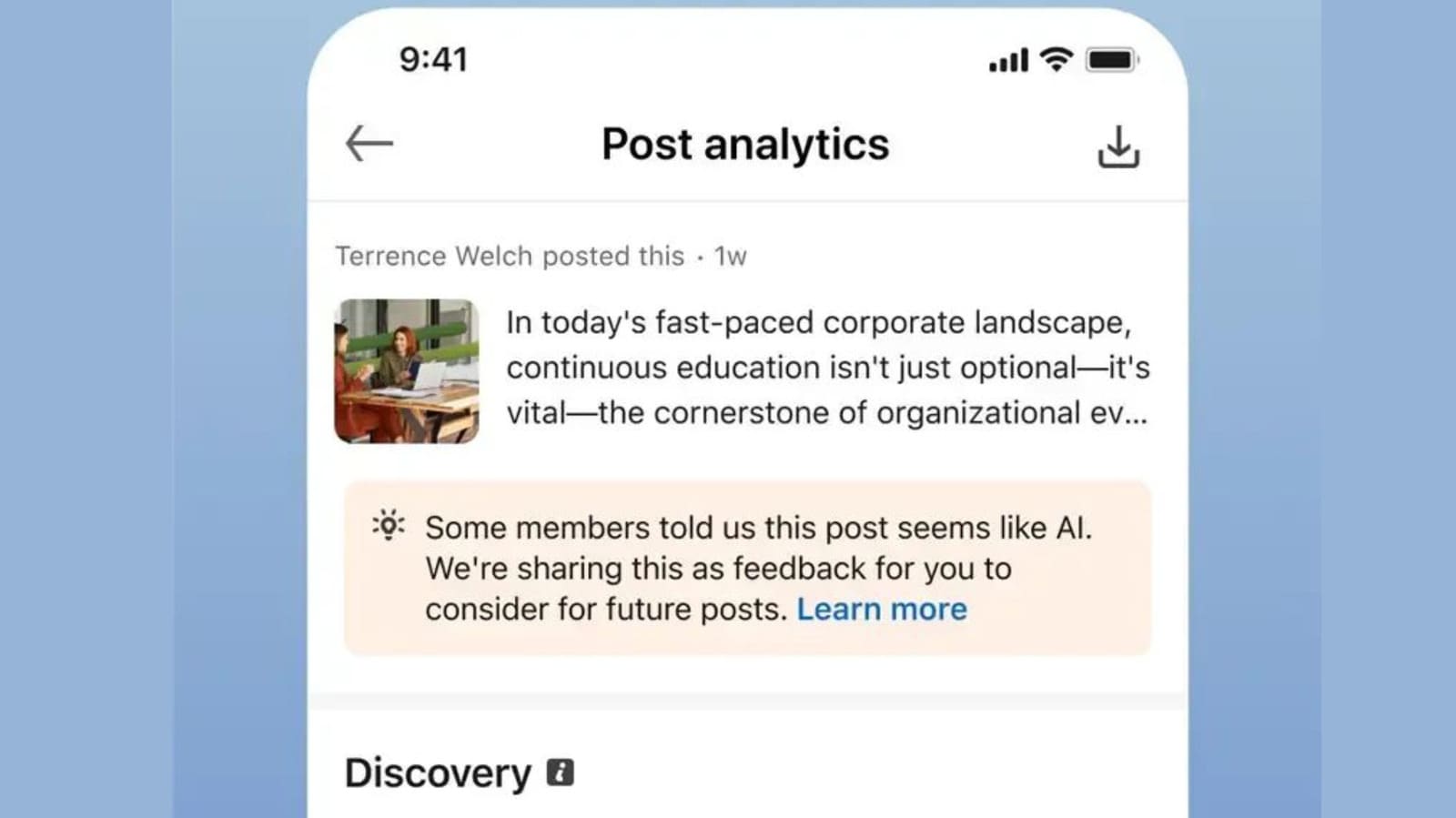
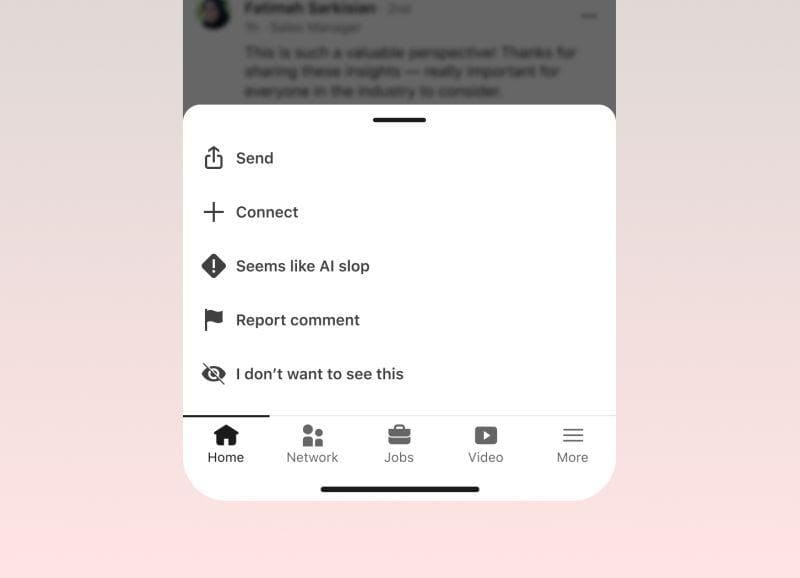
Three weeks after introducing a feature that lets users flag AI-generated posts, LinkedIn has recorded over one million uses of the tool. The mechanism, nestled in the three-dot menu on each post, allows members to report content they believe was written entirely by machine rather than human.
The rapid adoption rate underscores a brewing tension on professional social platforms. At DailyTechWire, we've tracked the proliferation of synthetic content across Asia-Pacific networks, where similar patterns are emerging on regional platforms from WeChat Work to Naver's business communities. The velocity of flagging suggests users are encountering AI-written material frequently enough to develop detection habits.
Chief product officer Hari Srinivasan disclosed the usage figures in a platform update, framing the metric as evidence of community engagement with content quality controls. The company rolled out the reporting feature on July 30, positioning it as part of a broader effort to maintain authenticity on a network built around professional reputation.
Detection at Scale
The timing of LinkedIn's rollout was hardly accidental. Weeks earlier, independent analysis by AI detection service Pangram found that 41 percent of long-form posts on the platform appeared to be fully machine-generated. That figure, substantially higher than most anticipated, highlighted how quickly generative AI tools had been adopted by users seeking to maintain visibility through frequent posting.
The detection threshold matters for context. Pangram's methodology flags content with high probability scores for synthetic origin, meaning the actual percentage of posts touched by AI assistance, editing, or partial drafting, is likely higher still. The distinction between fully automated posts and human-AI collaboration remains fuzzy, but users appear willing to report content that feels inauthentic regardless of the precise workflow behind it.
LinkedIn's response bundled the reporting button with upgraded classifiers designed to identify AI-generated material before it gains distribution. The company also quietly removed a feature that had encouraged certain types of automated engagement, though specifics on that deprecation remain limited.
The Economics of Synthetic Posting
Why would more than two-fifths of long-form content on a professional network be machine-written? The incentive structure is straightforward. LinkedIn's algorithm rewards consistent posting, commentary on trending topics, and engagement metrics. For consultants, recruiters, and executives building personal brands, the pressure to publish regularly competes with the time cost of thoughtful writing.
Generative models offer an efficient shortcut. A user can prompt a language model with a topic, receive a polished 300-word post in seconds, and schedule it for publication. Multiply that behavior across millions of users, and synthetic content becomes the default rather than the exception.
The phenomenon is not unique to LinkedIn. Across markets from Singapore to Seoul, we've observed professional platforms grappling with similar dynamics. Naver's corporate blog ecosystem, for instance, has seen a surge in posts that follow identical structural patterns, a telltale sign of template-based generation. Chinese enterprise social tools have begun experimenting with watermarking and disclosure requirements, though enforcement remains inconsistent.
User Backlash and Platform Credibility
The million-click milestone reflects more than annoyance with robotic prose. It signals a credibility crisis for platforms that derive value from authentic professional discourse. When users can no longer trust that a post reflects genuine expertise or experience, the informational commons degrades.
LinkedIn's challenge is compounded by its dual role as a networking hub and a content platform. Users tolerate, even expect, a degree of self-promotion and polished messaging. But there is a threshold beyond which the feed feels less like a professional conversation and more like an undifferentiated stream of marketing copy. AI-generated posts, especially those that mimic thought leadership without substance, accelerate that slide.
The reporting mechanism offers a pressure valve, but it also exposes the platform to a new problem. If a significant portion of flagged content is removed or down-ranked, LinkedIn risks alienating users who rely on AI tools for legitimate productivity gains. Conversely, if flagging has little effect on distribution, the feature becomes performative, eroding trust further.
Enforcement and the Path Forward
LinkedIn has not disclosed what happens after a post is flagged. Does it trigger human review? Does it feed into the upgraded classifiers as training data? Is there a threshold of reports that leads to automatic suppression? The opacity leaves room for both over-correction and under-enforcement.
Other platforms have faced similar dilemmas. Twitter's Community Notes system, for example, relies on crowdsourced context rather than removal, a model that preserves speech while adding friction. Reddit's subreddit moderators use AutoModerator rules to filter suspected bot content, but those systems depend on active volunteer labor. LinkedIn's scale and professional context make both approaches difficult to transplant directly.
One potential middle path involves disclosure rather than prohibition. Requiring users to label AI-assisted posts, similar to how some jurisdictions mandate disclosure of AI-generated political ads, would shift the conversation from detection to transparency. That approach respects the utility of generative tools while preserving the user's ability to assess credibility.
The million-click figure also raises questions about what users are flagging. Is the button being used to report obvious spam, or is it catching posts that are merely formulaic and uninspired? The distinction matters for product design. If users are flagging human-written content that happens to sound generic, LinkedIn's classifiers may struggle to distinguish style from automation.
Regional Variations in AI Adoption
The patterns we observe on LinkedIn's global platform play out differently across Asia-Pacific markets. In Japan, professional networks tend to emphasize institutional affiliation over personal branding, which may dampen the incentive to post frequently. In India, where LinkedIn has become a primary channel for job discovery and freelance work, the pressure to maintain visibility is acute, and AI tools are being adopted rapidly.
Southeast Asian markets present a mixed picture. In Singapore, where English-language proficiency is high and professional norms align closely with Western practices, AI-generated posts are proliferating at rates similar to North America. In Indonesia and Vietnam, where professional social media is still maturing, the baseline for content quality is more variable, making synthetic posts harder to distinguish.
China's enterprise social platforms operate under different constraints. WeChat Work and DingTalk prioritize internal communication over public content, which limits the visibility and impact of AI-generated posts. When synthetic content does appear, it is more likely to be corporate messaging than individual thought leadership, shifting the detection problem from user reporting to enterprise policy.
The Broader Implications for Professional Networks
LinkedIn's experiment with an AI slop button is a bellwether for how platforms will navigate the generative AI era. The million-click milestone suggests that users are willing to participate in content moderation, but it also highlights the scale of the problem. If one million reports have been filed in three weeks, and if each report represents a fraction of the AI-generated posts users encounter, the volume of synthetic content is staggering.
For product teams across the industry, the lesson is that detection alone will not suffice. Users need mechanisms to filter, report, and contextualize AI-generated material, but they also need platforms to articulate clear policies on what is acceptable. The current ambiguity, where AI tools are widely available but their use on professional networks remains contested, benefits no one.
The trajectory from here depends on whether platforms can establish norms that balance productivity with authenticity. If LinkedIn's flagging system proves effective at surfacing low-quality synthetic content without penalizing thoughtful AI-assisted writing, it may set a precedent for other networks. If it becomes a blunt instrument that either fails to curb the flood or punishes legitimate use, the platform will face continued erosion of trust.
At DailyTechWire, we'll be watching how LinkedIn iterates on this feature and whether other professional networks in Asia follow suit with their own reporting mechanisms. The question is not whether AI will be part of professional content creation, that shift is already underway, but whether platforms can preserve the signal amid the noise.