Unitree's Post-IPO Slide Exposes Cracks in China's Humanoid Robot Rally
The robotics company's shares have fallen 48% from their debut peak, prompting investors to question whether enthusiasm for humanoid platforms has outpaced commercial reality.
A Steep Descent After the Opening Bell
Unitree Robotics closed Thursday at 615 yuan per share, a modest 4 per cent rebound that did little to restore confidence after five consecutive sessions of declines. The company's market capitalization now sits at 248.8 billion yuan, roughly US$37 billion, down from a debut-week high of 1,100 yuan. Wednesday's intraday low of 571 yuan marked a 48 per cent retreat from that peak, a trajectory that has become emblematic of broader anxiety around humanoid robotics valuations in China.
At DailyTechWire, we've tracked a wave of IPO filings and late-stage funding rounds across Hangzhou, Shenzhen, and Beijing over the past eighteen months, many anchored by companies that promise general-purpose bipedal platforms for logistics, manufacturing, and eldercare. Unitree's stumble raises a question that venture partners and public-market analysts are now asking in unison: has the sector's narrative run ahead of its revenue model?
Why the Enthusiasm Built So Quickly
China's humanoid robotics ecosystem enjoyed a concentrated burst of capital inflows between late 2024 and mid-2025. Policy signals from Beijing, including subsidies for intelligent manufacturing and explicit mention of humanoid robots in the Ministry of Industry and Information Technology's five-year roadmap, created a permission structure for institutional allocators. At the same time, advances in electric actuation, lower-cost compute for real-time control, and open-weight transformer models gave founders credible technical demonstrations to show limited partners.
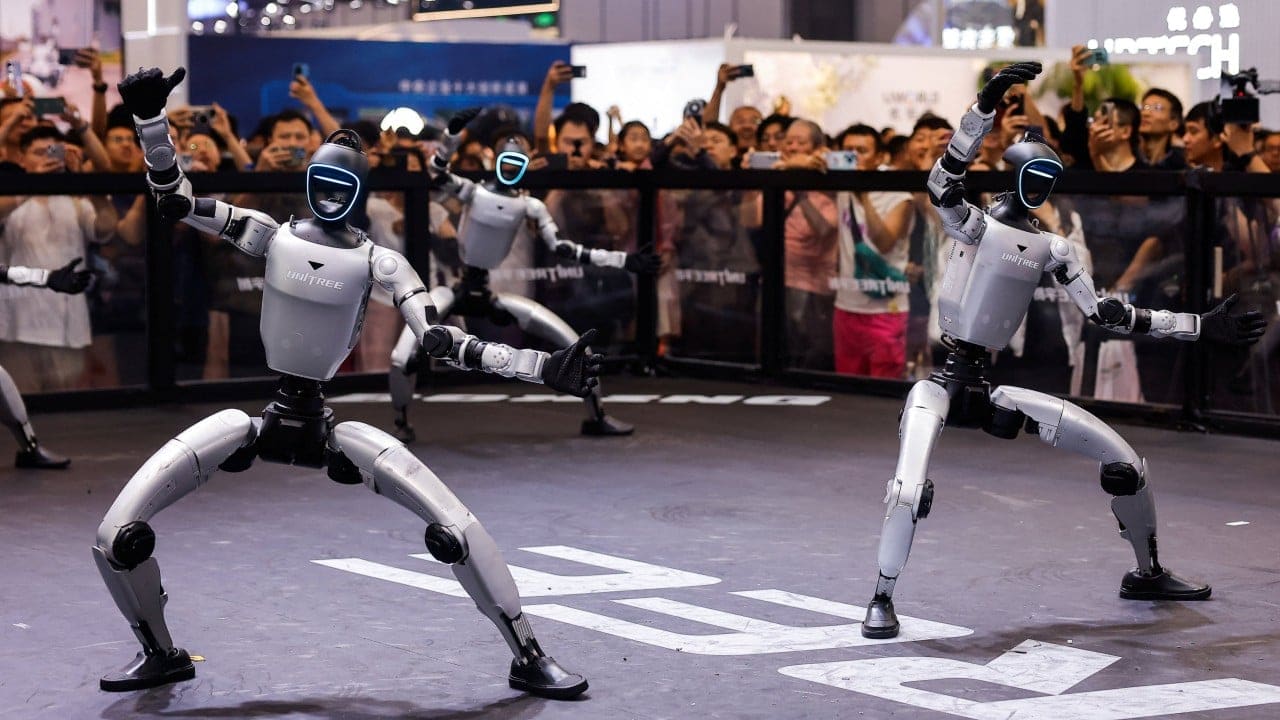
Unitree itself parlayed years of work on quadruped platforms into a bipedal form factor that attracted attention at trade shows in Shanghai and Munich. The company's pre-IPO valuation implied that investors saw a path to mass deployment, not just prototypes. That confidence translated into first-day pricing that valued the firm at nearly twice the market cap of established industrial-automation peers with decades of revenue history.
The Revenue Reality Check
Public filings and analyst notes point to a common challenge: most Chinese humanoid startups, Unitree included, have yet to demonstrate recurring revenue at scale. Pilot deployments in warehouses and assembly lines remain just that - pilots. Contracts are typically structured as proof-of-concept engagements with modest unit volumes and extended evaluation periods. Meanwhile, the cost structure remains punishing. Each robot requires precision gearboxes, high-torque motors, and increasingly sophisticated sensor suites. Gross margins are thin or negative in early production runs, and the path to margin expansion depends on volume manufacturing that has not yet materialized.
Investors who bought near the IPO peak are now confronting the gap between the story and the income statement. The five-day selloff reflects a repricing of that gap. It also suggests that the enthusiasm that carried Unitree into the public markets may have been amplified by retail participation and momentum-driven algorithms rather than disciplined fundamental analysis.
Echoes Across the Sector
Unitree is not alone. Several privately held humanoid robotics companies in China have seen their Series B and C valuations remain flat or decline in recent months, according to term-sheet data circulating among venture firms in the region. One Shenzhen-based startup that raised at a US$1.2 billion valuation in early 2025 is understood to be negotiating a down round. Another Beijing outfit has delayed its IPO timeline, citing "market conditions."
The pattern mirrors earlier cycles in autonomous vehicles and drone delivery, where a cohort of companies enjoyed simultaneous valuation surges only to face compression when deployment timelines stretched and unit economics failed to converge. The difference this time is the speed of the reversal. Unitree's 48 per cent decline occurred over days, not quarters, signaling that public-market participants are less patient than the private investors who funded earlier rounds.
What Needs to Happen Next
For Unitree and its peers, the path forward hinges on demonstrating that humanoid platforms can transition from engineering showcases to economically viable tools. That means securing multi-year contracts with anchor customers, proving that robots can operate reliably across shifts without constant human intervention, and achieving the manufacturing scale required to drive per-unit costs below the threshold at which automation becomes cheaper than labor.
It also means recalibrating investor expectations. Humanoid robotics is a long-cycle business. Development timelines are measured in years, not quarters. Companies that can communicate realistic milestones and deliver on them incrementally will likely retain access to capital. Those that cannot may find themselves in the position Unitree occupies now: watching their valuations evaporate as the market demands proof over promise.
Broader Implications for Chinese Tech IPOs
Unitree's volatility arrives at a moment when Chinese technology IPOs are already under scrutiny. Regulators in both Beijing and Hong Kong have tightened disclosure requirements for companies going public, particularly those in strategic sectors like robotics and artificial intelligence. The goal is to prevent speculative bubbles and protect retail investors, but the unintended consequence may be a chilling effect on IPO activity.
If Unitree's trajectory discourages other robotics startups from pursuing public listings, capital formation in the sector could slow. That would push companies back toward private funding, where valuations are less transparent and liquidity is constrained. It could also accelerate consolidation, with stronger players acquiring distressed competitors at steep discounts.
At the same time, the selloff may perform a useful function. It forces founders, investors, and analysts to separate hype from substance. The companies that survive this correction will be those with defensible technology, clear customer traction, and disciplined execution. In that sense, Unitree's stumble may ultimately benefit the sector by weeding out the pretenders and focusing attention on the contenders.
What We're Watching
Over the next six months, we'll be tracking three indicators. First, whether Unitree can stabilize its share price and articulate a credible path to profitability. Second, whether other humanoid robotics IPOs proceed as planned or get pulled. Third, whether venture firms in Shenzhen, Beijing, and Shanghai continue to write checks into the category or shift capital toward adjacent sectors like industrial vision and edge inference, where revenue models are more mature.
The humanoid robotics story in China is far from over. But the easy money phase appears to be behind us. What comes next will depend on execution, not excitement.