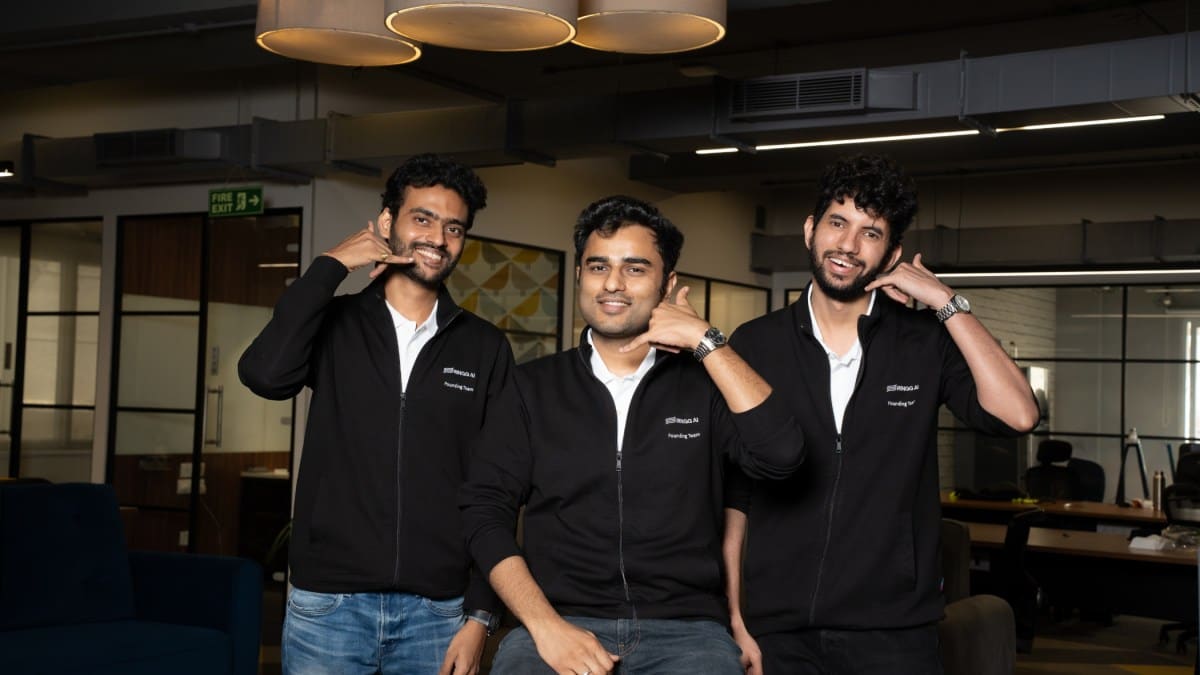
A 23-Year-Old Founder Just Raised $350 Million for an AI Assistant You Probably Can't Use Yet
Instinct's meteoric rise to a $2.5 billion valuation highlights investor appetite for agent-based AI, even as privacy questions swirl around the private-beta product.

A Billion-Dollar Bet on Personal AI
Instinct, an AI assistant startup founded just twelve months ago by 23-year-old Noah Shinn, has secured $250 million in Series B funding, bringing its total capital raised to $350 million and pushing its valuation to $2.5 billion. The round was co-led by Index Ventures and Benchmark, according to Spear Street Technology, the company behind the product.
The funding trajectory is remarkable even by the standards of today's overheated AI investment landscape. At DailyTechWire, we've tracked dozens of agent-based AI companies across the region over the past eighteen months, but few have achieved this scale of institutional backing while still operating in closed beta. The gap between product maturity and investor conviction tells us something important about where venture capital sees the next wave of consumer AI heading: not chatbots, but autonomous agents that act on your behalf.
What Instinct Actually Does
Instinct positions itself as a life-organization agent. Users grant it access to their apps and devices, then interact with it through text messages and voice calls. The promise is straightforward: delegate tedious tasks, coordinate logistics, manage subscriptions, and handle purchases without opening a dozen different apps.
Shinn described early use cases in a public statement, noting that users have planned road trips, ordered groceries, bought concert tickets, canceled unwanted subscriptions, and even begun organizing weddings through the assistant. The product's website remains deliberately minimal, a design choice that contrasts sharply with the scale of capital behind it.
The company has not disclosed how many users are currently in the private beta, nor when it plans to open access more broadly. That opacity is typical of the agent category, where companies are wrestling with reliability, liability, and the operational complexity of acting on behalf of users in real-world transactions.
The Privacy Trade-Off
Instinct's functionality hinges on deep integration, which means broad permissions. Users online have raised concerns about the scope of access the app requests, as well as language in its terms of service that some interpret as overly permissive regarding data use and retention.
The tension is inherent to the agent model. To book a flight, cancel a subscription, or coordinate a group dinner, an AI assistant needs read-and-write access to email, calendars, payment methods, messaging apps, and potentially much more. The more capable the agent, the more invasive the permissions required. Instinct is far from alone in facing this dilemma, but the scrutiny has been sharper because of the company's rapid ascent and high valuation relative to its stage.
Privacy frameworks in major Asian markets, including Singapore's PDPA and South Korea's PIPA, impose strict consent and data-minimization requirements. If Instinct expands beyond its current user base, it will need to navigate not just technical challenges but also divergent regulatory expectations across jurisdictions. We've seen agent startups stumble at this stage before, particularly when terms of service written for a small beta audience become liabilities at scale.
Why Investors Are Pouring In
The $2.5 billion valuation reflects a broader thesis: that the next platform shift in consumer software will be agent-mediated. Instead of users navigating interfaces, agents will navigate interfaces on their behalf. The model is appealing to venture capital because it implies lock-in, frequent engagement, and potential transaction economics, whether through subscription fees, referral revenue, or transaction cuts.
Index Ventures and Benchmark have both made early bets on infrastructure and application-layer AI companies across the US and Europe. Their co-leadership of this round signals confidence that Instinct can become a horizontal layer, not a feature that incumbents can easily replicate. That confidence is not universally shared. Skeptics point to the challenge of agent reliability, the risk of user backlash over permissions, and the likelihood that Apple, Google, and other platform owners will eventually integrate similar capabilities natively.
Shinn's youth and the company's rapid timeline also cut both ways. On one hand, it underscores the accessibility of today's AI tooling and the speed at which a well-positioned founder can attract capital. On the other, it raises questions about operational depth, enterprise relationships, and the ability to manage a complex, high-stakes product at scale.
The Agent Economy's Growing Pains
Instinct is part of a cohort of agent-first startups that have raised significant capital in 2025 and 2026, including companies building vertical agents for sales, customer support, recruiting, and logistics. The common thread is a belief that large language models have matured enough to handle multi-step tasks with acceptable accuracy, and that users are ready to cede control in exchange for convenience.
The reality has been messier. Agent reliability remains inconsistent, particularly for tasks that require nuanced judgment or real-time adaptation. Liability questions linger: who is responsible when an agent books the wrong flight, cancels the wrong subscription, or misinterprets an instruction? Terms of service have become battlegrounds, with companies trying to limit exposure while users demand accountability.
From a product perspective, the challenge is designing interfaces that allow users to trust without micromanaging. If users feel compelled to double-check every action, the agent's value proposition collapses. If they don't check and something goes wrong, trust evaporates. Striking that balance at scale is the central unsolved problem of the agent economy.
What Comes Next
Instinct's immediate task is to expand its beta, refine its reliability, and demonstrate that the product can handle the diversity of real-world use cases without generating a steady stream of user complaints or support tickets. The company has capital to experiment, hire, and iterate, but it also has heightened expectations. A $2.5 billion valuation demands a path to significant revenue and a defensible competitive position.
The broader question is whether the agent model will consolidate around a few horizontal players or fragment into dozens of vertical specialists. Instinct is betting on the former, positioning itself as the universal assistant. That strategy requires not just technical execution but also partnerships, integrations, and trust-building at a scale that few startups have managed.
For now, the company remains largely invisible to the public, accessible only to a select group of beta users. That will change, and when it does, the gap between investor enthusiasm and user experience will become visible. The funding Instinct has raised buys time, talent, and infrastructure. Whether it buys loyalty and trust is a different question, and one that capital alone cannot answer.