SpaceX Now Outvalues Tesla as Merger Speculation Builds Momentum
The rocket maker's $2.1 trillion debut eclipses its electric sibling, while fresh S-1 language and executive comments fuel talk of a historic combination under Musk.
A New Pecking Order in the Musk Universe
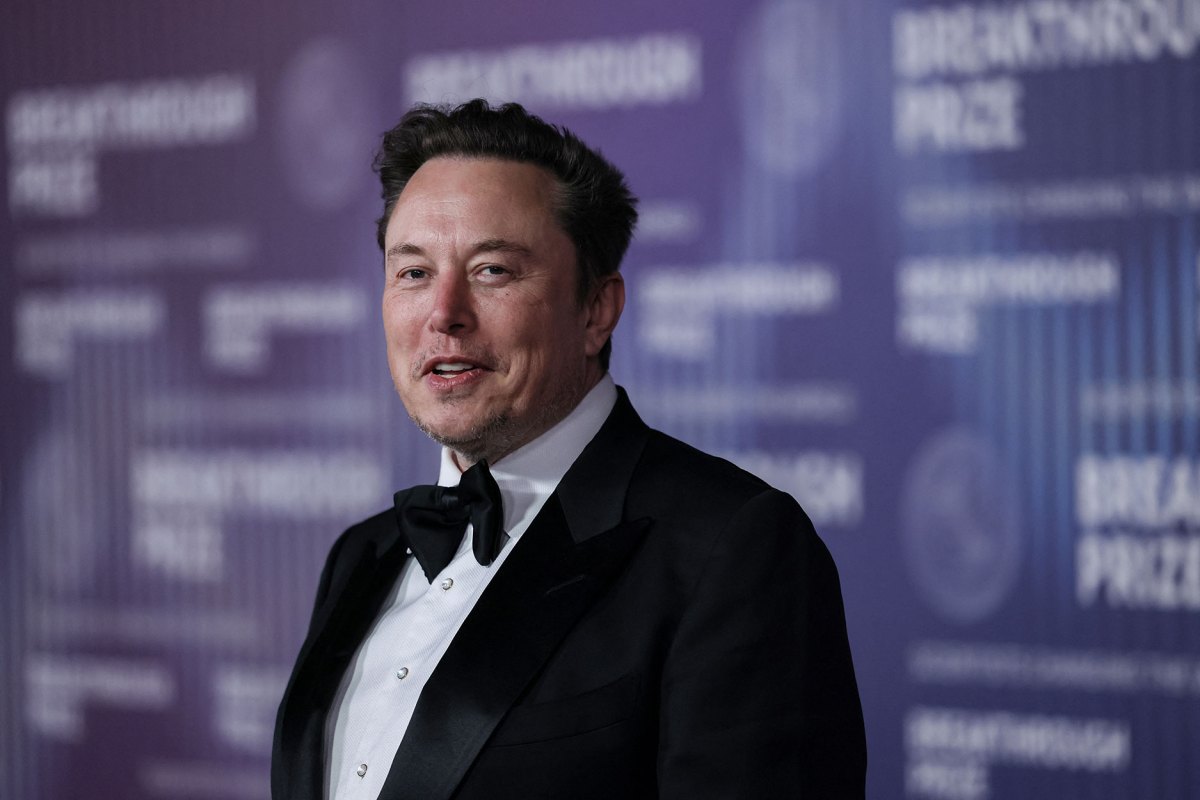
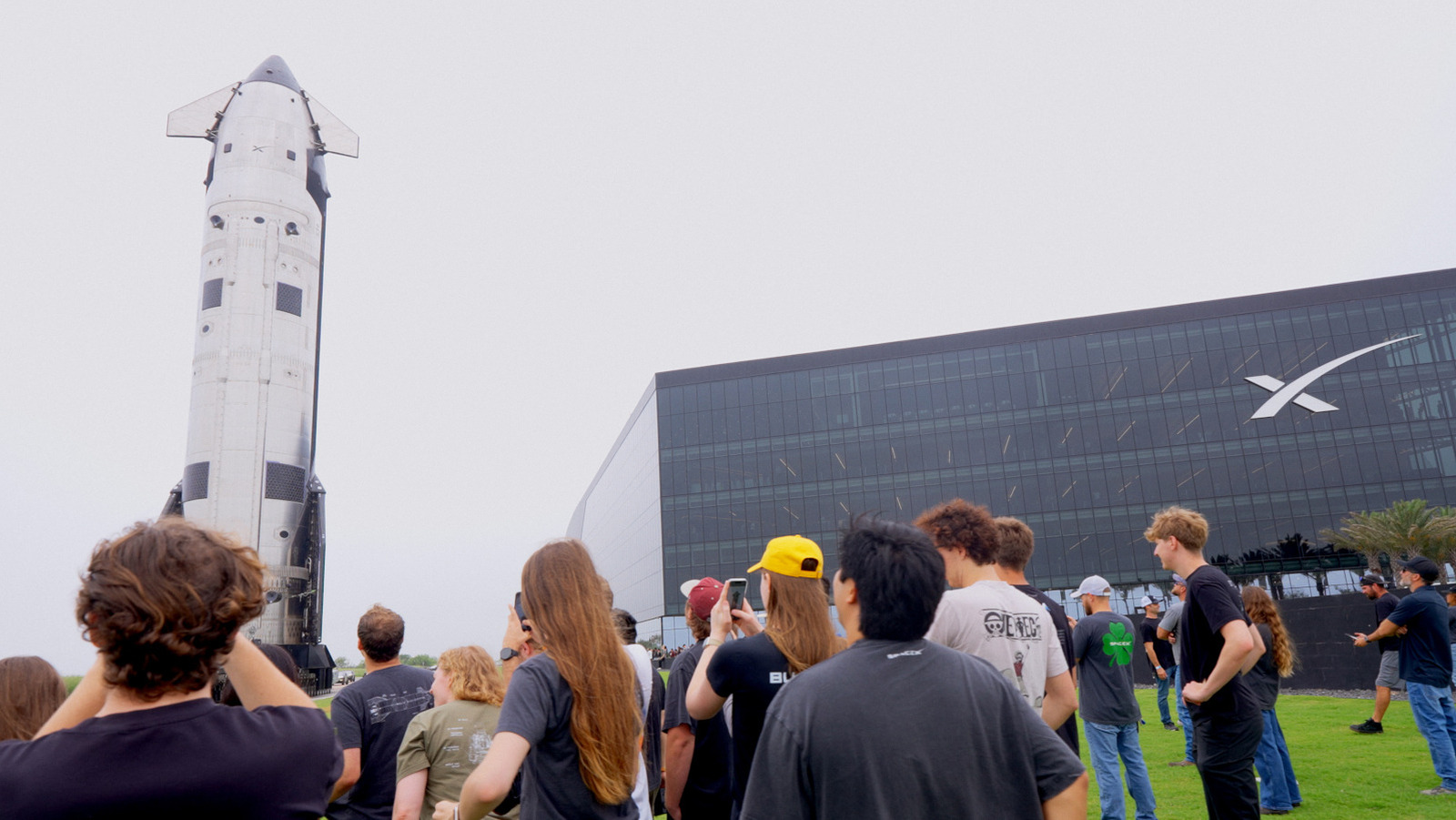
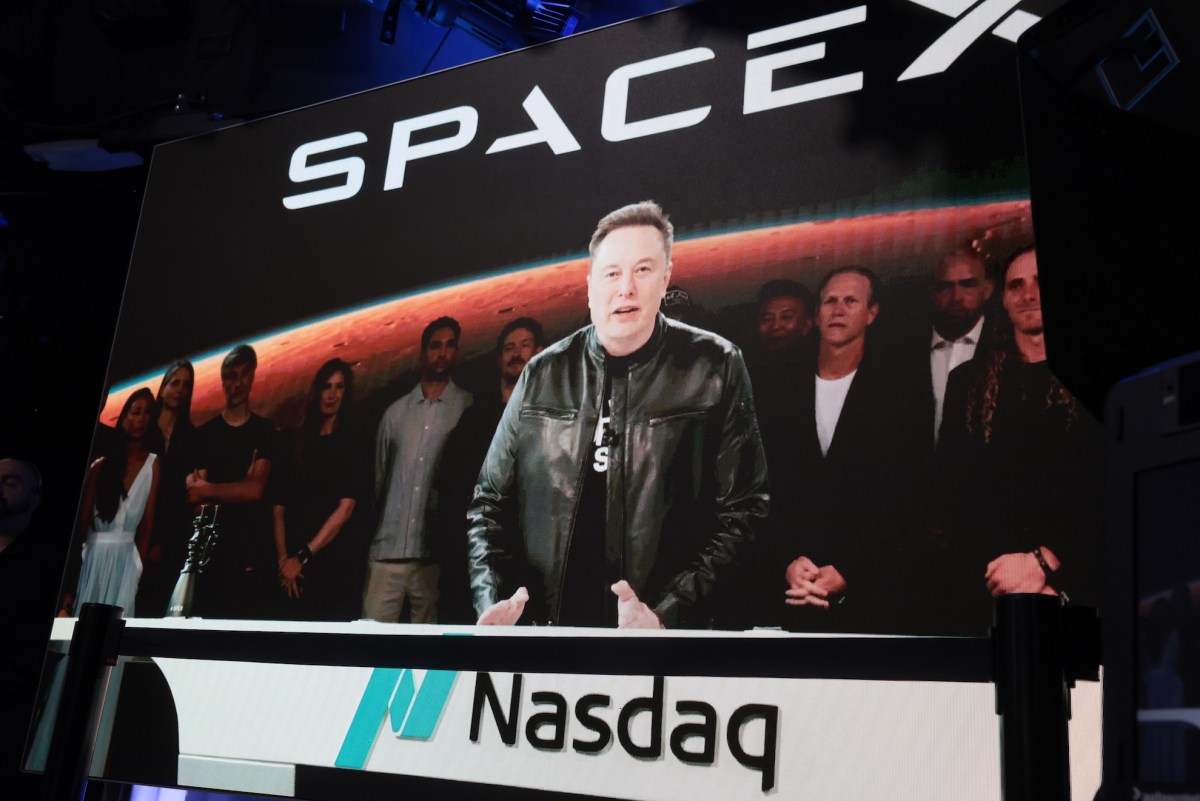
SpaceX closed its first week as a publicly traded company with a market capitalization of $2.1 trillion, according to official exchange data—vaulting it past Tesla, which ended the period at $1.52 trillion. The rocket manufacturer now ranks as the sixth most valuable U.S.-listed firm, trailing only Nvidia, Apple, Alphabet, Microsoft, and Amazon. For anyone tracking the intersection of aerospace, automotive, and artificial intelligence in Asia and beyond, the shift marks more than a simple valuation milestone; it sets the stage for what could be the largest industrial merger in history.
At DailyTechWire, we've followed Elon Musk's twin enterprises through years of supply-chain pivots, battery chemistry debates, and satellite-constellation rollouts. What makes this moment different is the convergence of regulatory filings, executive commentary, and capital-market timing. SpaceX's initial public offering arrived as both companies navigate AI inference workloads—Tesla for vision-based autonomy, SpaceX for real-time trajectory optimization—and as investor appetite for mega-cap combinations has never been stronger.
The valuation crossover also reflects diverging trajectories. Tesla's stock has faced headwinds from intensifying Chinese EV competition, slower European demand, and margin pressure on energy-storage products. SpaceX, by contrast, commands exclusive contracts for satellite internet, defense launches, and NASA's Artemis program, revenue streams that carry multi-decade visibility. In short, the rocket business has become the more predictable bet.
Fresh Language in the S-1 Filing
Buried in SpaceX's registration statement with the Securities and Exchange Commission is a sentence that did not appear in earlier drafts reviewed by market participants: "We may issue a significant amount of equity in connection with future transactions." The addition sits within a risk-factor section warning investors of potential dilution, and its scope—"significant amount"—suggests something far larger than a routine acquisition of satellite-component suppliers or ground-station operators.
Corporate attorneys we've spoken with note that such language typically surfaces when a company's board has already discussed transformational M&A scenarios and wants legal cover for rapid execution. The phrasing is broad enough to encompass a stock-for-stock merger with Tesla, a structure that would allow Musk to consolidate operational control, share engineering talent, and streamline the development of battery packs, AI chips, and autonomous systems across both platforms.
Tesla shareholders have long debated whether the automaker's energy division—which builds utility-scale battery installations—would benefit from tighter integration with SpaceX's power-management expertise for crewed spacecraft. A combined entity could also pool procurement for lithium, rare earths, and semiconductor fabrication capacity, leveraging scale that neither company enjoys alone. The S-1 language, in other words, is less a speculative flag than a roadmap checkpoint.
Shotwell's Candid Remark
On the day SpaceX shares began trading, president and chief operating officer Gwynne Shotwell sat for a televised interview and addressed the merger question directly. Asked whether a combination with Tesla made strategic sense, Shotwell replied that it "might make Elon's life a little easier." The comment was brief, but executives at her level rarely volunteer opinions on corporate structure unless the topic has already moved from boardroom whispers to active scenario planning.
Shotwell has been with SpaceX since 2002, steering commercial sales and government partnerships through every funding round and product iteration. Her operational authority is second only to Musk's, and her willingness to engage the merger narrative in public suggests internal alignment. We've observed similar rhetorical patterns before major aerospace deals—Northrop Grumman's acquisition of Orbital ATK in 2018, for instance, was preceded by months of executive commentary framing "portfolio synergies" and "operational simplification."
The ease-of-life framing also hints at governance complexity. Musk currently splits time between Tesla's Gigafactory expansions in Texas and Germany, SpaceX's Starbase launch site in Boca Chica, and social-media oversight. A single corporate structure would eliminate duplicative board meetings, separate earnings calls, and the regulatory gymnastics of related-party transactions. For a CEO managing satellite constellations, battery chemistry roadmaps, and full-self-driving timelines simultaneously, administrative consolidation carries tangible value.
What the Deal Could Look Like
If SpaceX and Tesla do merge, the mechanics will be scrutinized by regulators on three continents. The U.S. Department of Justice and Federal Trade Commission would examine market concentration in electric vehicles, energy storage, and launch services. European competition authorities would assess impact on automotive supply chains and satellite broadband. China's State Administration for Market Regulation would weigh effects on domestic EV makers and space-sector players.
A stock-for-stock transaction would likely value Tesla's equity against SpaceX's newly established public price, with an exchange ratio negotiated by independent directors. Early SpaceX investors—venture funds, sovereign wealth vehicles, and secondary-market SPV holders—would receive Tesla shares, creating a shareholder base that spans Silicon Valley, the Middle East, and East Asia. Some lower-tier SPV participants, who bought in at steep premiums during late-stage private rounds, may find their positions diluted or restructured, a risk that has already sparked quiet concern among family offices and secondary platforms.
Operational integration would be complex. Tesla's manufacturing footprint spans California, Texas, Nevada, Germany, and China; SpaceX operates launch sites in Florida and Texas, a satellite-production line in Redmond, and engine-test facilities across the Southwest. Merging these would require a new corporate entity, likely domiciled in a tax-efficient jurisdiction, with distinct business units for automotive, energy, launch, and satellite services. The combined company would also inherit Tesla's workforce of roughly 140,000 and SpaceX's 15,000 employees, raising questions about redundancy in AI research, power electronics, and supply-chain management.
Implications for Asia-Pacific Markets
For readers in Seoul, Singapore, and Shenzhen, a SpaceX–Tesla combination carries direct consequences. Tesla's Shanghai Gigafactory remains the company's largest production site by volume, and any corporate restructuring would need Beijing's approval to preserve that operational license. SpaceX, meanwhile, has courted partnerships with Japanese satellite operators and Indian launch customers; a merged entity would wield greater negotiating leverage but also face heightened scrutiny under export-control regimes governing rocket technology and AI chips.
Battery supply chains would shift, too. Tesla currently sources cells from CATL, LG Energy Solution, and Panasonic; SpaceX has developed proprietary chemistries for spacecraft power. A unified R&D effort could accelerate solid-state or sodium-ion adoption, potentially displacing incumbent suppliers or forcing them into exclusive partnerships. We've tracked similar dynamics in the semiconductor industry, where scale players like TSMC and Samsung leverage volume commitments to steer foundry roadmaps. A combined SpaceX–Tesla would command comparable influence over battery and inverter suppliers across Asia.
Satellite internet is another pressure point. SpaceX's Starlink service competes with terrestrial fiber and 5G infrastructure in Indonesia, the Philippines, and rural India. If Tesla's vehicle fleet becomes a distribution channel for Starlink terminals—imagine built-in satellite connectivity as a subscription feature—traditional telecom operators would face a new category of competition. Regulators in Jakarta, Manila, and New Delhi are already grappling with how to license low-Earth-orbit constellations; a merger would accelerate those policy debates.
GM's Battery Detour and Lucid's Executive Churn
Elsewhere in the mobility sector, General Motors confirmed that a foreign supplier—widely understood to be CATL—will provide lithium-iron-phosphate cells for the 2027 Chevrolet Bolt, with no current plans to manufacture LFP chemistry in-house for passenger EVs. The automaker is ramping LFP production at an Ultium facility, but those cells are earmarked for stationary energy-storage systems built by LG Energy Solution, not vehicles. The decision underscores a broader strategic pivot: legacy automakers are chasing the grid-scale battery market, seeking revenue diversification as EV margins compress.
GM also announced a partnership with startup Peak Energy to develop sodium-ion batteries tailored for AI data centers and utility storage. Sodium-ion offers lower energy density than lithium-ion but uses abundant, inexpensive materials and avoids cobalt and nickel supply risks. For data-center operators running inference workloads around the clock, energy density matters less than cost per kilowatt-hour and cycle life. GM's move mirrors Ford's investments in grid batteries and suggests that Detroit sees energy storage as a hedge against volatile EV demand.
At Lucid Motors, executive turnover continues. Emad Dlala, recently elevated to a senior role, has departed just months after the company named Silvio Napoli as CEO in April. Industry sources suggest additional exits may follow, a pattern that often signals strategic disagreement or financial pressure. Lucid's production volumes remain modest relative to its capital burn, and the leadership churn raises questions about the timeline for profitability and the durability of its Saudi backing.
Waymo's Arizona Land Grab and Apple's Exit
Waymo acquired a 5,500-acre proving ground in Arizona from Route 14 Investment Partners, a Delaware shell company linked to Apple, for $220 million. The transaction, documented in public filings, offers the clearest evidence yet that Apple has fully exited automotive ambitions. The company shuttered its special vehicle project in 2024, and the sale of a sprawling test facility removes any remaining physical infrastructure that could support a future restart.
For Waymo, the purchase reflects scaling ambitions. The Alphabet subsidiary already operates commercial robotaxi services in San Francisco, Phoenix, and Los Angeles, and is preparing to launch in London through partnerships with Uber and U.K. startup Wayve. A dedicated proving ground allows the company to simulate edge cases—dust storms, extreme heat, multi-vehicle interactions—without the regulatory constraints of public roads. The Arizona site's size also suggests plans for high-speed testing and scenarios involving freight or long-haul autonomy, segments Waymo has explored through its Via trucking unit.
Waymo also introduced a $29.99-per-month subscription called Waymo Premier, offering frequent riders priority pickup, fare discounts, and access to newer vehicle models. The loyalty program mirrors strategies from ride-hail incumbents and signals Waymo's intent to build recurring revenue ahead of a potential public offering. In parallel, the company published research on a new computer model designed to benchmark its autonomous software against human drivers with greater statistical rigor, addressing a perennial criticism that AV companies cherry-pick favorable comparisons.
Quick-Commerce, Drones, and the Last Mile
In India, quick-commerce startup Zepto disclosed plans for an initial public offering valued at roughly $1 billion, joining a wave of logistics companies tapping public markets as urban delivery density reaches critical mass. Zūm, which operates electric school-bus fleets in the U.S., is interviewing investment banks about a possible IPO, according to industry reports. Both moves reflect investor appetite for asset-light platforms that orchestrate fleets rather than own them outright, a model that scales faster but carries execution risk tied to third-party reliability.
Wing, Alphabet's drone-delivery unit, expanded its Walmart partnership into seven additional U.S. cities, bringing autonomous aerial delivery to suburban markets where low housing density makes traditional vans inefficient. The service remains a niche offering—weather, noise ordinances, and payload limits constrain adoption—but incremental geographic expansion suggests Wing has found a sustainable cost structure in partnership with a national retailer. Competitors including Zipline and Amazon Prime Air are pursuing similar strategies, and the race is as much about regulatory pathfinding as technology.
Decart's AI World Model for AV Simulation
Decart, an artificial-intelligence startup, released Oasis 3, an interactive world model that generates photorealistic driving environments in real time. The system is designed to help autonomous-vehicle developers simulate rare events—pedestrian crossings in low light, sensor occlusion by snow, multi-car pile-ups—at scale and cost below traditional 3D rendering pipelines. Decart plans to extend the platform into robotics and other physical-AI applications, targeting customers that need synthetic training data for vision and planning algorithms.
Generative models for simulation have attracted significant venture investment over the past year, driven by the realization that real-world data collection is expensive, dangerous, and geographically limited. A model trained on diverse video can synthesize scenarios that occur once per million miles, compressing years of test-track time into GPU hours. The challenge lies in ensuring that generated data preserves the statistical properties of reality—lighting physics, material reflectance, pedestrian behavior—so that algorithms trained on synthetic scenes transfer reliably to public roads. Decart's early customers include several stealth AV programs and a major German automaker.
The Broader Picture
The SpaceX–Tesla valuation flip, combined with explicit merger signals, represents a potential inflection point for the Musk industrial complex. A combined entity would control end-to-end capabilities in batteries, AI accelerators, launch services, satellite networks, and autonomous vehicles—a vertical stack unmatched by any other publicly traded company. For competitors in Asia and Europe, the implications span procurement leverage, talent competition, and regulatory strategy.
Yet the deal is far from certain. Antitrust review could stretch beyond a year, and divergent shareholder interests—Tesla investors focused on automotive margins, SpaceX backers prioritizing launch cadence—may resist a single equity instrument. Operational integration, particularly across U.S., European, and Chinese jurisdictions, would test even the most capable management teams. And Musk's track record on ambitious timelines, while often ultimately vindicated, is also littered with delays and pivots.
What is clear is that the center of gravity in future-of-transport capital markets has shifted. SpaceX's public debut, its overtaking of Tesla in market value, and the explicit acknowledgment of merger scenarios by senior leadership have moved the conversation from speculation to scenario planning. The next twelve months will reveal whether that planning translates into the largest industrial combination of the decade—or remains a tantalizing what-if in the annals of tech and transport.