SpaceX Sets $135 Share Price Ahead of $74.4B IPO — The Largest Float in History
Elon Musk's aerospace giant breaks convention with early pricing, targeting a $1.75 trillion valuation and a path to the world's first trillionaire.
The Numbers Behind the Largest Float Ever
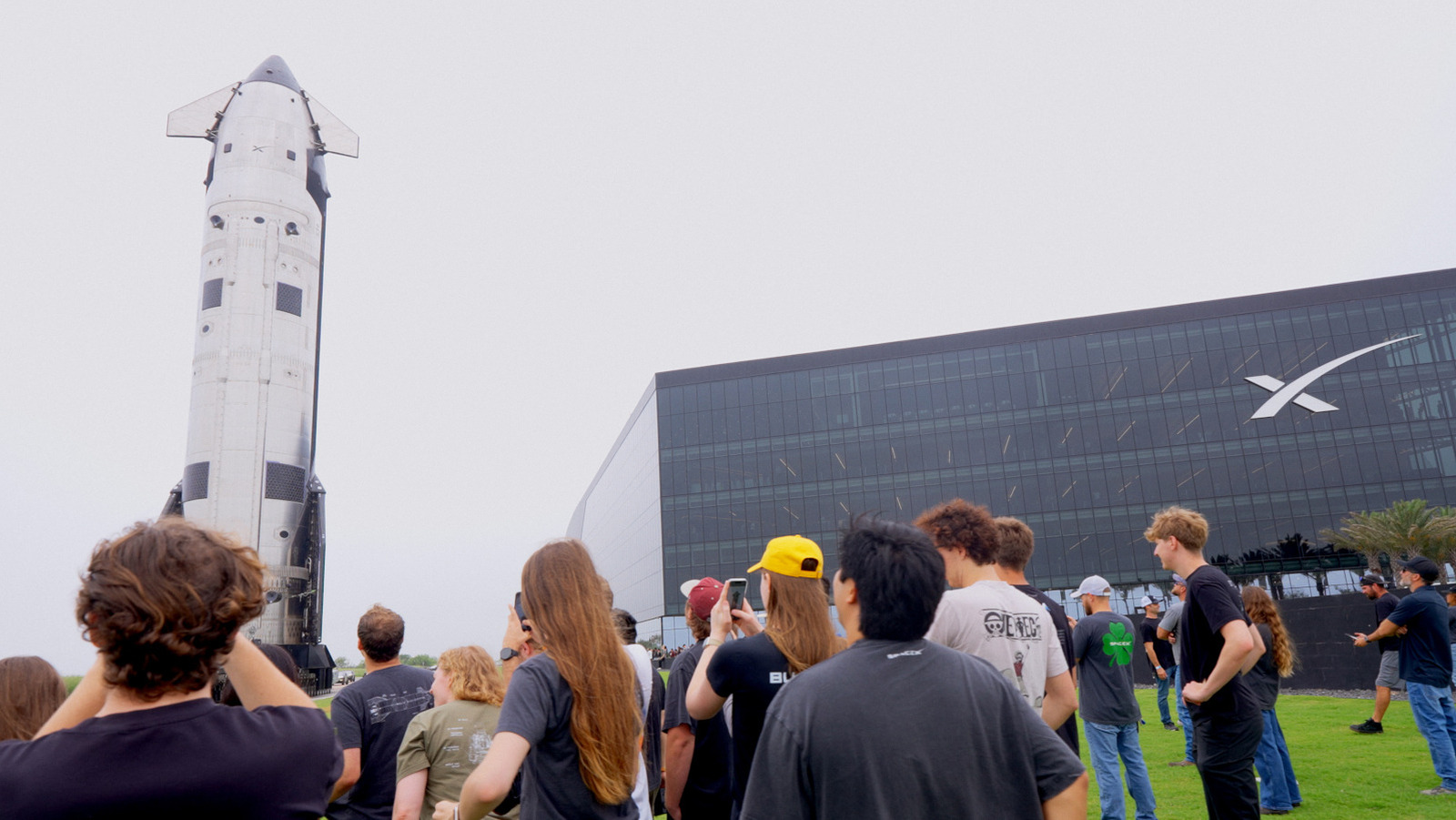
SpaceX has set a $135 per-share price for its initial public offering, according to an amended filing with the U.S. Securities and Exchange Commission. If that price holds through the June 11 final pricing announcement, the company will raise $74.4 billion when shares begin trading on June 12—an amount that would exceed the combined value of every U.S. IPO filed in the past 24 months, according to Renaissance Capital.
The move also sets SpaceX's post-float valuation at approximately $1.75 trillion, positioning it among the world's most valuable publicly traded companies on day one. For Elon Musk, who retains a 50 percent stake, the offering would translate to a personal holding worth roughly $752 billion—enough to make him the first individual to cross the trillion-dollar wealth threshold.
At DailyTechWire, we've tracked IPO mechanics across Asia and the U.S. for years, and the early lock on a concrete price—rather than the conventional range—stands out. Companies typically leave room for demand fluctuations in the final week before going public. SpaceX's decision to anchor at $135 suggests either extraordinary confidence in institutional appetite or a strategic signal to the market that this is non-negotiable premium pricing.
Why the Early Price Lock Matters
Matthew Kennedy, a senior IPO market strategist at Renaissance Capital, told reporters that the $74.4 billion target represents "more than every U.S. IPO combined in the last two years." That scale underscores two realities: first, that public markets have been in a prolonged drought for mega-floats since the Federal Reserve's rate cycle turned in 2022; and second, that SpaceX is betting its brand, execution record, and Musk's polarizing celebrity can override the hesitation that has kept other unicorns private.
The company filed draft registration paperwork with the SEC earlier this year. When those documents became public, they revealed financial interdependencies across Musk's constellation of companies. Anthropic, the AI safety-focused startup, will pay the combined SpaceX-xAI entity $1.25 billion per month through May 2029 to lease capacity in xAI's data centers, according to the filing. That contract alone represents $45 billion in committed revenue over the term—a floor that likely anchored underwriter confidence in the $135 price.
Meanwhile, the same disclosures showed that X, the social media platform Musk acquired in 2022, suffered a $595 million decline in advertising revenue in 2024 due to what the filing described as a "loss of advertising partners." The contrast between Anthropic's billion-dollar commitment and X's advertiser exodus illustrates the divergent trajectories of Musk's ventures: one riding the AI infrastructure boom, the other still struggling to stabilize its core business model.
Orbital Data Centers: The $74.4 Billion Use Case
SpaceX has stated that proceeds from the IPO will fund "future projects," with orbital data centers at the top of the capital allocation list. The company plans to deploy a constellation of one million satellites in sun-synchronous orbit between 500 and 2,000 kilometers altitude, where continuous solar exposure eliminates weather-related power interruptions. Each satellite would function as a node in a distributed compute grid, processing AI workloads in space and beaming results back to Earth.
Musk has argued publicly that orbital data centers will become the cheapest way to generate AI compute power within a few years, citing two cost curves: declining launch expenses (driven by Starship reusability) and zero-marginal-cost solar energy in orbit. The economics hinge on whether the per-watt cost of launching and maintaining a satellite data center can undercut terrestrial hyperscale facilities, which face rising electricity prices and cooling infrastructure overhead.
The concept is not entirely novel—Edge computing and low-latency satellite networks have been explored by Amazon's Project Kuiper and OneWeb—but SpaceX's scale ambition is an order of magnitude larger. One million satellites would represent roughly 20 times the number of active satellites currently in orbit across all operators. The regulatory, space debris, and orbital slot coordination challenges are non-trivial, and no timeline has been disclosed for when the first orbital data center node might launch.
Regional Implications: Asia's Response to U.S. Space-AI Integration
The SpaceX float arrives at a moment when Asian governments and conglomerates are accelerating their own space-launch and AI infrastructure strategies. South Korea's Hanwha Aerospace has ramped up investments in satellite launch vehicles, while India's ISRO has opened commercial satellite deployment to private operators. China, meanwhile, has been building its own mega-constellation under the Guowang program, targeting 13,000 satellites for broadband and compute applications.
If SpaceX's orbital data center model proves economically viable, it could shift the competitive landscape for AI training and inference away from terrestrial hyperscale clusters—where Chinese and U.S. players currently compete on chip access and energy costs—toward space-based infrastructure, where launch capability and satellite manufacturing become the new bottlenecks. That shift would favor vertically integrated players like SpaceX, which controls both launch and satellite production, and could disadvantage pure-play cloud providers in Asia that lack in-house launch capacity.
The Anthropic contract also signals a broader trend: AI labs are locking in long-term compute capacity through pre-commitment deals, rather than relying on spot pricing from public cloud providers. This mirrors the term sheet structures we've seen in Asia's data center market, where hyperscalers like ByteDance and Alibaba have signed multi-year leases with co-location operators to secure GPU clusters ahead of demand spikes. The difference is that SpaceX is positioning itself as both the infrastructure provider and the launch operator, collapsing two layers of the value chain.
Why It Matters
The $74.4 billion raise, if it closes at target, will test whether public markets are ready to price in speculative infrastructure bets on the same scale as proven SaaS or consumer tech businesses. SpaceX's core revenue—launch services, Starlink subscriptions, and government contracts—is well-established. But orbital data centers remain a PowerPoint ambition with no deployed prototypes, and the capital intensity required to launch a million satellites dwarfs even the most aggressive terrestrial data center build-outs.
For Asia's tech ecosystem, the IPO sets a new benchmark for what "infrastructure at scale" means in the AI era. If SpaceX can convince institutional investors that space-based compute is the next platform shift, it will accelerate capital flows toward launch startups, satellite manufacturers, and edge AI providers across the region. If the orbital data center thesis fails to materialize, the float will be remembered as the moment public markets repriced the Musk premium—and Asia's own space ambitions may proceed with more caution.
The final share price will be announced on June 11. Until then, the $135 figure stands as both a signal of confidence and a dare to the market: that the future of AI compute is not in the cloud, but in orbit.


