Rivian's R2 Gambit: Why a Mid-Market EV Launch Now Might Actually Work
As legacy automakers retreat from electrification in the U.S., Rivian is betting $58,000 SUVs—and a robotaxi partnership with Uber—can fill the vacuum left by policy rollbacks and Tesla's stumble.
A Calculated Launch Into Chaos
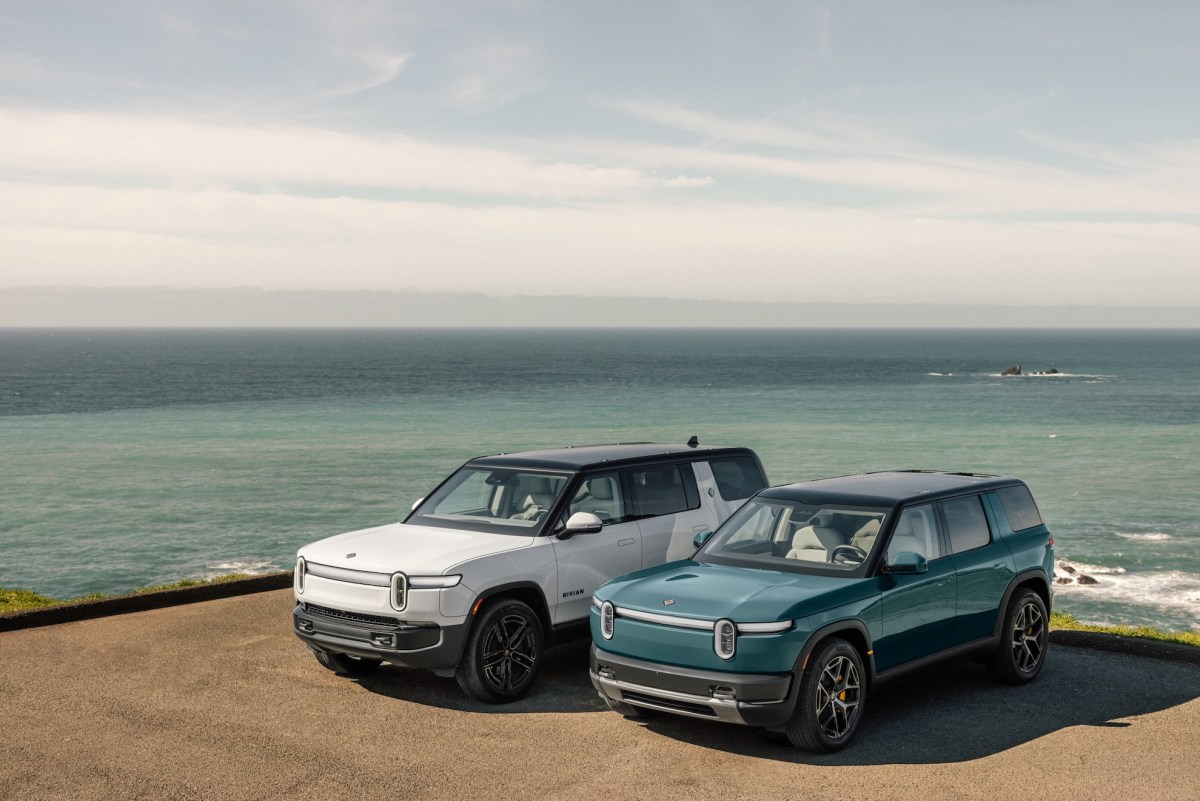
Rivian handed over its first R2 SUVs to customers this week, a milestone that arrives at a peculiar moment for electric vehicles in the United States. The company expects to deliver between 20,000 and 25,000 units by year-end—a ramp that would rank among the fastest EV scale-ups in U.S. history—even as the broader market contracts under policy headwinds. At DailyTechWire, we've tracked the tension between falling subsidies and rising production ambitions across automakers from Seoul to Fremont; Rivian's bet is that emptier showrooms create opportunity, not just risk.
Starting at approximately $58,000, the R2 condenses the design and capability of Rivian's flagship R1 platform into a more accessible form factor. Rivian plans to introduce a sub-$50,000 variant in 2027, followed by a configuration priced around $45,000 later that year—price points the company first signaled in 2024. The strategy hinges on volume: Rivian aims to manufacture and sell hundreds of thousands of R2s annually once its Georgia facility comes online in late 2028, supplementing output from its existing Normal, Illinois plant.
But the macro picture has shifted since those targets were set. The elimination of the $7,500 federal tax credit for new EVs and the weakening of emissions standards have prompted most legacy automakers to shelve or cancel U.S. electrification plans. Tesla, the category leader, is posting declining sales. Yet global EV adoption continues to accelerate—China's ultralow-cost crossovers are prompting import-tax reductions in markets like Canada, where governments are using tariff policy to hold down new-car prices. Rivian's founder has framed this divergence as a window: fewer domestic competitors mean the R2 could capture share by default, provided the company executes on cost and production cadence.
Autonomy as the Real Product Roadmap
Rivian's R2 ambitions extend well beyond the showroom. In December, the company outlined a multi-year autonomy development plan for the SUV, with the stated goal of enabling full self-driving capability. That timeline accelerated in March when Uber committed up to $1.25 billion to deploy as many as 40,000 R2 vehicles as robotaxis on its network. The deal represents one of the largest commercial autonomous-vehicle commitments to date and signals that Rivian views the R2 less as a consumer product and more as a platform—a hardware substrate for software services that could eventually dwarf vehicle sales revenue.
This mirrors the pivot we've observed among Asia-Pacific EV makers, where companies like BYD and Xpeng are bundling over-the-air updates, driver-assistance subscriptions, and fleet partnerships into their go-to-market models. Rivian's Uber arrangement effectively de-risks a portion of its production capacity: even if retail demand softens, fleet orders provide a baseline utilization rate for factories. It also aligns Rivian's engineering priorities with a clear commercial application—ride-hailing autonomy requires different sensor tuning, uptime guarantees, and regulatory compliance than consumer autopilot features.
The challenge is execution. Rivian has yet to demonstrate Level 4 autonomy in any production vehicle, and the R2's sensor suite—while forward-looking—has not been validated at scale. The company is effectively building two products in parallel: a mid-market SUV that must compete on price and range, and an autonomy stack that must meet the safety and economic thresholds Uber's network demands. Balancing those development tracks while ramping a new manufacturing line is a capital-intensive proposition, even with the Uber deal's financial cushion.
Why the Timing Might Not Be as Bad as It Looks
At first glance, launching a $58,000 EV into a subsidy-free, regulation-light U.S. market seems counterintuitive. But Rivian's calculus may be sound for three reasons. First, the R2's price band positions it below premium offerings from Mercedes and Audi but above the budget tier where Chinese imports will eventually compete—a middle ground that legacy automakers are vacating. Second, the company's Illinois and Georgia facilities give it domestic manufacturing capacity at a time when tariff uncertainty is pushing automakers to reshore production. Third, Rivian's brand equity among early adopters remains strong; the R1 platform's off-road capability and design language have cultivated a loyalist base willing to pay a premium for differentiation.
The wildcard is consumer sentiment. EV adoption in the U.S. has historically correlated with policy support—tax credits, HOV lane access, and emissions mandates. Without those tailwinds, demand becomes a function of product merit and total cost of ownership. Rivian's bet is that falling battery costs, improving range, and the R2's feature set can offset the loss of federal incentives. The company has not disclosed battery pricing or supply agreements, but industry trends suggest cell costs have dropped below $100 per kilowatt-hour at scale, enabling manufacturers to absorb some margin compression without passing full costs to buyers.
Still, the 20,000–25,000 delivery target for 2026 is aggressive. For context, that would represent a faster ramp than Ford achieved with the Mustang Mach-E or Hyundai with the Ioniq 5 in their first partial years. Rivian's supply chain, production tooling, and service network will all be tested. Any delays in Georgia factory commissioning or component shortages could compress timelines and force the company to prioritize either retail deliveries or Uber fleet commitments—a trade-off that could strain both revenue streams.
The Asia Angle: What Rivian's Strategy Reveals About Global EV Fragmentation
Rivian's R2 launch also highlights a broader decoupling in global EV markets. While U.S. policy retreats, Asia continues to double down. South Korea's battery triad—LG Energy Solution, Samsung SDI, SK On—are expanding capacity in Southeast Asia and India to serve local automakers. China's domestic EV penetration has crossed 40 percent in major cities, and manufacturers like Geely and NIO are exporting platforms to Europe and the Middle East. The R2's success or failure will offer a live case study in whether a U.S.-based manufacturer can compete on product alone, without the policy scaffolding that accelerated adoption in Shenzhen, Seoul, and Stockholm.
Canada's recent reduction of import taxes on Chinese EVs is particularly instructive. It signals that North American governments are willing to use trade policy to moderate vehicle prices, even if it means exposing domestic manufacturers to low-cost competition. Rivian's Georgia factory and domestic supply chain insulate it from some of that pressure, but the company will still face price comparisons once BYD or Geely models enter Canadian showrooms at sub-$35,000 price points. The R2's value proposition—autonomy capability, brand differentiation, off-road performance—will need to justify a 40–50 percent premium over imports.
For investors and policymakers tracking Asia-Pacific tech flows, Rivian's trajectory matters because it tests whether vertical integration and platform strategy can substitute for scale economies. Chinese EV makers benefit from integrated battery-to-chassis manufacturing and government-backed gigafactories; Rivian is building similar capabilities but without the state capital or domestic market density. The R2's production ramp will reveal whether that model is viable at mid-market price points or whether EVs outside China require either policy support or luxury margins to pencil.
Why It Matters: The Real Test Is 2027, Not 2026
The 20,000-unit delivery target for 2026 is a proof-of-concept, not a business model. Rivian's long-term viability depends on hitting the sub-$50,000 price point in 2027 and sustaining triple-digit-thousand annual production thereafter. That requires the Georgia factory to come online on schedule, battery costs to continue falling, and the Uber autonomy partnership to progress beyond pilot deployments. Any one of those variables slipping could force the company to raise additional capital or dilute its roadmap.
What makes the R2 launch significant is not the vehicle itself—it's the convergence of autonomy ambitions, fleet partnerships, and a policy vacuum that legacy automakers are choosing not to fill. Rivian is effectively testing whether a startup can occupy the space that Ford, GM, and Stellantis are abandoning, and whether autonomy revenue can offset the margin compression that comes with mid-market pricing. The answer will shape not just Rivian's future, but the viability of U.S.-based EV manufacturing in a world where subsidies are discretionary and Chinese competition is structural.
For now, the R2 is a bet that fewer competitors and smarter partnerships can outweigh weaker policy. Whether that calculus holds depends less on what happens in the next six months and more on whether Rivian can sustain production, cost discipline, and technology development through 2028. The launch is less a victory lap than the start of a multi-year stress test—one that will determine if mid-market EVs can survive in the U.S. without the training wheels of federal incentives.


