Sony's 2028 Disc Exit Exposes the Real Cost of Digital-Only Gaming
As console makers accelerate the shift away from physical media, players face a trade-off between convenience and control that reshapes ownership, pricing power, and the longevity of games themselves.
The Tipping Point
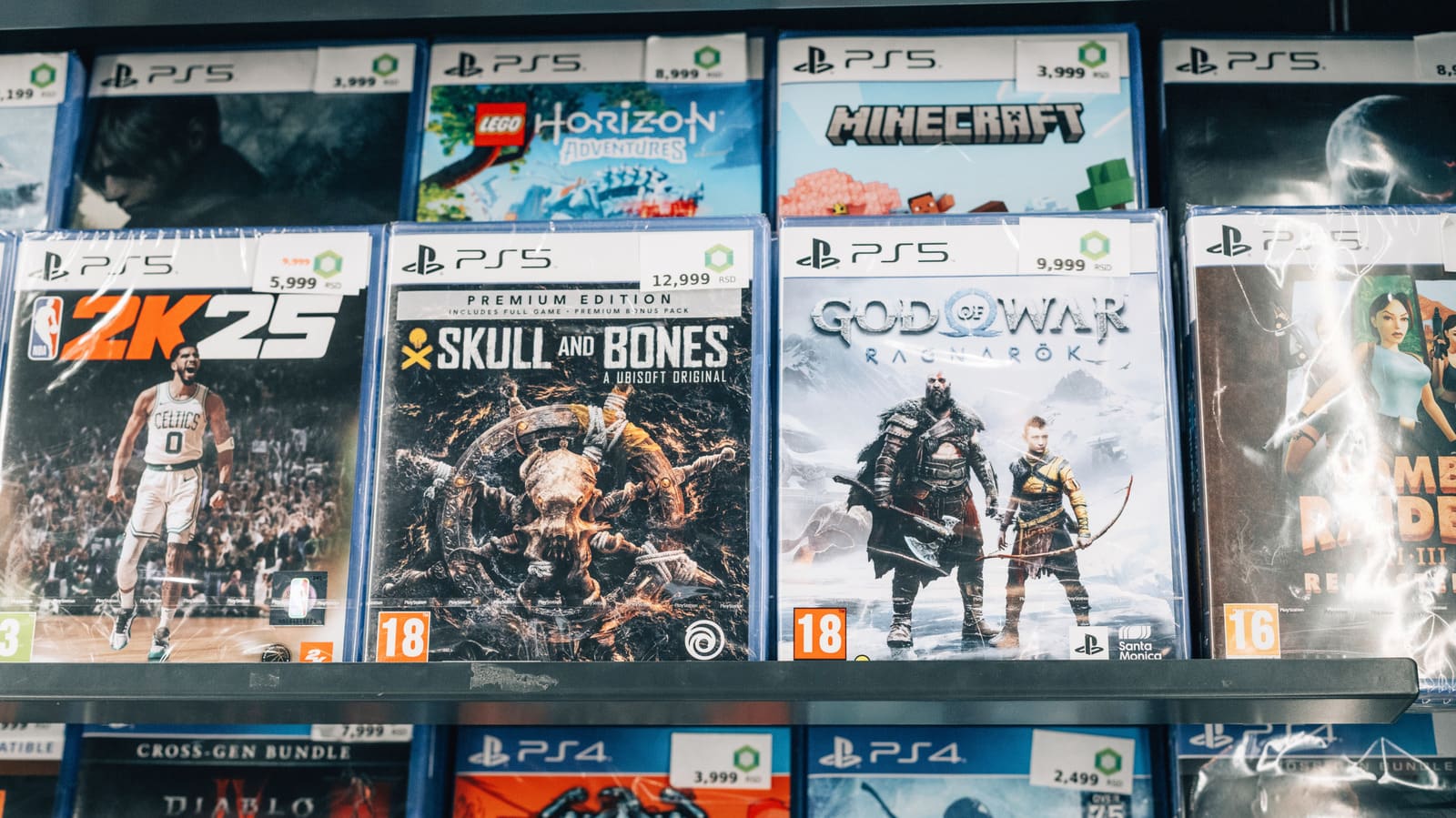
Sony's announcement that it will cease manufacturing PlayStation discs in 2028 represents more than a format change. It is the clearest signal yet that the console industry is willing to trade the ecosystem built around physical media for the operational simplicity and margin control of digital distribution. The move follows a pattern already visible across the hardware landscape: the PlayStation 5 Pro ships without an optical drive unless purchased separately, Microsoft's Xbox Series S launched with no disc slot at all, and Nintendo's Switch 2 game-key cards contain no actual game data, functioning instead as download tokens in cardboard packaging.
At DailyTechWire, we have tracked similar inflection points in other entertainment verticals. Music streaming eliminated the CD, video-on-demand hollowed out DVD retail, and e-books redrew the publishing map. Gaming is following the same arc, but with stakes that extend beyond format preference. When a game exists only as a revocable license on a remote server, questions of ownership, pricing power, and cultural preservation become urgent, not academic.
What Players Gain
The practical benefits of an all-digital library are immediate and tangible. No longer do players need to swap discs mid-session when switching from a story-driven title to a multiplayer session with friends. Cartridges stay home instead of rattling around in a travel case. Shelf space is reclaimed. The risk of a scratched disc or a lost cartridge disappears entirely.
Digital distribution also enables library sharing in ways physical media cannot easily replicate. On Xbox and PlayStation, setting a friend's console as your "home system" grants them access to your entire purchased catalog. Nintendo's family-account model allows virtual game cards to be lent within a household group. For households with multiple players or friends willing to coordinate purchases, this can halve the effective cost of new releases.
Purchasing itself becomes frictionless. A new release can be preloaded days before launch, unlocking at midnight without a trip to a retailer or a wait for a courier. For players in regions with limited brick-and-mortar game retail, or those in remote areas where shipping is slow and expensive, digital storefronts offer access that physical distribution never reliably provided.
These advantages, however, have been features of digital games since the PlayStation 3 and Xbox 360 era. What changes in a disc-free future is not the presence of these benefits but the absence of any alternative.
The Costs of Losing Physical
When physical copies vanish from the market, so does the entire secondary economy built around them. Trade-ins, used sales, lending to friends, and rental services all depend on the existence of a tangible object that can change hands. GameFly, the mail-order rental service, and public library gaming collections become unviable. Players who finish a title and want to recoup part of its cost by reselling it lose that option entirely.
Pricing power shifts decisively toward publishers and platform holders. Physical retail creates competition: big-box stores, independent shops, and online marketplaces all undercut one another, especially as titles age. Digital storefronts face no such pressure. A publisher can hold a game at full price indefinitely, and discounts happen only when the platform or publisher chooses to run a sale. Data from physical retailers shows boxed editions routinely selling for 20 to 30 percent below digital list price within months of release. That gap widens over time, but only when physical copies exist to create it.
Storage and bandwidth present practical friction. On Nintendo hardware, where cartridges historically carried the full game, digital downloads consume internal storage that is expensive to expand. PlayStation and Xbox discs function as license keys rather than data sources, but they still offer a faster path to playability for users on slow or metered internet connections. Copying 50 gigabytes from a disc takes minutes; downloading it on a 10-megabit connection takes hours, even before day-one patches.
Refund policies on console platforms remain consumer-hostile. Sony grants refunds only if a download has not been initiated. Nintendo declares all sales final. Xbox offers refunds within 14 days if playtime is minimal, but the threshold is undefined and enforcement is inconsistent. Compare this to Steam, which allows refunds for any reason within two weeks and under two hours of play, with case-by-case exceptions beyond those limits. As digital becomes the only option, the lack of a safety net becomes more consequential.
Ownership as Revocable License
The language in every digital storefront's terms of service is unambiguous: purchasing a game grants a license to access it, not ownership of the software itself. That license can be revoked. The reasons vary but the outcome is the same: a game you paid for becomes unplayable, and no refund is forthcoming.
The most notorious case is P.T., the playable teaser for the canceled Silent Hills project. After Sony removed it from the PlayStation Store, even users who had downloaded it could no longer reinstall it on new hardware without exploiting firmware vulnerabilities. Scott Pilgrim vs. the World: The Game disappeared from storefronts in 2014 due to expired music and film licenses, leaving no legal way to play it until a re-release seven years later. Ubisoft shut down the always-online racing game The Crew in 2024 and revoked existing licenses, rendering purchased copies inert with no compensation. In 2026, Sony deleted more than 500 purchased films from UK customer libraries, citing licensing issues.
These are not edge cases. They are predictable outcomes of a licensing model in which the seller retains unilateral control over access. When physical media exists, a delisted game can still be found secondhand, borrowed, or preserved in a library or archive. When digital distribution is the sole channel, delisting is extinction.
Preservation Under Threat
Game preservation organizations have spent two decades racing to archive titles before hardware failures, format obsolescence, and corporate decisions erase them. Physical media, for all its fragility, can be dumped, archived, and emulated. Digital-only releases that never received a physical edition and are later removed from storefronts simply vanish.
The scale of the problem is growing. Indies and smaller publishers often skip physical releases entirely, making digital storefronts the only distribution channel. When those games are delisted due to expired licenses, technical issues, or lack of platform-holder support, they become inaccessible. No library can collect them. No archive can preserve them. The legal frameworks around digital preservation remain murky, and platform holders have shown little interest in solving the problem.
This is not an abstract concern for historians. It is a present-tense loss of cultural artifacts. Games that shaped genres, introduced mechanics, or captured a moment in design history are disappearing because the infrastructure that delivered them was never designed for longevity.
The PC Parallel and Its Limits
PC gaming has been effectively disc-free for over a decade. Steam, Epic Games Store, GOG, and other storefronts dominate distribution, and optical drives have vanished from most gaming laptops and desktops. Yet the PC ecosystem differs in critical ways that blunt some of the concerns around console digital distribution.
Multiple competing storefronts create pricing pressure. Bundles, key resellers, and seasonal sales drive prices down faster than on walled-garden console platforms. Steam's refund policy sets a consumer-friendly standard that console makers have refused to match. And crucially, GOG offers DRM-free downloads that can be backed up and installed without authentication, preserving access even if the storefront shuts down.
None of these dynamics exist on consoles. Sony, Microsoft, and Nintendo each control a closed platform with a single storefront. There is no competition, no DRM-free alternative, and no meaningful refund protection. The PC model shows that digital distribution can coexist with consumer protections and market competition, but it also shows that those outcomes are not automatic. They require policy choices that console makers have declined to make.
What Comes Next
Sony's 2028 deadline is not an isolated decision. It is the next step in a roadmap that console makers have been following for years. Hardware is already shipping without disc drives, and publishers are already treating physical releases as legacy products with shrinking print runs and delayed availability. The trajectory is clear.
For players, the shift demands a recalibration of expectations. The convenience of digital libraries is real, but it comes with a hidden cost: reduced pricing competition, no resale value, revocable access, and a preservation crisis that will only deepen. The trade-off is not hypothetical. It is happening now, and the window to push back is closing.
Platform holders could mitigate these harms. They could adopt Steam-style refund policies, commit to long-term license guarantees, or build preservation programs for delisted titles. They could allow competing storefronts on their platforms or offer DRM-free options. They have chosen not to. The question is whether regulators, advocacy groups, or organized player pressure can force a different outcome before the physical option disappears entirely.