Pixel Watch 5 Introduces Passive Insulin Resistance Tracking
Health Guardian leverages wearable sensor data and neural networks to monitor metabolic health indicators that traditionally required blood tests.
A New Frontier in Wearable Metabolics
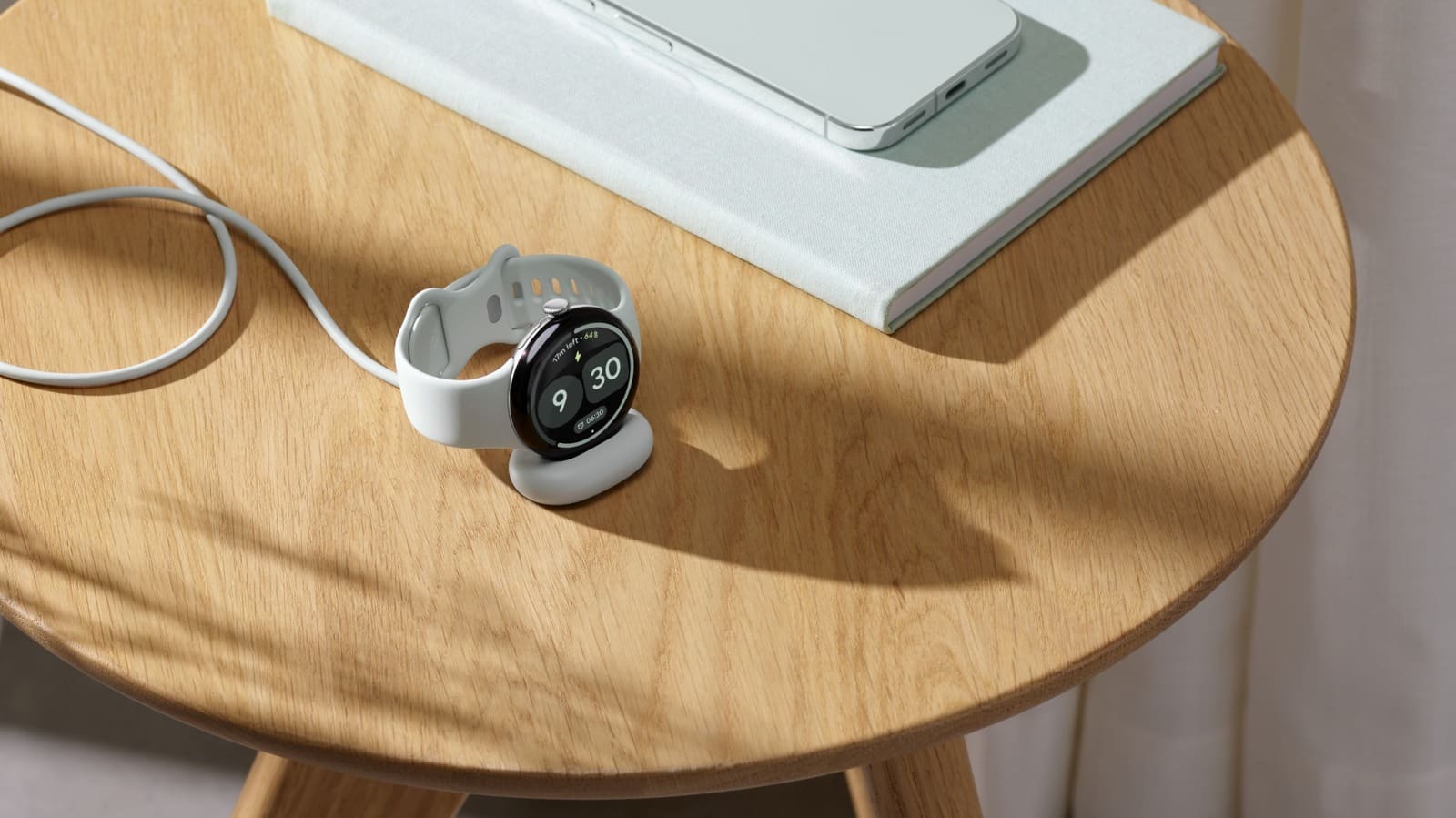
The latest hardware from Mountain View carries an unexpected payload: algorithms designed to infer insulin resistance without a finger prick. Health Guardian, shipping this fall on the Pixel Watch 5 and select Fitbit models, synthesizes heart rhythm, sleep architecture, and activity cadence into monthly metabolic snapshots. If the claims hold, it represents the first consumer wearable to surface prediabetic markers from the wrist alone.
At DailyTechWire, we've tracked the race toward noninvasive glucose monitoring across Seoul's Samsung labs, Cupertino's secretive health divisions, and Shenzhen's supply-chain whispers. Most efforts have centered on optical spectroscopy or electromagnetic sensing; this approach is orthogonal, betting instead on proxy signals and pattern recognition at scale.
Blood Pressure by Algorithm, Not Cuff
The platform's blood pressure component aggregates pulse morphology and motion over a full month, then delivers a single trend data point. Users calibrate nothing; the system runs continuously in the background. Unlike earlier cuffless implementations that demand weekly recalibration against a sphygmomanometer, Health Guardian treats BP as a longitudinal marker rather than a spot measurement.
Samsung's Galaxy Watch pioneered consumer cuffless monitoring in 2020, but the calibration burden and accuracy envelope kept it niche. Regulatory caution has softened since then; the FDA broadened clearance pathways in 2024, accepting that trend data can inform behavior even when absolute readings carry wider error bars. The trade-off is explicit: users receive context, not diagnosis.
Breathing Emergencies and Oxygen Saturation Guards
A second module watches for critical drops in blood oxygen, layering heart rate, accelerometer traces, and barometric altitude into a decision tree. When SpO₂ falls below threshold and motion data suggests the wearer is unconscious, the watch escalates through haptic alerts, a full-screen warning, an audible alarm, and finally a thirty-second countdown to an automatic emergency call.
The system borrows architecture from Loss of Pulse Detection, introduced on the Pixel Watch 4, but adds oxygen saturation as a primary input. Guard rails filter out benign scenarios such as sleep apnea during a nap or high-altitude rest. The feature has launched in several European markets and awaits FDA evaluation for the United States.
The WEAR-ME Study and Neural Network Training
The insulin resistance claim rests on a 2025 collaboration with Quest Diagnostics. Participants wore either a Fitbit or Pixel Watch while undergoing periodic venous blood draws; Quest measured fasting glucose, insulin, and HOMA-IR scores, the standard proxy for insulin sensitivity. Resting heart rate, step count, sleep stages, and heart rate variability from the wearables were fed into a convolutional neural network.
According to a paper published in Nature in March, the model identified correlations strong enough to flag early insulin resistance weeks before conventional screening would trigger. The team did not disclose sensitivity or specificity figures in the consumer announcement, but the study cohort exceeded two thousand participants across diverse demographics.
Insulin resistance sits upstream of type 2 diabetes; catching it early opens a window for lifestyle intervention before pancreatic beta cells burn out. Traditional diagnosis requires a fasting blood panel and often a glucose tolerance test. Passive monitoring collapses that friction, though it also introduces new questions around false positives, user anxiety, and the boundary between wellness tracking and clinical screening.
Why the Wearables Industry Has Chased This for a Decade
Noninvasive glucose sensing has been the stated ambition of nearly every major wearables program since at least 2015. Reports in 2017 suggested a stealth Apple effort dating to instructions from Steve Jobs; by 2023, insiders claimed progress but no product-ready sensor. The technical challenge is formidable: glucose concentration in interstitial fluid is low, optical path lengths through skin are noisy, and temperature, hydration, and motion all confound the signal.
The pivot to proxy inference sidesteps the physics problem. Instead of measuring glucose directly, Health Guardian bets that the metabolic consequences of insulin resistance leave fingerprints in heart rate variability, sleep fragmentation, and activity recovery. It is a fundamentally different approach, trading molecular precision for population-scale pattern matching.
If it works reliably across diverse skin tones, ages, and comorbidities, the public health upside is considerable. Prediabetes affects more than one in three adults in the United States and a similar fraction across urban Asia; most remain undiagnosed until A1C crosses the threshold.
Caveats, Disclaimers, and the Line Between Insight and Diagnosis
The company has wrapped the launch in explicit disclaimers: Health Guardian is not a diagnostic tool, does not replace clinical advice, and should not guide treatment decisions. The framing mirrors legal language common to wellness devices, a category that enjoys lighter regulatory oversight than medical devices.
Yet user behavior rarely respects those boundaries. A monthly insulin resistance score, paired with AI-generated recommendations, will shape decisions about diet, exercise, and whether to seek a physician. The psychological weight of a rising trend line can be as consequential as a lab result, regardless of the disclaimer text in the settings menu.
The tension is familiar. Wearables have spent years accumulating sensor suites without clear clinical validation, then disclaiming responsibility for how users act on the data. As the signals grow more consequential, that posture becomes harder to sustain.
Availability and Device Compatibility
Blood pressure trends and insulin resistance tracking will roll out this fall on the Pixel Watch 3, 4, and 5, as well as the Fitbit Air. Breathing emergency detection is live now on the Pixel Watch 4 and 5 in select European countries; U.S. availability awaits FDA clearance, with no public timeline.
The staggered rollout reflects the regulatory patchwork wearables navigate. Europe's medical device framework allows faster iteration on wellness features; the FDA's risk-based classification system moves more slowly but demands stronger evidence before clearance. For a feature that calls emergency services autonomously, that caution is warranted.
What Comes Next for Passive Metabolic Monitoring
If the insulin resistance model proves robust in real-world deployment, expect rapid iteration. The neural network will ingest millions of wearable-hours within months, refining its parameters and potentially surfacing new biomarkers. Lipid panels, liver enzymes, and inflammatory markers all leave indirect traces in the data streams wearables already capture.
The bottleneck is no longer sensor hardware; it is the training corpus and the regulatory appetite for probabilistic health signals. Health Guardian represents a bet that the latter is shifting, that users and regulators will accept algorithmic inference as a complement to blood work rather than a replacement.
For competitors, the pressure mounts. Samsung, Huawei, and Xiaomi have each telegraphed metabolic ambitions; Apple's health team remains the industry's most secretive and best-funded. The race is no longer to build a better glucose sensor. It is to prove that one is not strictly necessary.