Google's Passport Bet Pays Off as Samsung Follows Pixel Fold's Design Language
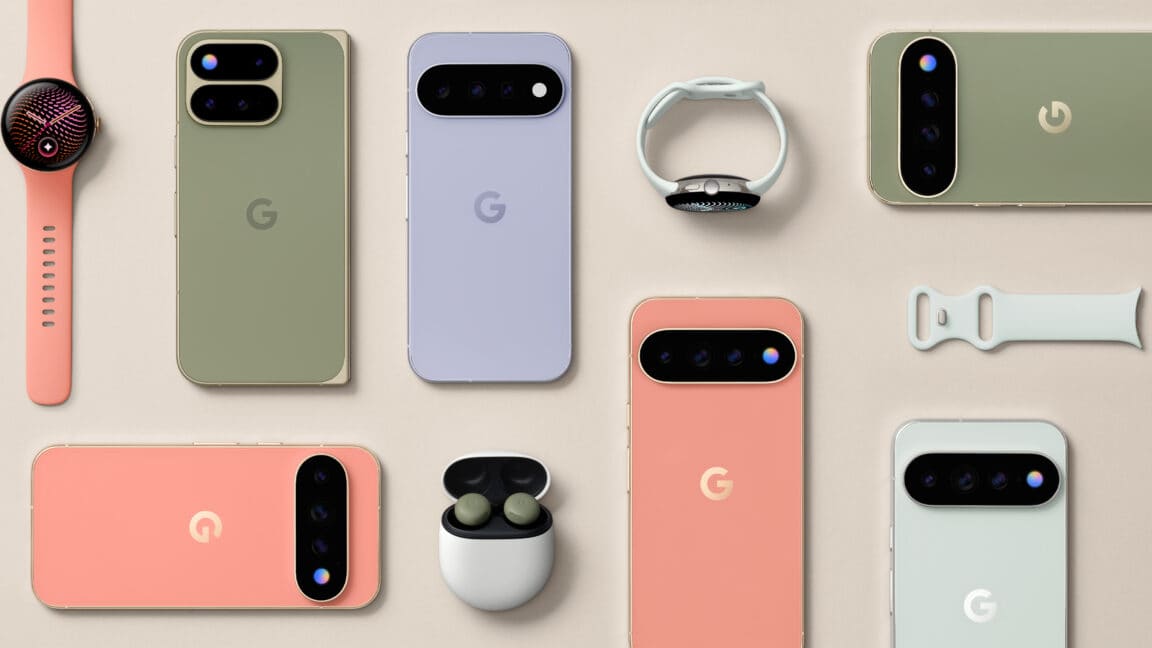
The Pixel 11 Pro Fold arrives as Samsung's Z Fold 8 adopts the wider form factor Google championed, reshaping the foldable landscape
A Design Philosophy Vindicated
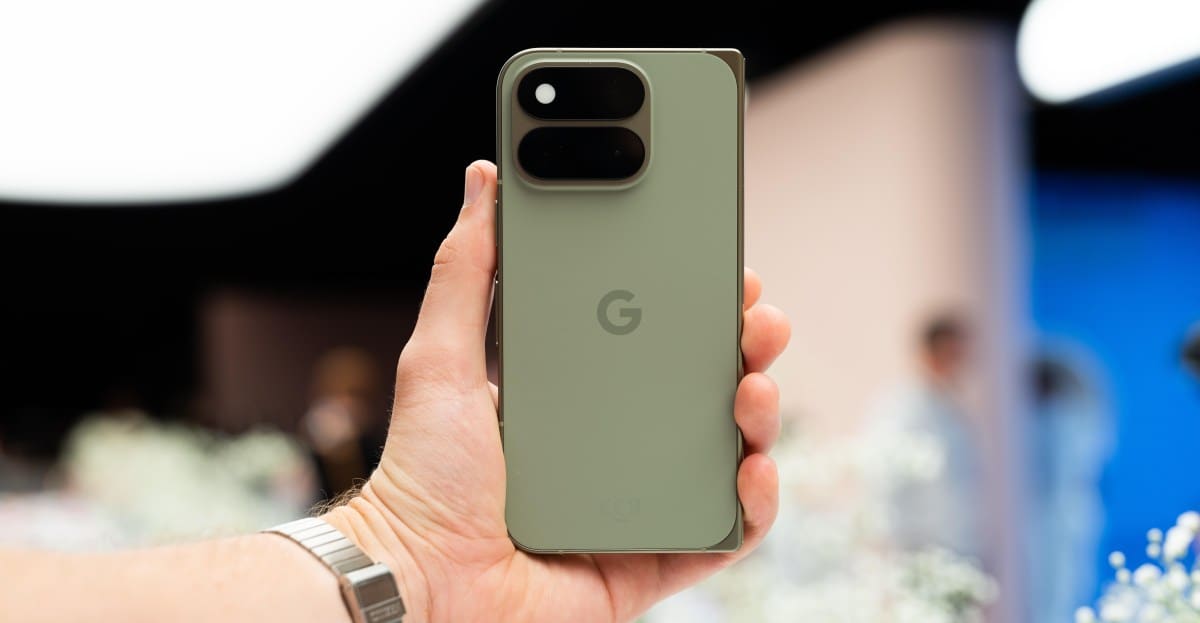
Google arrived late to the foldable game, but the company made a deliberate choice that is now reshaping the category. While competitors built tall, narrow devices that unfolded into awkward proportions, the Pixel Fold series went wide. The passport-style design, shorter and broader than traditional foldables, has moved from experiment to industry template. Samsung's Z Fold 8 marks the Korean giant's first adoption of this geometry, and whispers from Cupertino suggest Apple's rumored foldable iPhone may follow the same blueprint if it materializes later this year.
The Pixel 11 Pro Fold, unveiled alongside its sibling devices in the latest hardware push, enters a market that now validates Google's original thesis. At DailyTechWire, we've tracked the slow convergence of foldable design language across Asia and North America, and this moment represents a rare instance where a latecomer's choices influence the incumbent.
Why Dimensions Matter More Than Specs
Foldable phones live and die by their aspect ratios. A device that unfolds into a nearly square canvas behaves differently in hand, in pocket, and in software than one that stretches tall. The passport approach delivers a more tablet-like experience when open, with better real estate for split-screen multitasking and media consumption that doesn't letterbox aggressively. Closed, it's stubbier but more manageable for one-handed use, particularly for users in Seoul, Tokyo, and Singapore where commuter rail demands single-hand operation.
Samsung's pivot to this form factor with the Z Fold 8 is not merely aesthetic mimicry. The company's internal data likely shows what Google discovered early: users prefer symmetry when a phone becomes a tablet. The taller, narrower folds felt like compromises in both states. The passport design feels intentional in both.
Yet the shift introduces trade-offs. Pocketability becomes a question of depth rather than height. Users accustomed to Samsung's previous generations will notice the Z Fold 8 sits differently in jeans or blazer pockets. Google faced this critique with earlier Pixel Folds and addressed it incrementally through thinner hinge mechanisms and redistributed battery placement. Samsung's engineering choices in the Z Fold 8 will determine whether the company can match that refinement in its first attempt at the form factor.
Durability as Competitive Moat
The Pixel 10 Pro Fold introduced IP68 water and dust resistance, a first for foldables and a direct answer to the category's fragility perception. Foldables have long carried a reputation as delicate, expensive toys unsuited for daily punishment. Google's achievement in sealing a device with a moving hinge against submersion and particulate ingress was as much a manufacturing feat as a marketing one.
The Pixel 11 Pro Fold inherits and presumably refines that protection. Samsung, which has offered IPX8 ratings on previous Z Fold models, now faces pressure to match the full IP68 standard as table stakes. The "X" in IPX8 denotes no dust resistance rating, a meaningful gap when devices are pocketed with lint, sand, and urban grit. For markets like Jakarta, Bangalore, and Manila, where environmental conditions are harsher, full IP68 becomes a purchasing criterion, not a luxury.
Durability extends beyond ingress protection. Hinge longevity, screen crease depth, and the resilience of ultra-thin glass all factor into total cost of ownership. Google's multi-generation refinement gives it an edge in institutional knowledge, but Samsung's supply chain scale and materials research allow rapid iteration. The Z Fold 8's hinge design and screen laminate will reveal whether Samsung can compress Google's learning curve into a single product cycle.
Software and the Asia-Forward Lens
Hardware convergence is only half the story. Foldable success depends on software that exploits the expanded canvas without feeling like a stretched phone interface. Google's advantage here is Android itself. The company can optimize Pixel Fold devices in lockstep with OS development, ensuring gesture navigation, taskbar behavior, and app continuity feel native rather than retrofitted.
Samsung counters with One UI, a heavily customized Android layer that has historically led Google in foldable-specific features. Multi-window management, pop-up views, and stylus integration on Samsung devices often debut before Google's equivalents. The Z Fold 8 will likely showcase One UI refinements tailored to the new aspect ratio, and Samsung's partnerships with developers in Korea, Japan, and China mean localized apps may optimize for the Z Fold 8 faster than for Pixel devices.
For users across Asia, this software dimension carries weight. Regional apps for payments, messaging, and e-commerce often lag in supporting new form factors. Samsung's market share and developer relations infrastructure in Seoul, Shenzhen, and Taipei give it leverage to push app updates. Google's smaller foldable install base means Pixel Fold owners sometimes wait longer for third-party optimization, a friction point that hardware excellence alone cannot overcome.
The Apple Variable
Apple's potential entry into foldables looms over this entire conversation. If the company ships a foldable iPhone in 2026 with a passport-style design, it will validate the form factor to a mainstream audience that still views foldables as niche. Apple's influence on consumer perception and developer prioritization is asymmetric. A foldable iPhone would accelerate app optimization across the ecosystem, benefiting Google and Samsung by proxy.
But Apple's rumored device remains just that: rumored. The company's track record suggests it will enter the category only when it can deliver a hinge mechanism and screen durability that meet its standards for mass-market reliability. That bar is high, and the technical challenges that Google and Samsung have spent years solving, Apple will need to solve in its own way, with its own supply chain and materials science.
If Apple delays or skips foldables entirely, the Pixel 11 Pro Fold and Z Fold 8 have more room to define the category. If Apple ships in 2026, both devices become reference points against which the iPhone foldable will be measured, and both companies will benefit from the expanded market awareness Apple brings.
Positioning in a Maturing Category
Foldables are no longer experiments. They are a defined product category with established use cases, predictable refresh cycles, and a customer base that knows what it wants. The Pixel 11 Pro Fold arrives into this matured landscape with the confidence of a device that has proven its design choices correct. Samsung's Z Fold 8 arrives as a pivot, an acknowledgment that the passport form factor is the path forward.
For Google, the challenge is scaling. Pixel devices remain supply-constrained in many markets, and foldable production is inherently more complex and expensive than slab phones. Samsung's manufacturing scale and channel reach give it an advantage in volume and availability. Google's advantage is purity of vision and integration with Android's core development.
The competition between these two devices will play out not in spec sheets but in user retention and developer momentum. Whichever device becomes the default recommendation for foldable-curious buyers in Asia and North America will set the template for the next generation. Right now, that race is closer than it has ever been.