Honor Bets on Motorized Camera Hardware to Stand Out in Saturated Smartphone Market
The Shenzhen vendor's Robot Phone deploys a three-axis gimbal that responds to gestures - a hardware gambit aimed at differentiation as global shipments plateau.
A Physical Response to Market Saturation
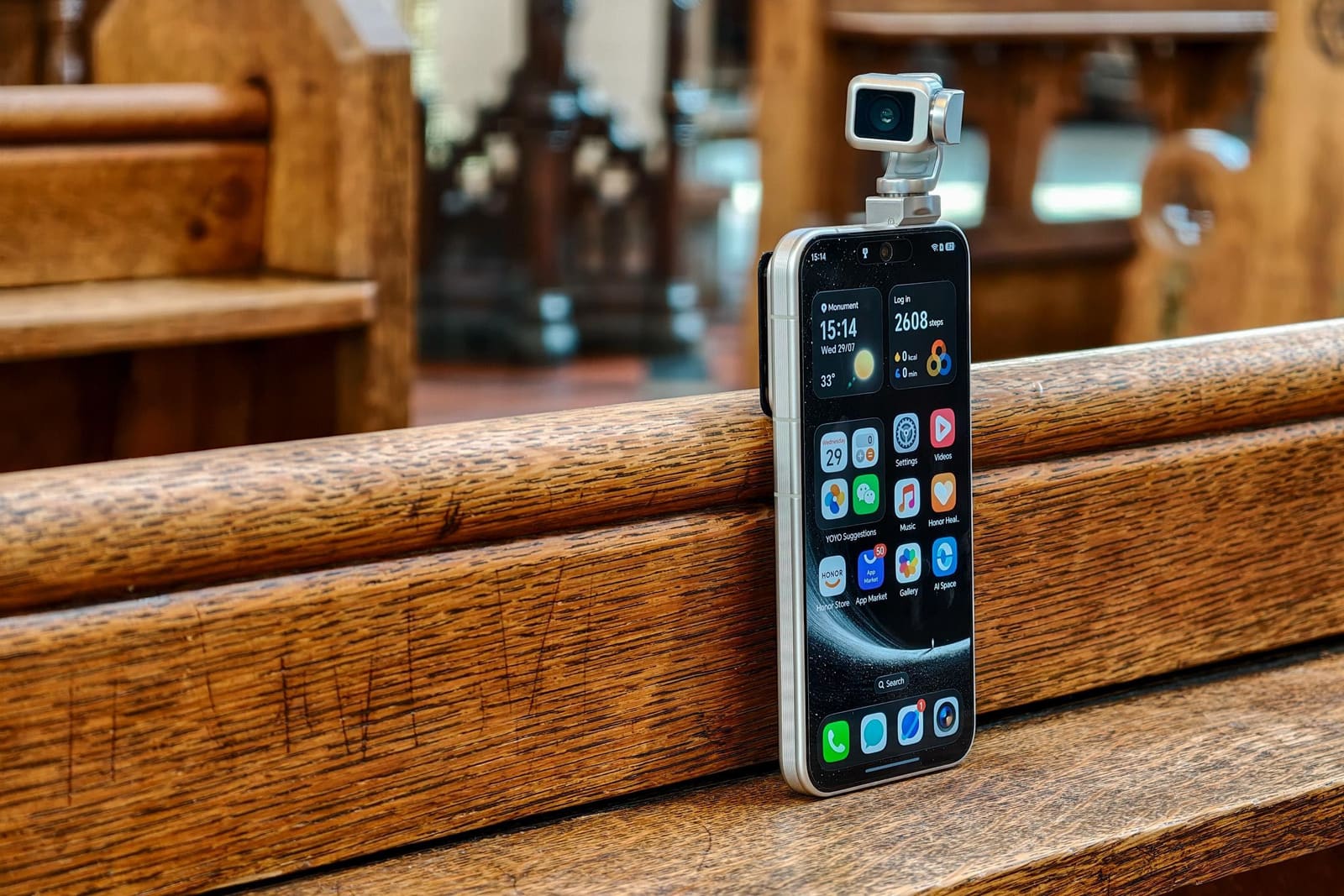
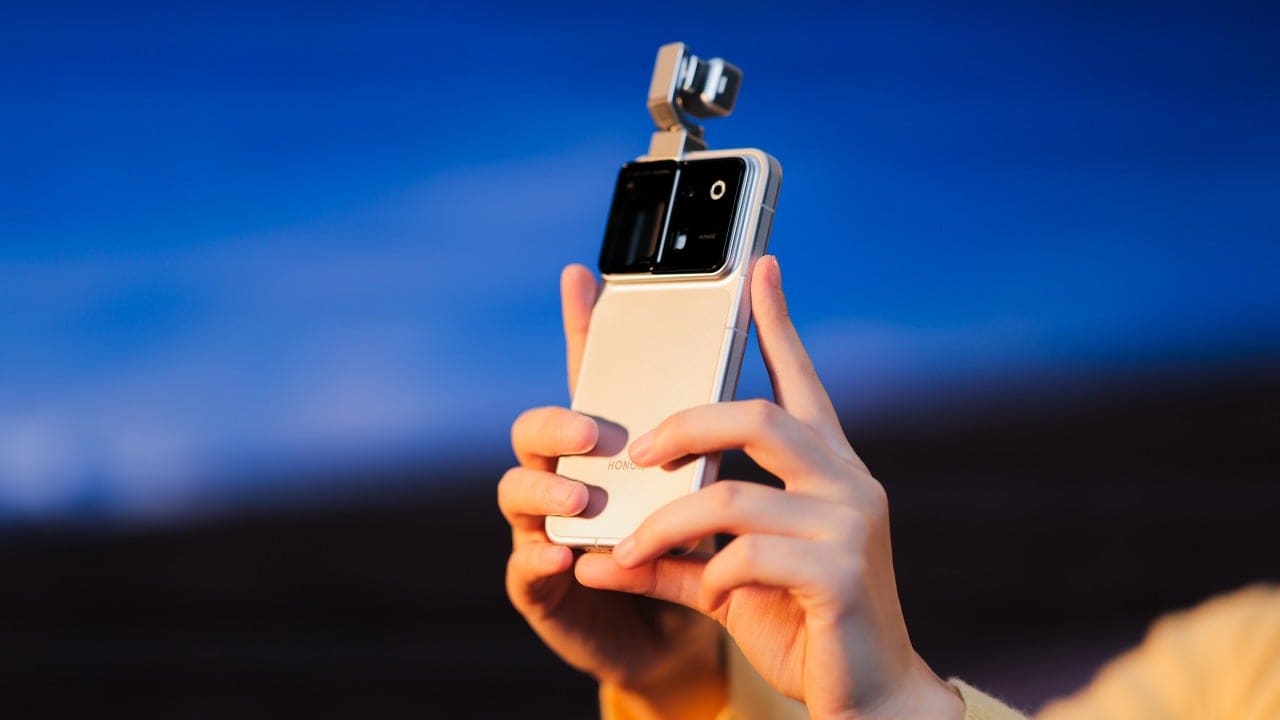
Honor unveiled a smartphone this week that moves. The Robot Phone, introduced Wednesday, incorporates a motorized three-axis gimbal camera that unfurls from the device's rear panel when users make a hand gesture. The mechanism can nod, tilt, and stabilize video across four degrees of motion - a design choice that positions physical interaction as the device's primary selling point.
At DailyTechWire, we've tracked the commoditization of flagship smartphone specifications across Asian vendors over the past eighteen months. Honor's move reflects a broader challenge: when every mid-tier device offers a 50-megapixel sensor and sub-200-millisecond touch latency, vendors must look beyond the spec sheet. The question is whether a nodding camera creates enough utility - or novelty - to justify the engineering investment.
The Mechanics of Differentiation
The gimbal system uses a three-axis stabilization platform, similar to technology found in standalone camera rigs and premium action cameras. When activated by gesture recognition, the assembly extends outward, allowing the camera module to pivot independently of the phone body. Honor has engineered four degrees of freedom into the mechanism: pan, tilt, roll, and a fourth axis that enables the camera to "nod" in response to user input.
This kind of mechanical complexity is expensive. Multi-axis gimbals require precision motors, calibration algorithms, and dust-resistant housings - all of which add cost and potential failure points. The decision to build this into a phone suggests Honor is targeting a segment willing to pay a premium for hardware differentiation, not the volume mid-market that has driven Chinese vendor growth over the past five years.
Gesture Control and the Interface Layer
The device activates its gimbal via hand gesture, bypassing touch input entirely. Gesture recognition has been a persistent experiment in smartphone interfaces - from Samsung's Air Gestures to Google's Soli radar - but adoption has been limited. Most users default to touch because it's faster and more reliable.
Honor's implementation adds a physical response loop: the camera nods back. This creates a feedback mechanism that might feel more intuitive than gesture controls that trigger only on-screen changes. Whether that translates to sustained use or becomes a demo feature will depend on how Honor integrates the gimbal into core camera workflows - video calls, content creation, stabilization during handheld shooting.
The gimbal's stabilization capability is the more pragmatic application. Optical image stabilization (OIS) has become table stakes, but a mechanical gimbal offers superior correction for video, particularly in low light or while walking. If Honor can deliver gimbal-level stabilization without requiring users to carry a separate rig, that becomes a tangible value proposition for mobile videographers and content creators.
Market Context and Global Ambitions
Global smartphone shipments have decelerated. After a post-pandemic rebound in 2021 and 2022, the market has settled into low single-digit growth, with replacement cycles stretching beyond three years in mature markets. Chinese vendors - Xiaomi, Oppo, Vivo, and Honor - have been competing primarily on price and incremental camera improvements, often within the same supply chain ecosystem.
Honor, which spun out from Huawei in 2020, has been rebuilding its international presence. The company lost access to Huawei's brand recognition and some of its component partnerships, forcing it to carve out a distinct identity. The Robot Phone is part of that effort: a statement device designed to generate attention and signal technical ambition.
The risk is that hardware novelty doesn't translate to sales momentum. Foldable phones, rotating cameras, and modular accessories have all been tried by Chinese vendors over the past decade. Some - like foldables - have found a niche. Others became footnotes. The Robot Phone's success will hinge on whether the gimbal solves a real workflow problem or remains a marketing hook.
Supply Chain and Manufacturing Complexity
Building a motorized gimbal into a smartphone at scale is non-trivial. The mechanism must survive drop tests, operate reliably across temperature ranges, and fit within the thermal and power budgets of a handheld device. Honor has likely partnered with a precision actuator supplier - possibly from the same ecosystem that serves DJI and other gimbal manufacturers in Shenzhen.
The production yield will be a key variable. Complex mechanical assemblies increase the defect rate, which in turn raises per-unit cost. If Honor is positioning this as a flagship, it can absorb some of that cost. But if the device is meant to scale into mid-tier volumes, the gimbal could become a bottleneck.
There's also the question of repairability. A motorized camera adds a new failure mode, and third-party repair shops may lack the tools or parts to service it. That could push users toward official service channels - or discourage them from buying the device in the first place.
The Broader Trend: Hardware as Experience
Honor's Robot Phone fits into a larger pattern we've observed across Asia-Pacific vendors: the shift from specification competition to experience differentiation. Oppo's retractable cameras, Xiaomi's liquid lens, and Vivo's gimbal systems all represent attempts to move beyond the megapixel arms race.
This trend is partly driven by component commoditization. When every vendor sources from the same pool of camera sensors, display panels, and chipsets, hardware design becomes one of the few remaining levers for differentiation. The challenge is ensuring that the design serves a function, not just a press release.
For Honor, the Robot Phone is a test of whether physical interaction can create a defensible product category - or whether the market will continue to reward incremental refinement over bold bets. The device's reception in Europe and Southeast Asia, where Honor has been investing in distribution, will offer early signals. If the gimbal resonates, expect other vendors to explore similar mechanical systems. If it doesn't, the Robot Phone will join the archive of ambitious hardware experiments that couldn't find their audience.