OpenAI's Infrastructure Leadership Faces Fresh Turbulence as Data Center Chief Exits
Chris Malone's departure after fifteen months underscores growing questions about stability at the AI lab, where executive turnover has reached thirteen this year alone.
A Critical Role Turns Over
Chris Malone, who led data center strategy at OpenAI, left the company last week after fifteen months in the role. His departure marks another high-profile exit from the AI lab at a moment when infrastructure planning has become central to competitive advantage across the industry. Malone brought substantial credentials to the position: nearly five years at Meta and over a decade at Google before joining OpenAI in March 2025.
The timing raises eyebrows. Data center leadership sits at the nexus of capital deployment, energy procurement, and hardware partnerships in an industry where compute capacity often determines which labs can train frontier models. At DailyTechWire, we've tracked how infrastructure bottlenecks have reshaped deal terms and partnership structures across Asia and North America over the past eighteen months. Turnover in this seat is unusual precisely because the role has become so strategic.
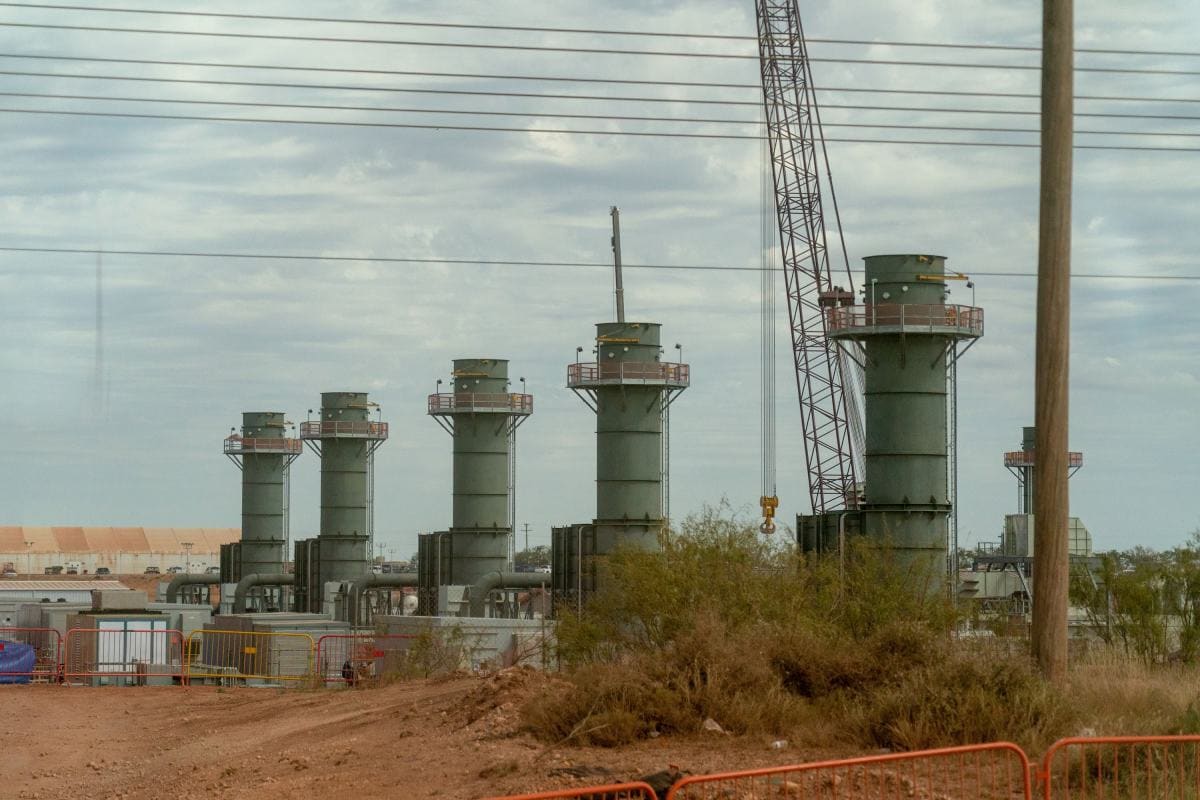
Malone joined OpenAI shortly after the Stargate Project announcement, a $500 million data center initiative backed by the Trump administration aimed at expanding U.S.-based AI infrastructure. OpenAI participates alongside Oracle, Nvidia, SoftBank, and Microsoft. His exit leaves questions about continuity in a program that involves complex coordination across government, hardware vendors, and hyperscale partners.
Reorganization or Red Flag?
OpenAI characterized the departure as part of a broader infrastructure reorganization. The company stated it had restructured its infrastructure organization to match the scale and pace of its work, and emphasized that a strong, experienced data center team remains in place with clear leadership and technical expertise.
The reorganization involved a reporting-line shift. Malone had initially reported directly to President Greg Brockman but was later moved to report to Vice President Sachin Katti, who assumed leadership of the infrastructure group. Three other executives now share oversight of data center strategy: Uday Ruddarraju leads the data center team, Brent Mayo heads the build and delivery program, and Spas Lazarov, a veteran of the data center and energy sectors, oversees all data center engineering.
Whether this represents a rational division of labor or a fragmentation of accountability is difficult to assess from the outside. What is clear is that the company has chosen to distribute a function that many competitors centralize under a single senior leader. That choice may reflect OpenAI's scale, or it may signal internal friction over priorities and resource allocation.
Thirteen Exits in a Single Year
Malone's departure extends a pattern that has become difficult to ignore. OpenAI has lost at least thirteen executives in 2026, several of them in the past month. These are not mid-level managers; they occupy some of the most senior and sensitive roles in the organization.
Two weeks before Malone left, the company replaced Denise Dresser, its chief revenue officer, after only eight months in the role. Two days before that announcement, Brad Lightcap, one of the longest-serving executives and the chief operating officer, departed to pursue an unspecified new project. Roughly a month earlier, Fidji Simo, who served as product and business chief and reported directly to CEO Sam Altman, stepped down to address a chronic illness. She remains in an advisory capacity.
The safety and ethics functions have also seen notable turnover. Chloé Bakalar, head of ethics, left in July. Last week, the company disbanded its preparedness team, a unit tasked with evaluating catastrophic risks from AI models. Bill Peebles, who led the Sora image generator project, departed after that initiative was shut down. Kate Rouch, chief marketing officer, left in April, reportedly for health reasons.
Co-founder Greg Brockman recently argued that the intense spotlight on OpenAI means every departure receives disproportionate scrutiny compared to other companies. That defense carries some weight: high-growth organizations often experience churn as roles evolve and individuals reassess their fit. But the volume and seniority of the exits suggest something more systemic may be at play.
IPO Delay and Valuation Scrutiny
The executive exodus unfolds against the backdrop of a delayed public listing. OpenAI's IPO, initially expected in 2026, has been pushed to 2027 according to recent reports. The delay gives the company more time to stabilize operations and financials, but it also extends the period during which these questions will be asked.
Concerns about valuation have surfaced in recent months. Investors and analysts have questioned whether the company's profitability trajectory justifies the scale of capital being deployed. The infrastructure buildout required to support training runs and inference at OpenAI's scale demands enormous upfront investment, and the revenue model remains heavily concentrated in API access and enterprise licensing. Diversification into consumer products has been slower than some expected.
A steady stream of senior departures complicates the narrative the company will need to present to public-market investors. Institutional buyers scrutinize management stability closely, particularly in technology companies where intellectual capital and organizational cohesion are critical assets. The departure of a data center chief in the middle of a multi-billion-dollar infrastructure expansion is precisely the kind of event that raises questions during roadshow presentations.
The Infrastructure Stakes
Data center strategy has become a defining competitive variable in AI. The funding rounds we've followed across the region over the past year show that capital increasingly flows to labs that can demonstrate credible plans for securing power, cooling, and hardware at scale. Partnerships with hyperscalers, co-location providers, and governments have become as important as model architecture in determining who can afford to train the next generation of systems.
Malone's exit matters not because one individual is irreplaceable, but because continuity in infrastructure planning reduces execution risk. Long lead times for power contracts, permitting, and hardware procurement mean that decisions made today shape what is possible two or three years out. Leadership changes in the middle of those cycles can introduce delays, misalignment, or renegotiation of terms.
OpenAI's decision to distribute infrastructure leadership across multiple executives may mitigate some of that risk, but it also introduces coordination costs. In an environment where Anthropic, Google DeepMind, and others are moving aggressively to lock in capacity, any friction in decision-making can translate into competitive disadvantage.
What Stability Looks Like from Here
The company's public statements emphasize continuity and depth of talent. That may well be true. OpenAI has attracted some of the most experienced infrastructure professionals in the industry, and the distributed leadership model could prove effective if roles are clearly delineated and communication flows smoothly.
But the pattern of departures suggests that organizational design, incentive structures, or cultural dynamics may be creating conditions that push senior leaders to exit. Whether that reflects the natural turbulence of hypergrowth, strategic disagreements, or deeper dysfunction is difficult to determine from outside. What is measurable is the rate of turnover, and by that metric, OpenAI is an outlier.
The coming months will test whether the remaining leadership can execute on infrastructure commitments, stabilize the executive team, and build the operational foundation necessary for a successful public listing. For a company that has defined much of the AI narrative over the past two years, the next chapter will be as much about internal cohesion as technical capability.