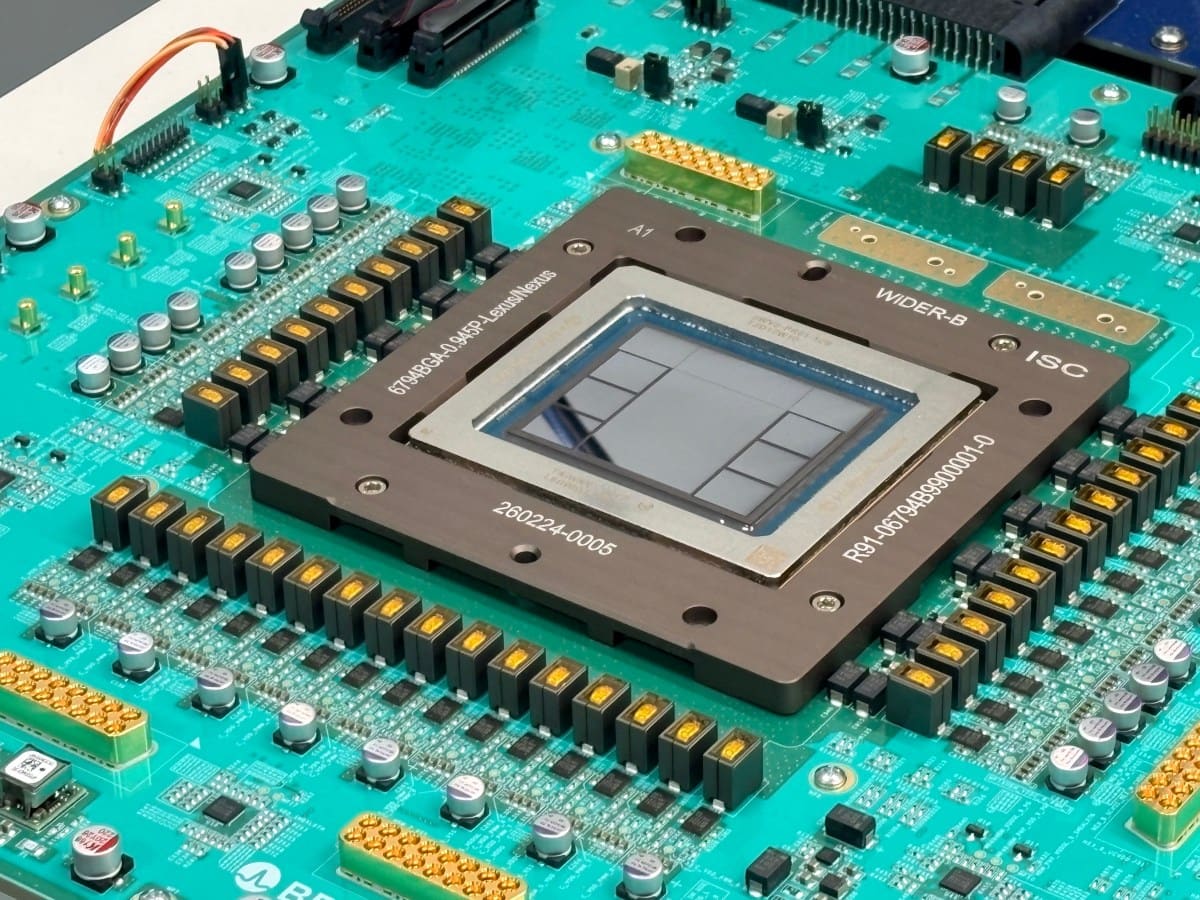
Apple Shifts to 2nm as M6 and M5 Ultra Chips Arrive
The company's latest silicon architecture doubles down on neural processing while introducing a new performance tier above traditional cores
The 2nm Transition Begins
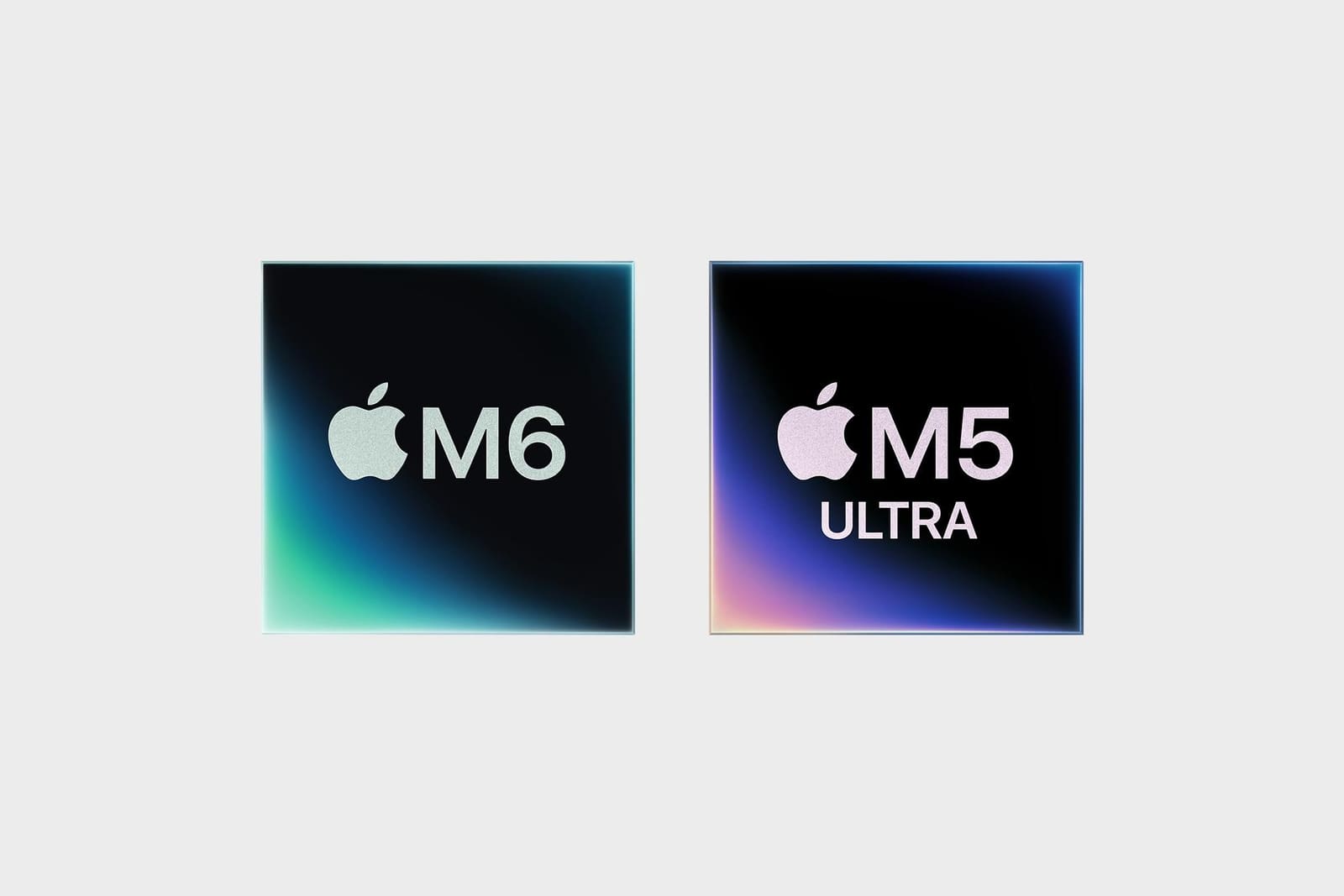
Apple has moved its Mac silicon to 2-nanometer process technology with the M6 chip, marking the first consumer deployment of the advanced node in its desktop and laptop lineup. The company positions the shift as delivering measurable gains in both performance per watt and raw throughput, though it has not yet disclosed specific efficiency metrics or benchmark comparisons against the outgoing M5 generation.
Accompanying the M6 is the M5 Ultra, which Apple describes as its most capable silicon to date for compute-intensive professional applications. The Ultra variant targets workflows in 3D rendering, video post-production, and the inference of large-scale AI models that exceed the capacity of consumer-tier chips.
Core Architecture Evolves
The M6 carries a 12-core CPU configuration, an increase from the 10-core design of the M5. Apple has subdivided the cores into three tiers: two "super" cores, four performance cores, and six efficiency cores. The super core designation represents a departure from prior nomenclature; until the M5 Pro generation, Apple used that term interchangeably with performance cores. The introduction of a distinct super tier suggests a further bifurcation in clock speeds, cache hierarchy, or instruction pipelines, though Apple has not published microarchitecture details.
This three-tier approach mirrors strategies employed by Intel and AMD in their hybrid x86 designs, where workload schedulers dynamically assign tasks to cores optimized for different power envelopes. For the M6, the efficiency cores likely handle background services and light foreground tasks, while performance and super cores take on single-threaded and latency-sensitive work.
Neural Engine Doubles Up
Apple has equipped the M6 with a dual 16-core Neural Engine configuration, effectively doubling the on-device AI execution resources compared to the single 16-core unit in the M5. The Neural Engine handles matrix multiplication and other operations common to transformer-based models, enabling tasks such as real-time language processing, image segmentation, and feature extraction without offloading to cloud services.
The doubling of Neural Engine capacity aligns with Apple's broader push to run generative AI workloads on-device. Over the past 18 months, the company has expanded its CoreML framework and introduced optimized versions of models like Stable Diffusion and open-weight language models that fit within the memory bandwidth constraints of unified architecture. With the M6, Apple appears to be betting that local inference will become a standard expectation for professional and prosumer users, particularly in markets where latency, privacy, or connectivity reliability matters.
M5 Ultra Targets Frontier Models
The M5 Ultra, built on the previous-generation process node, is designed for workloads that demand higher core counts and memory bandwidth than the M6 can provide. Apple has historically reserved Ultra-class chips for its Mac Studio and Mac Pro lines, where thermal headroom and power delivery support multi-die configurations.
The company specifically highlights the Ultra's suitability for running frontier AI models, a term that typically refers to large language models and multimodal systems with parameter counts in the tens or hundreds of billions. While Apple has not disclosed whether the M5 Ultra supports new memory tiers or expanded bandwidth, the emphasis on frontier models suggests it may be targeting workflows that involve fine-tuning or local deployment of models previously confined to data center GPUs.
Implications for the Mac Roadmap
The arrival of the M6 and M5 Ultra clarifies Apple's silicon roadmap for the remainder of 2026. The M6 will likely anchor refreshed MacBook Air and entry-level MacBook Pro models, while the M5 Ultra will serve as the flagship option for Mac Studio. The staggered release also indicates that Apple is managing yield risk on the 2nm node by limiting initial deployment to lower-power designs before extending the process to higher-complexity, multi-die configurations.
For software developers, the M6's expanded Neural Engine and revised CPU topology will require fresh optimization. Applications that rely heavily on CoreML or Metal Performance Shaders may see immediate gains, but workloads not yet adapted to the three-tier core hierarchy could encounter scheduling inefficiencies until macOS updates refine thread assignment logic.
Competitive Context
Apple's move to 2nm arrives several quarters ahead of expected Windows-on-ARM updates from Qualcomm and ahead of Intel's Arrow Lake refresh cycle. The lead on process technology has historically translated into power efficiency advantages that matter most in battery-constrained devices. However, the competitive gap in inference performance is narrowing; Qualcomm's recent Snapdragon X Elite chips include neural processing units with similar theoretical throughput, and AMD's Ryzen AI lineup has begun to close the gap in mobile workstations.
The real test will be whether Apple can sustain its lead in the orchestration layer, where unified memory architecture, tight hardware-software integration, and developer tooling have historically given macOS an edge in deploying AI features with lower friction than Windows equivalents.
At DailyTechWire, we've tracked the acceleration of on-device AI across the Asia-Pacific region, where concerns over data sovereignty and cloud costs have made local inference particularly attractive. Apple's silicon strategy, with its emphasis on Neural Engine scaling and memory unification, reflects a broader industry trend: AI workloads are migrating from the data center to the edge, and the chips that win the next upgrade cycle will be those that balance inference throughput with thermal and battery constraints.