Apple Ships M6 and M5 Ultra Chips Aimed at On-Device AI Workloads
The Mac mini and Mac Studio refresh centers on local inference and development, signaling Apple's bet on unified memory as a competitive edge in the AI compute race.
The Unified Memory Play
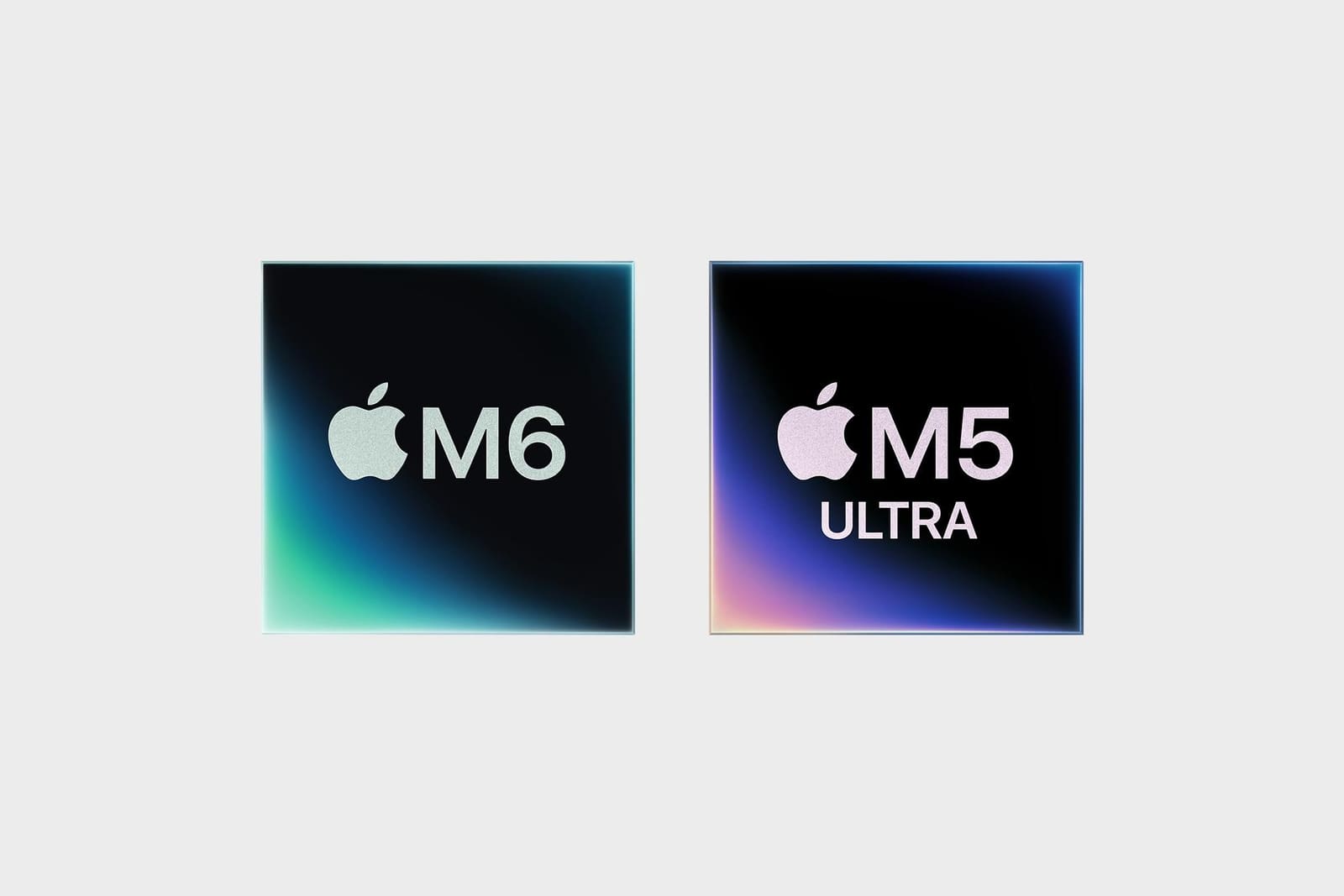
Apple introduced two desktop refreshes that make explicit what the company has been hinting at for months: its silicon roadmap is now explicitly optimized for on-device artificial intelligence. The Mac mini and Mac Studio both received updates centered on new system-on-chip designs, the M6 and M5 Ultra, which the company positions as purpose-built for local model inference and training workloads.
The M6 marks Apple's first 2-nanometer process node in the M-series desktop lineup, a manufacturing leap that typically delivers better performance-per-watt and higher transistor density. The M5 Ultra, meanwhile, sits at the top of the performance stack and is being marketed as the most capable chip in the range for AI-intensive tasks, a category that now includes everything from fine-tuning large language models to running multi-modal inference pipelines on-premise.
At DailyTechWire, we've tracked the steady uptick in developers using Mac hardware for AI experimentation, particularly in markets like Seoul, Singapore, and Bengaluru, where cloud egress costs and data residency requirements make local compute more attractive. Apple's unified memory architecture, which allows the CPU and GPU to share a single pool of high-bandwidth RAM, has proven especially useful for loading large parameter counts without the bottleneck of discrete memory transfers.
Why Developers Are Choosing Local Inference
The appeal of running models locally rather than routing requests to remote GPU clusters has grown in tandem with the proliferation of open-weight models. Developers working with Llama derivatives, Mistral variants, or custom fine-tunes often prefer hardware that can hold entire model weights in memory and serve predictions with sub-100-millisecond latency.
Apple's architecture addresses two pain points: memory bandwidth and thermal efficiency. Unified memory eliminates the need to shuttle tensors between CPU and GPU memory spaces, a process that introduces latency and complexity in traditional x86 workstations with discrete graphics. The thermal design of both the Mac mini and Mac Studio, which prioritize sustained workloads over burst performance, aligns well with the kind of repetitive matrix operations that dominate transformer inference.
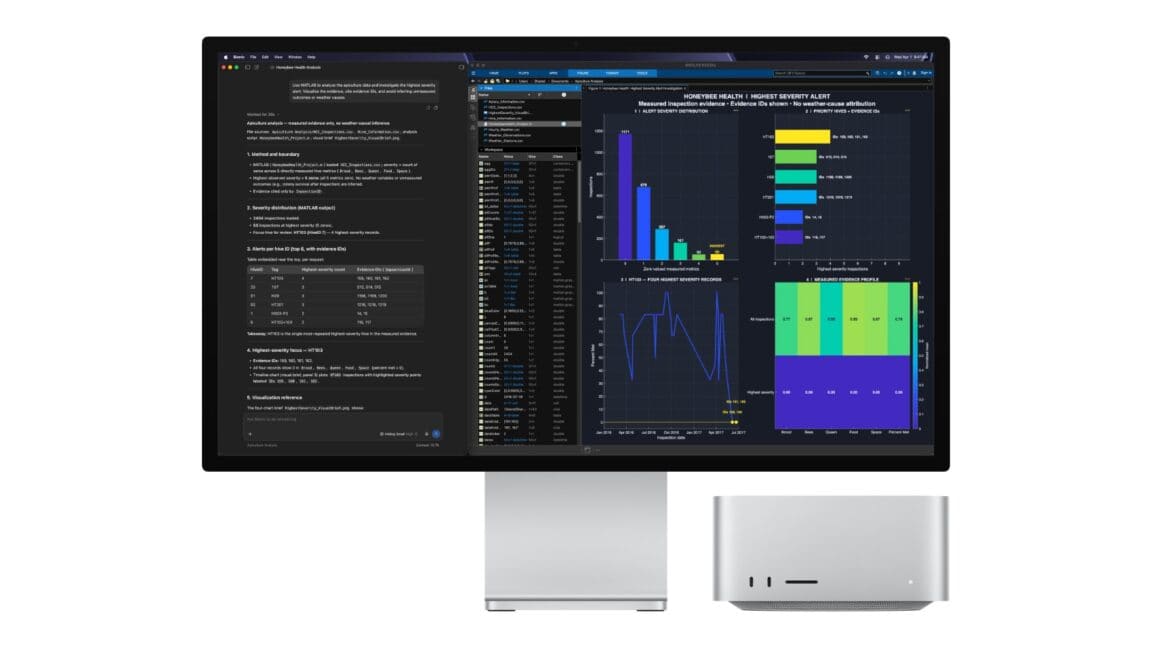
The Mac mini occupies the entry tier for this use case. It is compact, relatively affordable, and increasingly common in edge deployment scenarios where organizations want to run inference close to data sources without relying on cloud uplinks. The Mac Studio, by contrast, targets teams that need higher core counts and larger memory configurations for multi-user development environments or batch processing.
The M5 Ultra and the Performance Ceiling
Apple describes the M5 Ultra as the most powerful option for AI workloads, a claim that rests largely on memory bandwidth and GPU core scaling. The Ultra variant has historically been a chiplet design, bonding two Max-tier dies to effectively double memory channels and execution units. This approach scales well for embarrassingly parallel tasks like inference, where many operations can run concurrently without complex interdependencies.
The relevance of the M5 Ultra extends beyond raw compute. As parameter counts for state-of-the-art models continue to climb, even quantized versions of 70-billion-parameter models require substantial memory. The Ultra's support for larger unified memory pools means developers can load models that would otherwise require multi-GPU setups or model parallelism, simplifying deployment and reducing software complexity.
For organizations building AI products in Asia, where data sovereignty concerns are acute and cross-border data transfer regulations are tightening, the ability to run inference entirely on-premise using desktop-class hardware is not a luxury but a practical requirement. We have observed startups in Jakarta and Manila adopting Mac Studio clusters for exactly this reason, avoiding the compliance overhead of routing sensitive data through hyperscale cloud providers.
The 2nm Node and What It Signals
The M6's transition to a 2-nanometer process is less about immediate performance gains and more about Apple's long-term silicon roadmap. Smaller nodes allow for higher transistor density, which can be allocated to more neural engine cores, larger caches, or improved power gating. All of these contribute to better sustained performance in AI workloads, where thermal throttling and power draw are persistent challenges.
Apple has not disclosed specific transistor counts or neural engine core configurations for the M6, but the shift to 2nm suggests the company is keeping pace with TSMC's leading-edge manufacturing, a capability that gives it an advantage over competitors still shipping 3nm or 5nm desktop chips. This is particularly relevant in the context of export controls and fab capacity constraints, where access to the most advanced nodes is increasingly tied to geopolitical considerations.
The practical impact for developers is incremental rather than revolutionary. A 2nm chip will run cooler and draw less power for the same workload, which translates to quieter fans, longer component lifespans, and the ability to sustain higher clock speeds under load. For inference workloads that run continuously, these marginal gains compound over time.
Market Context and the Local Compute Shift
Apple's focus on local AI hardware arrives at a moment when the economics of cloud inference are under scrutiny. Hyperscale providers have raised prices on GPU instances, and the cost of serving millions of inference requests through third-party APIs can exceed the capital expense of owning hardware outright for many use cases. This is especially true for applications with predictable, high-volume traffic, where the marginal cost per request becomes the dominant expense.
The Mac mini and Mac Studio are not competing with NVIDIA H100 clusters or Google TPU pods. They are competing with the assumption that all AI workloads must be cloud-native. For startups, research labs, and enterprise teams building proofs of concept or serving internal tools, the ability to iterate locally without incurring API costs or exposing proprietary data is a meaningful advantage.
We have also seen interest from the creative and media sectors, where real-time video processing, audio generation, and image synthesis are increasingly powered by generative models. These workflows benefit from low-latency, on-device inference, and the Mac Studio's form factor and macOS ecosystem make it a natural fit for studios already invested in Apple hardware for production work.
What This Means for the Broader Ecosystem
Apple's desktop updates are a signal that the company views local inference as a durable trend rather than a niche use case. The decision to position the M5 Ultra as an AI-first chip, and to highlight the M6's process node specifically, suggests that future iterations will continue to prioritize memory bandwidth, neural engine performance, and thermal efficiency over raw CPU clock speeds or graphics benchmarks.
For the Asia-Pacific region, where AI adoption is accelerating but cloud infrastructure remains unevenly distributed, this matters. Developers in Hanoi, Dhaka, or Colombo may not have access to low-latency connections to the nearest AWS or Azure region, but they can run state-of-the-art models on hardware that fits on a desk. The democratization of AI compute is not just about software frameworks; it is also about making capable hardware accessible outside the hyperscale data center.
The risk for Apple is that the AI tooling ecosystem remains heavily skewed toward CUDA and NVIDIA's software stack. While Metal Performance Shaders and MLX have matured, many popular frameworks still treat Apple Silicon as a second-class citizen. If Apple wants these desktops to become the default choice for AI developers, it will need to invest as much in software enablement as it has in silicon design.
The Mac mini and Mac Studio updates are not about chasing benchmark records. They are about staking a claim in a market where the question is no longer whether AI will run locally, but which hardware will make it easiest to do so.