Meta Pocket Arrives in the US, Turning Prompts Into Phone Games
The company's latest AI experiment lets anyone build touch-and-tilt "gizmos" for a scrollable feed - and carries the DNA of a shuttered startup.
A New Kind of Canvas
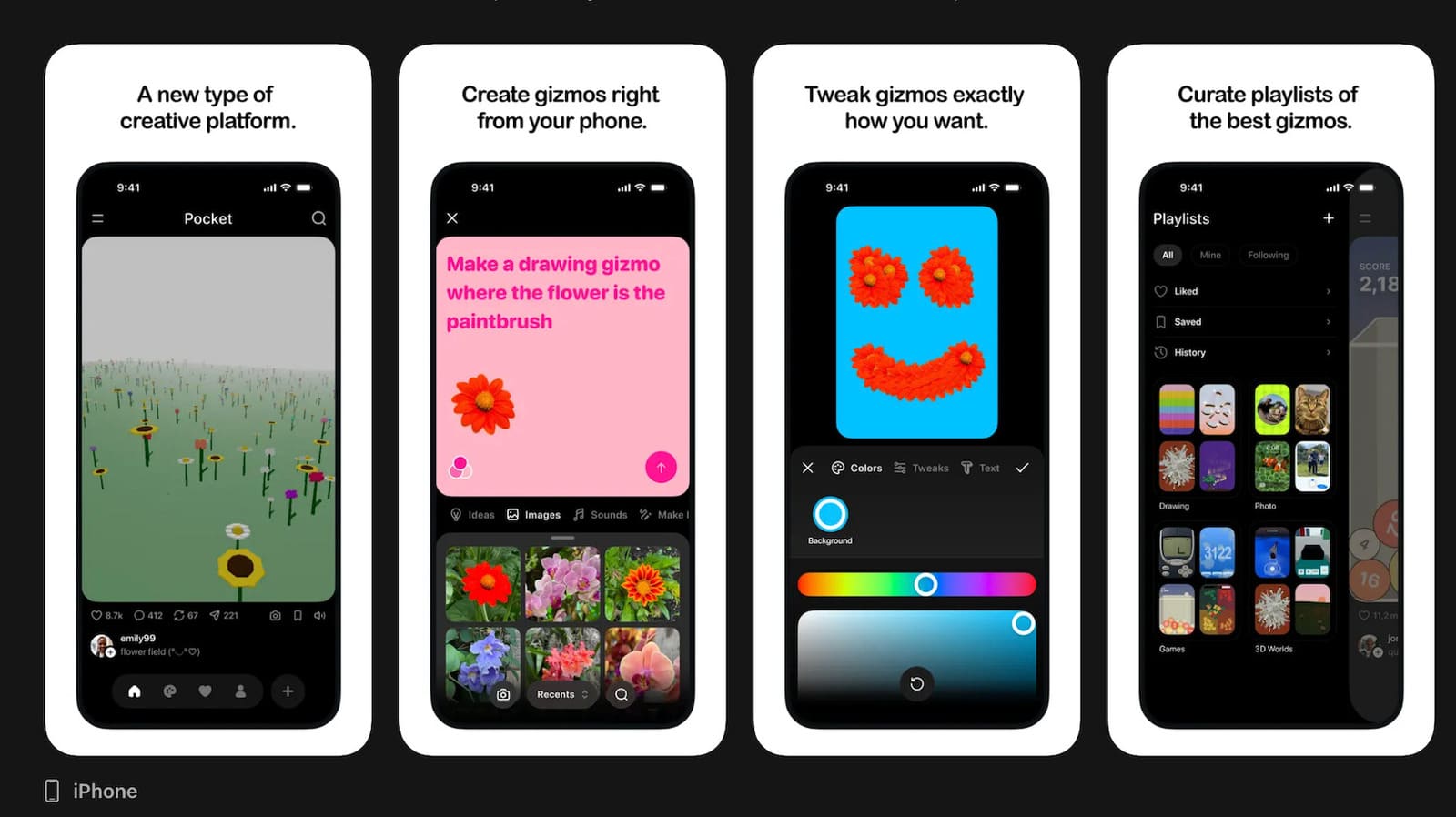
Meta has expanded Pocket, its generative-AI game creation tool, to users across the United States following initial trials in Brazil. The platform offers a straightforward proposition: describe an interactive experience in natural language, and the system renders it as a playable "gizmo" that lives inside a social feed.
At DailyTechWire, we've tracked the shift from code-first development environments to prompt-driven creation tools across mobile, and Pocket sits squarely in that trend. Unlike traditional game engines that demand knowledge of scripting or visual programming, the app translates conversational input into functional experiences that respond to smartphone sensors - touch, accelerometer, camera, and audio library access. A user might request a painting canvas, a simple rhythm game, or a physics toy, and the underlying model assembles the logic, assets, and interface on the fly.
More Than Games
Meta's choice of terminology is deliberate. The company calls these outputs gizmos rather than minigames, signaling a broader creative scope. According to Meta, the platform supports not only rule-based interactions but also open-ended utilities: digital scratch pads, mood boards that pull from a user's photo roll, or ambient soundscapes tied to device orientation.
The nomenclature also carries a corporate lineage. Meta recruited the majority of the team behind Gizmo, an independent app that offered nearly identical functionality and used the same term for its creations. That acquisition led to Gizmo's shutdown, and its design philosophy now underpins Pocket's architecture. The inherited talent brought with it a development roadmap and a user-experience model that Meta has adapted for scale.
Social Layer and Remix Culture
Pocket's interface centers on a vertical scroll feed - familiar territory for Meta's portfolio. Once a gizmo is generated, it publishes to a shared stream where other users can play, favorite, or repost. The platform includes a remix function: any saved gizmo can be altered through follow-up prompts, allowing collaborative iteration or derivative work. A tilt-controlled marble maze might be forked into a version with custom artwork or adjusted physics.
This social scaffolding positions Pocket less as a standalone creative tool and more as a content format within Meta's ecosystem. The feed model encourages rapid consumption and experimentation, trading depth for velocity. Early patterns from the Brazil pilot suggest users engage in short bursts - generating, testing, and moving on - rather than sustained project work.
Sensor Integration and Technical Scope
The app's integration with smartphone hardware expands the range of possible interactions. Gizmos can respond to multi-touch gestures, device tilt, and gyroscopic input, and they can incorporate photos from the camera roll or tracks from the music library. This sensor access differentiates Pocket from web-based AI toy generators, which typically remain confined to click-and-drag mechanics.
However, the platform's reliance on generative models introduces variability. The quality and coherence of a gizmo depend on prompt clarity and the model's interpretation. Edge cases - ambiguous requests, conflicting instructions, or niche sensor combinations - can produce inconsistent results. Meta has not disclosed the underlying model architecture, training dataset, or content moderation pipeline, leaving open questions about how the system handles copyright, inappropriate prompts, or resource-intensive creations.
Positioning Within Meta's AI Portfolio
Pocket arrives as part of a broader push by Meta into consumer-facing generative tools. The company introduced Vibes last year, a feed inside the Meta AI app that surfaces algorithmically generated images and text snippets. Facebook recently added AI-powered animations for profile photos, and Instagram has experimented with prompt-driven image editing within Stories.
These initiatives share a common thread: they embed generative AI into existing social behaviors - scrolling, sharing, remixing - rather than positioning it as a separate productivity category. Meta is testing whether casual creation, driven by natural-language input and surfaced through feeds, can sustain engagement at the scale its ad-supported model requires.
The risk lies in differentiation. Pocket competes for attention not only with dedicated game platforms but also with short-form video, messaging, and other in-app entertainment. Its success hinges on whether the novelty of prompt-based creation translates into habitual use, or whether it remains a curiosity that users explore once and abandon.
Market Context and Developer Implications
The launch reflects a broader industry pattern. Over the past eighteen months, we've seen generative tools migrate from desktop workflows into mobile-native formats, often with social layers attached. Companies from Stability AI to smaller startups have released apps that turn prompts into images, videos, or interactive elements, betting that the friction of traditional creation tools has locked out a large potential audience.
For developers and studios, platforms like Pocket represent both opportunity and disruption. On one hand, they lower the barrier to prototyping and user-generated content. On the other, they commoditize certain kinds of lightweight interactive design, potentially eroding niches that indie developers have occupied. The question is whether prompt-driven tools expand the market for interactive content or simply redistribute attention within it.
What Comes Next
Pocket is free to download and requires no subscription, aligning with Meta's strategy of using free tools to capture behavioral data and feed its recommendation systems. The company has not announced monetization plans, though in-app purchases, premium features, or ad placements within the gizmo feed are plausible trajectories.
The app's expansion to the US market will provide a more robust dataset on usage patterns, content moderation challenges, and technical performance under load. Whether Pocket evolves into a sustained platform or becomes another experiment in Meta's long list of product trials will depend on retention metrics over the coming quarters - and whether the company can cultivate a creator community that treats gizmos as more than a passing novelty.