When Smart Glasses Become Tools for Workplace Harassment
Ray-Ban Meta frames are colliding with retail labor in ways the product roadmap never anticipated - and policy is struggling to catch up.

A Blinking Light, a Repeating Question
Toru Hinkle was midway through a shift stocking shelves when two shoppers approached with what seemed like a straightforward request: a price check. The item was twenty dollars. Hinkle said so. The customers asked again. And again. The loop continued until Hinkle noticed the frames - Ray-Ban Meta glasses, identifiable by the small LED indicator - and understood the interaction wasn't about pricing at all.
The episode, which took place at a Target location in August, exemplifies a friction point that consumer electronics companies rarely surface in launch decks: what happens when always-ready recording devices meet workplaces where one party has no power to refuse participation. Hinkle called over a manager; the harassment continued, escalating to deliberate misgendering. The pranksters left with footage. Hinkle left with a problem that store policy wasn't built to solve.
At DailyTechWire, we've tracked the proliferation of wearable cameras across Asia and North America for three years, from body-worn livestream rigs in Shenzhen to Ray-Ban Meta's rollout in twenty-three markets. The devices are marketed as frictionless capture tools - hands-free video, ambient AI assistance, a post-smartphone interface. What the pitch decks elide is the asymmetry they introduce in spaces where labor is already precarious.
The Design Tension No One Wants to Name
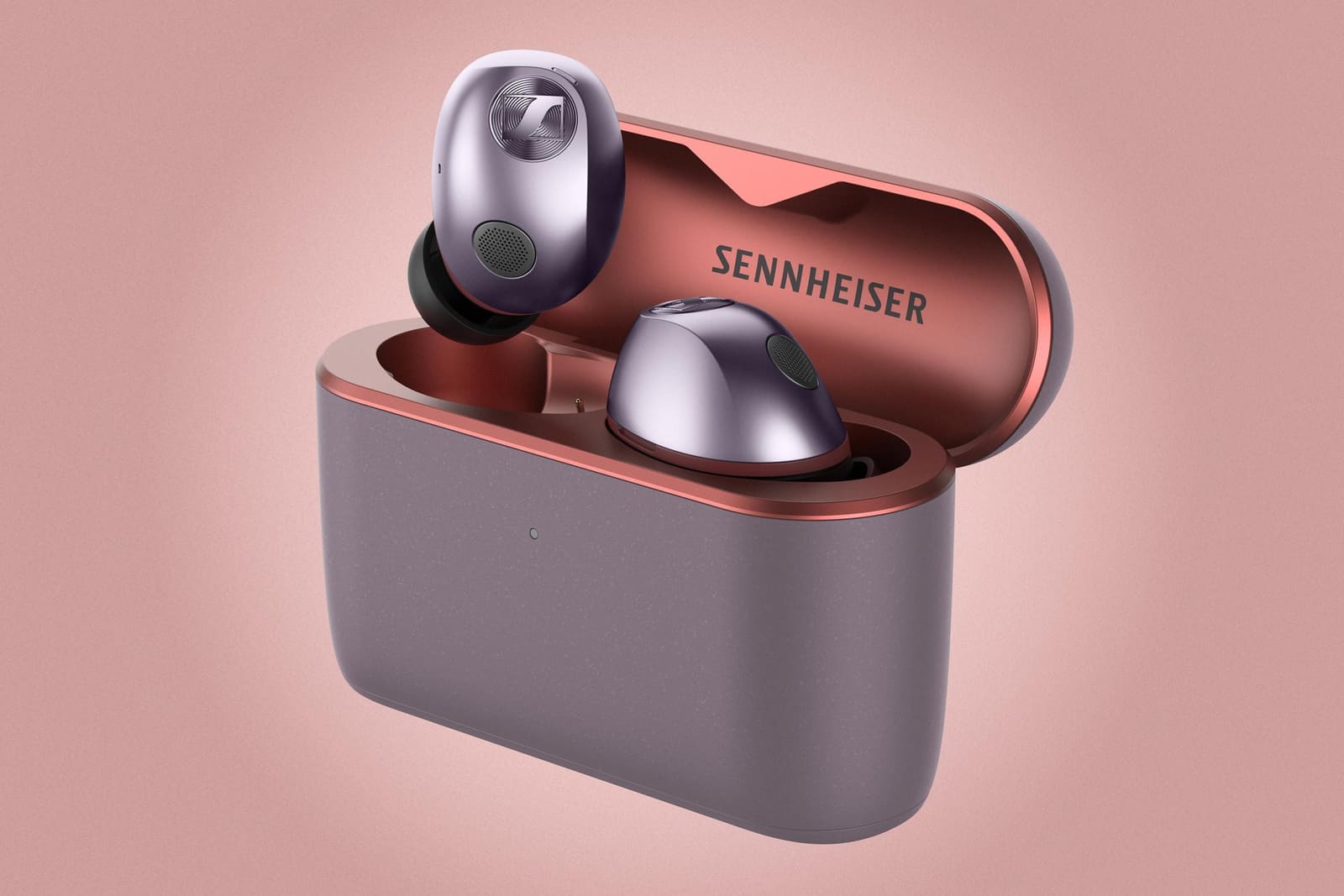
Meta's collaboration with EssilorLuxottica produced a product that looks unremarkable by design. The Ray-Ban Wayfarer and Headliner frames house a camera, microphone array, and connectivity hardware behind glass and acetate familiar enough to pass unnoticed. The LED indicator - a small white light that blinks during recording - is the sole disclosure mechanism, and it's visible only if you know to look for it and happen to be standing at the right angle.
That design choice is the product's core tension. For the wearer, invisibility is a feature: capture without the social overhead of holding up a phone. For the person being recorded, invisibility is a bug that removes the ability to consent or even be aware. In environments like retail floors, restaurants, delivery routes, and ride-hail vehicles - spaces where workers are required to interact with strangers as a condition of employment - that imbalance has consequences.
The Hinkle incident is not an edge case. Across North American retail and service sectors, frontline employees report similar encounters: customers using smart glasses to film confrontations, manufacture content for social platforms, or simply experiment with recording as a form of low-stakes antagonism. The workers, bound by customer-service protocols and often lacking institutional support, have little recourse.
Policy Gaps and the Limits of Employer Discretion
Most large retailers maintain policies prohibiting photography and video recording inside stores, ostensibly to protect intellectual property, prevent theft documentation, and guard employee privacy. Enforcement, however, is uneven. Store associates are rarely trained to identify wearable cameras, and even when they do, confronting a customer over a pair of glasses is a fraught proposition - especially when the device maker's own marketing emphasizes that the product is designed to be worn everywhere.
Target, Walmart, and other major chains have not issued public guidance specific to smart glasses. Internal protocols inherited from the smartphone era - asking customers to stop filming, escalating to management, involving security - assume a visible device and a clear moment of recording. Smart glasses obscure both. The result is a policy vacuum in which individual workers bear the risk of navigating an interaction the employer has not prepared them for.
Some jurisdictions have two-party consent laws that require all parties in a conversation to agree to recording. Enforcement in transient retail interactions, however, is nearly impossible. Prosecuting a prank video requires identifying the individuals involved, establishing jurisdiction, and proving intent - steps that demand resources most workers and most stores are unwilling or unable to commit.
The Broader Wearable Trend and Labor Vulnerability
Ray-Ban Meta glasses are one expression of a wider shift. In Shenzhen and Hangzhou, street vendors and gig workers have adopted body-worn cameras and livestream-enabled glasses to document disputes with customers or platform enforcers. In Seoul and Tokyo, similar devices are marketed as safety tools for solo workers. The use cases diverge, but the underlying dynamic is consistent: always-on recording redistributes power, and the direction of that redistribution depends entirely on who is wearing the device.
For knowledge workers in office environments, wearable cameras remain mostly hypothetical - corporate IT policy and workplace norms constrain their use. For workers in public-facing roles, the constraint is absent. Customers, delivery drivers, and passersby can record at will. The employee cannot. This asymmetry is not incidental; it is structural, embedded in the design of devices optimized for consumer convenience rather than relational equity.
Meta has positioned its glasses as a step toward ambient computing, a future in which capture and retrieval happen passively, mediated by AI that surfaces relevant information without manual input. That vision assumes a user moving through the world as a sovereign agent. It does not account for the worker who cannot walk away, who is contractually obligated to perform courtesy, and for whom the presence of a recording device transforms a routine interaction into a potential content event.
What Mitigation Looks Like in Practice
Some technology researchers and labor advocates have proposed technical guardrails: longer LED indicators, audible recording tones, or mandatory verbal disclosure. Each introduces friction that undermines the product's value proposition. Meta has so far resisted such changes, citing user experience and arguing that the LED provides sufficient notice.
Other proposals focus on policy rather than hardware. Retail unions in parts of Europe and Canada have begun pushing for explicit protections that classify surreptitious recording of workers as harassment and give employees the right to refuse service to customers who do not comply with recording bans. These efforts are nascent and face resistance from both employers, who fear customer backlash, and platform companies, who frame recording restrictions as impediments to innovation.
A third approach centers on training and institutional support. Providing frontline workers with clear scripts for identifying and responding to wearable cameras, backing them when they enforce store policy, and creating reporting channels that do not penalize the worker for escalating an incident - these measures do not prevent the problem but can reduce the isolation workers feel when navigating it.
None of these solutions is comprehensive. The underlying issue is not a bug in the product; it is a feature set that was never designed with the non-wearer in mind.
The Question the Industry Won't Ask
The Hinkle story is a data point in a larger pattern: consumer technology increasingly operates in social contexts its designers did not map. The same frames that let a parent capture a child's soccer game also let a prankster turn a retail worker into content. The device does not distinguish. It was not built to.
At DailyTechWire, the question we keep returning to is not whether the technology works - it does - but whether the industry is willing to account for the externalities it creates. Wearable cameras will become smaller, cheaper, and more capable. Retail work, delivery work, and service work will remain essential and underprotected. The collision is not hypothetical. It is happening now, on floors and sidewalks and in aisles, in encounters that leave no institutional record and demand no corporate response.
The LED blinks. The worker asks if you need help. The loop begins. And the product team, thousands of miles away, iterates on the next hardware revision, optimizing for capture latency and battery life, while the friction accumulates elsewhere - in the labor market the device was never designed to see.