Meta Donates 15,000 Ray-Ban Smart Glasses to Ireland's Vision Impaired Community
The move targets every blind and visually impaired adult served by Vision Ireland, reframing AI wearables as assistive tech amid ongoing privacy scrutiny.
A Strategic Pivot Toward Accessibility
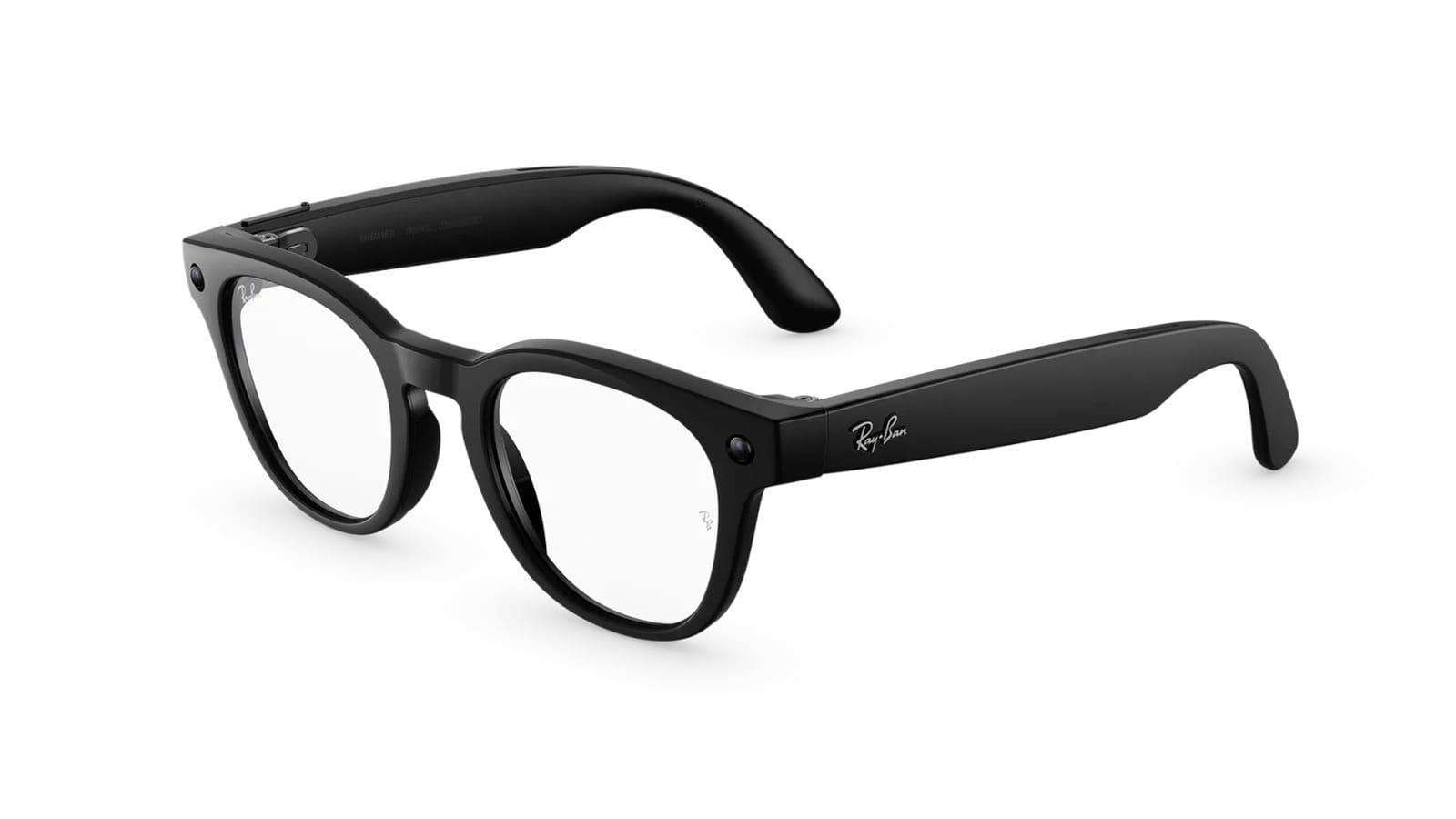
Meta has committed 15,000 units of its Ray-Ban smart glasses to Vision Ireland, the country's national sight-loss charity, in what represents one of the largest single deployments of AI wearables for accessibility purposes. According to Meta, the quantity is calibrated to reach every blind and visually impaired adult currently supported by the organization. Eligible individuals can register through Vision Ireland's website or by calling +353 1 882 1910; the charity will handle applicant selection, training, and ongoing support.
At DailyTechWire, we've tracked the Ray-Ban Meta glasses since their commercial launch, and this donation marks a notable shift in positioning. Where consumer adoption has been modest and privacy concerns loud, assistive-tech deployments offer a clearer value proposition and a more receptive user base.
The Assistive Feature Set
The glasses pack several capabilities tailored to low-vision use cases. Text-to-speech reads printed material aloud, from medicine labels to street signs. Object recognition identifies items in the wearer's field of view, a function useful in retail environments or unfamiliar spaces. Environmental descriptions, generated by the onboard AI, guide users through tasks that sighted individuals perform without conscious thought: navigating a crowded sidewalk, selecting produce, confirming the color of a garment.
Integration with the Be My Eyes volunteer network extends the system's reach. Wearers can initiate a live call to a sighted volunteer, who receives a video feed from the glasses and provides real-time assistance. The use cases skew practical: matching an outfit for a job interview, locating a specific product on a grocery shelf, verifying that a stove burner is off. Voice commands handle message replies, reducing reliance on screen readers or Braille displays.
These features are not experimental. They ship in the consumer version of the glasses, but adoption among the general public has been tepid. The assistive-tech context reframes the same sensor array and AI stack as solving concrete, high-stakes problems rather than offering convenience at the margin.
Privacy Backlash and LED Tampering
Meta's timing is not coincidental. The Ray-Ban glasses have drawn sustained criticism over their capacity for covert recording. A small LED indicator is supposed to illuminate during video capture, but third-party services have advertised LED-removal or disabling, effectively turning the glasses into a surveillance tool. Meta responded by announcing that any device with a tampered or non-functional LED would have its camera remotely disabled, though enforcement mechanisms remain opaque.
More recently, code discovered in the Meta AI app suggested the company is exploring facial-recognition integration. The feature has not shipped, but the prospect of walking cameras that can identify strangers by face has intensified regulatory and civil-liberties scrutiny across Europe and North America.
For Meta, the Vision Ireland partnership offers a narrative counter-weight. By anchoring the product in accessibility, the company shifts the conversation from privacy risk to social benefit. It is a familiar playbook: demonstrate utility in a sympathetic context, build goodwill, and use that goodwill as cover when expanding into more contentious applications.
Distribution and Training Logistics
Vision Ireland will manage the entire distribution pipeline. Registrants will be vetted for eligibility, a process likely to prioritize those with the most severe visual impairments and the least access to alternative assistive technology. Once selected, recipients will receive in-person training. This is non-trivial: effective use of the glasses requires fluency with voice commands, an understanding of the AI's limitations, and strategies for managing battery life and connectivity.
The charity's involvement also insulates Meta from direct customer-support obligations. Vision Ireland's staff, who already provide orientation and mobility training, will absorb troubleshooting, user education, and feedback loops. Meta supplies the hardware and software updates; the charity handles the human layer.
The 15,000-unit figure is significant. Ireland's population is roughly five million, and Vision Ireland serves approximately 15,000 blind or visually impaired adults, according to the charity. This donation, if fully distributed, would achieve near-total penetration within that cohort, turning the country into a real-world testbed for AI wearables in assistive contexts.
Market Implications and the Accessibility Wedge
The consumer wearables market remains skeptical of face-worn AI. Google Glass failed a decade ago; Snap's Spectacles have languished; even Apple's Vision Pro, with vastly superior hardware, has struggled to articulate a compelling daily-use case. Meta's Ray-Ban collaboration has fared better on aesthetics, but adoption remains niche.
Assistive tech, by contrast, operates under different constraints. Users tolerate higher friction, shorter battery life, and steeper learning curves when the alternative is functional blindness. The calculus shifts: a device that reads a menu or identifies a bus route is not a nice-to-have; it is autonomy.
If the Ireland deployment succeeds, it establishes a template. Governments and NGOs in other markets may fund similar distributions, subsidizing Meta's user base and generating training data for the AI models. The glasses learn from real-world use, improving object recognition and environmental descriptions with every query. Meta gets scale, data, and a defensible social mission. Visually impaired users get tools that materially improve daily life.
The trade-off, as always, is data. The glasses capture video, audio, and location continuously while in use. Meta's privacy policy permits the company to use interaction data to train its models. For a population that has historically been underserved by mainstream tech, the bargain may be acceptable. But it sets a precedent: assistive technology as a data-collection vehicle, wrapped in the language of inclusion.
Looking Ahead
Meta has not disclosed whether the donation is a one-time initiative or the start of a broader accessibility strategy. The company has made similar moves in virtual reality, funding research into VR therapy for PTSD and vision rehabilitation. Those programs generated positive press but did not fundamentally alter Meta's business model or product roadmap.
The Ireland program will be closely watched. If adoption is high and user feedback positive, expect Meta to scale the model to other markets, likely partnering with national sight-loss organizations in the UK, Canada, and Australia. If the rollout stumbles due to training challenges, hardware failures, or user resistance, the initiative will quietly fade, and the glasses will revert to their consumer positioning.
Either way, the deployment underscores a broader trend: AI wearables find their footing not in mass-market convenience, but in specialized, high-need contexts where existing solutions are inadequate. Accessibility is the wedge. What comes after depends on how much trust Meta can rebuild, and how much oversight regulators demand.