Google Brings NFC-Powered Contact Sharing to Android Devices
Quick Share's tap-to-transfer feature arrives two years after Apple's NameDrop, as hardware platforms converge on proximity-based exchange protocols
The Feature Gap Closes
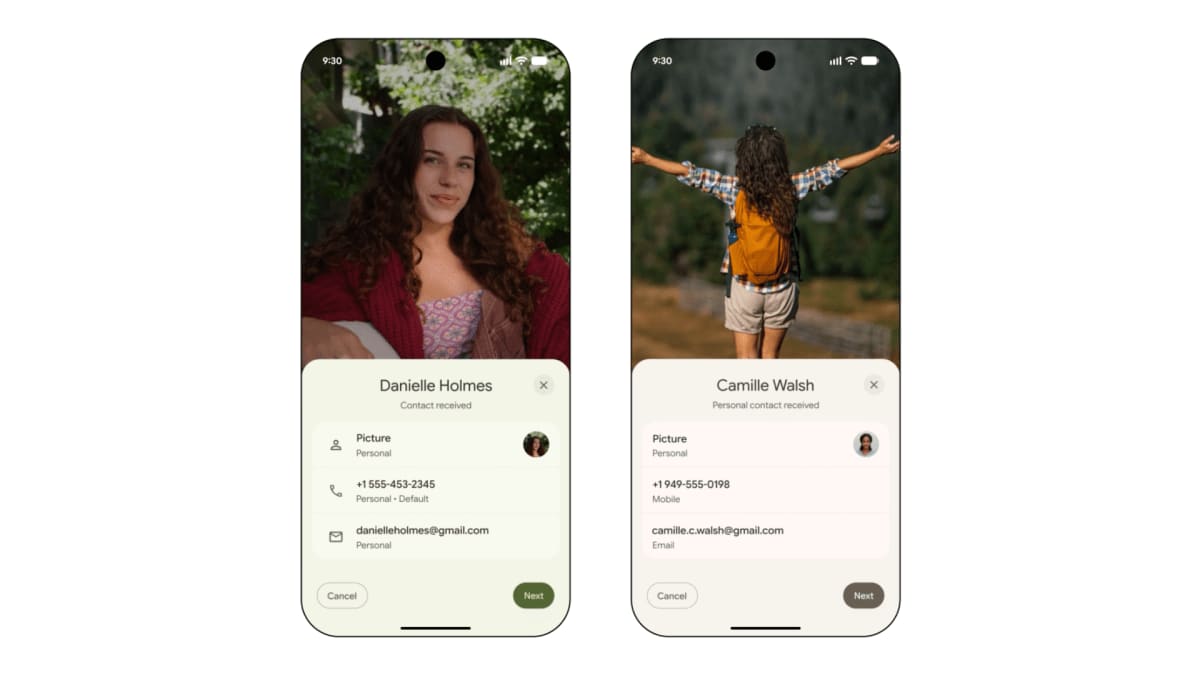
Google introduced tap-based sharing for Android devices this week, allowing users to exchange contacts, photos, and videos by bringing two phones within NFC range. The upgrade to Quick Share, Google's peer-to-peer file transfer system, eliminates the need to scan QR codes or manually select recipients from a device list.
The implementation relies on near-field communication chips already present in most mid-range and flagship Android phones. Users initiate a transfer from the system share menu, then physically tap devices together to complete the handoff. Google describes the interaction as an "instant, two-way exchange," though the company has not disclosed whether both devices must be unlocked or if the recipient needs to confirm receipt.
At DailyTechWire, we've tracked the slow convergence of Android and iOS feature sets across hardware generations. This particular addition arrives roughly two years after Apple shipped NameDrop in iOS 17, a delay that reflects the fragmented update cadence across Android's device ecosystem rather than any technical limitation.
Platform Parity and the NFC Advantage
Proximity-based sharing is not new. Samsung's iteration of Quick Share has supported device-to-device transfers since the Galaxy S20 generation, though typically through Bluetooth or Wi-Fi Direct rather than NFC initiation. Google's decision to standardize tap-to-share across the Pixel line, and to extend support to Samsung's latest foldables, suggests the feature will become table stakes for premium Android hardware.
NFC offers a meaningful user experience improvement over earlier methods. Bluetooth pairing can be slow and error-prone, particularly in crowded environments with multiple discoverable devices. Wi-Fi Direct requires manual network selection. Tapping two phones together collapses the handshake into a single physical gesture, reducing cognitive load and eliminating ambiguity about which device is receiving the file.
The trade-off is range. NFC operates within a few centimeters, so users cannot initiate transfers from across a room. For contact cards and individual photos, that constraint is acceptable. For bulk file transfers or scenarios where physical proximity is inconvenient, Quick Share will continue to fall back on Bluetooth and Wi-Fi Direct after the initial NFC handshake.
Rollout Strategy and Device Eligibility
Google confirmed the feature is live on Pixel 6 and newer models as of Wednesday. Samsung's Galaxy Z Fold8 Ultra, Fold8, and Flip8 will receive support in the coming weeks, with additional devices slated for compatibility by the end of the year, according to Google.
The Pixel 6 launched in late 2021, meaning the eligible install base spans roughly five years of hardware. That window is narrower than Apple's typical support horizon, but it aligns with Google's established update policy for Pixel devices. The exclusion of older models likely reflects hardware limitations around secure element access or NFC controller firmware rather than deliberate obsolescence.
Samsung's inclusion is significant. The company ships more Android devices globally than any other manufacturer, and its proprietary implementation of Quick Share has historically diverged from Google's stock Android version. Coordinating feature parity across both ecosystems suggests Google is prioritizing interoperability, a shift from the fragmented sharing landscape that has defined Android for much of the past decade.
What This Means for Cross-Platform Workflows
For users who operate within a single ecosystem, tap-to-share is a convenience upgrade. For those who move between Android and iOS, or who work in mixed-device environments, the absence of cross-platform compatibility remains a friction point. Apple's NameDrop works only between iPhones, and Google's Quick Share operates exclusively within Android. Neither company has signaled interest in bridging that gap.
The lack of interoperability is not a technical obstacle. NFC is an open standard, and the underlying protocols for contact card exchange, vCard and similar formats, are platform-agnostic. The barrier is strategic. Both Apple and Google benefit from ecosystem lock-in, and seamless cross-platform file sharing would erode one of the subtle advantages that keep users tethered to their respective platforms.
Third-party solutions exist. Apps like Snapdrop and Nearby Share's web interface allow file transfers between Android and desktop browsers, though these workarounds lack the polish and integration of native features. For now, users who need to share files between Android and iOS will continue to rely on cloud services, messaging apps, or physical transfer methods like USB cables.
The Broader Context of Peer-to-Peer Protocols
Tap-to-share fits into a longer trend of hardware platforms adopting proximity-based interactions. NFC has been a fixture in mobile payments since the early 2010s, and its use cases have gradually expanded into access control, transit ticketing, and now social sharing. The technology is mature, power-efficient, and secure, making it an ideal substrate for features that require physical co-presence.
Google's timing is deliberate. The feature arrives alongside the Pixel 11 lineup, which includes incremental hardware updates but leans heavily on software differentiation. Tap-to-share is a visible, user-facing improvement that requires no new sensors or components, only firmware updates and OS-level integration. It is the kind of feature that feels substantive in a product demo but costs little to implement.
The question is adoption. Features that require bilateral support, where both sender and receiver must have compatible devices and updated software, face a cold-start problem. Early adopters have few people to share with, which dampens enthusiasm and slows uptake. Google's decision to coordinate with Samsung mitigates that risk by ensuring a large portion of the premium Android market will support the feature within months.
Looking Ahead
Google has not disclosed whether tap-to-share will extend to non-phone devices like tablets, Chromebooks, or wearables. The Pixel Watch 5, also announced this week, includes NFC hardware for payments, but the company has not confirmed whether it will support Quick Share interactions. Extending the feature to watches would enable quick contact exchanges in contexts where pulling out a phone is inconvenient, though the smaller screen and limited UI real estate present design challenges.
The roadmap for Quick Share likely includes tighter integration with Google's Nearby Share protocol, which already supports transfers between Android devices and Chromebooks. Unifying these systems under a single brand and interaction model would simplify the user experience and position Google as a credible alternative to Apple's tightly integrated ecosystem.
For now, tap-to-share represents a measured step toward platform parity. It does not redefine how people exchange information, but it removes a small point of friction in a workflow that happens dozens of times a day for many users. In the aggregate, these incremental improvements matter, particularly in markets where Android and iOS compete on the margins of user experience rather than core functionality.