Jack Ma Places HK$600 Million Bet on Alibaba's AI Future
The e-commerce founder's consecutive-day share purchases mark a public vote of confidence in the company's artificial intelligence strategy at a pivotal moment for China's tech giants.
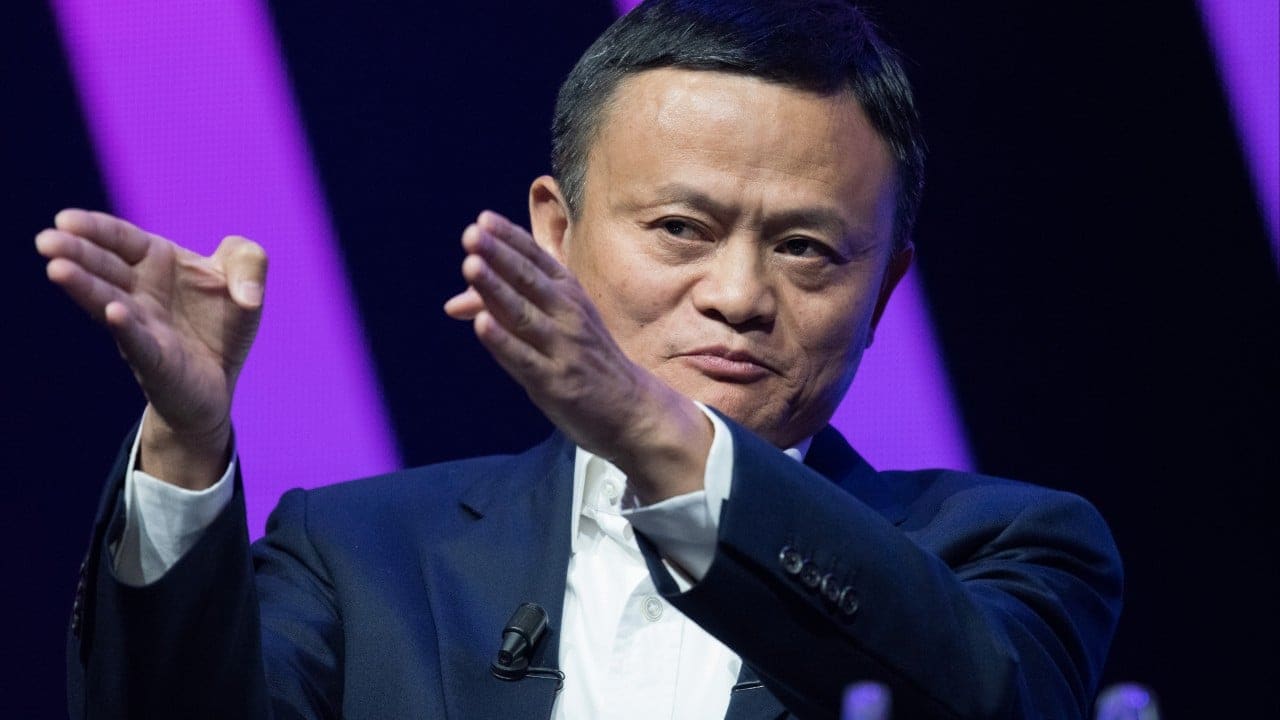
A Founder Returns to the Table
Jack Ma has acquired more than HK$600 million worth of Alibaba Group Holding shares over consecutive trading days in Hong Kong, according to people familiar with the transactions. The move represents one of the most visible expressions of confidence from the e-commerce pioneer since he stepped back from public life following regulatory scrutiny in 2020.
The timing matters. Alibaba, like its peers across China's tech ecosystem, is navigating a transition from platform economics to infrastructure plays, with artificial intelligence serving as the primary battleground. Ma's decision to deploy capital at this juncture suggests he views the company's current AI trajectory as credible and the valuation as attractive relative to the opportunity set ahead.
People close to the situation characterized the purchases as reflecting "strong confidence for Alibaba to realise its AI ambitions and capture the long-term growth opportunities ahead." That phrasing, whether deliberate or not, echoes the language Alibaba executives have used in recent earnings calls when discussing Tongyi Qianwen, the company's large language model, and its cloud infrastructure expansion.
The Broader Context for Chinese AI Investment
At DailyTechWire, we've tracked a pronounced shift in capital allocation among China's first-generation internet founders over the past eighteen months. Where 2022 and early 2023 saw portfolio diversification and offshore asset movement, 2024 and into 2026 have brought a pattern of domestic re-investment, particularly in companies with credible AI compute or model-layer capabilities.
Alibaba sits at an interesting intersection. Its cloud division, Alibaba Cloud, operates the largest public cloud infrastructure in China by revenue, giving it native distribution for AI services. Tongyi Qianwen has been integrated across the company's consumer and enterprise products, from Taobao search to DingTalk collaboration tools. Yet the company trades at a significant discount to its U.S. peers, in part due to regulatory overhang and questions about whether its e-commerce core can return to growth.
Ma's purchase, while modest relative to his historical stake, carries symbolic weight. Founders buying shares in their own companies can signal multiple things: opportunistic value capture, alignment with incoming institutional capital, or genuine conviction in a strategic pivot. In this case, the consecutive-day structure suggests intent rather than a one-off gesture.
What Alibaba's AI Stack Actually Looks Like
Alibaba has positioned Tongyi Qianwen as a horizontal model, available via API through Alibaba Cloud and embedded across its own product suite. The company claims tens of millions of daily active users interacting with AI-powered features, though it has not broken out monetization metrics in granular detail.
The cloud division has been investing heavily in GPU clusters and custom AI accelerators, an expensive but necessary play to compete with Tencent Cloud and ByteDance's Volcano Engine. Export controls on advanced NVIDIA chips have forced all three to rely on a mix of older-generation GPUs, domestic alternatives like Huawei's Ascend series, and architectural optimizations to squeeze performance from constrained hardware.
Alibaba Cloud's revenue growth has decelerated in recent quarters, but management has argued that AI workloads represent a new growth vector that will take time to materialize. The challenge is that enterprise customers in China remain cautious about AI spending, preferring proof-of-concept pilots over large-scale deployments. Consumer AI features, meanwhile, face the same monetization questions that plague generative AI globally: engagement is high, but willingness to pay remains unproven.
Reading Insider Moves in a Volatile Market
Insider purchases are not uncommon among Chinese tech executives, but they are typically coordinated around earnings releases or strategic announcements to maximize signaling value. Ma's timing, coming outside of a major event window, is notable. It suggests either that he views current prices as particularly dislocated from intrinsic value, or that he has visibility into upcoming developments that have not yet been disclosed.
Alibaba chairman Joe Tsai and CEO Eddie Wu have also been active buyers of the company's stock over the past year, though at smaller individual scales. The cumulative effect of repeated insider buying has been to stabilize sentiment among long-term institutional holders, many of whom have reduced exposure to Chinese equities since 2021.
The Hong Kong-listed shares have underperformed the NASDAQ-listed ADRs over the past twelve months, creating arbitrage opportunities and adding complexity to any insider purchase decision. Ma's choice to buy in Hong Kong rather than New York may reflect practical considerations around regulatory approval and settlement, but it also aligns with Beijing's stated goal of channeling capital back into domestic exchanges.
AI as the Next Margin Engine
For Alibaba, the AI thesis is ultimately about margin expansion and platform lock-in. If Tongyi Qianwen can become the default model for Chinese enterprises, Alibaba Cloud gains pricing power and reduces customer acquisition costs. If AI-powered search and recommendation improve conversion rates on Taobao and Tmall, the company can extract more value from existing traffic without proportional increases in marketing spend.
The risk is execution. Building and operating large language models at scale is expensive, and the return on that investment is not yet clear. Competitors are moving aggressively: Baidu has integrated Ernie Bot across its search and cloud products, Tencent has embedded Hunyuan into WeChat and its gaming portfolio, and ByteDance has leveraged Doubao to enhance content recommendation on Douyin and Toutiao.
Alibaba's advantage lies in its breadth. It touches more parts of the Chinese digital economy than any other single company, from retail and logistics to payments and entertainment. If it can thread AI capabilities through that ecosystem in a way that feels native rather than bolted on, the compounding effects could be significant.
A Bet on Structural Recovery
Ma's purchase can also be read as a bet on the macro environment stabilizing. Chinese equities have been volatile, driven by concerns about property sector contagion, export headwinds, and the pace of domestic consumption recovery. Tech stocks have been particularly sensitive to regulatory signals, with any hint of renewed scrutiny triggering sharp selloffs.
The regulatory environment has softened over the past year, with authorities signaling a shift from punitive enforcement to guided development. Alibaba has settled its major antitrust cases, restructured its governance to separate business units, and maintained regular communication with regulators. The risk of existential regulatory action has diminished, even if ongoing oversight remains a fact of life.
If Ma believes the worst of the regulatory cycle is behind the company, and that the AI opportunity is real, then current valuations offer an asymmetric entry point. The stock trades at a meaningful discount to historical averages, and the market is pricing in limited upside from AI monetization. Any evidence that AI is driving incremental revenue or margin could trigger a re-rating.
What Comes Next
The immediate question is whether other large shareholders will follow Ma's lead. Institutional investors have been cautious on Alibaba, citing governance concerns, competitive pressures, and uncertainty around AI returns. A sustained pattern of insider buying, combined with tangible evidence of AI-driven growth, could shift sentiment.
Alibaba has not yet commented publicly on Ma's purchases, and the company's next earnings release is not scheduled until November. Investors will be watching for any updates on AI monetization metrics, cloud revenue acceleration, and margin trends in the core commerce business.
For now, Ma's move stands as a data point: a founder with unparalleled visibility into the company's strategy and culture choosing to deploy significant capital at a moment when the market remains skeptical. Whether that confidence proves prescient or premature will depend on execution, competitive dynamics, and the broader trajectory of AI adoption in China.