Oura's IPO Plan Tests Whether Sleep Tech Can Command a $16 Billion Premium
The smart ring maker is preparing to go public next month, but a fresh lawsuit and intensifying competition from Whoop and Samsung complicate its path to market.
A Billion-Dollar Bet on Sleep
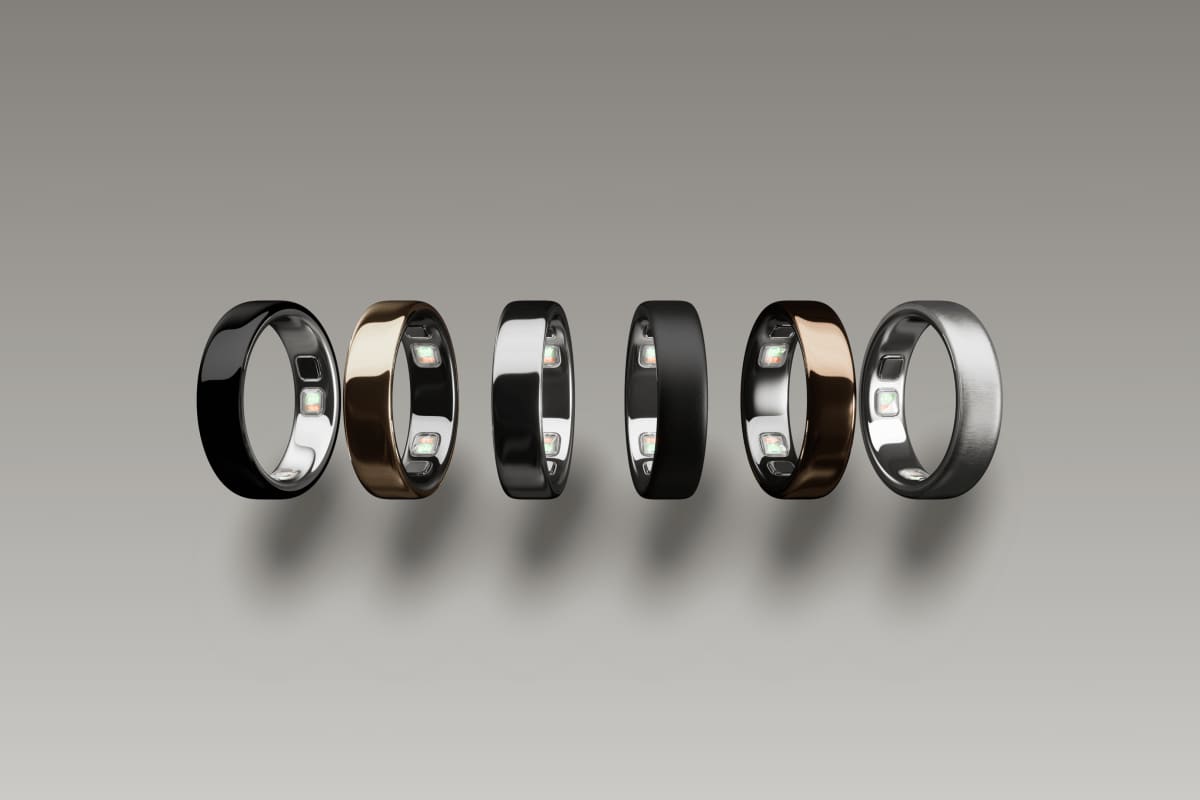
Oura, the Finland-and-San Francisco-based maker of sleep-tracking smart rings, is planning to raise up to $3 billion in a U.S. public offering as soon as next month, according to people familiar with the matter. The IPO would value the company north of $16 billion, a sharp climb from the $10.9 billion price tag investors assigned it less than a year ago.
That earlier valuation came from an $875 million Series E round closed in September 2025, backed by Fidelity, ICONIQ, Whale Rock, and Atreides, alongside earlier investors including Dexcom, The Chernin Group, Forerunner Ventures, Coatue, and Temasek. The proposed public-market valuation would represent a 47 percent premium in under twelve months, a trajectory that reflects both the company's revenue momentum and the frothy investor appetite for consumer health hardware.
Oura filed confidentially for an IPO in May. The company has disclosed that it generated $500 million in revenue in 2024 and roughly $1 billion in 2025, with expectations of approaching $2 billion in 2026. Those figures, once the S-1 filing becomes public, will offer a clearer picture of unit economics, gross margin, and the subscription revenue that underpins the business model.
At DailyTechWire, we've tracked a pattern across the wearables category over the past eighteen months: hardware companies that can layer recurring software revenue on top of device sales are commanding significantly higher revenue multiples than those selling gadgets alone. Oura's valuation premium hinges on that thesis holding up under public-market scrutiny.
The Pivot from Biohackers to Mainstream
Oura's journey began in the niche world of biohacking executives and performance-obsessed early adopters. The ring offered a less obtrusive alternative to wrist-worn trackers, emphasizing sleep quality, heart-rate variability, and recovery metrics. Over the past two years, the company has deliberately broadened its messaging, positioning the device as a mainstream sleep-and-wellness tool rather than a gadget for quantified-self enthusiasts.
That strategic shift mirrors the playbook of Whoop, Oura's most direct competitor. Once a performance band for elite athletes and young men, Whoop has spent the past year expanding into hormone tracking, blood-panel integration, and features targeting perimenopause and thyroid health. The pivot drove Whoop's valuation to $10 billion in a March 2026 round, signaling that investors see the addressable market for recovery-focused wearables extending far beyond the gym.
Samsung entered the space two years ago with the Galaxy Ring, adding another credible contender to a category that was effectively Oura's to lose. The South Korean giant brings manufacturing scale, retail distribution, and an installed base of Galaxy smartphone users, all of which represent structural advantages Oura cannot easily replicate.
The crowding of the smart ring category raises a central question for Oura's IPO: can the company defend its first-mover lead and sustain the growth rates implied by a $16 billion valuation, or will commoditization and margin pressure erode its premium positioning?
Legal Turbulence Ahead of the Roadshow
A proposed class-action lawsuit filed last week in San Francisco adds a layer of uncertainty to Oura's public-market debut. The complaint accuses the company of misleading consumers about the accuracy of its sleep-tracking features, arguing that Oura claims to measure precise sleep stages in a way that, in clinical settings, requires electrodes on the scalp and sensors on the eyes.
The lawsuit contends that Oura's marketing overstates the ring's diagnostic capability, a charge that, if sustained, could expose the company to both financial liability and reputational damage at a particularly sensitive moment.
Oura has pushed back against the claims, stating that while the ring is not a medical device or a substitute for a clinical sleep study, its sleep-staging algorithms have been validated in multiple studies against polysomnography, the clinical gold standard. The company emphasized that independent, third-party research supports its accuracy claims and that it has been transparent about the methods underlying its sleep-staging metrics.
Whether that defense holds up in court remains to be seen. The timing of the lawsuit, arriving just weeks before a planned IPO roadshow, is unlikely to be coincidental. Plaintiff attorneys often file such actions ahead of major liquidity events, betting that companies will settle rather than let litigation cloud a public offering.
The Unit Economics of a Subscription Ring
Oura's business model rests on two revenue streams: upfront hardware sales and a recurring membership fee that unlocks the full suite of insights and features. The ring itself retails for several hundred dollars, but the real value to investors lies in the subscription layer, which generates predictable, high-margin revenue over the lifetime of each customer.
The company's revenue trajectory suggests that it is adding users at a rapid clip while maintaining or expanding its subscriber base. The near-doubling of revenue from 2024 to 2025, and the expected doubling again in 2026, implies either strong unit growth, higher average revenue per user, or both.
Investors will scrutinize several metrics once the S-1 is public: customer acquisition cost, churn rate, lifetime value, and the proportion of revenue derived from subscriptions versus hardware. If Oura can demonstrate that a significant and growing share of its revenue is recurring, it will justify a valuation multiple closer to software companies than consumer electronics makers.
The risk is that competition drives down hardware prices while making it harder to sustain subscription attachment rates. If users perceive the ring as a commodity and resist paying for ongoing membership, Oura's margin profile and growth outlook would deteriorate quickly.
Asia's Role in the Next Chapter
Oura's existing investor base includes Temasek, the Singapore sovereign wealth fund, which signals early attention to Asia-Pacific expansion. The region represents both a massive addressable market and a complex regulatory and distribution landscape. South Korea, Japan, and urban China have high smartphone penetration, health-conscious consumer segments, and a willingness to pay for premium wellness products.
However, the smart ring category has not yet gained the same traction in Asia as fitness bands and smartwatches have. Local incumbents such as Xiaomi and Huawei dominate the affordable wearables segment, while Apple commands the premium tier. Oura will need to carve out a distinct positioning, likely emphasizing sleep science and recovery metrics that resonate with overworked professionals in Seoul, Tokyo, and Shanghai.
The company's ability to scale in Asia without incurring prohibitive customer acquisition costs will be a key determinant of whether it can sustain the growth rates embedded in a $16 billion valuation.
What the IPO Reveals About Wearables 2.0
Oura's public offering, if it proceeds as planned, will serve as a referendum on the second wave of wearables: devices that prioritize passive sensing, longitudinal health data, and personalized insights over step counts and calorie burn. The first generation of wearables, dominated by Fitbit and early Apple Watch models, focused on activity tracking and notifications. The current generation is betting that consumers will pay for deeper, more actionable health intelligence.
That thesis has attracted significant capital over the past two years. Whoop's $10 billion valuation, Oura's planned $16 billion debut, and the entrance of Samsung and other incumbents all reflect a belief that the category is maturing into a durable, high-value segment of the consumer health ecosystem.
Yet the lawsuit against Oura underscores a tension inherent in this market: the gap between what the technology can reliably measure and what marketing language implies. Consumer wearables operate in a gray zone between wellness gadgets and medical devices, a space that invites both opportunity and regulatory scrutiny. As these companies grow and go public, they will face increasing pressure to substantiate their claims and navigate the boundaries of what can be promised without crossing into medical territory.
For Oura, the next six weeks will determine whether the company can manage the legal noise, convince public-market investors of its long-term margin structure, and position itself as the category leader in a market that is rapidly filling with credible alternatives. The $16 billion question is whether sleep tracking can sustain a premium valuation in an era when every smartphone maker and fitness brand is racing to offer similar features at a fraction of the cost.