China's Reusable Rocket Push Gets Its First Landing - and a Veteran Engineer Who Bet on It
Dai Zheng left the state space programme a decade ago to join a private startup. On August 19, the Zhuque-3 booster touched down upright, vindicating his leap and marking a watershed moment for China's commercial space industry.
The Gamble That Landed
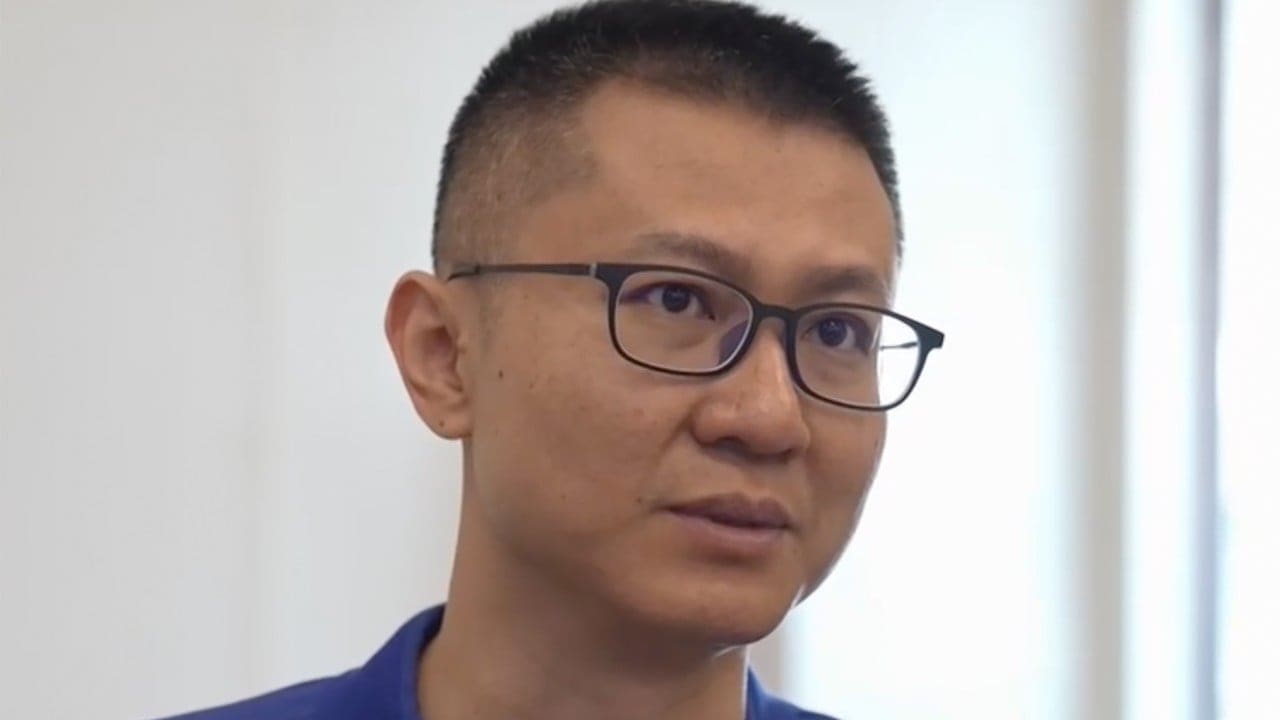
A decade is a long time to wait for vindication. Dai Zheng walked away from China's state space apparatus in 2016, trading the iron rice bowl of government engineering for the uncertain trajectory of a startup called LandSpace. On August 19, the Zhuque-3 booster he helped command descended through the atmosphere, fired its engines in a controlled burn, and settled onto its legs - the first vertical landing of a commercial rocket stage in China. It was the kind of moment that redefines careers and entire industries at once.
At DailyTechWire, we've tracked the commercial space buildout across Asia for years, watching capital flow into launch ventures from Bengaluru to Wenchang. What sets this landing apart is not just the technical milestone - reusable boosters are table stakes in the global launch economy - but the narrative arc behind it. Dai's move in 2016 was hardly obvious. State-owned enterprises still dominated Chinese aerospace; private capital was only beginning to probe the sector. The regulatory environment was opaque, and the supply chain for methane-fueled engines barely existed. Yet he and a cohort of engineers made the jump anyway, betting that reusability would eventually be non-negotiable and that a lean, vertically integrated startup could move faster than legacy institutions.
Why Reusability Matters Now
Reusable rockets are no longer a SpaceX novelty. They are the economic baseline for any launch provider hoping to compete on price and cadence. Every booster that flies once and burns up in the ocean is a sunk cost - millions of dollars of hardware, tooling, and labor that cannot be recouped. Vertical landing and reflight compress those costs dramatically, enabling operators to quote lower prices, fly more often, and iterate faster on vehicle design.
LandSpace has pursued this model with single-minded focus. The Zhuque-3 uses methane and liquid oxygen, a propellant combination that burns cleaner than kerosene and is easier to handle than hydrogen. Methane also leaves less coking residue in engine plumbing, which simplifies refurbishment between flights. The company designed its TQ-12 engine in-house, controlling the supply chain from combustion chamber to turbopump. That vertical integration mirrors the approach taken by SpaceX and, more recently, by Rocket Lab - companies that learned early that waiting on external suppliers kills momentum.
The August 19 landing was not a one-off demonstration. LandSpace has already announced plans for multiple Zhuque-3 flights this year, each one an opportunity to gather data on structural fatigue, thermal protection, and landing precision. The goal is to move from proof-of-concept to operational reuse - flying the same booster multiple times within weeks, not months.
The State vs. Private Divide in Chinese Space
China's space program has always been a state affair. The Long March family of rockets, operated by the China Aerospace Science and Technology Corporation, has launched everything from crewed missions to lunar landers. That heritage brings deep pockets, political backing, and decades of institutional knowledge. It also brings bureaucracy, slower iteration cycles, and less appetite for the kind of rapid prototyping that characterizes commercial space in the United States.
Private firms like LandSpace, iSpace, and Galactic Energy emerged in the mid-2010s, enabled by policy shifts that allowed non-state actors to participate in launch services. These companies have had to navigate a regulatory landscape that remains more restrictive than in the U.S. or Europe - launch licenses are harder to obtain, and access to certain technologies is tightly controlled. But the trade-off is a domestic market that is enormous and growing. China's satellite constellation plans, including broadband megaconstellations, will require hundreds of launches over the next decade. The state sector cannot meet that demand alone.
Dai Zheng's career arc embodies this transition. His training and early work were firmly within the state system, where he gained fluency in systems engineering and mission architecture. When he left for LandSpace, he brought that expertise into an environment where decisions could be made in days, not quarters, and where failure was an acceptable cost of learning. The result is a hybrid model - engineers with state-sector discipline operating inside startup-speed organizations.
Technical Hurdles and What Comes Next
Landing a booster is one thing; reflying it is another. The Zhuque-3 stage that touched down on August 19 will now undergo exhaustive inspection. Engineers will look for stress fractures in the airframe, measure ablation on the heat shield, and disassemble the engines to check for wear. If the hardware is in good shape, the booster could fly again within months. If not, the data will inform the next iteration.
LandSpace is also working on a larger variant, tentatively called Zhuque-3A, designed to carry heavier payloads to geostationary transfer orbit. That vehicle will require more powerful engines and a beefier structure, but the core architecture - methane propulsion, vertical landing, rapid reflight - will remain the same. The company is also exploring downrange landing on autonomous ships, a capability that would allow it to recover boosters from higher-energy missions where returning to the launch site is not feasible.
The competitive landscape is tightening. iSpace is developing its own reusable rocket, Hyperbola-3, and Galactic Energy is iterating on the Pallas series. None of these companies have yet demonstrated full reuse, but all are converging on similar architectures. The race is not just technical - it is also about securing launch contracts, demonstrating reliability, and building trust with satellite operators who have historically relied on state providers.
Capital, Cadence, and the Long Game
LandSpace has raised multiple rounds of venture funding, though exact figures are not publicly disclosed. What is clear is that investors are betting on launch cadence as much as on reusability itself. A rocket that can fly ten times a year is worth more than one that flies once, even if the latter is cheaper per unit. Cadence drives revenue, accelerates learning, and creates operational muscle memory that is hard to replicate.
The company's manufacturing facility in Huzhou is designed for serial production, not bespoke assembly. The goal is to build engines and airframes on a predictable schedule, much like an aircraft factory. That kind of industrialization requires upfront capital, but it pays off in lower marginal costs and faster turnaround times.
Dai Zheng's role as chief mission commander puts him at the nexus of engineering, operations, and strategy. He must balance the pressure to fly often with the need to avoid catastrophic failures that could set the program back years. Every launch is a calculated risk, and every landing is a data point that informs the next flight.
Asia's Launch Economy and the Road Ahead
China is not the only Asian nation pushing into commercial launch. India's space sector is opening to private players, with startups like Agnikul and Skyroot building small-lift rockets. Japan's space agency has partnered with commercial firms to develop reusable vehicles, and South Korea is investing heavily in its own launch capabilities. The region is becoming a competitive arena for space access, driven by falling costs, rising satellite demand, and government policies that encourage private participation.
For LandSpace, the immediate priority is to prove that reusability is not just possible but routine. That means flying the recovered booster again, demonstrating that refurbishment costs are manageable, and building a track record of reliability. If the company can do that, it will be well-positioned to capture a significant share of China's domestic launch market and, eventually, compete for international contracts.
Dai Zheng's gamble in 2016 was not just about joining a startup. It was a bet that China's space industry was ready for a different model - one that prized speed, iteration, and economic efficiency over institutional inertia. The August 19 landing suggests he was right.