Xpeng's Robotics Unit Lands $900M as China's EV Giants Pivot to Humanoids
Dogotix's record funding round underscores a strategic shift among Chinese automakers racing to commercialize embodied AI beyond vehicle assembly lines.
The Capital Play Behind the Pivot
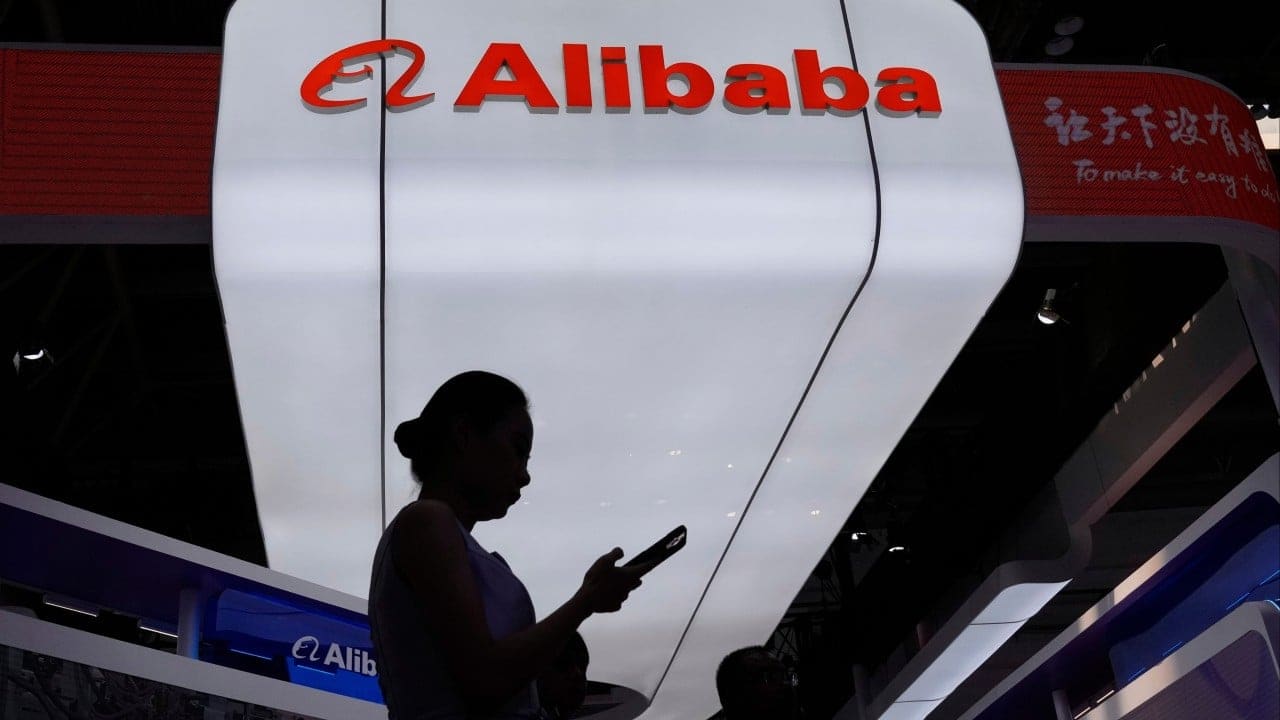
Dogotix, the robotics arm spun out from Chinese electric-vehicle manufacturer Xpeng, closed a $900 million financing round that values the unit at $6.3 billion, according to Xpeng. Alibaba Group and IDG Capital anchored the investment alongside undisclosed participants, channeling capital into a bet that embodied artificial intelligence will extend far beyond self-driving cars.
The deal represents the largest single private-equity transaction for a Chinese robotics company to date, a milestone that reflects both investor appetite and the urgency with which Chinese automakers are diversifying revenue streams. At DailyTechWire, we've tracked a steady migration of talent and capital from automotive R&D labs into humanoid and industrial robot ventures across Guangzhou, Shenzhen, and Hangzhou; Dogotix's raise is the clearest signal yet that this shift has reached institutional scale.
What makes the timing notable is the backdrop: Xpeng reported a wider second-quarter loss even as it poured resources into robotics, signaling that management is willing to absorb near-term margin pressure in exchange for positioning in a market that remains largely pre-commercial. The capital injection gives Dogotix runway to accelerate prototyping, field trials, and supply-chain partnerships without immediate pressure to achieve unit profitability, a luxury that few pure-play robotics startups enjoy.
Why Automakers Are Racing Into Humanoids
The convergence is structural. Electric-vehicle platforms already integrate perception stacks, real-time inference hardware, and over-the-air update pipelines. Transferring those capabilities to bipedal or wheeled robots is not trivial, but the overlap in sensor fusion, path planning, and edge compute is significant enough that automakers see a credible adjacency.
Xpeng's move mirrors Tesla's investment in Optimus, though the Chinese firm is pursuing a faster commercialization cadence. Where Tesla has framed its humanoid project as a long-term bet tied to its Full Self-Driving architecture, Xpeng and peers such as BYD and Geely are exploring near-term deployments in logistics hubs, manufacturing floors, and eldercare facilities. The regulatory environment in China, which permits broader industrial trials with fewer liability constraints than in the United States or European Union, accelerates this timeline.
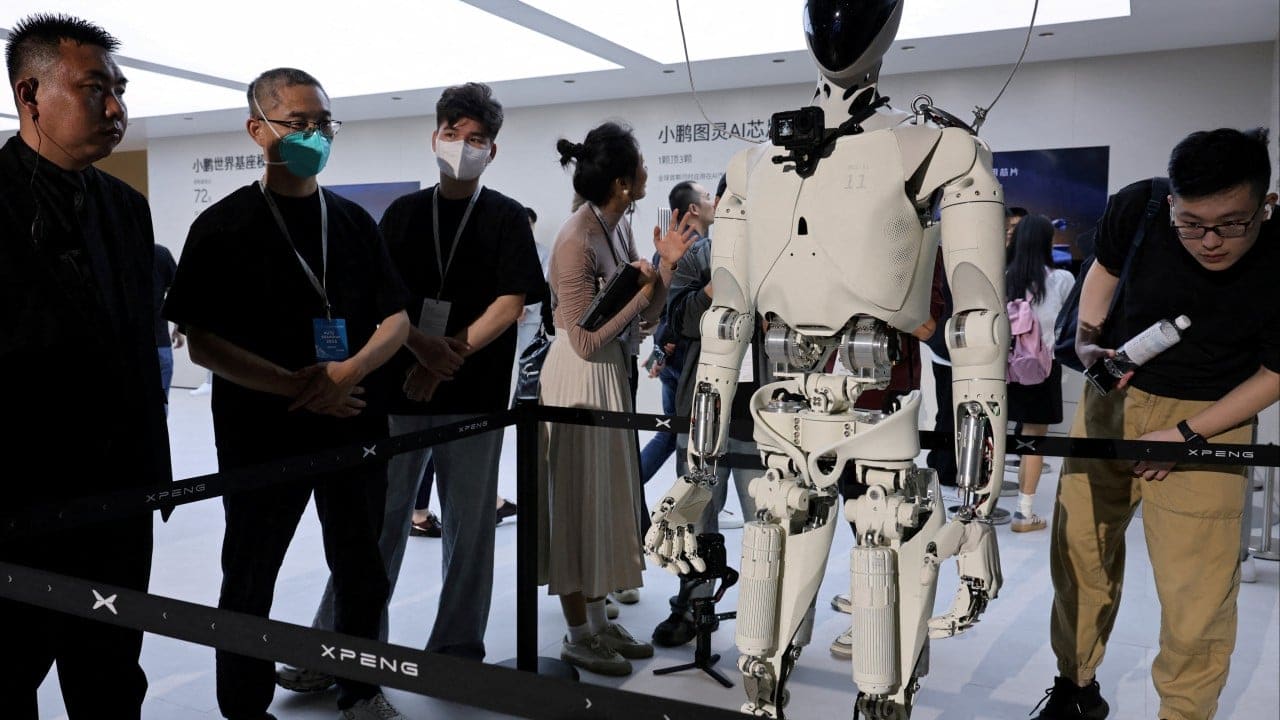
Dogotix has yet to disclose detailed technical specifications or production targets, but the subsidiary's focus appears to center on tasks that blend mobility with manipulation: moving pallets in warehouses, assisting with assembly-line handoffs, and potentially supporting last-meter delivery in dense urban environments. These use cases demand less dexterity than household chores but more contextual reasoning than fixed-arm industrial robots, positioning embodied AI in a middle layer that automakers believe they can address with automotive-grade sensors and compute.
The Investor Calculus
Alibaba's participation is strategic beyond the financial commitment. The e-commerce and cloud giant operates one of the world's largest logistics networks, with fulfillment centers that could serve as pilot sites for Dogotix platforms. IDG Capital, meanwhile, has a portfolio spanning semiconductor design, computer vision, and industrial automation, offering Dogotix potential introductions to component suppliers and integration partners.
The $6.3 billion valuation, while substantial, reflects a forward multiple rather than current revenue. Dogotix has not disclosed commercial shipments or signed contracts at scale, meaning investors are underwriting a roadmap rather than a proven business model. That risk premium is consistent with other pre-revenue robotics ventures in the region: Beijing-based humanoid startup Agibot raised $150 million earlier this year at a $1 billion valuation, and Shenzhen's Fourier Intelligence secured $60 million for rehabilitation exoskeletons, both on the strength of prototype demonstrations and government subsidies rather than sustained sales.
The willingness of Alibaba and IDG to lead at this valuation suggests confidence that Chinese demand for automation, driven by labor-cost inflation and demographic headwinds, will create a domestic market large enough to support multiple scaled players. It also reflects a broader pattern we've observed: Chinese venture investors are increasingly willing to fund hardware-intensive moonshots when they can be framed as dual-use platforms with civil and industrial applications.
Competitive Pressure and the Tesla Benchmark
Xpeng's pivot cannot be separated from the shadow of Tesla. Elon Musk has repeatedly positioned Optimus as a future revenue driver that could eventually surpass automotive sales, a claim that has drawn skepticism but also spurred competitors to accelerate their own programs. Chinese automakers, already engaged in a brutal price war in the EV segment, view robotics as a hedge against commoditization: if vehicle margins compress to single digits, a successful robotics business could preserve enterprise value.
The technical challenge, however, is formidable. Bipedal locomotion on uneven surfaces, real-time grasp planning, and human-robot interaction under variable lighting and occlusion remain unsolved at the level of reliability required for commercial deployment. Automakers bring expertise in sensor integration and power management, but they lack the decade-plus of research investment that academic labs and specialized robotics firms have accumulated. Whether Dogotix can bridge that gap with capital and automotive supply-chain muscle is an open question.
Implications for the Robotics Landscape
The Dogotix raise will likely accelerate consolidation and partnership activity in the Chinese robotics ecosystem. Smaller startups that lack automotive backing may find it harder to compete for talent and pilot contracts, while component suppliers, particularly those producing electric actuators, depth cameras, and edge AI accelerators, stand to benefit from increased procurement volume.
We also expect to see a wave of joint ventures and licensing deals as automakers seek to de-risk their robotics programs by sharing development costs. Xpeng itself has signaled openness to partnerships, though it has not named specific collaborators. If Dogotix can secure anchor customers in logistics or manufacturing within the next eighteen months, it will validate the automaker-to-robotics playbook and prompt faster replication across the industry.
For investors watching the space, the key metric will be unit deployment rather than valuation headlines. Robotics companies have historically struggled to scale beyond pilot projects, and the gap between a successful demonstration and a repeatable, profitable product is measured in years, not quarters. Dogotix's $900 million war chest buys time, but it does not guarantee that the unit will achieve the cost structure or reliability needed to compete with established industrial-robot vendors or emerging pure-play humanoid startups.
The broader takeaway is that embodied AI is transitioning from a research curiosity to a capital-intensive industrial race, with Chinese automakers leveraging their manufacturing scale and investor relationships to claim early positioning. Whether that translates into durable competitive advantage will depend on execution, regulatory tailwinds, and the pace at which real-world deployment uncovers unforeseen technical and operational challenges.