China's Robot Makers Shift From Showroom Flash to Factory Floor
With Unitree's IPO and a record exhibitor turnout in Beijing, the question now is whether the robotics boom can survive the grind of production work.
The Show Gets Bigger, the Stakes Get Higher
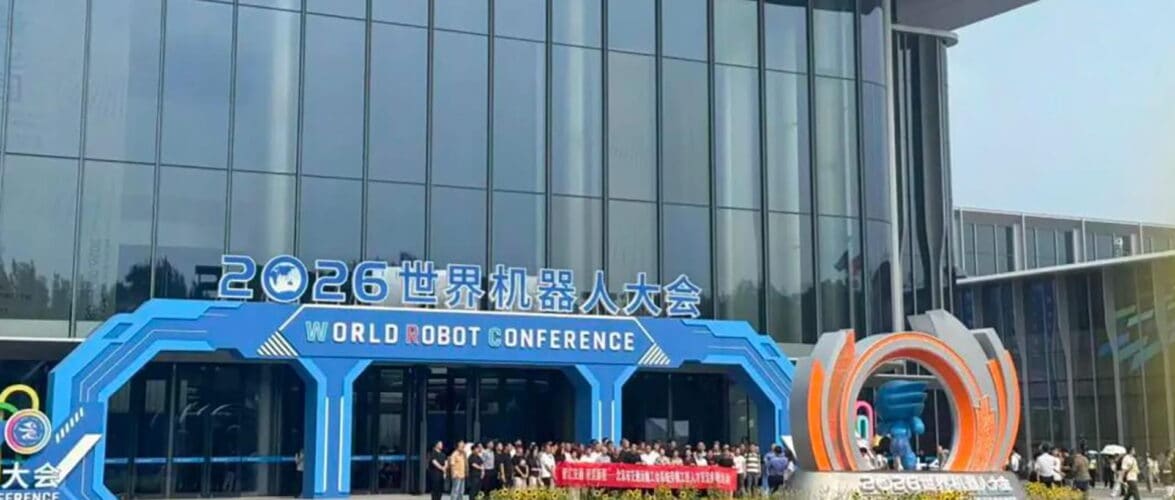
When the World Robot Conference opened in Beijing on August 20, the numbers told two stories. More than 300 exhibitors filled the halls, a 40% jump from the previous year, and approximately 3,000 robots lined the aisles. But the real pressure point arrived the same week: Unitree Robotics went public, briefly pushing its market capitalization past RMB 400 billion - roughly USD 59.4 billion - before settling lower. That valuation, even in its fleeting form, signaled how much capital and expectation now ride on China's robotics sector.
At DailyTechWire, we've tracked the region's hardware cycles long enough to know that demo-floor buzz and factory-floor reliability occupy different universes. The WRC has always been a showcase, but 2026 felt different. Conversations at booths turned less on futuristic capability and more on uptime, cost per task, and the mundane question of whether a given manipulator could run two shifts without recalibration. The crowd has grown; so has the scrutiny.
Unitree's IPO and the Valuation Question
Unitree's listing arrived at a moment when investors across Shenzhen, Shanghai, and Singapore are re-evaluating robotics portfolios. The company, known for quadruped platforms and more recently humanoid prototypes, hit a peak market cap that placed it among the most valuable robotics firms globally. Yet the price action in the days following the debut was volatile, reflecting uncertainty about how quickly these machines transition from research novelty to revenue-generating assets.
Unitree's hardware is technically impressive - its quadrupeds move with fluid dynamics that rival Boston Dynamics' Spot, and at a fraction of the sticker price. But the IPO prospectus revealed what many in the sector already suspected: unit economics remain fragile. Manufacturing at scale demands supply-chain discipline, and the gap between prototype cost and mass-production cost is wider than pitch decks suggest. The valuation spike was as much a bet on future production learning curves as it was on current product-market fit.
A Crowded Floor, a Narrowing Path
The 40% increase in exhibitors at WRC 2026 reflects both genuine progress and a certain amount of crowding. Robotics has become a policy priority in China, with provincial governments offering subsidies, cheap land, and preferential loans to companies that promise to build domestic automation capacity. The result is a surge in startups, many of them iterating on similar architectures - collaborative arms, mobile bases, vision modules sourced from a handful of suppliers.
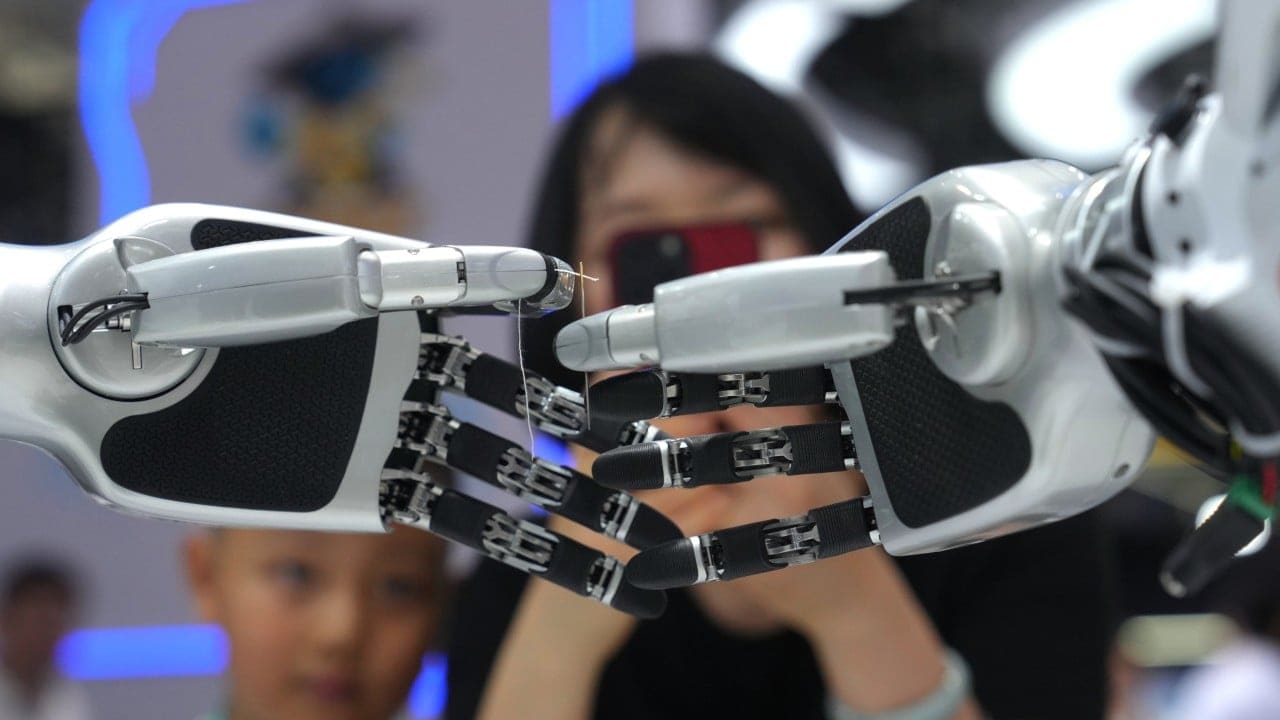
Walking the conference floor, the homogeneity was striking. Dozens of booths featured six-axis arms performing pick-and-place routines or humanoid torsos waving in pre-programmed loops. Differentiation increasingly hinges not on mechanical design but on software stacks, sensor fusion, and the ability to handle edge cases - when a part arrives misaligned, when lighting changes, when a human steps into the workspace unexpectedly. These are the problems that separate a trade-show demo from a machine that can run unsupervised in a Dongguan electronics plant or a Chongqing automotive line.
The Test of Real Work
China's robotics sector is entering what we might call the "deployment gauntlet." Early adopters - automakers, logistics operators, consumer electronics assemblers - are moving beyond pilot programs and demanding reliability metrics that mirror traditional industrial equipment. Mean time between failures, ease of integration with legacy manufacturing execution systems, and total cost of ownership now matter more than peak speed or headline-grabbing dexterity.
Several exhibitors at WRC 2026 acknowledged this shift. One collaborative-arm maker, for instance, highlighted not the robot's degrees of freedom but its ability to interface with existing PLCs and its modular wrist design, which allows on-site replacement without returning the unit to the factory. Another vendor emphasized thermal management, a mundane topic that becomes critical when a robot operates in a facility where ambient temperature swings by 15 degrees Celsius between day and night shifts.
The humanoid category, which drew the most press attention, faces the steepest climb. Humanoid robots remain expensive, power-hungry, and limited in the tasks they can perform reliably. At WRC, several companies demonstrated bipedal platforms navigating obstacle courses or manipulating objects, but few could articulate a clear deployment scenario beyond warehousing or inspection. The form factor is compelling - humans design workspaces for humans, so a humanoid robot theoretically requires less infrastructure adaptation - but the business case remains elusive. Until unit cost drops and battery life extends, humanoids will stay confined to research labs and pilot lines.
Capital, Competition, and the Road Ahead
Unitree's IPO is unlikely to be the last. Several robotics firms in China are preparing for public listings or late-stage private rounds, and the capital influx will accelerate both innovation and consolidation. Companies that can demonstrate repeatable deployments and positive unit economics will attract follow-on investment; those that remain stuck in the demo loop will struggle.
The competitive landscape is also shifting. International players - ABB, FANUC, KUKA - still dominate high-precision segments, but Chinese firms are closing the gap in cost-sensitive applications. Meanwhile, export controls on advanced semiconductors and certain AI accelerators introduce friction. Robotics platforms that rely on cutting-edge inference chips may face supply constraints, pushing some companies toward domestically produced alternatives that lag in performance.
We see this dynamic playing out in real time. At WRC 2026, a number of exhibitors highlighted partnerships with Chinese chip designers, framing them as strategic resilience rather than necessity. The subtext was clear: supply-chain sovereignty is no longer optional. For robotics firms targeting both domestic and export markets, navigating these constraints while maintaining performance parity will be a defining challenge.
From Conference to Factory
The World Robot Conference has always been part trade show, part aspiration. In 2026, the aspiration is giving way to accountability. Investors, customers, and policymakers are all asking the same question: can these machines do the work? The answer will determine which of the 300-plus exhibitors in Beijing become enduring platforms and which fade into the long list of hardware experiments that never escaped the prototype stage.
China's robotics sector has the talent, the capital, and the manufacturing base to compete globally. What it needs now is time under load - robots running second and third shifts, handling variability, proving that the hype can translate into uptime. The conference floor is where the story begins. The factory floor is where it gets written.