GuliKit Launches ES Max Controller With Upgraded Anti-Drift Thumbsticks
The $49.99 wireless gamepad brings refined magnetoresistance sensors to Switch 2, undercutting Nintendo's Pro Controller while targeting the drift problems that defined the previous generation.
A Second-Generation Bet on Magnetoresistance
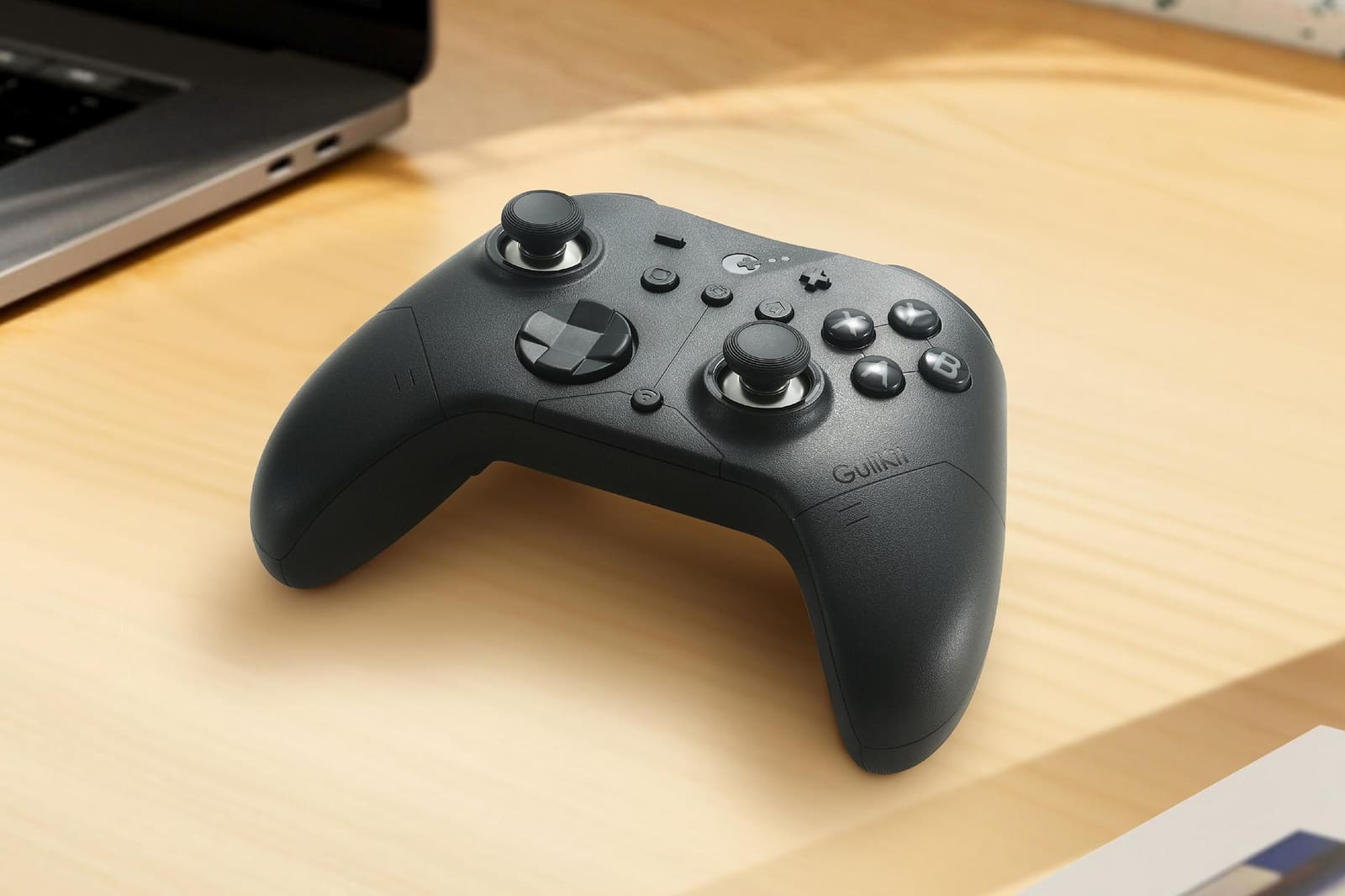
GuliKit has introduced the ES Max, a wireless controller that refines the tunneling magnetoresistance thumbstick technology the company first shipped in last year's ES Pro. The new gamepad, priced at $49.99, arrives as Nintendo's Switch 2 ecosystem expands and third-party accessory makers race to deliver alternatives that address the stick drift issues that haunted the original Switch hardware.
At DailyTechWire, we've tracked the evolution of input mechanisms across gaming peripherals, and GuliKit's iterative approach reflects a broader industry push to move beyond the potentiometer-based analog sticks that have dominated console controllers for decades. The ES Max doesn't represent a radical departure from the ES Pro's design philosophy but instead tweaks the measurement methodology within the TMR sensor stack to improve responsiveness and longevity.
Pricing Strategy in a Crowded Accessory Market
The ES Max sits in a deliberate pricing tier. At $49.99, it undercuts Nintendo's official Switch 2 Pro Controller while commanding a premium over the $29.99 ES Pro that launched nearly a year ago. That spread reflects both the component cost of the upgraded sensors and GuliKit's positioning as a performance-focused alternative rather than a budget option.
For context, first-party controllers from platform holders typically carry a brand premium and the assurance of full compatibility, but they also inherit design conservatism. GuliKit and competitors like 8BitDo or PowerA have found room to experiment with features, materials, and input technology that Nintendo may be slower to adopt. The ES Max's feature set extends beyond the TMR sticks, though the company has not detailed every addition; the emphasis remains squarely on drift resistance as the headline value proposition.
How TMR Thumbsticks Diverge From Potentiometers
Traditional analog sticks rely on potentiometers, variable resistors that wear down as a wiper moves across a resistive track. Over time, carbon deposits, dust, and physical degradation introduce noise into the positional signal, manifesting as drift, where the stick registers movement even when centered. Nintendo faced a wave of consumer complaints and lawsuits over Joy-Con drift during the original Switch's lifecycle, and the issue became emblematic of cost-driven design trade-offs in mass-market hardware.
Tunneling magnetoresistance sensors, by contrast, measure the position of a magnet attached to the stick's gimbal using quantum tunneling effects in layered magnetic materials. Because there is no physical contact between the sensing element and the moving part, mechanical wear is virtually eliminated. Hall-effect sensors, which also use magnetic fields, have gained traction in premium controllers from brands like Thrustmaster and SCUF; TMR represents a parallel path with different signal-to-noise characteristics and power requirements.
GuliKit's iteration in the ES Max adjusts how the sensor samples the magnetic field, likely through changes in the sensor IC's architecture or the algorithm that translates raw magnetoresistance values into stick coordinates. The company has not published technical documentation, but the claim of improved performance suggests tighter tolerances, faster polling, or reduced latency, all of which matter in competitive gaming scenarios where stick precision can influence outcomes.
The Drift Problem as a Market Wedge
Stick drift evolved from a niche reliability concern into a mainstream consumer rights issue over the past five years. Class-action lawsuits in North America and regulatory scrutiny in Europe pushed Nintendo to extend repair programs and, reportedly, to revisit input designs for the Switch 2. That public pressure created an opening for third-party manufacturers to differentiate on durability.
GuliKit has leaned into this wedge aggressively. The ES Pro's budget positioning made TMR technology accessible to cost-conscious players who wanted assurance that their controller would outlast the typical potentiometer lifespan of 500,000 to 2 million cycles. The ES Max, with its higher price and enhanced sensor implementation, targets enthusiasts willing to pay for incremental performance gains and extended feature sets.
This strategy mirrors trends in the mechanical keyboard market, where brands like Wooting and Rainy differentiated through novel switch technologies, magnetic or optical, that promised advantages over traditional Cherry MX clones. In both cases, the pitch is that a modest upfront investment avoids the replacement cycle and frustration associated with wear-prone components.
Switch 2 Ecosystem Timing
The ES Max's launch aligns with the early months of the Switch 2's availability, a window when accessory attach rates are highest and players are assembling their hardware kits. Nintendo's official Pro Controller remains the default choice for many, but the ecosystem has matured to the point where third-party options are widely accepted, especially among players who prioritize customization, ergonomics, or specific technical features.
The Switch 2's backward compatibility with original Switch software means the ES Max can serve dual duty, appealing to households that own both generations of hardware. That installed base, estimated in the hundreds of millions globally, provides a large addressable market for a controller that promises to avoid the pitfalls of its predecessors.
Open Questions on Feature Parity and Compatibility
GuliKit has not yet disclosed the full specification sheet for the ES Max. Key unknowns include wireless protocol support beyond Bluetooth, whether the controller includes gyroscope and accelerometer sensors for motion control, haptic feedback implementation, battery life, and compatibility with platforms beyond the Switch family, such as PC, Android, or iOS.
Third-party controllers often face firmware update requirements to maintain compatibility with platform software revisions, and GuliKit's track record on post-launch support will influence long-term value. The company's previous controllers have received mixed reviews on build quality and button feel, areas where Nintendo's first-party hardware still sets the benchmark despite its drift vulnerabilities.
The Durability Promise in Context
While TMR and Hall-effect sensors eliminate the primary failure mode of analog sticks, they do not make a controller indestructible. Other components, such as shoulder triggers, face buttons, and internal flex cables, remain subject to wear. The ES Max's longevity will ultimately depend on the quality of its entire assembly, not just the thumbsticks.
Moreover, the performance delta between a well-calibrated potentiometer stick and a TMR sensor may be imperceptible to many players in everyday gaming. The real value proposition is peace of mind: the knowledge that drift is unlikely to emerge after months of use, sparing the hassle of recalibration, repair, or replacement.
For competitive players, especially in precision-dependent genres like fighting games or first-person shooters, even minor improvements in stick consistency can justify the premium. For casual users, the ES Max's appeal hinges on whether the drift-resistant promise translates into tangible reliability over years of use.
Implications for the Controller Market
GuliKit's move to a two-tier TMR lineup, with the ES Pro and ES Max occupying budget and mid-range slots, signals confidence that magnetic sensor technology can scale beyond niche enthusiast products. If the ES Max gains traction, expect competitors to accelerate their own magnetic sensor roadmaps or to emphasize alternative durability features.
Nintendo, for its part, has historically been slow to adopt third-party innovations in input technology, preferring incremental refinement of proven designs. Whether the company will integrate TMR or Hall-effect sensors into future first-party controllers remains uncertain, but the mounting public awareness of drift and the visibility of alternatives like the ES Max increase the pressure to act.
In the near term, the ES Max will test whether players value drift resistance enough to choose a third-party controller over the brand familiarity and ecosystem integration of Nintendo's official hardware. The answer will shape accessory strategies across the industry as the Switch 2 generation unfolds.