Spotify's New AI Persona Badges Reveal the Platform's Authenticity Problem
The streaming giant will flag AI-generated artist identities and wall them off from recommendations, a rare instance of a platform choosing curation over algorithmic neutrality.
The Badge and the Barrier
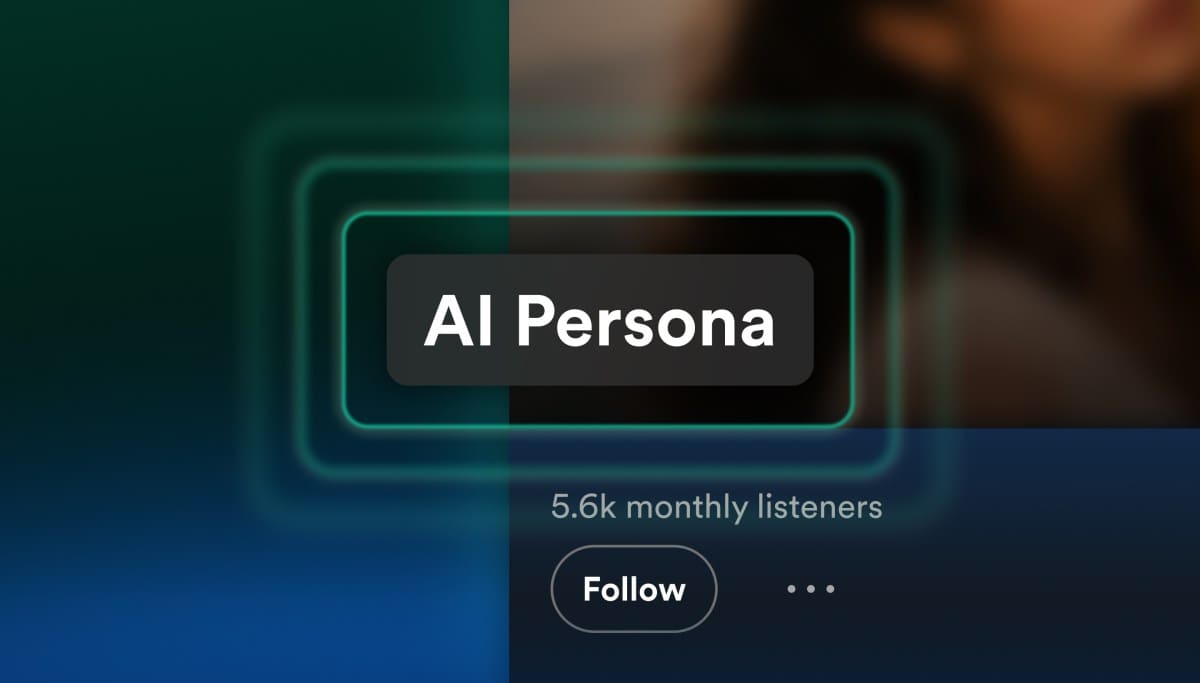
Starting mid-September, Spotify listeners will encounter a new visual marker on certain artist profiles: an "AI Persona" badge. The label will appear across the platform's interface, from artist banners and About sections to search results and playlist track rows. More significantly, artists carrying this badge will be excluded from both editorial picks and algorithmic recommendations unless a user has explicitly chosen to follow them.
The policy, which Spotify began accepting self-disclosures for in August, represents a deliberate step away from algorithmic neutrality. By creating a two-tier system where AI-generated artist identities are permitted but gated, the company is signaling that not all content deserves equal distribution, even if it technically complies with platform rules.
Spotify's review process will begin with profiles that have already crossed pre-defined audience thresholds, ensuring the most-listened-to accounts are assessed first. The company will not rely solely on artist self-reporting. Its review team will examine profiles where names and imagery suggest photorealistic AI-generated identities, a category that has proliferated as generative tools have become more accessible and convincing.
Why Curation Trumps Scale
At DailyTechWire, we've tracked the tension between content volume and user experience across Asian and Western platforms for years. Spotify's move echoes strategies seen at Xiaohongshu and LINE Music, where human curation remains a hedge against algorithmic overload. The difference here is scale: Spotify operates in 180-plus markets and must balance creator freedom with listener trust.
The company framed its decision around "authentic artists building careers in music," a phrase that acknowledges growing consumer resistance to AI-generated art. Internal data likely shows that exposure to low-quality or deceptive content correlates with churn, a metric that matters more than raw catalog size when subscription revenue is the business model.
Importantly, Spotify clarified that the AI Persona designation applies to the artist's public identity, not the production method. An artist using AI tools in composition or mixing will not automatically receive the badge. That distinction is handled through separate features like AI Credits and SongDNA, which document the creative process without affecting discoverability.
The Slop Problem and the Remix Exception
Spotify's policy update arrives as platforms across media categories grapple with what the company itself calls "AI-generated slop," low-effort content that generative models make trivially cheap to produce at scale. For music streaming, slop manifests as synthetic tracks designed to game playlist algorithms, rack up micro-payments, and dilute the listening experience.
By excluding AI Personas from recommendations, Spotify is effectively de-monetizing a category of content that might otherwise flood its system. The company already bans unauthorized AI voice clones and deepfakes, a policy introduced in September 2025. The new badge system extends that framework to artist identities, not just audio artifacts.
Yet Spotify is simultaneously preparing to permit AI-generated remixes and covers under licensing agreements with Universal Music Group and Merlin. These deals, finalized earlier this year, allow fan-made derivative works while routing royalties back to original rights holders. The distinction matters: remixes are user-generated content tied to real artists, while AI Personas are synthetic identities with no human counterpart.
The dual approach reflects a bet that listeners will accept AI as a creative tool but reject it as a substitute for human artistry. Whether that bet holds depends on how clearly users can distinguish between the two, and whether the badge system proves legible across mobile, desktop, and connected devices.
Appeals, Reporting, and the Human in the Loop
Spotify will allow artists to contest an AI Persona label if they believe it has been applied incorrectly. The appeals process acknowledges that the line between AI-assisted and AI-generated can be blurry, especially for artists who use digital avatars, stage names, or heavily processed visuals as part of their brand.
Starting in the coming months, users will also be able to report profiles they suspect are AI Personas that have not yet been labeled. This crowdsourced moderation layer mirrors systems at YouTube and TikTok, where user flags help platforms scale enforcement beyond what automated detection can achieve.
The reliance on both human review and user reporting suggests Spotify does not yet trust machine learning alone to make these determinations. That makes sense: photorealistic AI-generated faces have crossed the uncanny valley, and distinguishing a synthetic profile from a heavily edited real one requires contextual judgment that current computer vision models struggle with.
What It Means for the Streaming Economy
Spotify's policy has immediate implications for the broader creator economy in Asia and beyond. Artists who have built followings using virtual personas, common in markets like Japan and South Korea, may face labeling even if a human team controls the music and brand. The badge could carry stigma, reducing discoverability and limiting growth.
For rights holders and labels, the policy offers a partial defense against catalog dilution. If AI Personas are walled off from recommendations, their streams will decline, reducing the share of royalty payouts they claim. That shifts more revenue toward human artists, but it also raises questions about how Spotify will handle hybrid cases, such as virtual idols like Hatsune Miku, whose music is composed and performed by humans but whose identity is entirely synthetic.
The policy also sets a precedent for other platforms. Apple Music, Amazon Music, and YouTube Music have yet to announce comparable measures, but if Spotify's user retention improves as a result, competitors may follow. The risk is fragmentation: if each platform adopts different standards, artists and labels will face a patchwork of compliance requirements across markets.
The Authenticity Bargain
Spotify's AI Persona badges are ultimately a bet on authenticity as a differentiator. In an environment where generative models can produce passable music, album art, and even backstories, the platform is choosing to highlight the human origin story as a signal of value.
That choice aligns with broader consumer trends. Surveys across APAC and North American markets show declining trust in AI-generated content, particularly in creative fields. Spotify is banking that listeners care not just about what they hear, but about who made it and whether that person exists.
The policy also reveals the limits of algorithmic governance. Spotify's recommendation engine is among the most sophisticated in the industry, but it cannot solve for user trust or cultural backlash. By layering human judgment and explicit labeling on top of its algorithms, the company is acknowledging that some decisions require more than data.
Whether this approach scales, and whether it can be adapted as AI tools evolve, remains an open question. For now, Spotify is drawing a line: synthetic identities are allowed, but they will not be promoted. In a platform economy built on discovery and personalization, that distinction may be the most consequential one the company makes this year.