Google and Samsung Choose Opposite Paths for Foldable Design
The Pixel 11 Pro Fold and Galaxy Z Fold 8 reveal sharply divergent hardware philosophies as Android's two biggest players bet on different aspect ratios, camera arrays, and battery chemistry.
A Fork in the Foldable Road
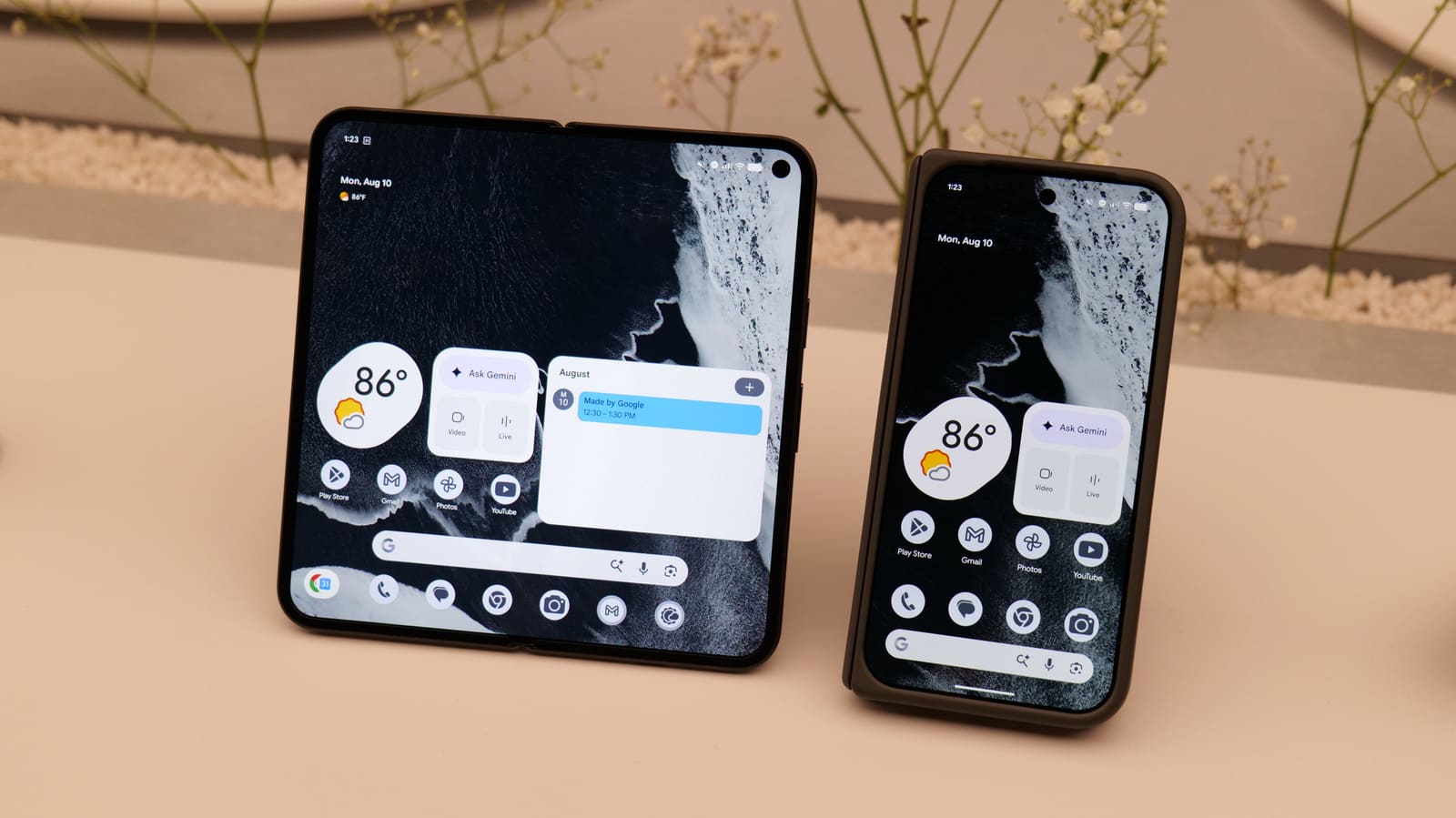
Two years ago, the conventional wisdom was simple: foldables would converge on a single, optimized form factor once the market matured. Instead, 2026 has delivered the opposite. Samsung pivoted to a wider aspect ratio after years of narrow designs, while Google moved in the reverse direction, adopting the tall, slim profile Samsung just abandoned. The result is a natural experiment in hardware philosophy, with the Pixel 11 Pro Fold and Galaxy Z Fold 8 now sitting at opposite ends of the foldable spectrum.
At DailyTechWire, we've tracked every major foldable launch across Asia and North America since 2019, and this divergence marks the first time two flagship Android devices have pursued such fundamentally different geometries in the same product cycle. The implications reach beyond screen size, touching everything from battery chemistry to camera sensor selection and wireless charging standards.
Screen Geometry and the One-Hand Problem
Samsung's Galaxy Z Fold 8 measures shorter and wider than its predecessor, built around a 5.5-inch external AMOLED panel that prioritizes thumb reachability. Unfold it, and you get a 7.6-inch internal display optimized for 16:9 video content. Both screens run at 120Hz, with peak brightness hitting 3,000 nits in direct sunlight.
Google went the other direction. The Pixel 11 Pro Fold stretches taller and narrower, with a 6.5-inch external Super Actua display that behaves much like a standard smartphone. Open it, and the 8-inch internal screen provides enough vertical real estate to stack two full-size apps without cramping either one. Peak brightness climbs to 3,600 nits, and Google added a new "HiLight" notification strip on the camera bar that glows different colors depending on caller ID or Gemini assistant activity.
The aspect ratio question isn't academic. Samsung's wider stance makes the Z Fold 8 easier to grip one-handed when closed, but the external screen feels cramped for typing or scrolling through long documents. Google's approach delivers a more familiar phone experience on the outside, at the cost of added height that can make the device awkward to pocket. Neither solution is objectively superior; both reflect different assumptions about how users will split their time between folded and unfolded modes.
Silicon-Carbon Batteries vs. Qi2 Magnets
Battery technology reveals another split. Samsung equipped the Galaxy Z Fold 8 with a 4,800mAh silicon-carbon cell, a newer chemistry that packs more capacity into a smaller volume than traditional lithium-ion. The company claims over 28 hours of mixed use, and the device supports 45W wired charging alongside 20W wireless. Critically, Samsung skipped Qi2 magnets, meaning no MagSafe-style snap-on accessories.
Google stuck with conventional lithium-ion but included Qi2 magnets throughout the Pixel 11 Pro Fold's 4,750mAh pack. That enables 25W wireless charging with Google's Pixelsnap chargers and opens the door to magnetic cases, wallets, and mounts. Wired charging tops out at 30W, and Google estimates 24-plus hours of battery life. The magnets add weight and complexity, but they also future-proof the device for an accessory ecosystem that's only beginning to materialize.
Silicon-carbon batteries represent a meaningful technical leap, particularly for foldables where internal volume is at a premium. But the Qi2 decision reflects a broader strategic bet: Google is wagering that users will value accessory compatibility more than raw milliamp-hours, while Samsung is optimizing for endurance and fast top-ups.
Camera Arrays and the Telephoto Question
The Pixel 11 Pro Fold carries three rear cameras: a 48-megapixel wide with a 1/1.56-inch sensor, a 10.5-megapixel ultrawide, and a 10.8-megapixel telephoto. All three lenses support Super Res Zoom, a computational feature that extends digital magnification to 30x, up from 20x on last year's model. Google also introduced Magic Capture, which automatically crops and sharpens photos, and Camera Looks, a film-grade system similar to Apple's Photographic Styles. Front-facing cameras on both the external and internal screens clock in at 10 megapixels.
Samsung took a simpler route, pairing a 50-megapixel wide with a 50-megapixel ultrawide and dropping the dedicated telephoto lens entirely. The company's ProVisual Engine handles noise reduction and multi-frame processing, and the Z Fold 8 can record simultaneously from front and rear cameras. Selfie cameras match Google's at 10 megapixels on both screens.
The telephoto omission is the headline. Samsung reserved its 200-megapixel sensor for the more expensive Z Fold 8 Ultra, leaving the standard Fold 8 with a two-camera setup that's competitive for everyday shooting but lacks the reach enthusiasts expect. Google's retention of a telephoto, even a modest one, signals continued commitment to computational zoom as a differentiator. For users who rarely zoom beyond 5x, Samsung's dual 50-megapixel array may prove more versatile in mixed lighting. For those who regularly crop or magnify, Google's three-lens system is the safer bet.
Tensor G6 vs. Snapdragon 8 Elite Gen 5
Google's Tensor G6 chip powers the Pixel 11 Pro Fold, paired with 16GB of RAM across all storage tiers (256GB, 512GB, 1TB). The company claims 20 percent better power efficiency, 25 percent faster web browsing, and 15 percent quicker app launches compared to the Tensor G5. More importantly, the G6 includes an updated Image Signal Processor and optimized pathways for running Gemini Nano, Google's on-device large language model, without hammering battery life.
Samsung equipped the Galaxy Z Fold 8 with Qualcomm's Snapdragon 8 Elite Gen 5, offering 12GB of RAM on the 256GB and 512GB models and 16GB on the 1TB variant. In practice, the Snapdragon handles multitasking and mobile video editing without hesitation, and Qualcomm's latest generation delivers class-leading GPU performance for gaming and AR workloads.
Tensor has always prioritized AI inference and image processing over raw benchmark scores, and the G6 continues that tradition. If your workflow leans heavily on real-time translation, voice transcription, or computational photography, Tensor's custom accelerators provide tangible advantages. If you're editing 4K video or running demanding Android games, Snapdragon's brute-force approach still leads. Neither chip is a bottleneck for typical foldable use cases, but their architectural differences matter at the margins.
Color Options and the Design Tax
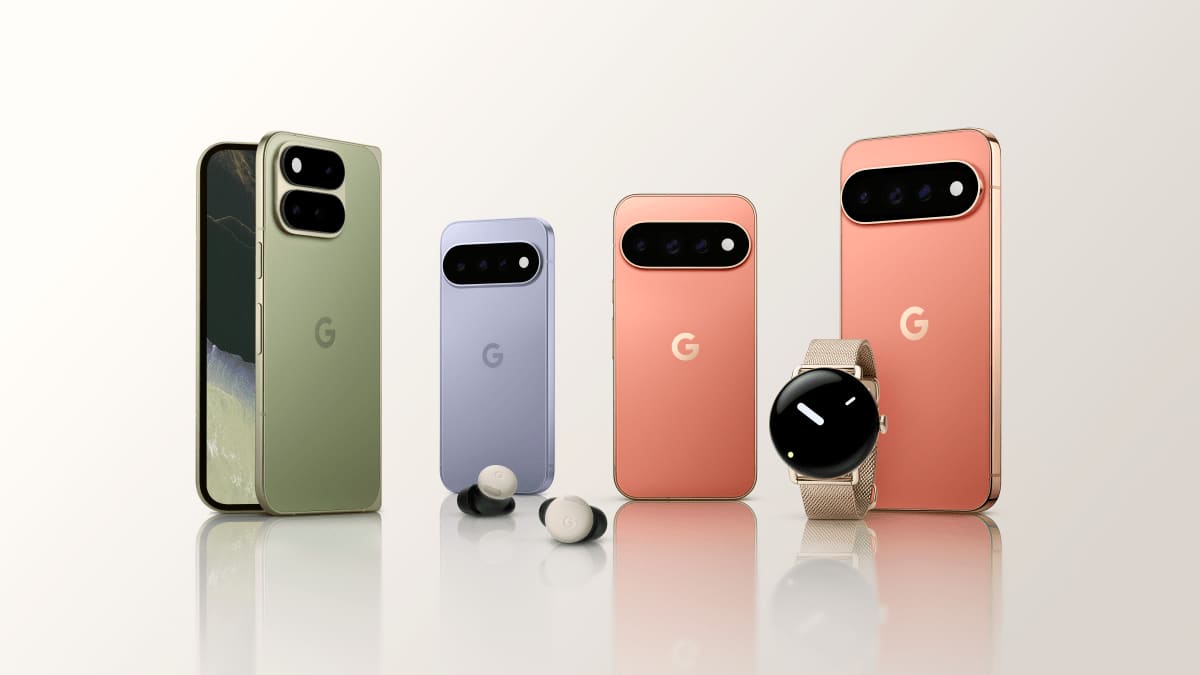
Samsung offers four finishes for the Galaxy Z Fold 8: Lavender (light purple), Cream (white), Graphite (gray), and a web-exclusive Pistachio (green). Google ships the Pixel 11 Pro Fold in just two: Olive (soft green) and Obsidian (black). Both devices measure roughly 1mm thinner than their predecessors when folded, and both use Gorilla Glass Victus on the external screen.
The Pixel 11 Pro Fold is also 1mm thinner than the Pixel 10 Pro Fold, a detail that required tighter hinge tolerances and shaved internal components. Samsung's decision to go wider without adding thickness suggests similar engineering trade-offs, particularly around the silicon-carbon battery and the removal of the telephoto module.
Pricing and the $1,900 Floor
Both devices start at $1,900, a price point that reflects elevated DRAM costs and the inherent complexity of folding displays. Google raised the Pixel Pro Fold's entry price by $100 year-over-year, while Samsung technically lowered the Z Fold 8 by the same margin compared to the Z Fold 7. Neither discount changes the fundamental reality: foldables remain a premium category, and $1,900 is now the baseline for flagship Android folders.
At DailyTechWire, we've seen similar pricing across Asia's foldable market, from Xiaomi's Mix Fold to Oppo's Find N series. The $1,900 threshold appears to represent a hard floor for devices with 120Hz OLED internals, flagship silicon, and multi-camera arrays. Expect that number to hold or inch higher as manufacturers layer in features like Qi2 magnets, silicon-carbon batteries, and on-device AI accelerators.
What the Split Means for Android Foldables
The Pixel 11 Pro Fold and Galaxy Z Fold 8 are both excellent devices, but they're aimed at subtly different users. Samsung's wider aspect ratio favors media consumption and one-handed portability when closed. Google's taller design prioritizes multitasking and a more traditional smartphone feel. Samsung's silicon-carbon battery and faster wired charging appeal to power users who top up multiple times a day. Google's Qi2 magnets and Tensor AI optimizations cater to users embedding themselves in Google's accessory and services ecosystem.
Neither approach is wrong, and both will likely coexist as Android foldables mature. The real question is whether other manufacturers will pick a side or continue hedging with incremental tweaks. For now, Google and Samsung have drawn a clear line in the sand, and the market will decide which geometry wins.