Google Rolls Out Publisher-First Controls in Search and Discover
A new "Preferred Sources" button lets readers boost publishers in Search results, while Gemini enters the Discover feed with conversational curation.
A Button That Shifts the Algorithm
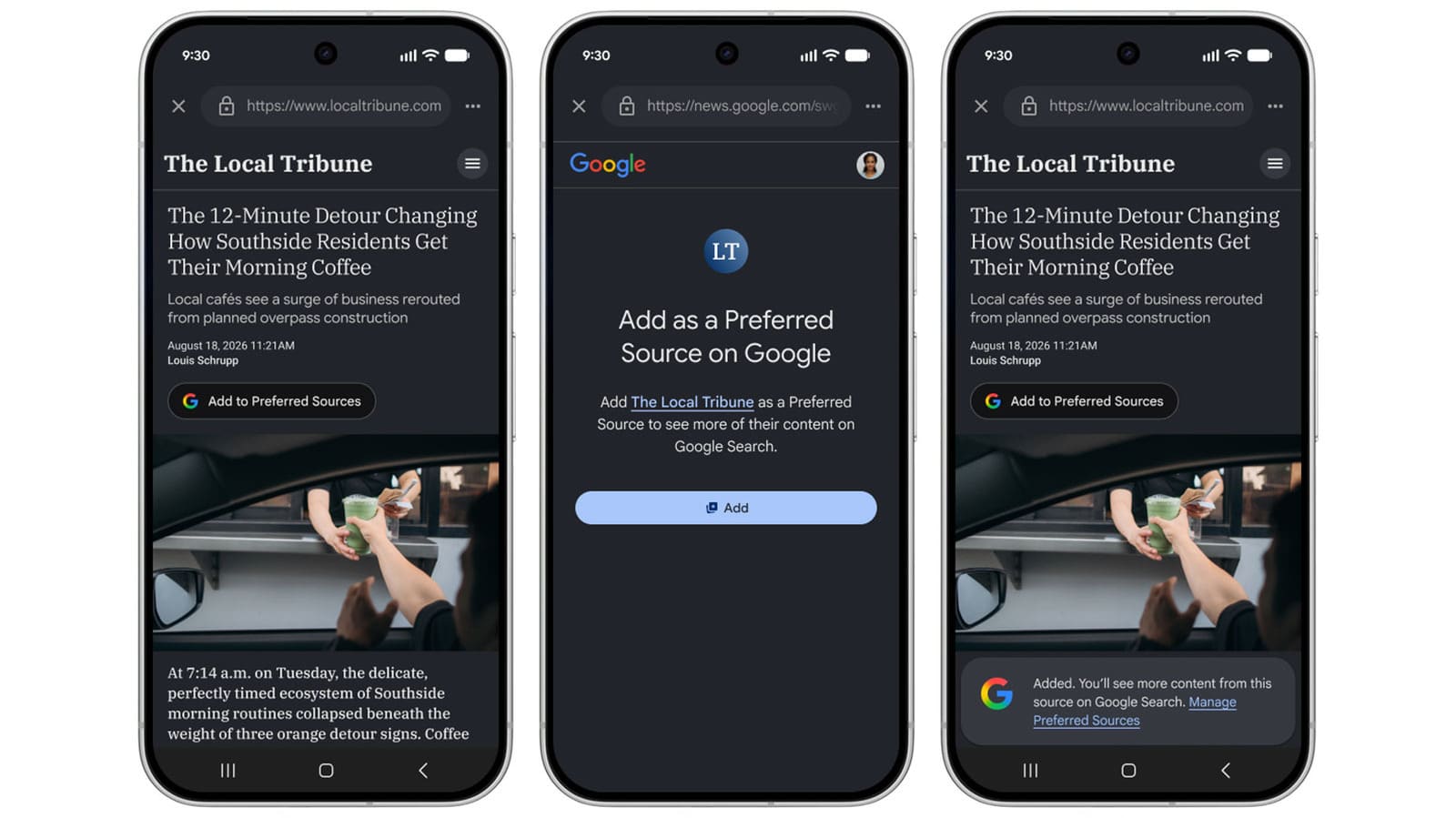
Google has introduced a Preferred Sources button that webmasters can embed on their sites, allowing readers to signal which publications they want to see more of. When visitors click the button, the site is marked as preferred and they return to the exact spot they left off. From that point forward, the publication appears more prominently across Google Search, Top Stories, AI Overviews, and AI Mode, according to Google.
The feature formalizes a workaround that publishers had already been building independently. At DailyTechWire, we've tracked how referral traffic from Google has contracted over the past eighteen months, squeezed by AI-generated summaries that keep users inside Google's own properties. For many newsrooms across Asia and beyond, Search still represents a meaningful share of audience and ad revenue, even as that share erodes.
The timing of this rollout invites scrutiny. In June, facing pressure from the UK Competition and Markets Authority, Google announced that websites could opt out of appearing in AI-generated search results. Now it offers a complementary lever: a way for readers to opt publishers in. Whether this gesture translates into measurable traffic gains or simply redistributes a shrinking pool of clicks remains an open question. Publishers will be watching their analytics closely.
Gemini Moves Into the Feed
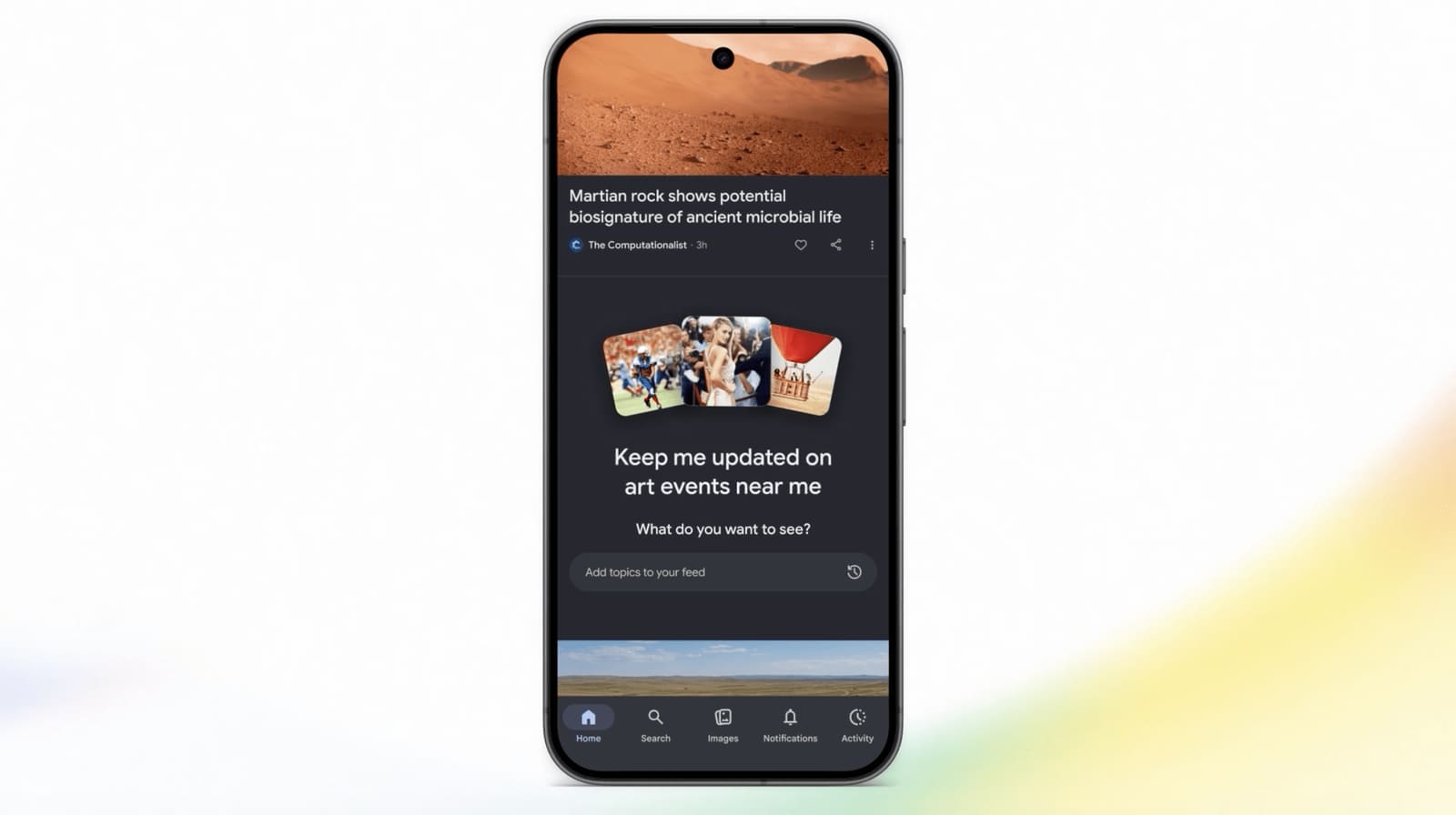
Google is also embedding its Gemini assistant directly into the Discover feed, the algorithmically curated stream that appears in the Google app, Chrome on mobile, and Android home screens. Users will be able to refine what they see by tapping a three-dot menu next to any story and conversing with Gemini. The feed adjusts in real time and remembers preferences across sessions, Google says.
The move represents a shift from passive curation to active dialogue. Instead of swiping past irrelevant cards, users can tell Gemini to surface more stories about semiconductor export policy, fewer celebrity interviews, or deeper coverage of a particular startup. The model learns iteratively, a design choice that mirrors patterns we've seen in other recommendation engines but layers conversational interface on top.
Gemini's integration into Discover also signals Google's broader strategy to weave large language models throughout its product suite. The assistant is no longer a standalone chatbot; it is becoming infrastructure, embedded wherever Google surfaces content. That ubiquity may drive usage, but it also raises familiar questions about model accuracy, source attribution, and the risk of hallucination when summarizing news.
Audio Briefings Get Granular
For users who prefer to listen, Google is expanding customization options in its News app on Android. Audio briefings, which compile recent headlines into spoken summaries, can now be tailored by topic. Google emphasizes that briefings include clear source attribution and links to full articles, a nod to transparency concerns that have shadowed AI-generated news products.
The feature positions Google to compete with podcast-style news apps and voice assistants that offer morning briefings. By letting users choose specific beats or publications, Google is betting that personalization will keep listeners engaged longer than a generic top-stories playlist. The challenge, as always, is ensuring that algorithmic curation does not create filter bubbles or prioritize engagement over accuracy.
What Publishers Stand to Gain or Lose
The Preferred Sources button is a low-friction gesture toward publisher relations, but its impact hinges on adoption and visibility. If the button is buried at the bottom of articles or requires multiple taps, few readers will use it. If it is prominent and publishers promote it effectively, it could generate a meaningful signal for Google's ranking algorithms.
There is also a strategic tension. By offering readers a way to elevate preferred sources, Google acknowledges that its default ranking may not align with user intent or trust. At the same time, the button does nothing to address the underlying issue: AI Overviews and summaries that answer queries without sending traffic downstream. A reader who prefers a particular outlet may still never visit it if Google's interface provides the answer inline.
For publishers, the calculus is familiar. They can embrace the button as a partial remedy, lobby for structural changes to how Google surfaces content, or invest in direct audience relationships that reduce dependence on Search altogether. Many will do all three.
The Regulatory Backdrop
Google's recent product moves cannot be separated from the regulatory environment in which it operates. The UK's Competition and Markets Authority has scrutinized how Google's AI features affect publisher traffic and competition in digital advertising. The European Union has pressed similar questions under the Digital Markets Act. In the United States, antitrust cases continue to wind through the courts.
By giving publishers new tools and users new controls, Google may be seeking to demonstrate responsiveness before regulators impose mandates. The opt-out mechanism for AI-generated results and the Preferred Sources button both suggest a company trying to thread a narrow path: advancing AI-driven products while placating stakeholders who feel harmed by them.
Whether these measures satisfy regulators or publishers is uncertain. What is clear is that the next twelve months will produce data. Traffic patterns, click-through rates, and user adoption of these features will reveal whether Google's latest adjustments are substantive or symbolic.
Rollout and Availability
The features are rolling out gradually, as is typical for Google. Preferred Sources buttons will appear on publisher sites as webmasters choose to implement them. The Gemini integration in Discover will arrive first on mobile, with no firm timeline for desktop. Audio briefing customization is live in the Google News app on Android.
Users who do not see the updates immediately should wait a few days. Google's staged rollouts often take a week or more to reach all accounts, particularly outside the United States. For publishers weighing whether to add the Preferred Sources button, the decision comes down to opportunity cost and design: does the button fit naturally into the page, and will readers understand what it does?
At DailyTechWire, we view these changes as part of a longer negotiation between platforms and publishers. The tools Google ships matter less than the incentives they encode and the traffic they ultimately deliver. We will be testing the Preferred Sources button, monitoring our referral data, and reporting what we learn.