Google's Fourth-Gen Foldable Faces a Tougher Crowd
The Pixel 11 Pro Fold brings a better camera and lighter build, but iterative upgrades and a $1,899 price tag leave it trailing Samsung and Motorola on design and value.
Weight Loss Without the Form Factor Win
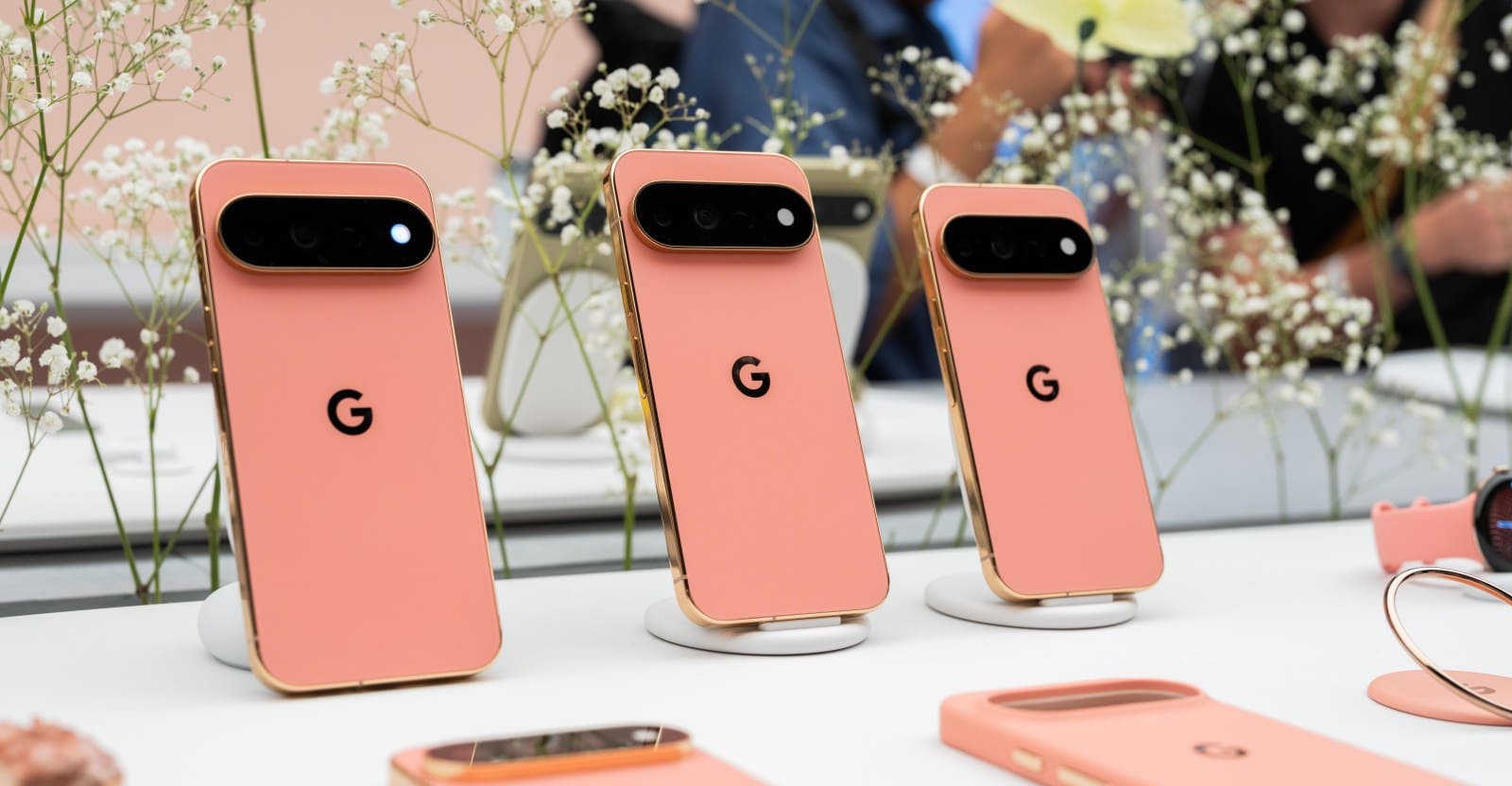
Google introduced the Pixel 11 Pro Fold at $1,899, a hundred dollars more than its predecessor, banking on camera improvements and a lighter frame to justify the premium. The device sheds 20 grams compared to last year's model, landing at 238 grams. That reduction comes partly from a new glass fiber composite back panel that Google describes as nearly crack-proof, though real-world durability testing remains to be seen.
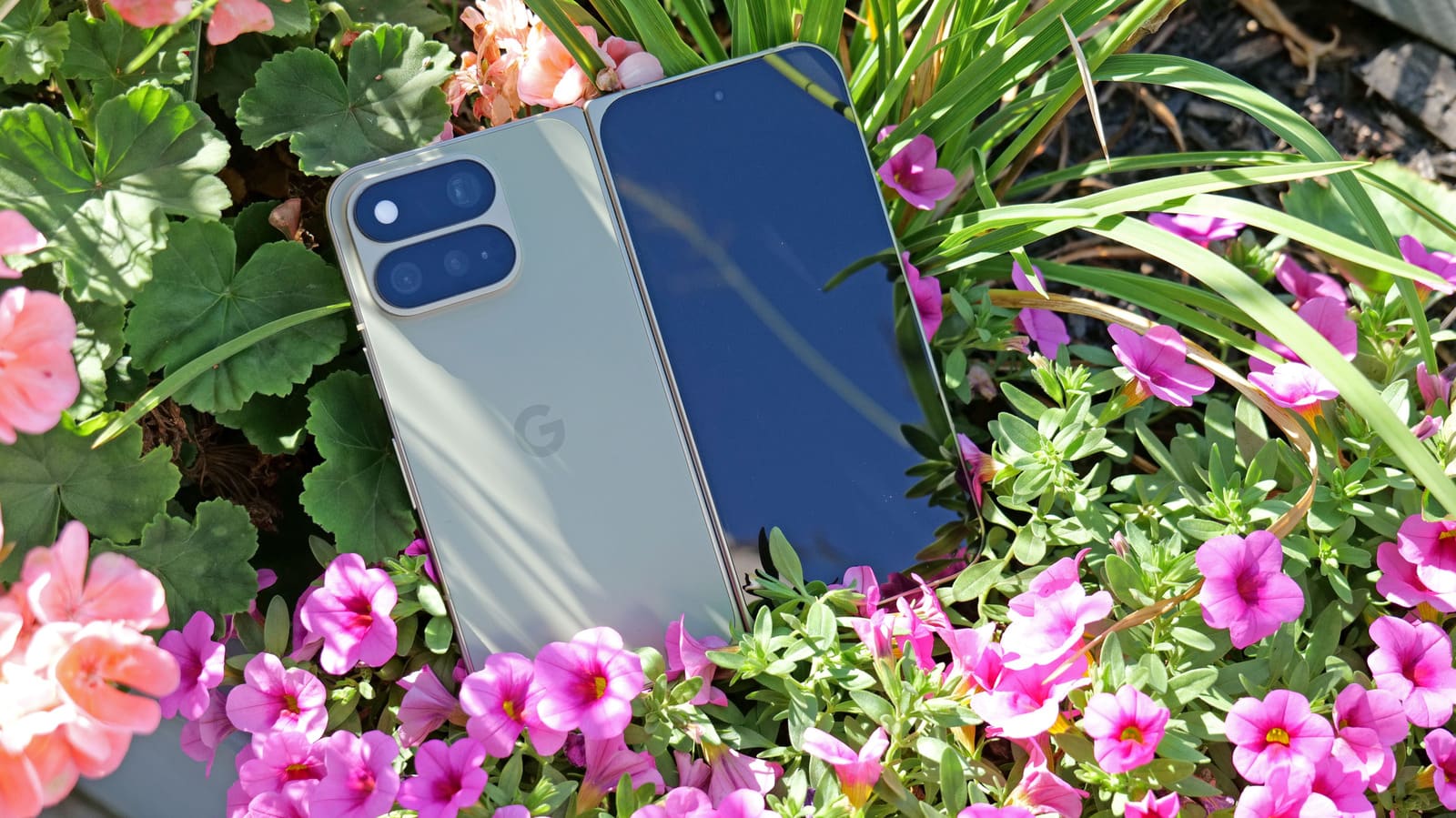
Despite the diet, the phone still measures 10.1mm when closed, thicker than Samsung's Galaxy Z Fold 8 at 9.7mm and the Z Fold 8 Ultra at 8.9mm. The Motorola Razr Fold matches the Pixel's thickness but achieves a sleeker feel through tapered edges. Both Samsung models also weigh significantly less, with the base Z Fold 8 at 201 grams and the Ultra at 215 grams. For users who pocket their phones throughout the day, those differences compound into tangible friction.
The hinge mechanism lags behind competitors in ease of opening. Where Samsung and Motorola foldables snap open with minimal effort, the Pixel requires deliberate two-handed engagement more often than not. Google retained the side-mounted fingerprint reader, USB-C port, and native magnetic accessory support, a feature that distinguishes it from Samsung's lineup, which requires cases for magnetic attachment.
Dual Displays That Deliver on Brightness
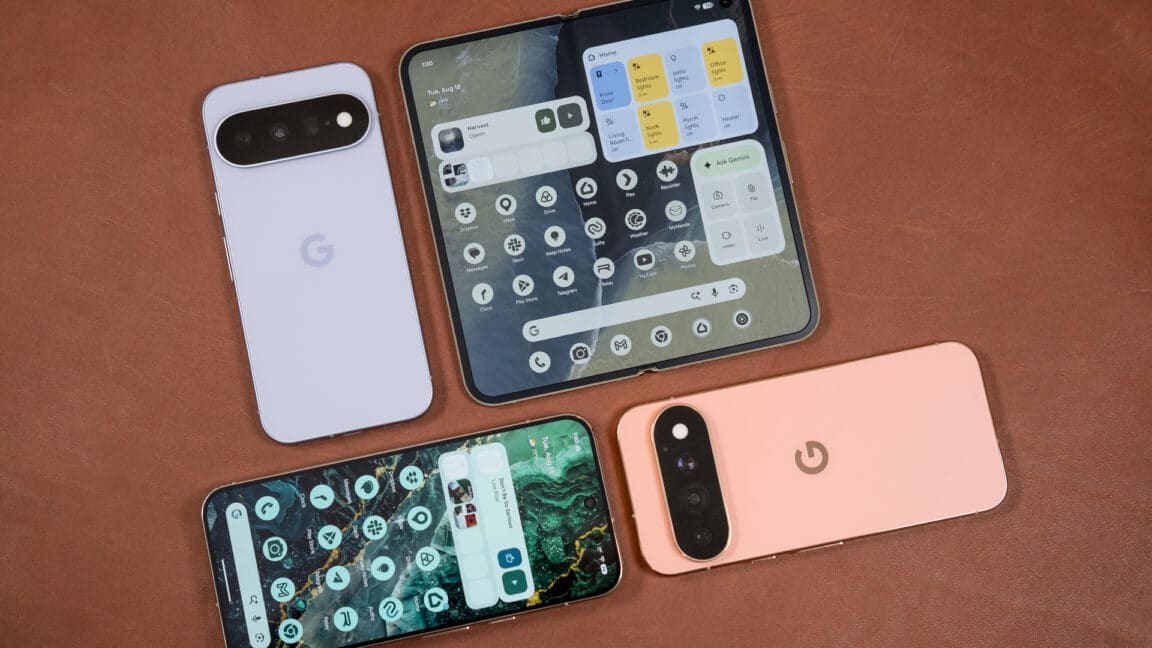
The 6.5-inch exterior OLED and 8-inch interior screen carry over from the previous generation with one meaningful upgrade: peak brightness climbs from 3,000 to 3,600 nits. In direct sunlight, the improvement registers clearly. Text remains legible and video content holds contrast even under harsh conditions.
Google applied ceramic cover glass to the outer display and maintained the IP68 rating introduced last year. Among foldables, that level of dust and water resistance remains rare. The trade-off for that durability shows up in bulk, but for users prioritizing longevity over slimness, the calculus may favor Google's approach.
The company also preserved the physical SIM tray on the Pro Fold, diverging from the eSIM-only strategy applied to the rest of the Pixel 11 lineup in the United States. For travelers who swap regional SIM cards frequently, that choice removes a layer of friction.
HiLight Lands as a Half-Finished Idea
Google embedded LEDs inside the rear flash module to create HiLight, a notification system that activates when the phone rests face down. At launch, the feature responds to only two triggers: incoming calls from designated contacts and Gemini voice assistant activation. The LED can shift colors during AI interactions, but practical utility remains narrow.
The company indicated that text and messaging support may arrive later, but the current implementation feels constrained. Users cannot configure HiLight to display battery status, app-specific notifications, or charging progress. For a feature that required hardware integration, the software limitations stand out. The color-changing LED during Gemini conversations serves more as a novelty than a workflow enhancement.
Tensor G6 Delivers Adequate Performance, Not Dominance
Google's Tensor G6 chip brings incremental gains: 25 percent faster web browsing and 15 percent quicker app launches compared to the previous generation. In daily use, the phone handles split-screen multitasking and background processes without visible lag. Games like Sword of Convallaria and Pokemon Champions run smoothly, though demanding titles exhibit slight framerate drops compared to devices powered by Qualcomm's latest Snapdragon processors.
All configurations of the Pixel 11 Pro Fold ship with 16GB of RAM and 256GB of base storage, a spec advantage over the standard Pixel 11 Pro models, which saw RAM cuts this year amid global supply shortages. The memory headroom proves useful when juggling multiple apps in bubble mode or running extended camera processing tasks.
Camera Hardware Widens the Foldable Lead
The main camera receives a new 48-megapixel sensor, larger than the unit in last year's model. Images captured in both bright and low-light conditions show sharper detail and better dynamic range than competing foldables. Google's Night Sight mode continues to extract usable images from near-dark scenes, and the 5x optical zoom lens remains a standout feature in the category.
The company introduced Camera Looks, a set of customizable color profiles that let users shift tonal rendering on the fly. The default Natural mode delivers the most accurate color reproduction, while Shadows adds contrast for dramatic shots and Digi applies a nostalgic filter. The profiles save time in post-processing and offer enough variation to suit different shooting contexts.
Magic Capture represents Google's attempt to automate moment selection. Users press a dedicated button, point the camera at a subject, and let on-device AI record the best frames and a short video. The feature excels with sports and dance, capturing dynamic poses without manual timing. Results vary with fast-moving children or chaotic environments, where the algorithm struggles to prioritize the right frames. Video processing takes longer than ideal, creating a delay before content becomes shareable.
The telephoto camera uses a 10.8-megapixel sensor, and the ultra-wide employs a 10.5-megapixel unit. Both lag behind the 48-megapixel sensors in the standard Pixel 11 Pro and Pro XL. Super Res Zoom extends digital magnification to 30x, far short of the 120x capability on the non-folding Pro models. The sensor disparity creates a meaningful gap for users who prioritize zoom performance or ultra-wide detail.
Rambler Quietly Steals the Show
Across the Pixel 11 lineup, Google shipped new software features including Circle to Search within the camera app and the Creator Suite. Two stand out on the Pro Fold: bubble anything and Rambler.
Bubble anything, part of Android 17, allows users to long-press an app icon and launch it in a free-floating window. Nearly any app can adopt the picture-in-picture behavior previously limited to video players. A small app switcher appears in the bottom right corner, streamlining navigation between bubbled apps. The feature proves particularly useful on the Pixel 11 Pro Fold's large interior display, where users can monitor food deliveries while streaming video or keep a text conversation visible during other tasks.
Rambler, integrated into the Google Keyboard's voice typing, filters out filler words like "umm" and "ahh" while supporting seamless language switching. Users can dictate in multiple languages within a single sentence, and the system translates or transcribes accordingly. For bilingual speakers, the feature reduces cognitive load when composing messages that blend languages. Mandarin support, though not yet on the official list, already functions well enough to transcribe food terms and short phrases, though it defaults to simplified characters and occasionally renders single words as pinyin instead of full characters.
Customization options remain limited. Users cannot specify character set preferences or fine-tune the threshold for when Rambler translates versus transcribes. Even so, the feature represents one of the most practical applications of on-device language processing in recent Android releases.
Battery Capacity Shrinks, Wireless Charging Accelerates
The Pixel 11 Pro Fold packs a 4,806mAh battery, down from 5,015mAh in the previous model. Capacity reductions are uncommon in a market where silicon-carbon cells are enabling denser energy storage, and the decision impacts endurance. In local video rundown testing on the exterior display, the device lasted 27 hours and nine minutes, trailing the Motorola Razr Fold at 31 hours, the Galaxy Z Fold 8 at 28 hours and 14 minutes, and the Z Fold 8 Ultra at 32 hours and 11 minutes.
Wired charging remains capped at 30 watts, unchanged from last year. Wireless charging via Qi 2 jumps from 15 watts to 25 watts, a meaningful improvement for users who rely on magnetic chargers throughout the day. The faster wireless speed narrows the gap with wired charging, making cable-free top-ups more practical for overnight or desk-based charging.
The Iteration Trap in a Fast-Moving Category
Google's approach with the Pixel 11 Pro Fold mirrors last year's strategy: refine rather than reinvent. The camera upgrades deliver tangible benefits, Rambler adds genuine utility, and the weight reduction improves handling. But the phone arrives in a market where Samsung has slimmed its Ultra model to 8.9mm and Motorola has matched Google's screen size while maintaining a more pocketable feel.
At $1,899, the Pixel 11 Pro Fold asks buyers to value camera quality and software integration over form factor competitiveness. For users already embedded in Google's ecosystem, particularly those who prioritize photography and multilingual voice input, the trade-offs may align. For everyone else, the gap between Google's iterative updates and its rivals' more aggressive redesigns will be harder to overlook.