Amazon's Drone Ambitions Face a Suburban Noise Test
The e-commerce giant plans to expand Prime Air to nearly 500 U.S. neighborhoods by year-end, but scale brings scrutiny over daily flight paths and community tolerance.
A Sixfold Bet on Aerial Fulfillment
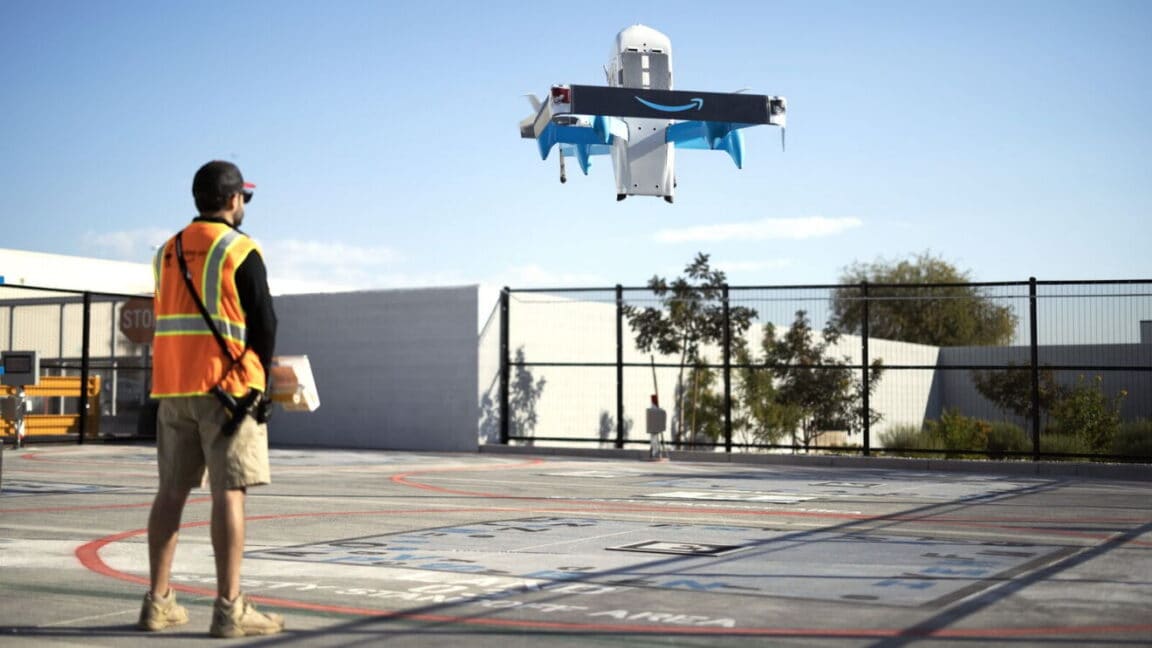
Amazon announced plans to scale Prime Air delivery drones to nearly 500 cities and towns across the United States before the calendar flips to 2027. The expansion represents a sixfold increase from the current footprint and signals that the company believes the logistics and regulatory groundwork are finally stable enough to move from pilot mode to operational scale.
Prime Air currently operates from ten warehouse locations spread across seven states, serving primarily suburban neighborhoods. Each site covers roughly 175 square miles, delivering parcels in thirty to sixty minutes. The new wave of launches will add metropolitan areas including Chicago, Cleveland, Atlanta, Syracuse, and Boise by late 2026, with additional sites planned before year-end.
At DailyTechWire, we've tracked drone delivery pilots in Asia and North America for the past three years, and this marks the first time a major platform has committed to hundreds of concurrent service zones within a single calendar year. The decision reflects confidence not just in hardware maturity but in the patchwork of state and local airspace agreements Amazon has been negotiating since 2021.
The Noise Equation
Expanding to half a thousand neighborhoods will surface a friction point that pilot programs, by design, tend to minimize: community tolerance. Delivery drones generate a high-frequency hum distinct from road traffic, and when flight paths cross residential zones dozens of times per day, that hum becomes ambient.
Early feedback from existing Prime Air neighborhoods in Phoenix, Tampa, and Kansas City has been mixed. Some residents appreciate the speed and novelty; others report irritation during evening hours when drones pass overhead in clusters. Amazon has not published aggregate noise-complaint data, and municipal records in Phoenix show fewer than fifty formal complaints filed in the past year. That figure, however, covers only one service area and may not reflect unreported dissatisfaction.
The company has invested in quieter rotor designs and route optimization software that steers flights away from schools and hospitals during peak hours. Whether those measures prove sufficient at scale remains an open question. As the network grows, so does the likelihood that flight corridors will overlap with backyards, parks, and outdoor dining areas where residents spend discretionary time.
Infrastructure and Weather Constraints
Each Prime Air site requires dedicated warehouse space for drone staging, battery swaps, and maintenance. Amazon has not disclosed the capital expenditure per location, but industry estimates place the build-out cost between two and four million dollars when factoring in FAA compliance, insurance, and localized air-traffic coordination.
Weather represents another variable. Drones are grounded during heavy rain, high winds, and thunderstorms, meaning service availability fluctuates seasonally. Cities like Boise experience winter conditions that limit flight windows, while humid Gulf Coast markets such as Baton Rouge and Houston face frequent afternoon storms. Amazon will need to manage customer expectations around reliability, especially if Prime Air becomes a premium add-on to existing membership tiers.
The company has not announced pricing details for drone delivery, but internal documents reviewed by industry analysts suggest it may be bundled into an enhanced Prime subscription rather than charged per delivery. That model would align with Amazon's broader strategy of increasing membership stickiness through exclusive fulfillment options.
Competitive Pressure from Walmart and Zipline
Amazon is not alone in racing toward drone ubiquity. Walmart has partnered with Zipline and DroneUp to offer aerial delivery in over 30 U.S. markets, focusing on rural and exurban areas where last-mile costs are highest. Zipline's fixed-wing platform covers longer ranges than Amazon's multirotor design, enabling service to communities farther from fulfillment centers.
In Asia, JD Logistics operates autonomous drone routes across mountainous regions of Sichuan and Yunnan, delivering medical supplies and consumer goods to villages that lack reliable road access. That use case underscores a strategic divide: Amazon's expansion targets dense suburban clusters where speed matters, while competitors prioritize cost reduction in low-density geographies.
The regulatory landscape in the United States remains fragmented. The FAA grants waivers on a case-by-case basis, and some municipalities have enacted local ordinances that restrict flight altitudes or times of day. Amazon's ability to reach 500 neighborhoods by December will depend in part on how quickly it can secure those approvals at scale, a process that historically has moved slower than technology timelines.
The Fulfillment Endgame
For Amazon, drone delivery is less about novelty and more about capacity. Ground-based last-mile networks face driver shortages, rising fuel costs, and urban congestion. Drones offer a parallel channel that bypasses those constraints for lightweight, time-sensitive parcels.
The company has stated that Prime Air is optimized for items under five pounds, which covers a significant share of everyday orders: phone chargers, cosmetics, over-the-counter medications, snacks. By offloading those deliveries to drones, Amazon frees up van capacity for bulkier shipments and reduces per-package fulfillment costs in high-density markets.
Whether customers will tolerate the trade-off between speed and ambient noise remains the central tension. Early adopters in suburban Phoenix may welcome a fifteen-minute shampoo delivery; families in quieter neighborhoods of Cleveland or Syracuse may feel differently once drones become a daily presence. The next six months will reveal how elastic that tolerance is, and whether Amazon's infrastructure bet pays off or requires recalibration.