Google's Foldable Strategy Hits a Wall
While Samsung and a rumored Apple entry push boundaries on form factor and engineering, the Pixel 11 Pro Fold stays put with a thick crease and last-generation design language.
The Crease That Stayed Behind
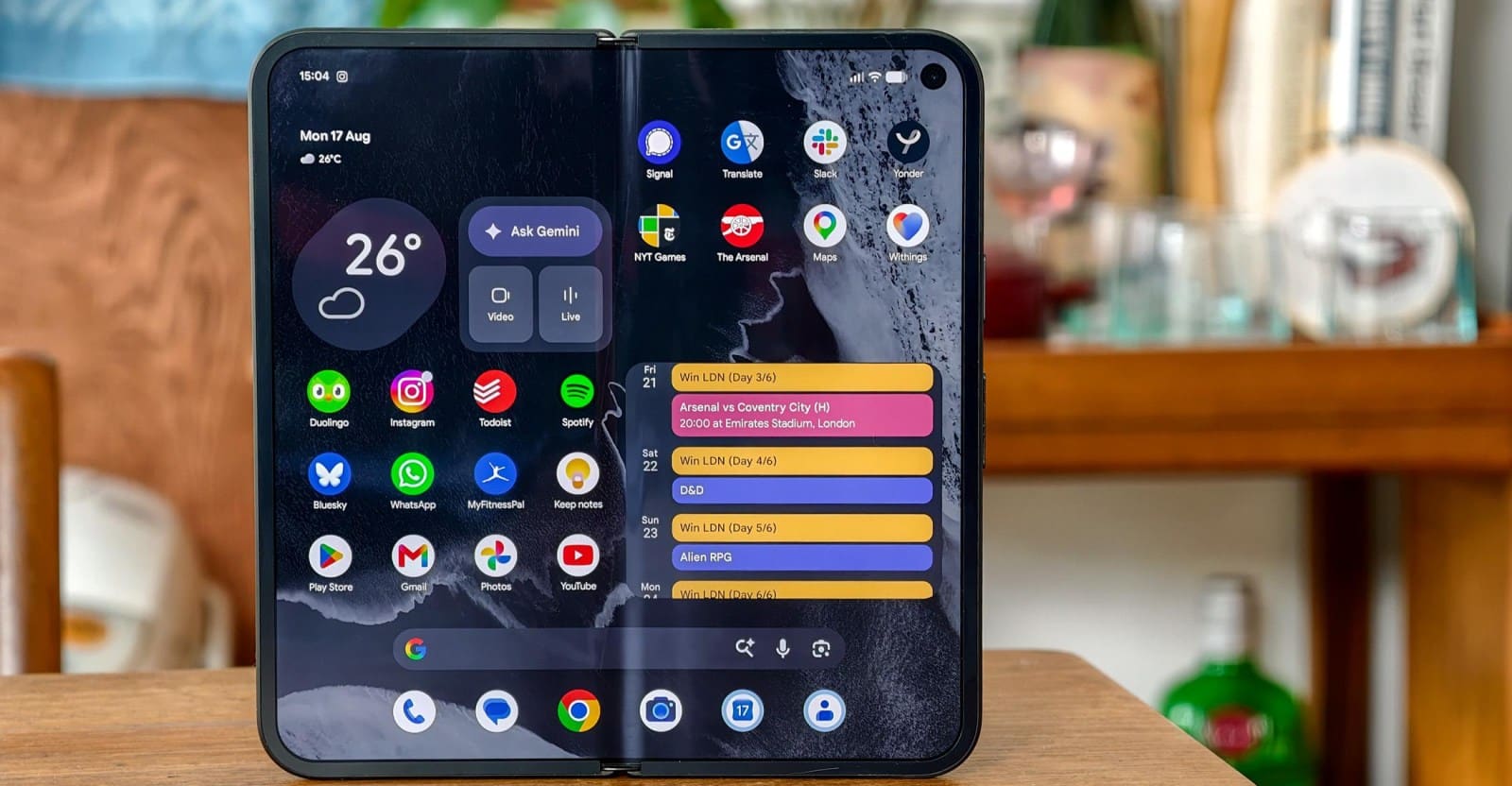
Google shipped its latest foldable with a square unfolded display and a crease visible enough to catch light at most angles. That alone wouldn't be news if the foldable category were standing still, but it isn't. Over the past eighteen months, manufacturers in Seoul and Shenzhen have pushed hinge tolerances tighter, shaved millimeters from z-height, and brought fold lines closer to invisible. The Pixel 11 Pro Fold arrives into that environment carrying hardware decisions that feel dated before the box opens.
At DailyTechWire, we've tracked the foldable segment since the first commercial units shipped in 2019. Early generations traded off thickness, battery life, and durability in exchange for a tablet-sized canvas that fit in a pocket. By 2024, the trade-offs had begun to narrow. Samsung's seventh-generation Fold introduced a thinner hinge assembly and a less pronounced crease. The follow-up this year went further: lighter materials, tighter fold geometry, and a shift to a passport aspect ratio that many users found more practical for one-handed navigation and split-screen work. Meanwhile, supply-chain reports out of Cupertino suggest Apple's foldable will debut next month with an ultra-thin glass layer and hinge that may set a new benchmark for crease suppression.
Google's response has been to iterate rather than reinvent. The Pixel 11 Pro Fold shares its design lineage with the previous model, keeping the same square inner screen and similar hinge architecture. The crease remains prominent, a tactile ridge that runs vertically through the center of the display. In isolation, the device works. Unfolded, it offers a large workspace for multitasking, and Google's software continues to handle app continuity and window management better than most Android OEMs. But isolation isn't the context in which products compete.
A Market That Moved On
Foldables are no longer a novelty segment sustained by early adopters willing to overlook compromises. Unit sales in Asia-Pacific grew thirty-eight percent year-on-year in the first half of 2026, driven largely by devices that closed the gap with traditional flagships on weight, battery endurance, and screen durability. Consumers now expect foldables to feel like refined tools rather than prototypes, and they're willing to pay flagship prices only when the engineering justifies it.
Samsung's pivot to a passport form factor addressed one of the category's longstanding friction points: the narrow, awkward cover screen that made folded use frustrating. A wider outer display means less need to unfold the device for routine tasks, which in turn reduces hinge wear and extends battery life. The design also makes the phone easier to grip and less likely to tip over when propped on a table. These aren't cosmetic changes; they're functional improvements rooted in how people actually use foldables day to day.
Google's square screen, by contrast, optimizes for the unfolded experience. It provides more vertical space for reading documents and browsing, but it leaves the cover display narrower and less usable. The result is a device that nudges users to unfold more often, which accelerates hinge fatigue and drains the battery faster. The trade-off might have made sense two years ago, when foldable owners were enthusiasts who valued screen real estate above convenience. Today's buyers are more pragmatic.
What Iteration Buys You
The Pixel 11 Pro Fold does bring incremental upgrades. Like the rest of the Pixel 11 lineup, it ships with Google's latest Tensor G6 chip, which delivers measurable gains in on-device AI tasks and image processing. The camera array carries over the improved ultrawide and telephoto modules from the Pixel 11 Pro, and computational photography remains a strength. Battery capacity is up slightly, though not enough to offset the power draw of the larger display. The hinge feels solid, and Google claims it's rated for two hundred thousand folds, matching the durability spec of competitors.
But none of these updates address the form-factor question. A faster chip and better cameras matter, but they matter within the context of a physical product that users will hold, fold, and carry every day. When that physical product feels a generation behind, performance improvements become table stakes rather than differentiators. The Pixel 11 Pro Fold is a capable device that doesn't feel urgent or essential, and in a category defined by rapid iteration, that's a problem.
The Apple Variable
Apple's entry into foldables, still unconfirmed but widely anticipated, will reset expectations. If the company ships a device with a nearly invisible crease, a thin profile, and tight integration with iOS and the broader Apple ecosystem, it will set a new floor for what premium foldables must deliver. Google will then face a choice: continue iterating on an established design language or undertake a more fundamental rethink of what a Pixel foldable should be.
The challenge for Google is that incremental updates work well in mature categories where the design paradigm is settled. Foldables aren't there yet. The category is still in flux, with manufacturers testing new aspect ratios, hinge mechanisms, and use cases. Standing pat in that environment means falling behind, even if the product itself is competent.
Pressure Points in Mountain View
Google's hardware division has historically moved cautiously, preferring to refine proven concepts rather than chase novelty. That approach has served the Pixel phone line reasonably well, carving out a niche for users who value clean software and computational photography over bleeding-edge specs. Foldables, however, demand a different calculus. The category's value proposition is inherently tied to hardware innovation, and buyers expect each generation to push boundaries in ways that justify the higher price and added complexity.
The Pixel 11 Pro Fold's unchanged design suggests either that Google believes the current form factor is correct and competitors are chasing trends, or that the company's hardware roadmap didn't allow for a more ambitious update this cycle. Neither explanation is comforting. The former implies a misread of market dynamics; the latter points to resource constraints or strategic indecision. Either way, the result is a device that feels out of step.
What Comes Next
Foldables are entering a phase where the hardware is good enough that software and ecosystem become the primary differentiators. Google has advantages there: Android's multitasking framework, deep integration with Google services, and a track record of software updates that improve devices over time. But those advantages only matter if the hardware gets users in the door, and right now the Pixel 11 Pro Fold's physical design is a barrier rather than a draw.
The question is whether Google will treat this generation as a placeholder and come back with a more ambitious redesign, or whether the company sees foldables as a secondary priority within its hardware lineup. The Pixel 11 Pro Fold works, but working isn't enough when the category is moving this fast. At some point, standing still becomes moving backward.