Google's Pixel 11 Sharpens Zoom and AI, but Skips the Leap
The $899 flagship doubles storage and adds 30x Super Zoom, yet its real edge lies in smarter messaging and a telephoto lens rivals still won't match.
The Iterative Cadence of Flagship Hardware
The Pixel 11 lands in a market where enthusiasm for smartphone launches now peaks over color options rather than breakthrough features. Google's latest flagship, announced last week and priced at $899, carries a $100 premium over its predecessor while delivering the kind of measured hardware refinement that defines the category in 2026. The Tensor G6 processor, a larger main camera sensor, and expanded base storage anchor the spec sheet, but the device's appeal rests more on cumulative strengths than any single innovation.
For owners of the Pixel 10 or other recent flagships, the upgrade case is thin. For those holding Pixel 9 hardware or older Android devices, however, the Pixel 11 consolidates Google's camera advantage, on-device AI capabilities, and software integration into a package that remains competitive despite its price climb.
Three Cameras Where Competitors Offer Two
Google retained the three-lens array introduced on the Pixel 10, a configuration that continues to separate the device from the base iPhone 17 and Samsung's Galaxy S26. The 13-megapixel ultrawide and 5x optical telephoto lenses carry over unchanged, while the main sensor grows in physical size despite holding at 48 megapixels. The front camera remains a 10.5-megapixel unit.
The meaningful camera development arrives in software: a new 30x Super Zoom mode that extends the previous 20x ceiling. Google achieves this through multi-frame HDR+ processing rather than generative fill, a distinction that matters for those wary of AI hallucination in photography. The results hold up adequately on phone screens but reveal their computational origins under desktop scrutiny. At 30x magnification, output quality roughly matches the iPhone 17 Pro, though both devices produce images better suited to quick reference than archival prints.
The 5x telephoto lens, now in its second generation on a base Pixel model, remains the more consequential optical feature. Samsung's flagship still caps optical zoom at 3x, while Apple reserves telephoto capability for Pro models. For users who regularly shoot at distance, whether capturing wildlife, architecture, or children's sports, this lens alone justifies consideration of the Pixel 11 over competing devices in the $700-900 bracket.
Software Layers: Filters, Capture Modes, and Contextual Smarts
Google introduced Camera Looks, a customizable filter system that echoes Apple's photographic styles but with broader parameter control. Users can adjust contrast, highlights, shadows, and color temperature, then save presets accessible via swipe gestures. The interface remembers settings between sessions, allowing quick shifts from neutral rendering to high-contrast aesthetics.
Magic Capture represents a more ambitious addition. When activated, the mode records a short video clip while simultaneously capturing multiple still frames, then applies automated edits to extract what it deems the best moments. Google positions this as a solution for fast-moving scenes like birthday candles or sports, though real-world utility depends heavily on shooting context. Early testing by colleagues suggests the feature performs well for dynamic subjects like dancing or athletics, though video processing times lag expectations.
Beyond the camera, Rambler brings natural-language voice input to any text field on the device. Unlike traditional dictation that transcribes every utterance, Rambler interprets spoken corrections in real time. Saying "pick up tortellini, sorry, I mean tortillas" yields the corrected phrase without manual editing. The system processes speech before displaying results, introducing a brief delay but enabling post-hoc verbal corrections. For heavy voice-texters, this reduces friction; for others, it remains a niche convenience.
Proactive Intelligence and the Messaging Layer
The most practically useful software addition may be Proactive Intelligence, an expansion of last year's Magic Cue feature. When conversations in Google Messages reference scheduling or locations, Gemini-powered suggestion chips surface contextual actions. A dinner invitation for Wednesday or Thursday triggers calendar availability checks and event-creation prompts. A request to "get tacos in Somerville this weekend" generates both schedule queries and restaurant search suggestions within Gemini, all without leaving the messaging app.
Apple's Siri AI offers similar context awareness this year, but implementation remains narrower, typically limited to reminder or note creation. Google's approach integrates more deeply with calendar, search, and mapping functions, reducing the cognitive overhead of translating conversation into action. For users who rely heavily on digital scheduling and task management, this cross-app glue represents meaningful utility rather than novelty.
Tensor G6: Enough Power for On-Device AI
The Tensor G6 chip brings an upgraded image signal processor to handle computational photography tasks like 30x zoom, plus a Tensor Processing Unit that Google claims runs 50 percent faster than the G5 generation. This TPU acceleration enables on-device Gemini Nano processing for features like Proactive Intelligence, keeping data local while maintaining responsiveness.
The chip pairs with 12GB of RAM, unchanged from the Pixel 10, but base storage now starts at 256GB, double last year's entry point. A 512GB tier remains available. In daily use, the device handles messaging, streaming, web browsing, navigation, and photography without perceptible lag. Performance headroom proves adequate for a non-Pro device, though users chasing benchmark supremacy will find faster silicon elsewhere.
Battery endurance stretches comfortably into a second day under moderate use patterns. A typical cycle from Saturday morning through Sunday evening, encompassing messaging, music streaming, social media, photography, and navigation, left reserves above 20 percent before battery-saver mode engaged. The 6.3-inch Actua display, with its 60-120Hz variable refresh and 3,000-nit peak brightness, contributes to this longevity through adaptive refresh scaling, though the Pixel 11 Pro's 1Hz floor delivers better idle efficiency.
The Price-Increase Calculus
At $899, the Pixel 11 sits $100 above the Pixel 10's launch price, a climb that coincides with doubled base storage but limited hardware evolution. The display, telephoto lens, and ultrawide camera carry over unchanged. The main camera sensor grows physically but not in resolution. The Tensor G6 delivers incremental performance gains rather than a generational leap.
For potential buyers weighing the Pixel 11 against alternatives, the value proposition hinges on priorities. The three-camera system, particularly the 5x telephoto, outflanks the base iPhone 17 and Galaxy S26 for photography versatility. Proactive Intelligence and Rambler showcase Google's AI integration advantages, though their utility varies by user behavior. Build quality, display brightness, and battery life all meet flagship expectations without exceeding them.
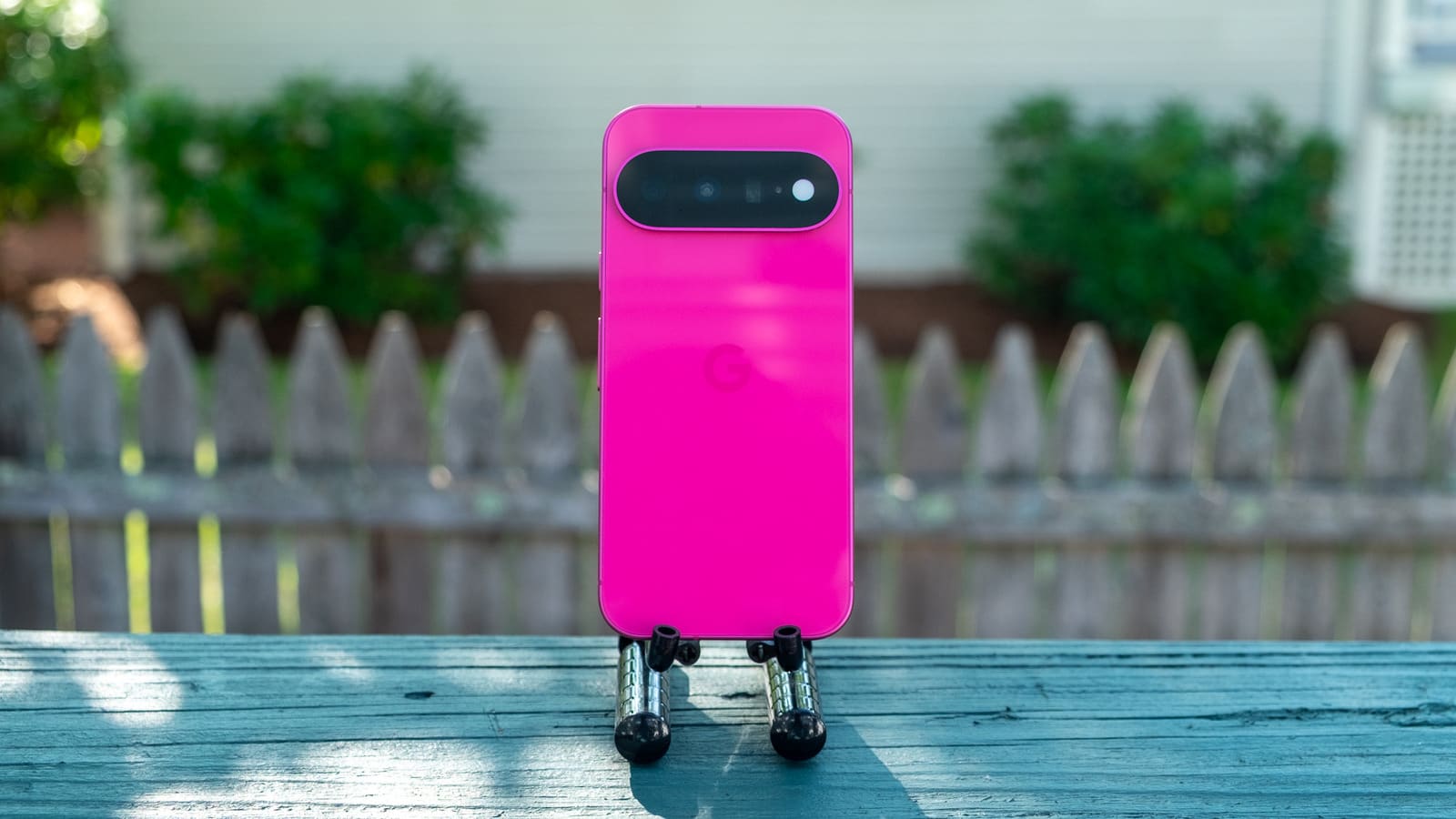
The device ships in four colors: obsidian, frost (a blue-tinted silver), pistachio green, and hibiscus, a bold magenta that drew internal excitement during the leak phase. In a hardware cycle defined by iterative refinement, aesthetic differentiation takes on outsized importance.
What This Signals for the Pixel Line
The Pixel 11's measured update cadence reflects broader smartphone market maturity. The Pixel 10 introduced meaningful hardware changes with its telephoto lens and redesigned camera bar; the Pixel 11 consolidates those gains while layering in software features that leverage Google's AI infrastructure. The pattern suggests future differentiation will increasingly come through on-device intelligence and cross-app integration rather than sensor or silicon breakthroughs.
For Google, maintaining the telephoto lens on the base model sustains a competitive edge in the $800-900 segment, where rivals either omit the capability or reserve it for pricier tiers. The challenge lies in justifying annual upgrades to existing Pixel owners when hardware deltas shrink. The solution, at least for now, appears to be software features that require newer Tensor generations, creating a slower but still functional obsolescence curve.
The Pixel 11 won't prompt mass upgrades from recent-generation devices, nor does it need to. Its role is to capture switchers, first-time flagship buyers, and owners of aging hardware with a well-rounded package that leverages Google's software strengths. In that mission, it succeeds, even as the $100 price increase tests the elasticity of the Pixel brand's value perception.