Five Years That Reshaped the iPhone
From Lightning to USB-C, static notches to Dynamic Islands, and the arrival of on-device AI, Apple's flagship has transformed in ways both visible and invisible since 2021.
The Compound Effect of Incremental Change
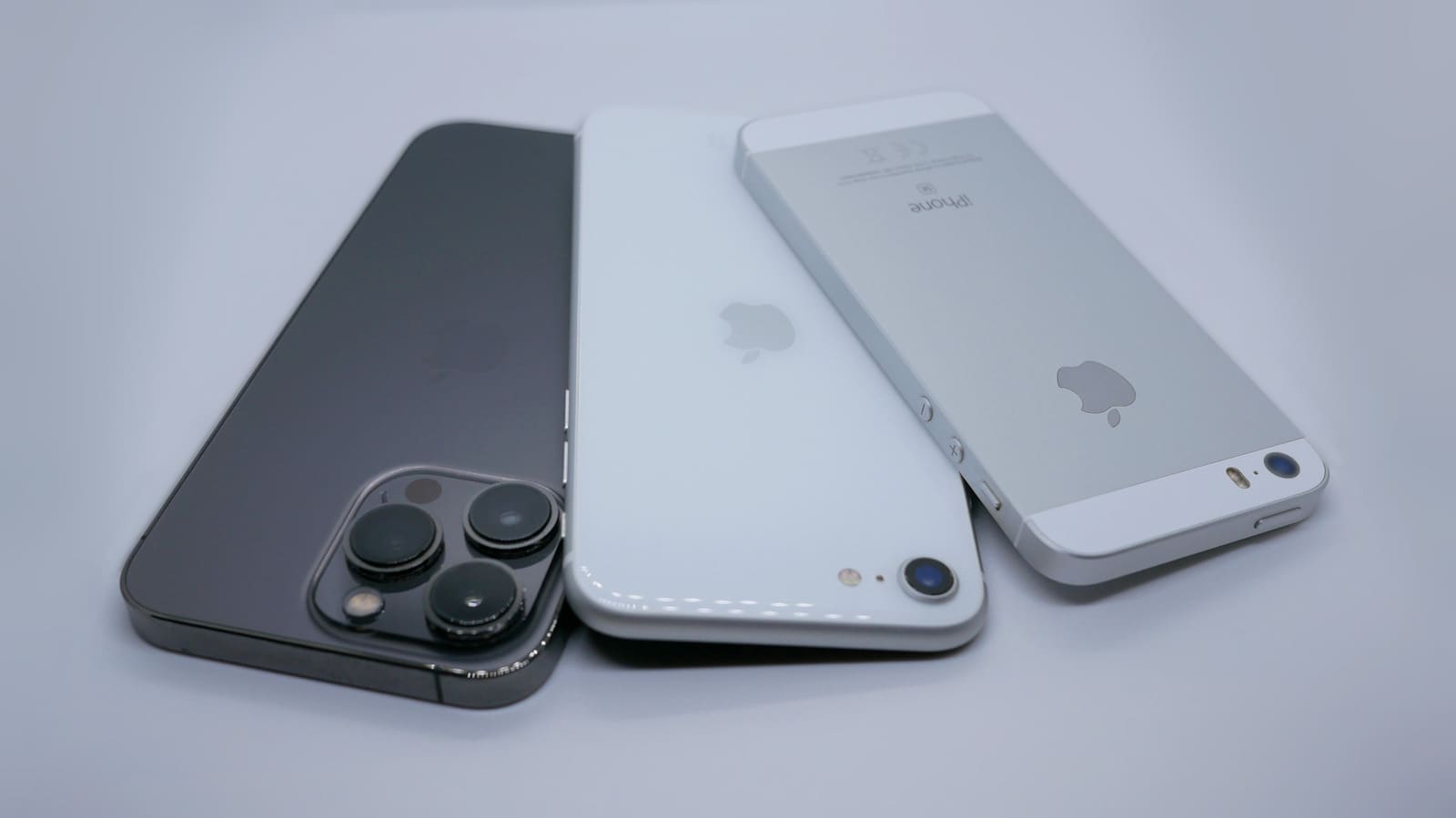
Year-over-year smartphone updates often feel underwhelming. A slightly brighter screen here, a modestly improved camera there. But compress five years of iteration into a single comparison, and the iPhone's evolution from 2021 to 2026 comes into sharp focus. What began with the iPhone 13 series has cascaded through four subsequent generations, bringing hardware pivots mandated by regulation, interface paradigms borrowed from software, and the first serious integration of generative AI into iOS.
At DailyTechWire, we've tracked how features once reserved for Pro-tier devices migrate downmarket, how Apple responds to external pressure (legislative and competitive), and how the company balances its reputation for restraint with the industry's sprint toward AI ubiquity. The story of the iPhone over the past half-decade is less about any single breakthrough and more about the accumulation of decisions that, taken together, redefine what users expect from a flagship device.
The End of Lightning and the Button Renaissance
Apple held onto its proprietary Lightning connector for more than a decade, introducing it with the iPhone 5 in 2012. By the early 2020s, that choice looked increasingly anachronistic. USB-C had become the de facto standard for Android flagships, tablets, and laptops, offering faster data transfer and more versatile accessory ecosystems. Lightning, by contrast, remained locked at USB 2.0 speeds on iPhones, a constraint that frustrated photographers, videographers, and anyone moving large files.
The turning point came from Brussels, not Cupertino. European Union legislation requiring all phones sold in the bloc to adopt USB-C forced Apple's hand. The iPhone 15 lineup, launched in September 2023, marked the transition. For users, the practical benefit was immediate: one cable for MacBook, iPad, and iPhone. For Apple, it meant the end of a lucrative accessory ecosystem but also alignment with a broader industry standard.
The same generation brought another hardware shift: the Action Button. Since the original iPhone in 2007, a physical mute switch had lived on the upper-left edge of every model. The iPhone 15 Pro and Pro Max replaced it with a programmable button that could still silence calls but also trigger the flashlight, launch the camera, or execute custom Shortcuts. By the iPhone 16 generation, the Action Button had spread across the entire lineup, completing the transition.
Then came Camera Control. Introduced with the iPhone 16 and carried forward into the iPhone 17 series (excluding the budget-oriented "e" variants), this new button does double duty: a press opens the camera and captures a shot, while capacitive touch sensitivity allows on-the-fly adjustments to zoom, exposure, and focus. It's a concession to the tactile feedback that touchscreens can't replicate, particularly for users who treat their iPhones as serious photography tools.
Displays That Finally Feel Fluid
Screen technology has advanced more quietly but no less significantly. ProMotion, Apple's term for adaptive refresh rate, debuted on the iPhone 13 Pro and Pro Max in 2021. The feature allows the display to scale between 1Hz and 120Hz depending on what's happening on-screen: ramping up for smooth scrolling and gaming, dropping down to save battery when static. For two generations, ProMotion remained a Pro exclusive. With the iPhone 17 lineup, it finally arrived on the base models, making the 120Hz experience standard across the range.
The difference is immediately perceptible. Scrolling through feeds, swiping between apps, and even typing feel noticeably smoother at higher refresh rates. It's one of those upgrades that's difficult to quantify in benchmarks but impossible to ignore in daily use. The fact that it took until 2025 for Apple to extend ProMotion to non-Pro iPhones speaks to the company's strategy of using display tech as a differentiator, then democratizing it once the feature becomes table stakes.
The notch, introduced with the iPhone X in 2017, persisted largely unchanged until the iPhone 13 line shrank it slightly. The iPhone 14 Pro and Pro Max replaced it entirely with the Dynamic Island, a software-driven interface element that turns the front-camera cutout into a contextual information hub. Instead of a dead zone, the Dynamic Island displays live activity from apps: a running timer, turn-by-turn navigation, music playback. It's ambient computing in miniature, designed to keep you informed without pulling you fully into an app.
Always-on display functionality arrived with the iPhone 14 Pro and Pro Max, then expanded to the entire iPhone 17 lineup, including the newly introduced iPhone Air. The Lock screen remains visible even when the device is idle, showing time, widgets, and notifications at a glance. It's a feature Android flagships have offered for years, and its belated arrival on the iPhone reflects Apple's cautious approach to battery management.
Apple Intelligence and the AI Reckoning
In 2021, the generative AI wave had not yet crested. OpenAI's GPT-3 existed but remained largely in research circles. By 2024, the landscape had transformed. ChatGPT, Midjourney, and a constellation of AI-powered tools had entered mainstream workflows, and Apple found itself playing catch-up.
Apple Intelligence launched in October 2024, initially as an optional suite of features available on the iPhone 15 Pro, Pro Max, and all subsequent models. The toolkit is familiar to anyone who has used competing AI platforms. Writing Tools can summarize documents, adjust tone, and correct grammar. Image Playground generates visuals from text prompts or edits existing photos. Siri, long criticized for lagging behind Google Assistant and Alexa, received a significant intelligence boost, with the ability to understand more natural language and, when necessary, hand off complex queries to ChatGPT.
Visual intelligence, introduced with the iPhone 17 series, uses the camera to identify objects, translate text in real time, and surface contextual information. It's Apple's answer to Google Lens, arriving years later but tightly integrated into the native camera experience.
The rollout has been staggered. iOS 27, expected in fall 2026, will bring a more substantial overhaul to Siri, but some advanced features will remain exclusive to the iPhone 17 Pro, Pro Max, and Air. This tiering strategy mirrors Apple's historical approach: introduce cutting-edge functionality on high-end models, then trickle it down once the hardware and software infrastructure can support broader deployment.
The company's caution is both a strength and a liability. Apple Intelligence is less prone to the hallucinations and missteps that have plagued other AI rollouts, but it also arrived late enough that competitors had already set user expectations. The integration is polished, but the question remains whether Apple can differentiate its AI experience in a market where the underlying large language models are increasingly commoditized.
Camera Evolution and the Megapixel Race
Photography has always been a cornerstone of iPhone marketing, and the past five years have brought measurable gains. The iPhone 13 used 12-megapixel sensors for both its main and ultra-wide cameras. By the iPhone 17, those had jumped to 48 megapixels each, enabling greater detail and more flexibility in post-processing. The front-facing camera climbed from 12MP to 18MP, a nod to the selfie and video call economy.
Optical zoom capabilities have expanded on the Pro models. The iPhone 13 Pro offered 0.5x, 1x, and 3x zoom. The iPhone 17 Pro now supports 0.5x, 1x, 2x, 4x, and 8x, giving users more compositional options without relying on digital crop. Video recording has also improved: 4K Dolby Vision capture now reaches 120 frames per second on the iPhone 17 Pro, double the 60fps ceiling of its 2021 predecessor.
New shooting modes have proliferated. Action mode, introduced with the iPhone 14 lineup, uses sensor-shift stabilization and algorithmic processing to smooth out handheld video, making gimbal-style footage accessible without additional hardware. The iPhone 17 series brought Center Stage to the rear camera, automatically reframing shots to keep human subjects centered, a feature borrowed from the iPad. Dual Capture, also new to the iPhone 17, allows simultaneous recording from front and rear cameras, useful for vlogging and documentary-style content.
Macro photography, absent from the iPhone 13, is now standard on the iPhone 17. It's a small addition but one that expands the creative toolkit for users who shoot close-up details, whether for social media, e-commerce, or personal projects.
The Quiet Infrastructure Upgrades
Beyond the marquee features, several foundational changes have reshaped how the iPhone operates. Satellite connectivity, introduced with the iPhone 14 lineup in 2022, allows emergency calls and text messages even in areas with zero cellular coverage. It's a safety feature with limited day-to-day utility but immense value in edge cases: hikers in remote terrain, drivers stranded in dead zones, travelers in regions with spotty infrastructure.
Crash detection, also debuting in 2022, uses accelerometer and gyroscope data to detect vehicle collisions. If the user doesn't respond within a set window, the phone automatically contacts emergency services. It's another insurance policy feature, rarely needed but potentially life-saving.
The same generation marked the end of the physical SIM card slot in the United States. iPhones sold in the US became eSIM-only, a move that simplifies manufacturing and allows for slimmer designs but also ties users more tightly to carrier ecosystems. The rest of the world retained physical SIM support, highlighting how regulatory and market conditions fragment Apple's hardware strategy.
Storage tiers have crept upward. The base iPhone 13 in 2021 shipped with 128GB. By 2025, entry-level models started at 256GB, reflecting the growing file sizes of ProRAW photos, 4K video, and app installations. Curiously, iCloud's free storage tier remains stuck at 5GB, a figure unchanged since the service launched in 2011. It's a persistent friction point for users and a reminder that some aspects of the iPhone ecosystem evolve far more slowly than others.
What This Means for the Next Cycle
The iPhone 18 series, expected to be unveiled later in 2026, will inherit the accumulated changes of the past five years and likely add its own. The pattern is clear: hardware standardization (USB-C, eSIM), interface experimentation (Dynamic Island, Action Button, Camera Control), and AI integration are the three axes along which Apple is pushing the platform.
What remains to be seen is how far Apple will lean into AI differentiation. The company has historically been cautious about over-promising, but the competitive pressure from Samsung, Google, and Chinese manufacturers is intensifying. Features that were Pro exclusives in 2021 are now baseline expectations. The challenge for Apple is maintaining margin and brand premium in a market where the performance gap between flagships and mid-range devices continues to narrow.
For users weighing an upgrade, the five-year delta offers clear value: faster displays, more versatile cameras, modern connectivity, and on-device AI. For the industry, it's a case study in how even the most iterative product line can accumulate significant change when viewed across a longer time horizon. The iPhone hasn't been revolutionized in the past half-decade, but it has been methodically refined, one generation at a time.