Leaked Xbox Elite 3 Controller Features Embedded Display and Cloud Gaming Toggle
A prototype spotted online suggests Microsoft is preparing a major hardware revision with dual scroll wheels and direct cloud-server pairing capability
An Unusual Find on the Secondary Market
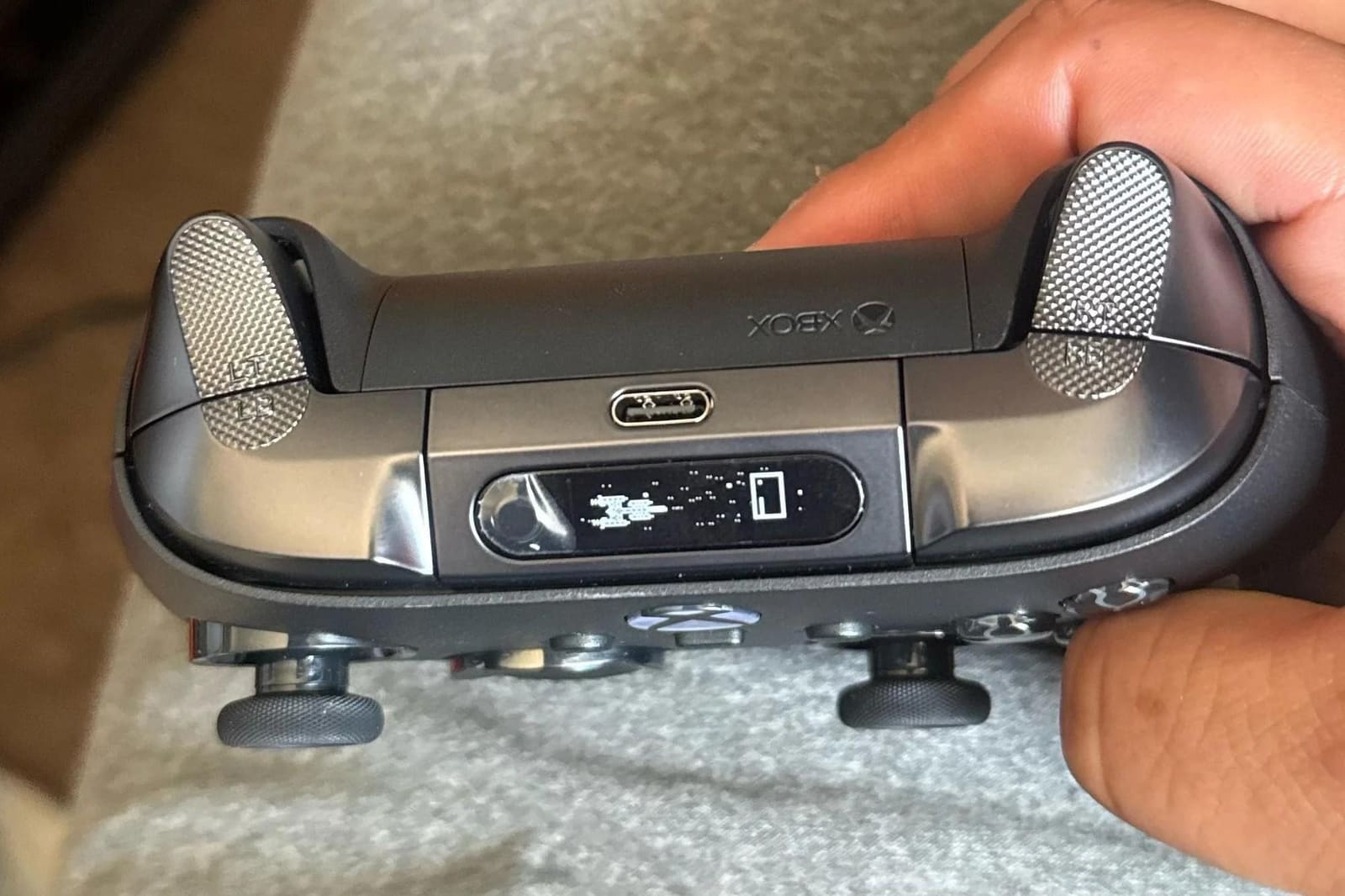
Someone just paid $200 for what appears to be Microsoft's next flagship gamepad. Photos circulating on Reddit show a prototype Xbox controller bearing design elements and feature labels consistent with an unannounced Elite Series 3 model. The device carries markings and an industrial finish typical of pre-production hardware, and its feature set suggests Microsoft is exploring a more ambitious upgrade path than incremental button remapping.
At DailyTechWire, we've tracked the premium controller segment closely as it has grown from enthusiast niche to a meaningful revenue stream for platform holders. Sony, Razer, and Scuf have all pushed into the $150-250 bracket, but Microsoft's Elite line has held the largest installed base among console players who prioritize latency and customization. The components visible in these leaked images point to a hardware shift that ties the controller more tightly to Microsoft's cloud infrastructure, a move that aligns with the company's multi-year bet on Game Pass streaming revenue.
Two New Scroll Wheels and a Mysterious Button
The prototype includes a pair of scroll wheels positioned along the bottom edge of the controller, a placement that would put them under the middle and ring fingers during standard grip. Regulatory filings that surfaced in Brazil earlier this year hinted at this layout, but the leaked unit confirms the physical implementation. Scroll wheels have seen limited adoption in console controllers; their inclusion here likely targets genres where granular analog input matters, such as flight simulators, racing titles, or inventory management in strategy games.
More significant is the presence of a dedicated pairing button that sits adjacent to what the prototype labels as a mode selector. One position on that selector is marked for standard console connectivity; the other references a direct link to Xbox Cloud Gaming servers. If shipping hardware retains this design, it would represent the first consumer gamepad with a physical toggle for switching between local and cloud endpoints without navigating software menus. That kind of seamless transition matters in households where multiple users share a single console but maintain separate cloud libraries, or in scenarios where a player wants to hand off a session from a local machine to a mobile device mid-game.
The Screen Question
The most striking element is a small display embedded in the controller's face. The resolution and refresh characteristics are not discernible from static photos, but the screen real estate appears sufficient for status indicators, button remapping previews, or battery and connection telemetry. Premium PC peripherals from Logitech and Corsair have experimented with OLED panels for similar purposes, but console controllers have largely avoided screens due to cost, power draw, and the risk of increasing latency in the input path.
Microsoft has not publicly commented on any Elite Series 3 development, and the prototype's provenance remains unverified. However, the device's fit and finish, combined with the alignment between its features and earlier regulatory disclosures, lend credibility to the leak. If genuine, the unit likely represents a mid-stage prototype rather than final production hardware; button legends, materials, and firmware would all be subject to revision before retail.
Cloud Gaming as a First-Class Input Target
The dual-mode pairing mechanism is the most telling feature from a strategic perspective. Microsoft has spent the past three years building out its Azure-based xCloud infrastructure, investing in custom server blades that run Xbox Series X silicon and deploying edge nodes across North America, Europe, and parts of Asia. Subscriber growth for Game Pass Ultimate, which bundles cloud access, has plateaued in some markets, and the company has acknowledged that discoverability and session initiation remain friction points.
A hardware toggle that lets players jump directly into a cloud session without opening an app or navigating a UI could lower that friction materially. It also signals that Microsoft views cloud gaming as a peer to local play rather than a fallback option. That framing has implications for how the company architects future hardware: if controllers, headsets, and other peripherals are designed to work equally well in local and remote contexts, the distinction between console and cloud becomes less relevant to the end user.
From a product perspective, the challenge will be managing latency and input fidelity when the controller is routing data through an internet path rather than a local radio link. The prototype's second wireless mode likely uses a different protocol stack optimized for wide-area connectivity, possibly leveraging techniques like predictive input buffering or adaptive polling rates. These are well-understood problems in the PC peripheral space, but console players have historically been more sensitive to input lag, particularly in competitive multiplayer titles.
Premium Controller Economics
The Elite Series 2 launched at $180 in 2019 and remains in Microsoft's catalog at that price point, though it frequently appears in promotional bundles. The secondary-market purchase price of $200 for a prototype suggests the Series 3 could carry a similar or slightly higher MSRP, especially if the embedded screen and additional wireless hardware add meaningful bill-of-materials cost. That pricing would keep the device in the upper tier of the console accessory market, but well below the $250-300 range where fully modular PC controllers from Scuf and Thrustmaster compete.
The broader question is whether the feature set justifies the price for the core audience. Elite controller buyers tend to prioritize build quality, remappability, and competitive advantage in multiplayer scenarios. A cloud-pairing toggle and an embedded display serve different use cases, ones more aligned with convenience and ecosystem lock-in than raw performance. Microsoft may be betting that as cloud gaming matures, the premium controller audience will broaden beyond esports-focused players to include users who value seamless cross-device experiences.
What Comes Next
If the prototype is representative of shipping hardware, an official announcement would likely coincide with a major Game Pass or Xbox platform event. Microsoft has historically used its summer showcases or The Game Awards in December to unveil premium hardware. The timing would also depend on component availability and manufacturing scale-up; adding a screen and a second radio module to a controller increases supply-chain complexity, particularly if Microsoft wants to avoid the stock issues that plagued the Series X and Series S console launches.
The leak itself may accelerate or delay the announcement. Companies sometimes choose to officially reveal products early when prototypes surface in order to control the narrative, but Microsoft has also shown a willingness to let speculation build if the leak does not expose sensitive technical details or disrupt retail partnerships. Either way, the images circulating now provide the clearest look yet at how Microsoft intends to evolve its premium controller line in an era where the boundary between local and cloud gaming continues to blur.