Epic Promises Launcher Overhaul After Years of Developer and Player Frustration
A complete architectural rebuild aims to deliver five-fold speed gains and address complaints that have sent users searching for workarounds to avoid the platform's sluggish interface.
A Rare Public Acknowledgment of Failure
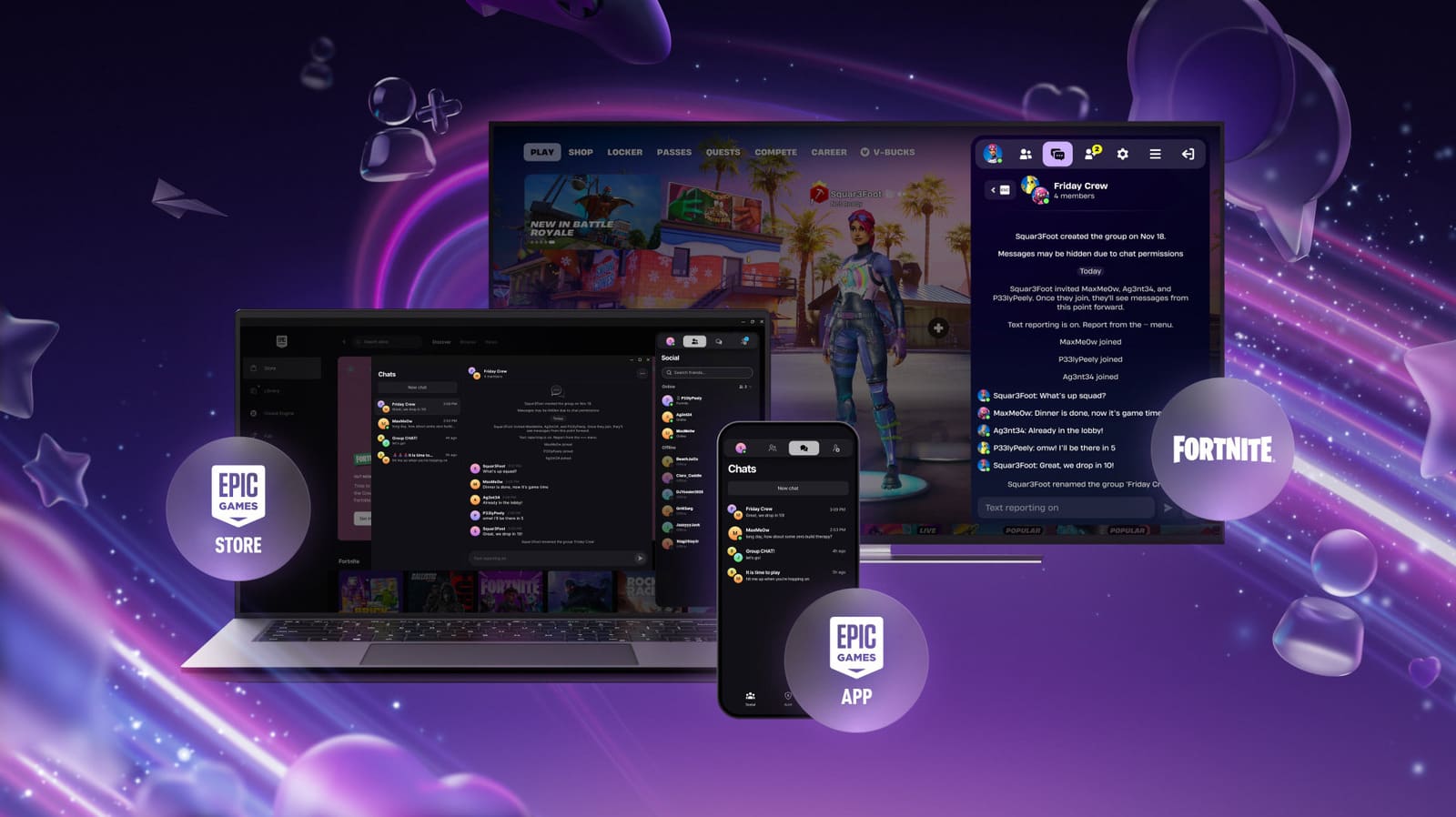
Epic Games has begun work on a complete reconstruction of its game launcher, a move that follows months of mounting criticism and an unusually candid admission from company leadership that the current software falls short. During a presentation at Unreal Fest in June, engineers outlined plans for what they are calling Launcher V2, a from-scratch rebuild designed to address performance bottlenecks that have frustrated both developers and players since the storefront's inception.
According to Epic, the new architecture will deliver cold-start times five times faster than the existing launcher and restore from the system tray 6.5 times more quickly. Those figures represent a direct response to complaints that have defined the user experience for years: long load times, unresponsive interfaces, and a general sense that the software was built without sufficient attention to the daily friction it would create.
The company's presentation acknowledged the scale of the problem in blunt terms, noting that every developer in attendance and every player on the platform has encountered challenges with the current launcher. That level of candor is rare in an industry where platform holders typically deflect or minimize criticism, and it signals that Epic understands the reputational cost of ignoring user experience in a competitive distribution landscape.
Workarounds as a Symptom of Deeper Issues
The frustration has driven some users to elaborate workarounds. A notable pattern has emerged in which players claim free games offered through the Epic Games Store but then access those titles via Steam, using third-party tools or manual library management to bypass the Epic launcher entirely. This behavior underscores a broader problem: when users invest effort to avoid a piece of software, the software has become a liability rather than a feature.
At DailyTechWire, we've tracked similar dynamics in other platform ecosystems, particularly in mobile app stores and enterprise software suites, where poor performance or intrusive design prompts users to seek alternative pathways. In Epic's case, the launcher was always secondary to the company's primary revenue streams - Fortnite and Unreal Engine licensing - but as the storefront has grown into a vehicle for exclusive releases and aggressive developer incentives, the launcher's shortcomings have become harder to ignore.
The technical roots of the performance issues likely stem from the original architecture's reliance on web-based rendering and inefficient state management. Many modern launchers, including those from competitors like Valve and GOG, have moved toward native UI frameworks and asynchronous data handling to reduce latency and improve responsiveness. Epic's decision to rebuild from the ground up suggests that incremental patches were no longer viable, and that the codebase had accumulated enough technical debt to warrant a full reset.
A Phased Rollout and a Summer Timeline
Epic's roadmap, shared during the presentation, indicates that Launcher V2 will enter a private beta before a broader public release. The company has not committed to specific dates, but a February statement indicated plans to ship improvements over the summer. That timeline suggests an internal target of late July or August for at least an initial rollout, though private betas for platform software often stretch longer than anticipated, particularly when performance gains are the headline promise and any regression would be highly visible.
The phased approach is prudent. A launcher is infrastructure, and any instability or data-loss incident during a transition would compound the reputational damage Epic is trying to repair. A private beta allows the company to test under real-world conditions with a controlled user base, gather telemetry on edge cases, and iterate before exposing millions of players to a new experience.
Beyond the performance overhaul, Epic also outlined a set of feature additions aimed at bringing the storefront closer to parity with competitors. Planned enhancements include in-store patch notes, user reviews, quick-access category filters, and a personalized homepage. None of these are novel - Steam has offered versions of all four for years - but their absence from the Epic Games Store has been a recurring point of criticism, particularly among players who view the platform as feature-poor compared to incumbents.
The Competitive Context and the Cost of Inattention
Epic's storefront strategy has always been developer-first, built on lower revenue splits and guaranteed minimum sales for exclusives. That approach has attracted a roster of high-profile releases and indie darlings, but it has not translated into enthusiastic adoption among players, many of whom continue to see the platform as a necessary inconvenience rather than a destination. The launcher's poor performance has been a visible symbol of that dynamic, a reminder that distribution is not just about contracts and economics but also about the tactile experience of using software every day.
The competitive pressure is real. Valve continues to iterate on Steam with features like the Steam Deck, remote play, and social integrations that deepen user lock-in. GOG has carved out a niche with DRM-free releases and a curated library. Even Microsoft, historically a laggard in PC gaming distribution, has improved the Xbox app and integrated it more tightly with Game Pass. Epic's slower pace on user-facing features has left it vulnerable to the perception that it prioritizes developers over players, a perception the launcher rebuild is clearly meant to address.
There is also a regional dimension worth considering. In markets across Asia, where PC gaming is growing rapidly and internet infrastructure varies widely, launcher performance is not just a convenience issue but a barrier to entry. A five-second delay in cold start might be tolerable on fiber in Seoul or Singapore, but on inconsistent connections in secondary cities across Southeast Asia or India, it compounds into a frustrating experience that pushes users toward alternatives. Epic's emphasis on speed improvements suggests the company is aware that global expansion requires software that performs well under a range of conditions.
What a Rebuild Signals About Priorities
The decision to rebuild the launcher from scratch is a statement about Epic's willingness to invest in the storefront as a long-term platform rather than a promotional vehicle. For years, the Epic Games Store has felt like a loss-leader designed to challenge Steam's dominance and secure a foothold in PC distribution. The free game giveaways, the exclusive deals, the lower revenue split - all of these are tactics that prioritize market entry over profitability.
A ground-up rebuild, by contrast, is a bet on retention and user satisfaction. It is expensive, time-consuming, and risky, and it signals that Epic believes the storefront can become a sustainable business rather than just a competitive wedge. Whether that bet pays off will depend not only on the technical execution of Launcher V2 but also on whether Epic can follow through with the feature parity and community engagement that have historically been weak points.
The inclusion of user reviews is particularly significant. Epic has resisted implementing reviews for years, citing concerns about review-bombing and the difficulty of moderating user-generated content at scale. The decision to add them now suggests either a shift in philosophy or a recognition that the absence of reviews has become a larger liability than the risks associated with managing them. Reviews are a form of social proof, and their absence has made the Epic Games Store feel less like a community platform and more like a transactional storefront.
The Path Forward and the Unknowns
Epic's presentation at Unreal Fest was aimed at developers, not players, which is instructive. The company understands that developer satisfaction is tied to player satisfaction, and that a clunky launcher affects not just user retention but also the perceived value of releasing on the platform. If players avoid the launcher, developers lose visibility and engagement, which in turn makes the revenue-split advantage less compelling.
The unknowns are substantial. Will the private beta reveal unforeseen technical challenges that delay the public rollout? Will the performance gains hold up across a diverse range of hardware configurations and operating systems? Will the new feature set be enough to shift player sentiment, or will the storefront continue to feel like a work in progress compared to more mature competitors?
At DailyTechWire, we've seen platform rebuilds succeed and fail. Success typically requires not just technical competence but also a sustained commitment to iteration and responsiveness after launch. Epic has the resources and the engineering talent to execute on the technical side, but the cultural and organizational discipline to maintain momentum over months and years is harder to assess from the outside.
The launcher rebuild is a necessary step, but it is also overdue. The fact that Epic is only now addressing issues that have been widely documented since the storefront's launch in 2018 raises questions about internal prioritization and decision-making. The company has been willing to spend aggressively on exclusives and giveaways, but it took years of public criticism before committing to a fundamental overhaul of the user experience. That delay has a cost, both in terms of lost goodwill and in the opportunity cost of users who have formed habits around competing platforms.
A Test of Execution and Follow-Through
Launcher V2 will be judged not only on its initial performance but on whether Epic can sustain the improvements and continue building out the feature set. A fast launcher that still lacks basic storefront functionality will not be enough to change the narrative. Players and developers will be watching to see whether this rebuild represents a one-time fix or the beginning of a longer-term commitment to the platform's maturity.
The presentation at Unreal Fest was a start, but it was also a promise. Epic has acknowledged the problem, outlined a solution, and set expectations for speed and functionality. Now comes the harder part: delivering on those promises, iterating based on feedback, and proving that the Epic Games Store can be more than a challenger brand sustained by deep pockets and exclusive deals. The launcher rebuild is a necessary condition for that transformation, but it is not a sufficient one. The months ahead will reveal whether Epic is prepared to do the less glamorous work of building a platform that players actually want to use.