Why Automakers Are Betting Against Phone Mirroring
General Motors and others are walking away from Android Auto, wagering that proprietary AI systems, subscription revenue, and first-party data will matter more than driver convenience.
A Decade-Old Truce Is Breaking Down
For the past ten years, a quiet understanding has governed the automotive industry: drivers would tolerate mediocre factory infotainment systems as long as they could plug in their phones and summon Android Auto or Apple CarPlay. The arrangement worked. Consumers got their playlists, contacts, and navigation without wrestling with clunky manufacturer interfaces, while automakers outsourced a thorny software problem to Silicon Valley.
That truce is now fraying. General Motors announced it will phase out Android Auto from its entire vehicle portfolio, starting with its electric lineup. Rivian and Tesla never adopted phone mirroring in the first place. While the majority of 2026 model-year vehicles still support the technology, the defections signal a strategic pivot driven by three overlapping motives: capturing driver data, unlocking subscription revenue, and embedding generative AI directly into dashboards.
At DailyTechWire, we have tracked how automotive software has evolved from an afterthought into a contested battleground. The current wave of departures from Android Auto is less about technical capability and more about who controls the relationship with the driver once the sale is complete.
The Promise of In-House Intelligence
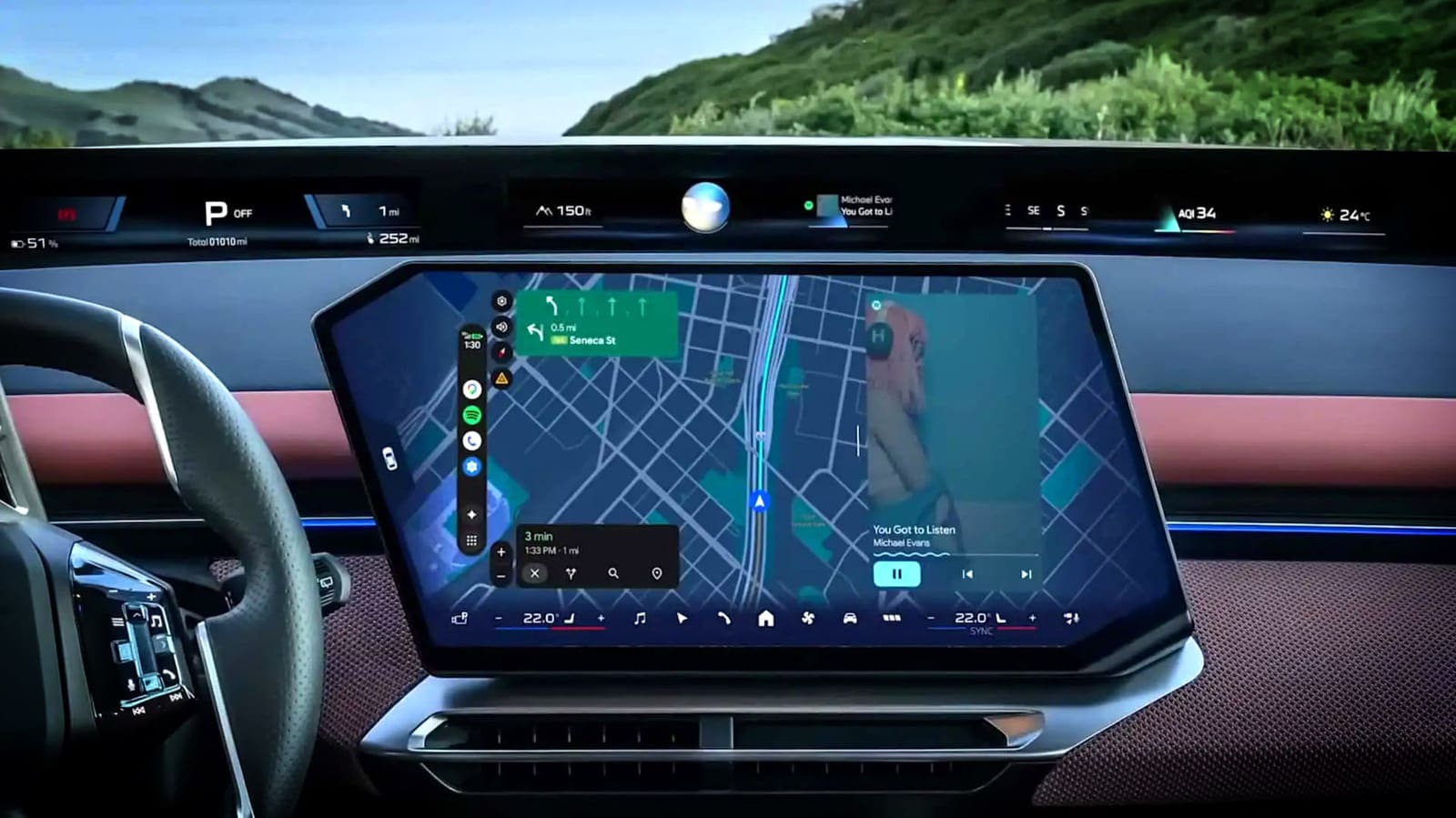
General Motors has framed its decision as a feature upgrade rather than a removal. The company plans to replace Android Auto with a conversational interface powered by Google's Gemini large language model, running atop Android Automotive OS. The distinction matters: Android Automotive OS is a full vehicle operating system that does not require a tethered phone, whereas Android Auto is a projection layer that mirrors a smartphone's interface.
According to General Motors, the new system will enable intelligent EV routing that factors in real-time charge state, remaining range, and charging station availability. The company argues that phone mirroring architectures make it difficult to pull vehicle telemetry off the handset and back into onboard systems, limiting the sophistication of features like route optimization and integration with its Super Cruise driver-assistance suite.
Rivian has made a similar argument, contending that advances in on-device AI have rendered phone mirroring obsolete. The company's operating system, also built atop Android Automotive OS, is designed to offer deep integration between navigation, vehicle controls, and contextual assistance without relying on a smartphone intermediary.
Tesla has operated under this philosophy since its first Model S. The automaker has never supported Android Auto or CarPlay, betting instead that a tightly integrated, over-the-air-updatable interface would prove more compelling than third-party projection.
Data as the New Steering Wheel
Beneath the talk of better routing and smarter assistants lies a more fundamental motivation: data ownership. When a driver uses Android Auto, Google collects GPS traces, search queries, and app usage patterns that can be monetized through targeted advertising. None of that information flows back to the vehicle manufacturer.
For automakers, this represents a strategic blind spot. General Motors has stated that access to granular navigation and energy-consumption data is essential for improving the electric-vehicle ownership experience. Rivian has echoed the sentiment, arguing that first-party data enables faster iteration on software features and deeper customer retention.
The irony is that some manufacturers have a troubled history with driver data. General Motors paid a twelve-and-a-half-million-dollar fine to California regulators for violating state privacy laws. The settlement bars the company from selling driver data to advertisers, but it does not prevent internal use for product development or customer relationship management.
Tesla and Rivian, meanwhile, have faced scrutiny over the volume of telemetry their vehicles transmit. Both companies collect detailed logs on driving behavior, charging patterns, and feature usage. While neither has been accused of selling that data to third parties, the sheer granularity of the collection has raised questions about long-term privacy implications.
At DailyTechWire, we have observed that data ownership is increasingly framed as a prerequisite for delivering personalized services. Whether that framing holds up under regulatory scrutiny remains an open question, particularly in jurisdictions with stringent data-protection regimes.
Subscription Revenue and the Connectivity Tax
The shift away from phone mirroring also opens the door to recurring revenue. Built-in infotainment systems require cellular connectivity, which automakers can monetize through tiered data plans. Rivian charges one hundred fifty dollars per year for its Connect+ service, which includes features like live traffic, streaming audio, and remote vehicle access. Tesla's premium connectivity package costs the same.
General Motors has committed to bundling eight years of OnStar connected services with new vehicles, but the company has not disclosed what will happen when that period expires. If historical precedent is any guide, drivers will face a choice between paying for continued connectivity or losing access to cloud-dependent features.
The appeal of subscription revenue is obvious. Traditional automotive margins are thin, and electrification has added significant upfront costs in battery procurement and manufacturing retooling. Recurring software and connectivity fees offer a path to higher lifetime customer value without the capital intensity of hardware sales.
But the strategy carries risk. BMW attempted to charge eighteen dollars per month for heated-seat activation in select markets and faced immediate backlash. The company reversed course, illustrating how quickly subscription models can erode brand goodwill when applied to features consumers expect to own outright.
Kia, which continues to support Android Auto across its lineup, has still placed remote locking and climate pre-conditioning behind subscription paywalls. The fact that even manufacturers with robust phone-mirroring support are experimenting with paid tiers suggests the industry views subscriptions as inevitable, regardless of infotainment architecture.
Consumer Pushback and the Retention Question
The most significant unknown is whether drivers will accept the trade-off. When General Motors announced its Android Auto phase-out, the response was swift and skeptical. Online forums and comment sections filled with declarations that buyers would defect to brands that continue to support phone mirroring.
Whether those threats translate into lost sales remains to be seen. Automotive purchase decisions are complex, influenced by price, range, charging infrastructure, brand loyalty, and dozens of other variables. Infotainment is one factor among many, and it is unclear how heavily it weighs in the final calculus.
What is clear is that automakers are betting they can deliver an experience compelling enough to offset the loss of familiarity. General Motors has highlighted features like Dolby Atmos spatial audio on Amazon Music, which it claims cannot be replicated through simple phone projection due to hardware and processing constraints.
Rivian has leaned into voice-driven AI, positioning its interface as a conversational co-pilot rather than a static menu system. Tesla has relied on over-the-air updates to iteratively refine its interface, adding features like streaming video, gaming, and Caraoke to justify the absence of CarPlay.
The challenge for all three is that traditional automakers have a poor track record in software execution. Volkswagen's early attempts at in-house operating systems were plagued by latency, crashes, and fragmented user experiences. Ford and Toyota both tried to build proprietary infotainment platforms and eventually retreated to Android Auto and CarPlay as table stakes.
That history has left consumers wary. The promise of AI-driven, cloud-connected interfaces is appealing in theory, but drivers have learned to be skeptical of manufacturer software claims after years of laggy touchscreens and outdated map data.
The Asian OEM Countermove
While American and European manufacturers experiment with proprietary systems, many Asian automakers have doubled down on phone mirroring as a differentiator. Hyundai, Kia, and Honda have all reaffirmed support for both Android Auto and Apple CarPlay across their lineups, positioning openness as a competitive advantage.
This creates an interesting regional divergence. In markets where brand loyalty is fluid and consumers prioritize interoperability, manufacturers that maintain phone-mirroring support may capture defectors from brands like General Motors. In markets where charging infrastructure, service networks, or brand prestige dominate purchase decisions, the absence of Android Auto may prove less consequential.
At DailyTechWire, we have noted that software strategies in the automotive sector are increasingly shaped by regional regulatory environments and consumer expectations. What works in the subscription-tolerant North American market may face resistance in Europe, where right-to-repair laws and data-portability requirements are more stringent.
What Comes Next
The departure of a handful of automakers from Android Auto does not yet constitute an industry-wide trend, but it does signal a willingness to test whether drivers can be weaned off phone mirroring. The success or failure of that experiment will hinge on three factors: the quality of the replacement interfaces, the transparency of data practices, and the pricing of connectivity subscriptions.
If General Motors, Rivian, and Tesla can deliver infotainment systems that feel faster, smarter, and more context-aware than plugging in a phone, they may prove that proprietary platforms can compete on merit. If their systems feel like thinly veiled subscription traps or data-harvesting tools, consumer backlash will be swift.
For now, the majority of automakers are hedging. They continue to support Android Auto and Apple CarPlay while quietly building out their own cloud-connected platforms in parallel. That dual-track approach buys time, allowing them to observe which bets pay off and which provoke defections.
The endgame is still unclear. What is certain is that the dashboard has become the next frontier in the battle for driver attention, loyalty, and recurring revenue. Whether that battle is won with better AI, better data practices, or simply better software execution will determine which automakers thrive in the subscription era and which lose customers to rivals willing to let them bring their own phones.