Dell's $700 XPS 13 Chases the MacBook Neo but Stumbles on Memory
The company's thinnest XPS yet delivers on build quality and battery life, but 8GB of RAM creates a computing experience best described as "walking through mud."
The Race to Match Apple's Budget Breakthrough
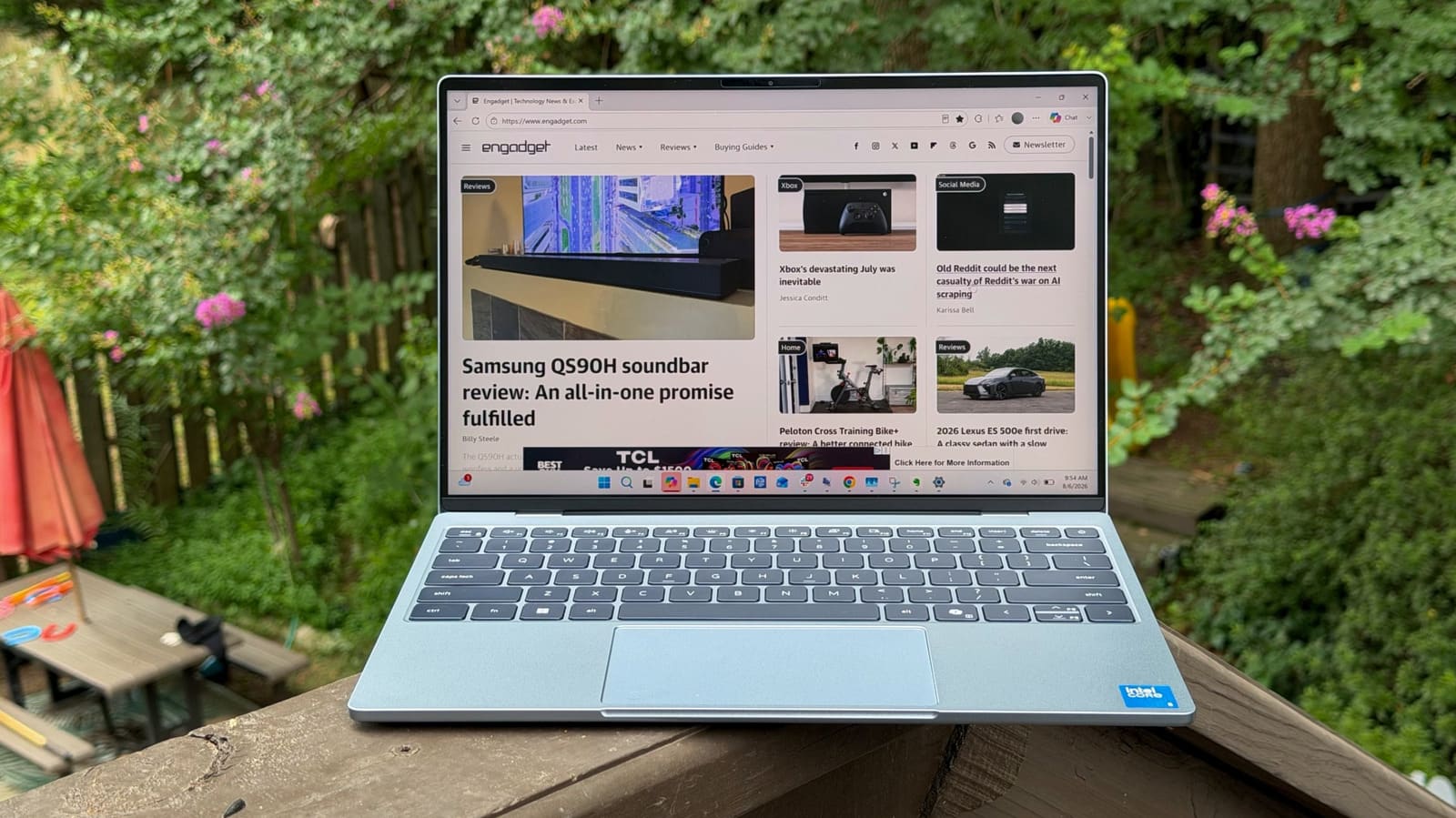
When Apple repositioned the MacBook Neo at $700, PC manufacturers faced an uncomfortable question: could they build a Windows laptop that works at that price point with similar specifications? Dell's answer arrives in the form of its thinnest XPS 13 yet, a 2.2-pound machine that strips away premium flourishes to hit the same target. The company shed half a pound compared to Apple's offering and added a 120Hz display, but the real test lies elsewhere. After two weeks of daily use, the central tension becomes clear: Windows 11 and 8GB of RAM make uncomfortable roommates.
The computing experience oscillates between tolerable and frustrating. Boot the system and 80 percent of memory vanishes immediately to background processes. Open a browser with multiple tabs and memory commitment climbs to 95 percent, where it stays. Scrolling stutters. Application switches hesitate. On one occasion, a note-taking app displayed a blank screen for 30 seconds before rendering content. These aren't catastrophic failures, but they accumulate into what feels like working underwater.
What Dell Got Right
The industrial design succeeds within its constraints. Dell wrapped the XPS 13 in aluminum that feels solid in hand, with none of the flex typical of budget laptops. The finish doesn't match the brushed-metal elegance of the XPS 14 or 16, but it avoids feeling cheap. At 12.7 millimeters thick, the chassis disappears into bags easily.
The display merits attention. Dell equipped the base model with a 1440p panel running at 120Hz, a specification tier above what Apple offers on the Neo. The faster refresh rate makes web browsing and document scrolling noticeably smoother. Brightness holds up in direct sunlight, though the panel lacks the depth of OLED or the intensity of MiniLED backlighting. It's a competent screen that punches above its price class.
Battery endurance exceeds expectations. In testing focused on productivity workloads, the XPS 13 ran for nearly 16 hours, outlasting Dell's own XPS 14 by five and a half hours. That longevity matters for users who need a full workday away from outlets. The company also placed USB-C ports on both sides of the chassis, a small convenience that eliminates the single-side charging frustration common in thin laptops.
Storage represents another area where Dell outflanks Apple. The base XPS 13 includes 512GB, double what the MacBook Neo offers. For users who store local files or need room for applications, that difference closes the gap in practical value.
The Compromises That Sting
Memory constraints dominate the user experience. Windows 11 dedicates significant RAM to security and system processes before any applications launch. Services like "Anti-malware service executable" and "Secure biometrics" consume resources that macOS handles more efficiently. The result: Windows machines need more headroom to deliver comparable smoothness.
The keyboard returns to traditional chiclet-style keys after years of Dell experimenting with edge-to-edge layouts. Key travel stays shallow but typing remains comfortable and accurate. The trackpad, however, feels like time travel to 2014. It uses mechanical clicking rather than haptic feedback, and the top third of the surface doesn't register presses at all. Users accustomed to Apple's Force Touch or Microsoft's Precision trackpads will spend days adjusting to the dead zones.
Dell equipped the laptop with Intel's Core 5 320 processor, prioritizing efficiency over raw performance. Benchmark comparisons reveal the trade-off starkly. The 2024 XPS 13 models, which featured either Intel Core Ultra 7 or Snapdragon X Elite chips, deliver substantially faster multi-core performance and graphics. The Snapdragon version achieved nearly double the graphics scores, while the previous Intel model ran three times faster in GPU tests. Anyone seeking performance would find better value in a used 2024 XPS 13 than this new release.
The speaker array technically includes four drivers, but audio quality stays thin and bright with minimal bass response. It's adequate for video calls and background music, not immersive media consumption. Dell also eliminated the 3.5mm headphone jack years ago, forcing users toward USB-C adapters or Bluetooth audio.
The Pricing Calculus
Dell's positioning creates an interesting market dynamic. The $700 base model exists primarily as a marketing anchor, a number that looks competitive in headlines. In practice, most buyers should budget $900 for the 16GB RAM configuration. That extra memory transforms the experience from tolerable to functional, eliminating the constant memory pressure that plagues the base model.
At $900, the value proposition shifts. You're no longer comparing against the MacBook Neo but against refurbished premium laptops and mid-range new systems. The XPS 13 holds up better in that context, offering new-machine warranty coverage and modern I/O in a portable package.
The inability to upgrade RAM after purchase amplifies the initial configuration choice. A decade ago, budget laptops often featured accessible memory slots, letting users add capacity later. Modern thin-and-light designs solder everything to the motherboard, making the day-one spec permanent. That permanence makes the 8GB model a risky investment for anyone planning to keep the laptop beyond two years.
The Redesign's Strategic Shift
This XPS 13 marks a philosophical departure for Dell's flagship ultraportable line. Previous generations started at $1,300 to $1,400 and featured design elements like invisible trackpads and edge-to-edge keyboards. This version adopts a simpler aesthetic that resembles Dell's mainstream Inspiron series more than the premium XPS family.
The repositioning makes strategic sense. Dell now offers clearer product segmentation: the XPS 14 serves buyers seeking premium features in a portable form, while the XPS 13 targets budget-conscious customers willing to accept trade-offs. The company lacked a competitive offering below $1,000 before; now it has an answer when shoppers compare Windows options against the MacBook Neo.
Whether that answer satisfies depends on expectations. The XPS 13 doesn't try to match the Neo's integration of hardware and software, nor can it. Windows 11 carries more overhead than macOS, and Intel's current chip efficiency trails Apple Silicon by a generation. What Dell delivers instead is a Windows machine that gets closer to Apple's price-to-quality ratio than most PC manufacturers have managed.
Who This Laptop Serves
The 8GB XPS 13 works for a narrow user profile: someone who needs Windows specifically, works primarily in web applications, and rarely juggles more than a few tasks simultaneously. Students writing papers in Google Docs or office workers living inside Microsoft 365 web apps might find it adequate. The moment workflows expand to include local applications, photo editing, or heavy multitasking, the memory ceiling becomes oppressive.
The 16GB model expands that viable user base considerably. It provides enough breathing room for moderate multitasking and leaves capacity for future software bloat. At under $1,000, it represents a reasonable entry point for portable Windows computing, even if it doesn't excite.
The Larger Industry Question
Dell's quick response to the MacBook Neo's pricing illustrates both the PC industry's agility and its structural challenges. Windows laptop makers can iterate quickly, adjusting specifications and prices across product lines within months. But they're also constrained by the Windows ecosystem's memory appetite and Intel's performance-versus-efficiency trade-offs.
Apple controls its entire stack, from silicon to operating system, enabling optimization that component-assembling PC makers can't match. When Apple ships 8GB and makes it work, that's vertical integration paying dividends. When Dell tries the same approach, the seams show immediately.
The next iteration of the XPS 13 will be telling. If Dell treats this generation as a learning exercise, testing how low they can price an XPS while gathering feedback on acceptable compromises, the line could evolve into a genuinely competitive MacBook Neo alternative. If they simply maintain this configuration as a permanent budget option, it'll remain a footnote for deal-hunters rather than a mainstream recommendation.
For now, the XPS 13 exists in an awkward middle ground: too compromised at $700, more sensible at $900, but facing stiffer competition at that higher price. It's a first attempt at answering a difficult question, and like most first attempts, it shows both promise and room for refinement.