China's Wealthy Trade Supercars for Local EVs on Technology Merit
Affluent buyers prioritize advanced features and driving dynamics over badge prestige as domestic electric brands close the technical gap
A Shift in Supercar Garages
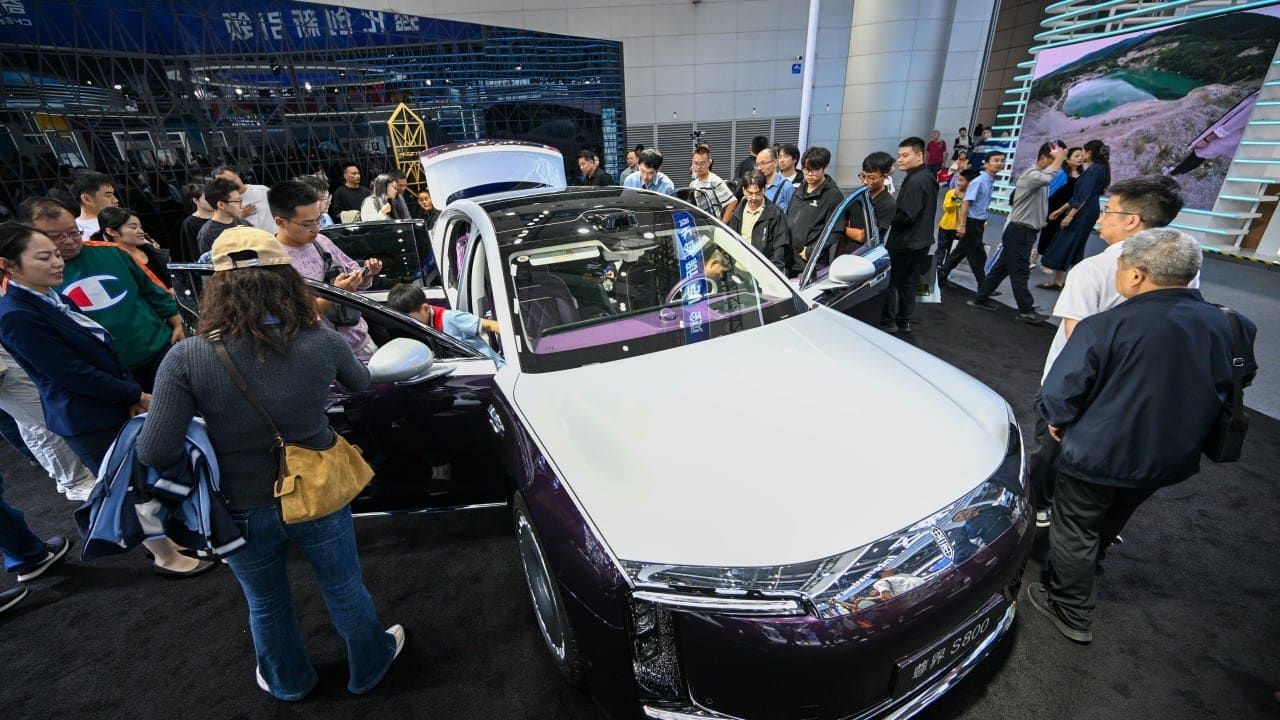
Eric Huang's garage tells a story familiar across China's entrepreneurial class. The Guangdong healthcare entrepreneur owns a Lamborghini Aventador and a Tesla Model S Plaid, but his next vehicle won't carry a Western badge. Instead, he's eyeing a six-seat premium electric minivan from a Chinese manufacturer, a choice that would have seemed improbable five years ago.
The shift isn't driven by patriotism or cost savings. For Huang and buyers in his income bracket, the calculation has become purely technical. Chinese electric vehicle makers have closed what was once a meaningful gap in safety engineering, battery management, and autonomous driving capabilities. The brands that once represented compromise now deliver the specifications that luxury buyers demand.
At DailyTechWire, we've tracked this migration across multiple markets in Asia, but nowhere is it more pronounced than in the world's largest automotive market. The transition marks a fundamental change in how affluence expresses itself through vehicle choice, and it carries implications far beyond China's borders.
When Technology Trumps Heritage
Traditional luxury automotive brands built their reputations on decades of engineering heritage, motorsport pedigree, and carefully cultivated exclusivity. That formula worked when mechanical sophistication was the primary differentiator. Electric powertrains have rewritten those rules.
Battery thermal management, over-the-air software updates, sensor fusion for driver assistance, and interior human-machine interfaces have become the new benchmarks of premium performance. Chinese manufacturers entered the electric era without the burden of legacy combustion platforms or dealer networks resistant to change. They built software-defined vehicles from the ground up, often with talent recruited from Silicon Valley and European design studios.
The result is a product category where a five-year-old brand can credibly compete with marques that have existed for a century. Buyers who once purchased a Porsche for its transmission engineering or a Mercedes for its chassis tuning now evaluate vehicles on metrics like inference latency in parking assistance or the responsiveness of regenerative braking calibration.
The Safety Threshold
Huang's comment about safety standards reflects a broader pattern. Affluent Chinese buyers, particularly those with families, have historically viewed Western brands as offering superior crash protection and reliability. That perception was rooted in real differences: older Chinese manufacturers struggled with inconsistent build quality and less sophisticated safety systems.
Recent crash test results and real-world incident data have narrowed that gap substantially. Chinese EV makers now incorporate the same supplier base for critical safety components, use similar battery cell chemistries with comparable thermal runaway protections, and subject their vehicles to the same international testing protocols. For buyers like Huang, the safety threshold has been crossed, removing the primary objection to domestic brands.
This shift is particularly evident in the premium minivan and SUV segments, where family transportation rather than personal performance is the priority. These vehicles feature advanced driver monitoring systems, redundant braking architectures, and structural designs optimized for battery pack protection in side impacts. The engineering is sophisticated enough to satisfy buyers who previously would have defaulted to a German or Japanese nameplate.
The Prestige Calculation
Luxury goods have always carried signaling value, and automotive purchases are among the most visible forms of status display. What's changing in China is the nature of the signal.
Owning a Lamborghini or Ferrari still communicates wealth, but increasingly it also suggests a buyer who prioritizes heritage and emotion over cutting-edge technology. For entrepreneurs in tech, healthcare, and finance sectors, that's not necessarily the message they want to send. A domestic EV with Level 3 autonomy, a 15-inch augmented reality head-up display, and bi-directional charging capability signals a different kind of sophistication: an understanding of where automotive technology is heading rather than where it has been.
This dynamic is amplified by the rapid product cycles in the Chinese EV market. New models arrive with feature sets that can make a two-year-old vehicle feel outdated. Buyers who refresh their vehicles every three to four years find more value in a brand that can deliver annual software improvements and hardware updates than in a marque that refreshes its lineup every seven years.
Regional Production and Service Networks
Another practical advantage for domestic brands is proximity. Chinese EV manufacturers have built extensive service networks across tier-one and tier-two cities, with mobile service vans that can perform many repairs and software updates at a customer's home or office. Parts availability is immediate, and warranty claims are processed without the friction that sometimes accompanies imported vehicles.
For buyers in Shenzhen, Hangzhou, or Chengdu, this convenience factor is meaningful. A European luxury brand might offer comparable service in Beijing or Shanghai, but coverage thins quickly outside those hubs. Chinese manufacturers have prioritized service density as a competitive advantage, recognizing that affluent buyers value their time as much as their money.
The service experience also reflects different design philosophies. Domestic EVs are built with over-the-air updates as a core feature, allowing many issues to be resolved remotely. Traditional luxury brands have been slower to embrace this model, in part because their dealer networks generate significant revenue from service visits.
The Minivan Moment
Huang's interest in a premium electric minivan is particularly telling. The segment barely exists in Western markets, where minivans are associated with budget family transport. In China, however, the category has been reimagined as a luxury product: six or seven seats with executive lounge configurations, massaging second-row captain's chairs, ambient lighting, and acoustic glass.
Chinese manufacturers recognized that affluent buyers wanted the space and versatility of a minivan without sacrificing the technology and finish quality of a luxury sedan. They created vehicles that function as mobile offices or family living rooms, with features like retractable tables, refrigerators, and rear-seat entertainment systems that rival business-class airline cabins.
This product category exemplifies a broader trend: Chinese manufacturers are designing for local preferences rather than adapting global platforms. That allows them to move faster and target niches that multinational brands overlook or dismiss as too small. For buyers, it means vehicles that feel purpose-built for their specific needs rather than compromised by the demands of multiple markets.
What It Means for Global Brands
The migration of affluent Chinese buyers to domestic EVs represents a strategic challenge for European and American luxury manufacturers. China is not only the world's largest automotive market but also the most profitable segment for many premium brands. Losing share among high-net-worth buyers in that market undermines both revenue and brand perception globally.
Some multinational brands are responding by accelerating their electric transitions and localizing more design and engineering work in China. Others are forming joint ventures with domestic partners to access local supply chains and software talent. But these moves take years to yield products, and the Chinese market is evolving in quarters, not decades.
The competitive pressure is also starting to flow outward. Chinese EV brands are entering Southeast Asian markets with similar value propositions: advanced technology at price points that undercut established players. Affluent buyers in Bangkok, Kuala Lumpur, and Singapore are beginning to make the same calculations as their counterparts in Guangzhou and Shanghai.
The Driving Experience
Beyond specifications and features, there's a subtler shift in how buyers evaluate vehicles. Traditional luxury brands emphasized the tactile and auditory experience: the sound of a door closing, the feel of leather, the note of an exhaust. Electric vehicles have different sensory signatures.
Chinese manufacturers have invested heavily in interior materials, ambient sound design, and the responsiveness of accelerator and brake pedals. They've also focused on interface design, recognizing that a clunky infotainment system can undermine an otherwise premium product. The result is a driving experience that feels cohesive and modern, even if it lacks the heritage cues of a European grand tourer.
For buyers who grew up in the digital era, this trade-off is increasingly favorable. A vehicle that integrates seamlessly with their phone, learns their preferences, and updates itself feels more sophisticated than one that requires a trip to a dealer for a software patch. The definition of luxury is shifting from hand-stitched leather to machine-learned personalization.
Looking Forward
Huang's purchasing decision is a data point, but it's part of a pattern that has implications for the global automotive industry. When affluent buyers in the world's largest car market choose domestic brands on merit rather than price, it signals a maturation of those brands and a vulnerability in the positioning of traditional luxury marques.
The shift also raises questions about how brand equity is built and maintained in categories where technology evolves rapidly. A century of motorsport heritage matters less when the primary performance metric is software latency. Exclusivity is harder to maintain when production volumes scale quickly and new competitors enter the market every year.
For Chinese EV manufacturers, the challenge will be sustaining this momentum as they expand internationally and face buyers with different expectations and regulatory environments. For established luxury brands, the task is adapting business models and product development cycles built for a different era. And for buyers like Huang, the opportunity is access to vehicles that deliver the technology they want without requiring them to compromise on quality or safety.
The garage of the future, at least in China, looks less like a collection of European exotics and more like a showcase of domestic electric innovation. That transformation has been swift, and it's far from over.