Apple's Vision Pro Chief Jumps to OpenAI Hardware Unit
Paul Meade's move signals OpenAI's push into consumer devices - and raises questions about how its in-house team will coexist with Jony Ive's independent studio.
A Seven-Year Bet on Spatial Computing Walks Out the Door
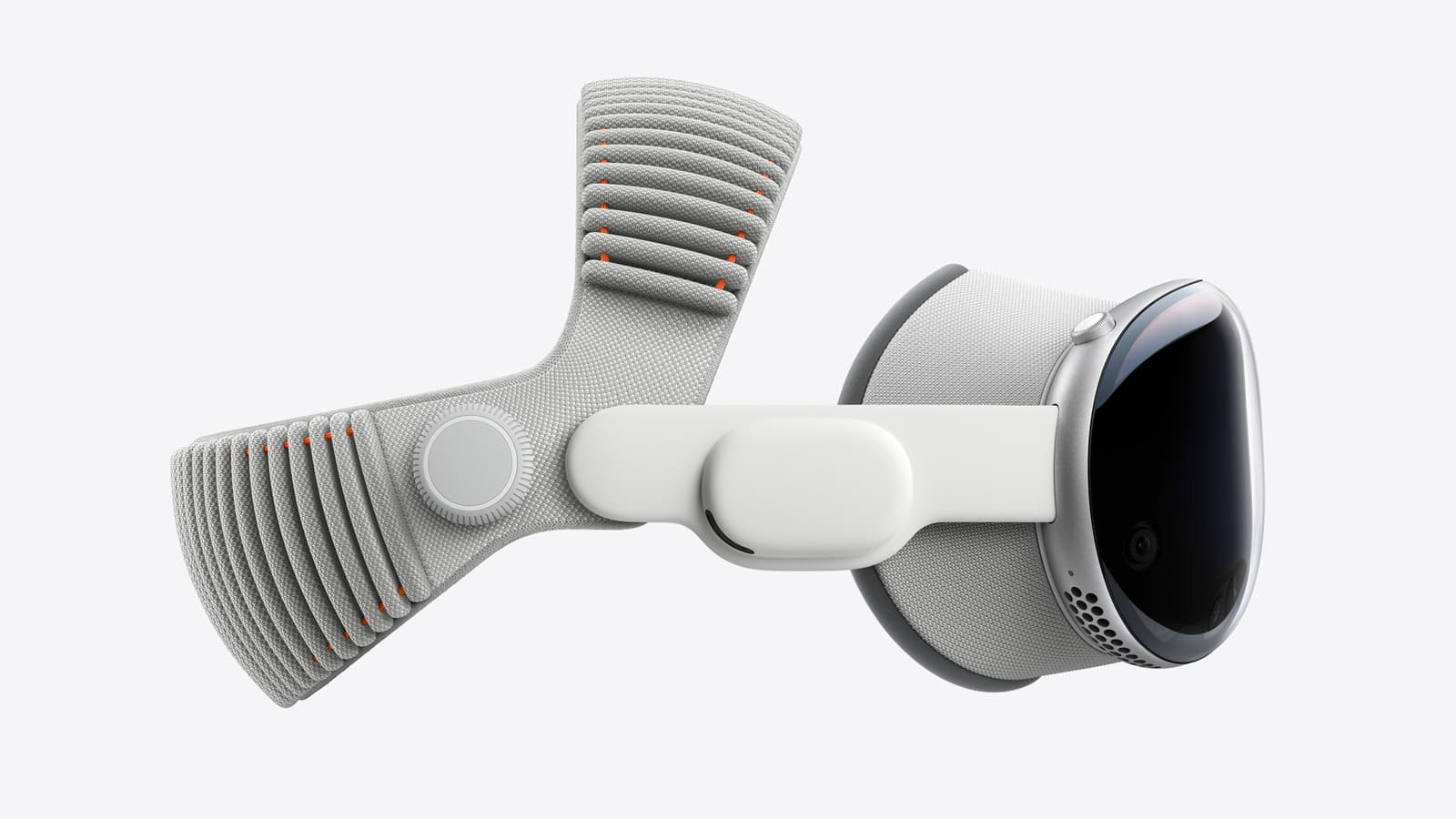
Paul Meade spent seven years steering the hardware engineering behind Apple's Vision Pro, the $3,499 mixed-reality headset that launched with fanfare and sold in modest volumes. Next week, according to Apple, he will start a new role at OpenAI: heading up the company's nascent hardware division.
The departure is more than a personnel shuffle. Meade oversaw not only the Vision Pro but also Apple's internal efforts to develop smart glasses, a category the company has explored quietly for years but has yet to ship. His exit arrives just as OpenAI doubles down on physical products, an ambition that began in 2025 when the company partnered with Jony Ive's design studio, io, to prototype AI-powered devices.
At DailyTechWire, we've tracked OpenAI's hardware pivot since the Ive collaboration was first reported. What remains unclear is how Meade's in-house team will interact with io - which merged with OpenAI in a $6.5 billion deal yet continues to operate independently. The arrangement now features two parallel hardware streams: one led by a veteran Apple engineer inside OpenAI, the other by Apple's former design chief outside it.
Two Hardware Tracks, One AI Company
OpenAI's partnership with io has already yielded at least one product in development: a smart speaker slated for release in 2027. The device is part of a broader family of AI-enabled hardware that io is designing, though specifics remain scarce.
Meade's remit, according to OpenAI, will be to build and ship a portfolio of AI-powered devices from within the company. Whether that portfolio overlaps with io's roadmap - or complements it - is a question neither OpenAI nor Ive's studio has addressed publicly. The $6.5 billion deal that brought io into OpenAI's orbit preserved the studio's operational independence, a structure that now looks both flexible and potentially redundant.
For OpenAI, the calculus is straightforward: large language models and multimodal systems are most valuable when embedded in hardware people touch every day. Amazon proved this with Alexa speakers; Google with Nest hubs. OpenAI, which has no consumer hardware legacy, is building one from scratch - and Meade's hire suggests it wants Apple-level polish, not startup prototypes.
What Meade Built at Apple
Meade joined Apple's Vision Products Group in 2017, taking over hardware engineering leadership two years later. Before that, he worked on the iPad and iPhone, two product lines that taught Apple how to integrate sensors, displays, and silicon at scale.
The Vision Pro was a different challenge: a head-worn computer with dual 4K displays, eye-tracking cameras, spatial audio, and a custom M2 chip. The device shipped in early 2024 to mixed reviews - praised for its display fidelity and hand-tracking precision, criticized for its weight, battery life, and lack of killer apps. Sales have been tepid; Apple has not disclosed unit volumes, and the company is not expected to launch a second-generation model until late 2026 at the earliest.
Meade also led early-stage work on Apple's smart glasses initiative, a project that remains years from market. The company is targeting late 2027 for its first glasses product, according to supply-chain sources, though that timeline has slipped before. The glasses are expected to lean heavily on iPhone for processing, a design choice that would keep costs and weight down but limit standalone functionality.
A Reshuffle Tied to Leadership Transition
Apple has named Fletcher Rothkopf, one of the Vision Pro team's original founders, to assume many of Meade's responsibilities. Rothkopf has been with the Vision Products Group since its inception and is well-versed in the technical and strategic challenges of spatial computing.
The timing of Meade's departure, according to Apple, is linked to a broader leadership transition: John Ternus, currently senior vice president of hardware engineering, will succeed Tim Cook as CEO on September 1. Ternus has overseen Apple's silicon strategy and hardware roadmap for years, but his elevation to the top job is reshuffling reporting lines and priorities across the company.
Meade's decision to leave suggests he saw a ceiling - or a mismatch - in the post-Cook era. Vision Pro has not become the platform hit Apple hoped for, and the smart glasses timeline stretches well into the next decade. At OpenAI, he inherits a blank slate and the backing of a company that raised $6.5 billion in a single funding round.
The Bet on AI Hardware
OpenAI's move into hardware is not novel - it follows a well-worn path from software to devices. But the company's approach is unusual: it is running two parallel efforts, one in-house and one with Ive's studio, each with significant capital and autonomy.
Meade's role is to make the in-house track credible. That means hiring engineers, negotiating with suppliers, setting up manufacturing pipelines, and shipping products that work reliably in users' hands. It also means navigating the political and strategic complexity of working alongside io, which has its own design language, timelines, and relationship with OpenAI's executive team.
The smart speaker io is developing will be an early test. If it ships on schedule in 2027, it will establish a baseline for what AI hardware can do - and what consumers are willing to pay for it. If Meade's team ships something similar, or better, before that, the question of why OpenAI needs two hardware groups will become harder to answer.
For now, OpenAI is betting that talent and capital can compress the learning curve. Meade brings a decade of experience building complex consumer electronics at Apple. Whether that experience translates to a company with no retail stores, no supply-chain legacy, and no track record of hardware support remains to be seen.
The funding rounds we've followed across the region show that AI hardware is a crowded space. Humane, Rabbit, and a dozen well-funded startups have shipped - or tried to ship - AI-first devices in the past two years. Most have struggled with distribution, software bugs, and unclear use cases. OpenAI has the brand and the capital to avoid some of those pitfalls. What it doesn't have yet is proof that consumers want AI in a physical form factor beyond their phones.
Meade's job is to find that proof - and build the products that deliver it.