Micron's Market Cap Climbs to $1.2 Trillion as Memory Shortage Deepens
The Idaho-based chipmaker posted a 28-fold profit surge while Apple warns customers to brace for higher device prices
A Seller's Market in Silicon
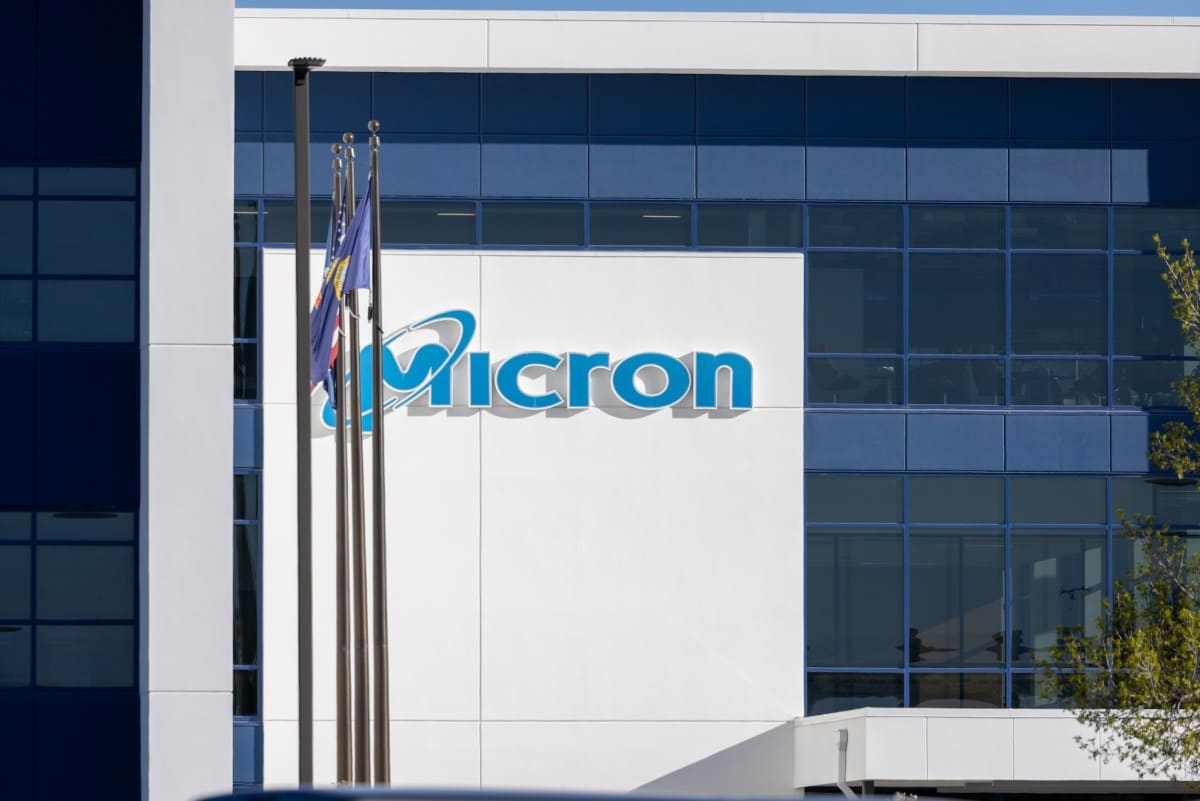
Micron closed Wednesday trading at $1,048.51 per share, valuing the largest U.S. memory chip manufacturer at $1.2 trillion and capping a 1,160 percent rally from its early-2024 position of roughly $83 per share. The ascent reflects an industry-wide squeeze that has turned high-bandwidth memory into one of the most fought-over commodities in the AI stack, and it underscores a structural shift that analysts expect to persist well into 2027.
At DailyTechWire, we've tracked memory pricing across the region for eighteen months. What began as a routine uptick in data-center procurement has morphed into what some engineers are calling "RAMageddon," a term that captures both the severity of supply constraints and the cascading consequences for hardware OEMs, hyperscalers, and end users alike. The scarcity is no longer confined to lab procurement channels; it has begun to move price tags on consumer devices, a reality Apple's chief executive acknowledged in public remarks last week.
Micron's third-quarter earnings, released after the close on Wednesday, offer the clearest window yet into who stands to gain as the shortage tightens. Revenue climbed to $41.45 billion, four times the figure recorded in the same quarter a year earlier, according to Micron. Net income surged from $1.88 billion to $28.2 billion over the same span, a near-fifteenfold expansion that reflects both volume growth and the pricing power that comes with constrained supply.
The Anthropic Tie-Up and Strategic Bets
The same week Micron disclosed its quarterly results, the company announced a supply agreement with Anthropic, the San Francisco artificial-intelligence lab that competes with OpenAI and DeepMind in frontier-model development. Under the arrangement, Micron will furnish memory and storage components for Anthropic's training and inference infrastructure. Micron also participated in Anthropic's Series H funding round, though the chipmaker did not disclose the size of its equity commitment.
The dual move, commercial contract and venture stake, signals a deeper strategic calculus. Memory suppliers have historically operated as arms-length vendors to cloud providers and device makers; direct investment in an AI lab represents a tighter coupling of hardware roadmaps and model architecture. For Micron, the rationale is straightforward: locking in long-term offtake from a well-capitalized customer whose compute appetite will only grow as parameter counts and context windows expand.
Anthropic's model development has consistently pushed the envelope on memory bandwidth and capacity. Training runs for the latest generation of large language models require terabytes of high-bandwidth memory distributed across thousands of accelerators, and inference at scale demands low-latency access to multi-gigabyte weight matrices. The constraints are not just about total DRAM supply; they hinge on specific packaging technologies, HBM3 and its successors, that remain in short supply even as legacy DRAM production ramps.
Pricing Power and the Consumer Ripple
The pricing environment has shifted visibly. Apple's chief executive warned customers that device cost increases are unavoidable, a statement that breaks with years of careful margin management and supply-chain optimization. When a company known for squeezing pennies from its bill of materials signals upward price pressure, it reflects a fundamental change in bargaining power between chipmakers and their customers.
Memory accounts for a meaningful share of the cost stack in smartphones, laptops, and tablets. A doubling of DRAM spot prices, which has occurred in certain segments over the past year, translates directly into higher bills of materials for OEMs. Those costs can be absorbed through lower margins, passed to consumers through higher retail prices, or deferred through inventory drawdowns. Apple's public acknowledgment suggests the first two levers are now in play.
The dynamic is not unique to Cupertino. Across Asia, handset makers in Shenzhen, Seoul, and Hsinchu are facing similar trade-offs. Some have begun to design around the constraint, shipping models with less onboard memory or slower refresh cycles. Others are paying up and adjusting their average selling prices accordingly. Either path represents a departure from the deflationary hardware economics that defined the previous decade.
A Windfall Built on Structural Demand
Micron's guidance for the fourth quarter projects revenue between $49 billion and $51 billion, implying continued sequential growth and sustained pricing strength. The outlook rests on assumptions about AI infrastructure build-outs, data-center refresh cycles, and the slow ramp of competing supply from South Korean and Taiwanese fabs.
The company's trajectory since early 2024 also reflects a broader revaluation of memory as a strategic asset. For years, DRAM and NAND were treated as commoditized, cyclical businesses prone to boom-bust swings driven by capacity additions and inventory corrections. The AI wave has reframed that narrative. Memory is now a bottleneck resource for the most capital-intensive and economically consequential workloads in computing, and the suppliers who can deliver at scale command pricing that would have seemed implausible three years ago.
Micron's market capitalization of $1.2 trillion places it among a small cohort of semiconductor firms valued above the trillion-dollar threshold. That club, until recently dominated by designers and foundries, now includes a pure-play memory manufacturer, a signal of how central bandwidth and capacity have become to the infrastructure layer of machine learning.
What Lies Ahead for Memory Economics
The shortage is expected to persist through 2027, driven by a mismatch between fab lead times and the pace at which AI labs and hyperscalers are scaling their clusters. New high-bandwidth memory production lines take eighteen to twenty-four months to bring online, while model sizes and training budgets are doubling on shorter cycles. The gap creates a structural tailwind for incumbents with existing capacity and process know-how.
At the same time, the shortage is spurring responses that could eventually ease the constraint. Chipmakers in Taiwan and South Korea are accelerating HBM capacity expansions, and some hyperscalers are exploring architectural changes, sparse models, quantization, and memory-efficient attention mechanisms, that reduce peak memory requirements. Whether those efforts arrive in time to prevent a prolonged supply crunch remains an open question.
For now, the winners are clear. Micron's fifteen-fold profit expansion in a single year is not the result of incremental efficiency gains or modest volume growth. It is the product of a market in which demand has outstripped supply to a degree that allows producers to set terms. The company's participation in Anthropic's funding round, and its supply agreement with the lab, suggest it intends to deepen those relationships and secure its position as AI infrastructure scales.
The broader implication is that memory, long viewed as a necessary but low-margin input, has become a high-stakes, high-return business. As training runs grow more expensive and inference workloads proliferate, the firms that control the supply of high-bandwidth, high-capacity memory will wield influence that extends well beyond the fab floor. Micron's market valuation, and its recent earnings performance, reflect that new reality.