Seer Robotics Targets Hong Kong Listing After Fourteen-Month IPO Marathon
The Shanghai-based autonomous mobile robot maker is pricing shares at HKD 101.60, valuing the specialist technology firm at USD 1.4 billion as it prepares to debut on the HKEX.
A Fourteen-Month Path to Public Markets
Seer Robotics began accepting investor subscriptions on June 15, offering shares at HKD 101.60 (USD 13.00) each with a minimum board lot of fifty shares. The pricing establishes a market capitalization of HKD 11.2 billion (USD 1.4 billion) for the Shanghai-headquartered autonomous mobile robot manufacturer, according to the company. Trading is scheduled to commence on June 24 under the Hong Kong Stock Exchange's Chapter 18C framework for specialist technology companies.
The journey to this point stretched across fourteen months and two regulatory submissions. Seer Robotics initially filed its prospectus with the Hong Kong Stock Exchange in May 2025, but that application lapsed after the standard six-month validity window closed without a listing hearing. The company refiled in November 2025 and successfully passed its listing hearing in June 2026.
At DailyTechWire, we've tracked the growing cohort of robotics and automation firms turning to Hong Kong's Chapter 18C route over the past eighteen months. The specialist technology provisions, introduced to attract pre-profit or early-revenue companies in strategic sectors, have become a favored path for mainland Chinese robotics makers seeking offshore capital while navigating tighter scrutiny in U.S. markets.
Chapter 18C and the Specialist Technology Gateway
Chapter 18C was designed to accommodate companies that may not meet traditional profitability thresholds but demonstrate technological innovation and commercial traction in sectors the exchange deems strategically important. Autonomous mobile robots, warehouse automation, and industrial logistics solutions all fall within the eligible categories.
For Seer Robotics, the Chapter 18C designation signals both opportunity and constraint. The framework allows the company to access international capital pools without needing to demonstrate consecutive quarters of positive net income, a hurdle many hardware-focused robotics firms struggle to clear during their scaling phase. However, it also subjects the listing to heightened disclosure requirements around technology validation, customer concentration, and forward revenue visibility.
The fourteen-month timeline from initial filing to trading debut is longer than the typical eight-to-ten-month span for conventional IPOs in Hong Kong, reflecting both the lapsed initial application and the more intensive due diligence process that Chapter 18C listings entail. The refiling in November suggests the company likely needed additional time to address regulatory feedback, update financial statements, or refine its commercialization narrative.
Underwriting Structure and Market Positioning
CICC is serving as sole sponsor for the offering, while CMB International has been appointed overall coordinator, according to Seer Robotics. The single-sponsor structure is less common in large Hong Kong IPOs, where syndicates of two or three sponsors typically share risk and distribution responsibilities. A sole sponsor arrangement can indicate either a strong existing banking relationship or a more streamlined deal structure, often seen when the issuer prioritizes speed and control over maximum distribution reach.
CMB International's role as overall coordinator places it atop the bookrunning hierarchy, responsible for demand aggregation, pricing strategy, and allocation decisions. The firm has been active in technology and industrial IPOs over the past two years, particularly for issuers with mainland China operations seeking to tap both institutional and retail investor bases in Hong Kong.
The HKD 101.60 price point and fifty-share board lot translate to a minimum investment of HKD 5,080 (approximately USD 650), positioning the offering within reach of retail participants while keeping the per-share price high enough to signal premium positioning. Retail allocation details and cornerstone investor commitments have not been disclosed in the available filings, but the pricing level suggests the underwriters are targeting a mix of long-only institutional funds and family offices with exposure to automation and logistics technology.
The Autonomous Mobile Robot Market Context
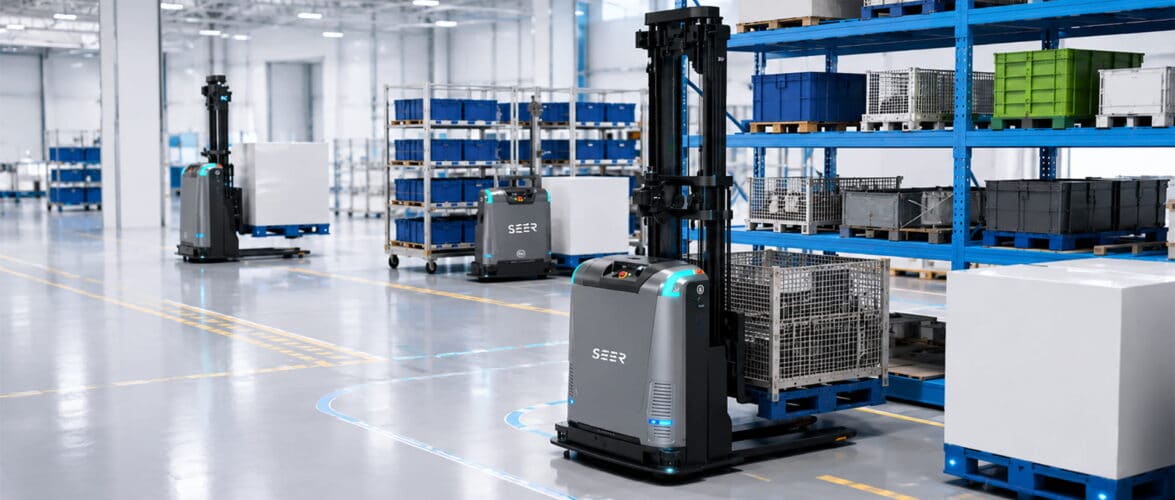
Seer Robotics operates in a segment that has seen both rapid adoption and intensifying competition. Autonomous mobile robots, or AMRs, are used primarily in warehouse and factory environments to transport materials, navigate dynamic spaces, and integrate with warehouse management systems. The technology sits at the intersection of computer vision, simultaneous localization and mapping (SLAM), and fleet management software.
Demand for AMRs surged during the pandemic as e-commerce volumes strained legacy logistics infrastructure and labor shortages made automation investments more attractive. However, the market has matured quickly. Established players such as Geek+, Quicktron, and HAI Robotics have raised successive growth rounds and expanded internationally, while incumbents like KION Group and Körber have acquired or developed their own AMR capabilities.
For Seer Robotics, the IPO represents both a capital influx to fund production scale-up and a branding milestone that may help the company compete for large enterprise contracts against better-known rivals. Manufacturing-focused AMR deployments typically involve multi-year service agreements and require significant upfront integration work, making brand credibility and balance-sheet strength important selection criteria for procurement teams.
Risks and Forward Outlook
Several factors will shape Seer Robotics' post-listing trajectory. First, the company's ability to convert its valuation into sustained revenue growth will depend on its customer pipeline and the pace of repeat purchases. AMR deployments often begin with pilot projects, and conversion rates from pilot to full-scale rollout vary widely across industries.
Second, the competitive environment remains fluid. Domestic rivals are well-capitalized, and international expansion by Chinese robotics firms faces both tariff headwinds and localization requirements in key markets such as Europe and North America. Seer Robotics will need to demonstrate either technological differentiation, superior unit economics, or vertical-specific domain expertise to defend margin in a commoditizing hardware category.
Third, the Chapter 18C listing framework imposes ongoing disclosure obligations around key performance indicators, including customer concentration, gross margin trends, and R&D spending intensity. Investors will scrutinize these metrics closely in the first few quarterly reports, particularly if broader sentiment toward Chinese technology stocks remains volatile.
The June 24 trading debut will offer an early read on institutional appetite. If the stock trades above the offer price in the opening sessions, it may embolden other robotics and automation firms in the pipeline to accelerate their own Hong Kong listings. Conversely, a muted reception could prompt underwriters to recalibrate pricing expectations for subsequent Chapter 18C candidates.
What the Listing Signals for the Sector
Seer Robotics' move to public markets arrives at a moment when automation infrastructure is no longer a niche bet but a core capital expenditure category for logistics and manufacturing operators across Asia. The IPO pricing and structure reflect a calculated effort to balance valuation ambition with market realism, particularly given the broader slowdown in venture-backed late-stage funding and the uneven recovery in Hong Kong's new listings market.
For investors, the offering presents a direct play on the continued digitization of supply chains and the shift from manual material handling to software-orchestrated fleets. For competitors, it sets a public valuation benchmark that will influence private-market funding rounds and M&A discussions throughout the second half of 2026.
Whether Seer Robotics can translate its IPO momentum into durable competitive advantage will depend on execution in the quarters ahead - customer wins, margin discipline, and the ability to articulate a differentiated technology story in an increasingly crowded field.