The Air Taxi Industry Is Fighting Itself Before It Can Fly
Patent disputes and corporate espionage claims are draining capital and delaying certification in one of Asia and North America's most-watched aviation races.
Courtrooms Before Skyports
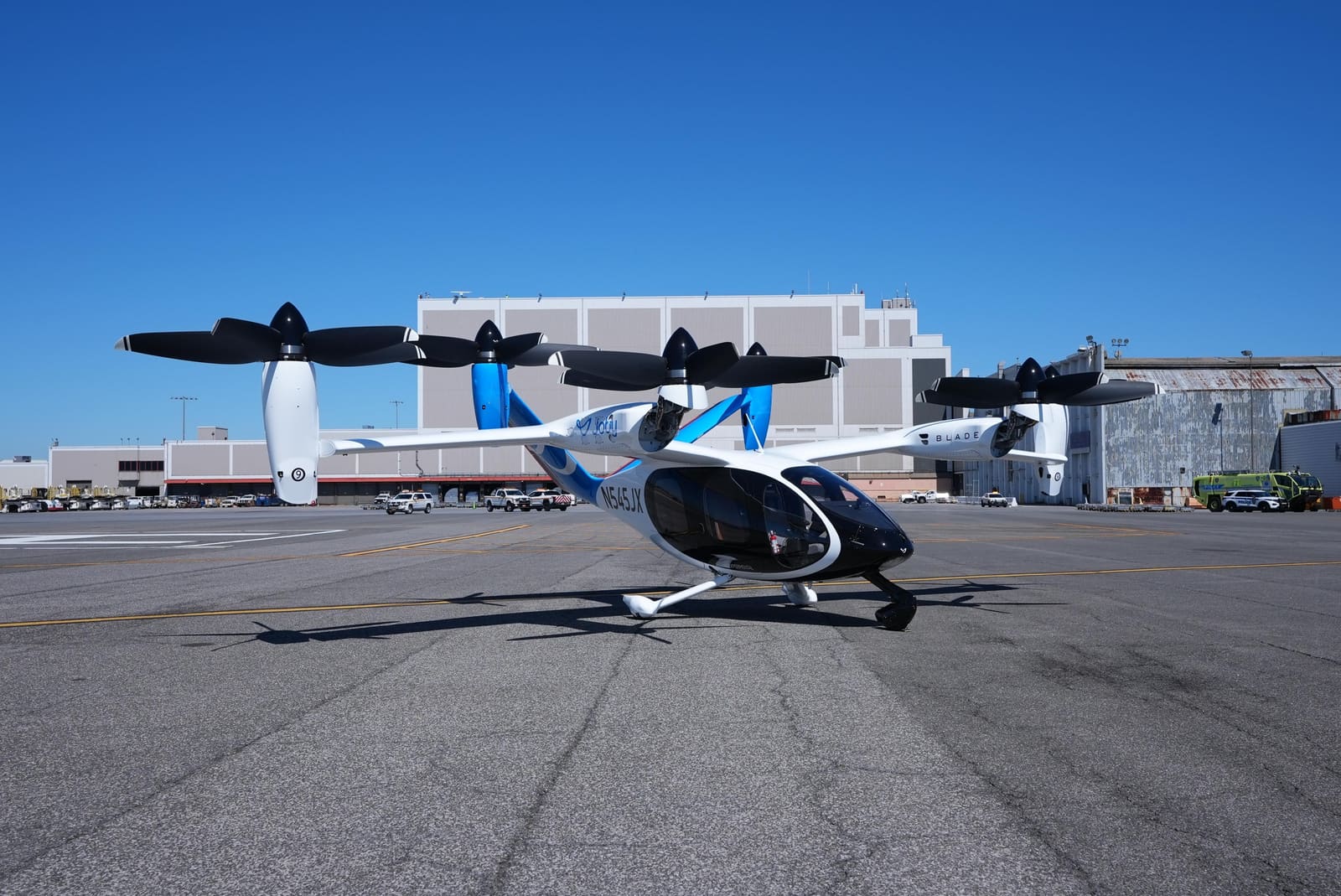
Joby Aviation and Archer Aviation, two of the best-funded electric vertical takeoff and landing (eVTOL) ventures in North America, have spent the past eighteen months entangled in litigation rather than scaling production. Last year Joby filed suit alleging corporate espionage; Archer countered with claims that Joby had concealed relationships with Chinese partners. More recently, Archer opened a second front, filing a patent infringement action against Vertical Aerospace, a UK-based competitor also eyeing certification timelines in the mid-2020s.
At DailyTechWire, we've tracked dozens of funding rounds across Seoul, Shenzhen, and Silicon Valley since 2021, and a pattern has emerged: the closer these companies come to commercial operation, the more fiercely they contest intellectual property, supply chains, and regulatory pathways. The air taxi sector, which was supposed to showcase deep-tech collaboration and first-mover speed, is instead becoming a textbook case of how legal friction can consume the capital and management bandwidth that hardware startups can least afford to lose.
A Capital-Intensive Race With Shrinking Runway
Electric air taxis are expensive to certify. Each airframe must pass thousands of hours of testing under aviation-safety regimes in the United States, Europe, and increasingly in markets such as Japan, South Korea, and Singapore. Certification alone can cost north of half a billion dollars, and that figure does not include the infrastructure - vertiports, charging stations, maintenance hangars - required to operate even a pilot route.
Joby has raised more than one billion dollars and counts Toyota and Delta Air Lines among its backers. Archer has secured similar sums, with United Airlines holding both an equity stake and a conditional purchase order. Vertical Aerospace raised capital on the promise of a London-to-Paris shuttle and partnerships with airlines including American and Virgin Atlantic. All three have publicly stated they expect to begin commercial service between 2025 and 2026, though none has yet secured a full type certificate from the Federal Aviation Administration or the European Union Aviation Safety Agency.
The problem is that litigation burns cash and management focus at exactly the moment when engineering teams need to close out test campaigns and production teams need to lock in supply agreements. Patent fights, in particular, can drag on for years. Injunctions can halt manufacturing. Settlement talks can force licensing deals that reshape unit economics before the first paying passenger boards.
Espionage Allegations and the China Question
Joby's complaint against Archer centered on allegations that former employees had taken proprietary designs and processes when they moved between companies. Archer's counterclaim accused Joby of obscuring ties to Chinese entities, raising questions about export-control compliance and technology transfer in a sector that straddles dual-use boundaries - eVTOL platforms share propulsion, battery, and avionics architectures with uncrewed systems that fall under International Traffic in Arms Regulations and the Export Administration Regulations.
These are not abstract legal theories. The U.S. Department of Commerce has tightened controls on lithium-battery technology, high-density electric motors, and flight-control software over the past three years. Any company that accepts Chinese investment, sources critical components from Shenzhen or Hangzhou, or enters joint ventures with mainland partners must now navigate a thicket of disclosure and licensing requirements. Failure to do so can trigger investigations, suspend export privileges, and spook Western institutional investors who price geopolitical risk into their term sheets.
Archer's move to frame Joby's China exposure as a competitive vulnerability is a signal that air taxi rivalry is no longer purely technical. It is regulatory, geopolitical, and reputational. In private conversations with investors across Singapore and Hong Kong, we've heard growing concern that eVTOL companies with complex cross-border supply chains may face the same scrutiny that has reshaped semiconductor and telecommunications deals over the past five years.
Patent Wars and the Vertical Aerospace Front
Archer's February suit against Vertical Aerospace alleged infringement of patents covering rotor configuration, transition flight modes, and structural design elements. The specifics remain under seal, but the timing is revealing. Vertical had just completed a test campaign in the UK and was preparing to submit certification data to EASA. A successful injunction or settlement could delay that submission, giving Archer and Joby additional quarters to advance their own regulatory timelines.
This is a familiar dynamic in capital-intensive hardware: the first mover to secure certification gains not only regulatory clarity but also negotiating leverage with airlines, airport authorities, and municipal governments. A six-month delay for a competitor can translate into exclusive route agreements, anchor-tenant clauses in vertiport construction contracts, and preferential treatment in air-traffic-management trials. In other words, the winner of the patent fight may also win the market-access fight, independent of whose aircraft actually performs better in revenue service.
Asia's Parallel Build-Out and the Window of Opportunity
While North American and European players litigate, companies in South Korea, Japan, and China are moving forward with state-backed infrastructure programs. Korea Airports Corporation has committed funding to vertiport construction at Incheon and Gimpo. Japan's Ministry of Land, Infrastructure, Transport and Tourism has designated Osaka and Tokyo as trial corridors ahead of a potential 2025 Expo showcase. In China, EHang has conducted hundreds of autonomous passenger flights under a special certification pathway that bypasses some of the prescriptive testing Western regulators require.
These programs are not encumbered by the same multi-party litigation that slows progress in the United States. They benefit from integrated industrial policy: the same government agencies that fund battery research also approve flight corridors and co-invest in charging infrastructure. The risk for Western eVTOL companies is that by the time their lawsuits settle, the most attractive early markets - dense, affluent metro areas with congested ground transport - will have already selected platforms, signed concession agreements, and begun operations with Asian or European rivals.
Why the Industry Cannot Afford a Prolonged Legal Stalemate
Air taxis are not software businesses. They cannot iterate in beta, pivot to a new vertical, or survive on minimal viable product revenue while they fight in court. Every month of delayed certification is a month of cash burn with no offsetting income. Every quarter spent in discovery is a quarter in which the competitive landscape shifts - new battery chemistries reach production scale, new air-traffic-management standards are published, new airline partnerships are announced.
The companies that succeed in this sector will be those that can simultaneously execute on engineering, regulatory, and commercial workstreams without allowing legal disputes to become the primary constraint. That requires either settling quickly, designing around contested patents, or demonstrating to judges and juries that the claims lack merit - none of which is easy when the underlying technology is novel, the prior art is sparse, and expert witnesses charge five-figure daily rates.
The Investor Calculus
Venture and growth-equity investors in eVTOL have so far tolerated legal expenses as part of the cost of defending moats in a winner-take-most market. But patience is finite. If Joby, Archer, and Vertical remain locked in multi-front litigation into late 2025, and if none secures a type certificate by early 2026, the narrative will shift from "which company will dominate urban air mobility" to "whether urban air mobility is commercially viable at all."
That shift would depress valuations, making it harder to raise the next tranche of capital needed to fund production ramp and route launches. It would also open the door to acquirers - traditional aerospace primes or well-capitalized Asian conglomerates - who can afford to wait out the litigation, buy distressed assets, and consolidate the industry on their own terms.
What Comes Next
The air taxi sector is at an inflection point. The technology works - multiple companies have demonstrated piloted and autonomous flights carrying passengers over urban and suburban routes. The regulatory frameworks exist, even if they are slower and more conservative than founders hoped. The customer demand is plausible, particularly in markets where ground congestion is severe and helicopter service is already established.
What remains uncertain is whether the leading companies can resolve their legal disputes quickly enough to preserve the capital, focus, and market position they need to reach commercial scale. The next twelve months will reveal whether the courtroom battles were a necessary defense of intellectual property and competitive advantage, or a strategic misstep that allowed faster-moving rivals in Asia and Europe to capture the early-mover benefits that venture investors expected their portfolio companies to secure.
For now, the race to launch the world's first commercially viable air taxi network is being run not on tarmacs and in test cells, but in depositions, claim construction hearings, and settlement negotiations. That is not the future the industry promised, and it is not the future its backers are paying for.