India's EV Ambitions Run Through Shenzhen and Wuhu
Tata Motors' Chery partnership exposes the trade-off at the heart of New Delhi's electric transition: speed versus sovereignty in a geopolitically fraught supply chain.
A Platform Deal That Tells a Bigger Story
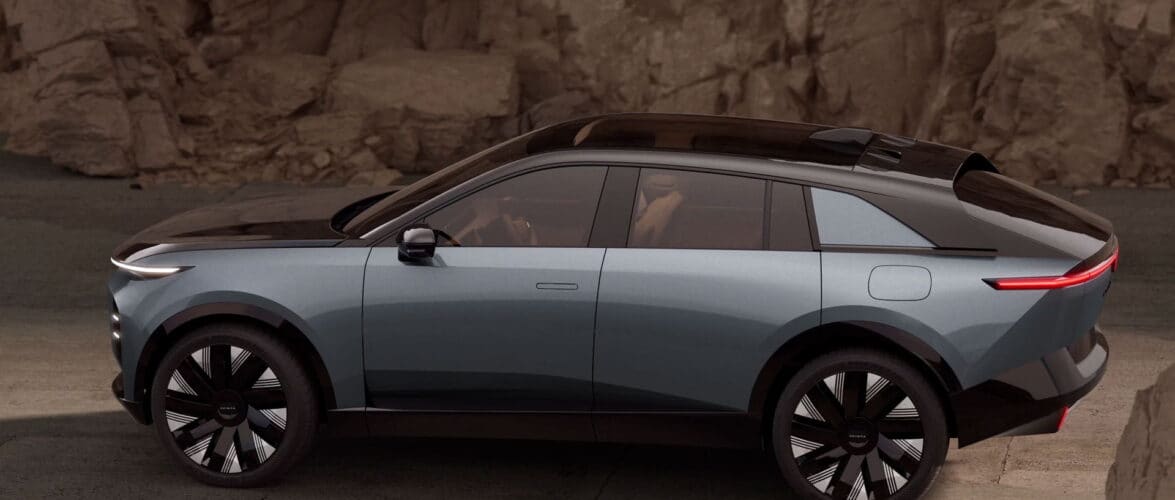
When Tata Motors announced in early June that certain models in its forthcoming Avinya premium electric range would be built on a jointly developed platform with Chery Automobile - originally conceived to revive Jaguar Land Rover's Freelander nameplate - the news carried implications far beyond product planning. The arrangement, brokered through Tata's British subsidiary JLR, underscores a reality that India's automotive industry has been navigating with increasing urgency: the fastest route to competitive electric vehicles often runs through Chinese engineering, battery chemistry, and manufacturing scale.
At DailyTechWire, we've tracked similar patterns across South and Southeast Asia, where automakers face a common dilemma. Homegrown platforms take years and billions of dollars to mature; Chinese suppliers offer proven skateboard architectures, high-density cells, and integration expertise honed over a decade of policy-driven EV deployment. For Tata, which aims to launch the first Avinya variant in 2027, partnering with Chery shortens development cycles and derisks technical execution. Yet it also deepens dependence on a neighbor with whom India shares a contested Himalayan border and a fraught trade relationship.
The Pragmatism of Proven Technology
Chery's role in this collaboration is instructive. The Wuhu-based automaker has spent years refining modular EV platforms that balance cost, range, and production flexibility - capabilities that matter acutely in price-sensitive markets. By tapping into Chery's architecture, Tata gains access to battery integration, thermal management, and power electronics that have already been validated in China's hyper-competitive domestic market, where subsidies have receded and consumers demand 400-plus kilometers of real-world range at accessible price points.
This is not Tata's first brush with Chinese supply chains. The conglomerate's electric portfolio, including the Nexon EV and Tigor EV, relies on cells and motor controllers sourced in part from mainland suppliers. What distinguishes the Avinya deal is its upstream nature: rather than buying components off the shelf, Tata is co-developing the skeletal structure of the vehicle itself, embedding Chinese intellectual property into the DNA of what is intended to be a flagship, premium product line.
For Indian policymakers who have championed "Atmanirbhar Bharat" - self-reliant India - the optics are uncomfortable. Yet the engineering calculus is hard to ignore. Developing a competitive skateboard platform from scratch typically requires five to seven years and upward of USD 1 billion in R&D, tooling, and testing. Licensing or co-developing an existing platform can halve that timeline and capital outlay, a trade-off that becomes attractive when the government has set ambitious electrification targets and legacy automakers are racing startups and new entrants for market share.
Geopolitical Friction Meets Industrial Necessity
India's relationship with China has been strained since the 2020 border clashes in Ladakh, and New Delhi has since imposed restrictions on Chinese investment in sensitive sectors, scrutinized apps and telecom equipment, and raised tariffs on select imports. Yet automotive supply chains have proven harder to decouple. Chinese firms dominate global production of lithium-ion cells, cathode materials, separators, and increasingly the software stacks that manage battery health and charging.
Indian automakers, including Tata, Mahindra, and a cohort of EV-focused startups, have found themselves in a bind. Domestic cell manufacturing remains nascent; the government's production-linked incentive schemes for advanced chemistry cells have attracted some investment, but gigafactories will not reach meaningful output until the latter half of this decade. In the interim, carmakers must either import Chinese cells and components or delay launches, ceding ground to competitors who are less constrained.
The Tata-Chery arrangement can be read as a hedged bet. By partnering through JLR, a British entity, Tata adds a layer of geographic and corporate distance. The platform is described as jointly developed, suggesting some degree of co-engineering rather than a pure licensing deal. And by targeting the premium Avinya segment first, Tata limits exposure: if geopolitical winds shift or public sentiment sours, the collaboration affects a smaller, higher-margin slice of the portfolio rather than mass-market volume products.
Still, the strategic risk is real. Should bilateral tensions escalate - whether over borders, trade, or technology transfer - Tata could face supply disruptions, public backlash, or regulatory pressure to localize or redesign. The company's ability to insulate itself will depend on how quickly it can build parallel capabilities, either in-house or through partnerships in friendlier jurisdictions.
The Broader Pattern Across Indian EV Makers
Tata is not alone. Several Indian startups and legacy players have struck deals with Chinese battery suppliers, motor manufacturers, and software vendors. Ola Electric, which has built one of the country's largest two-wheeler EV factories, sources cells from contemporary suppliers with roots in China. Mahindra has explored partnerships with mainland firms for drivetrain components. Even companies that publicly emphasize domestic content often rely on sub-tier suppliers whose own supply chains trace back to Shenzhen, Ningde, or Hefei.
This pattern reflects a global reality: China's decade-long head start in EV industrialization has created knowledge moats and economies of scale that are difficult to replicate quickly. Western automakers have faced similar dependencies, though many have diversified through joint ventures in Europe, North America, and South Korea. Indian firms, operating with tighter capital and shorter timelines, have fewer options.
The question facing India's automotive sector is not whether to engage with Chinese technology - that ship has largely sailed - but how to manage the engagement in ways that build domestic capability over time. Some industry observers argue for a phased approach: rely on Chinese platforms and components in the near term to establish market presence and cash flow, then reinvest profits into indigenous R&D, talent development, and supplier ecosystems. Others warn that such dependencies, once established, are hard to unwind, especially if Chinese partners retain control over critical IP or if cost advantages prove durable.
What Comes Next for Avinya and Indian Electrification
The first Avinya model, slated for a 2027 rollout, will be a test case. If Tata can deliver a premium electric vehicle that competes on range, build quality, and features - while keeping costs in check - the Chery collaboration will be vindicated as pragmatic engineering. If the car stumbles, or if geopolitical complications arise, the partnership may be remembered as an overreach.
More broadly, the Tata-Chery deal will likely embolden other Indian automakers to pursue similar arrangements, particularly as the government's 2030 electrification targets loom and consumer expectations rise. We may see a wave of co-development agreements, joint ventures, and technology licensing deals in the coming 18 to 24 months, as companies balance the imperative to launch against the desire to control their own technological destiny.
At the same time, New Delhi's policy stance will be critical. If the government can accelerate domestic cell production, invest in battery R&D, and create incentives for local platform development - while managing the geopolitical optics - it may give Indian automakers the runway they need to reduce reliance over the medium term. If policy remains reactive or inconsistent, the industry will continue to lean on Chinese suppliers by default, storing up strategic vulnerabilities that could complicate India's long-term competitiveness.
For now, Tata's Avinya partnership with Chery is a pragmatic acknowledgment of where the technology and the timelines currently sit. It is also a reminder that in the race to electrify, geography and politics do not always align with industrial logic - and that navigating the gap requires both engineering skill and strategic nerve.