When Ambition Meets Payroll: An E-Truck Dream Runs Into Cash Reality
Windrose Technology promised to challenge Tesla in long-haul electric freight, but unpaid wages and stalled US expansion reveal the gap between vision and execution in cross-border hardware startups.
The Promise Was Global Scale
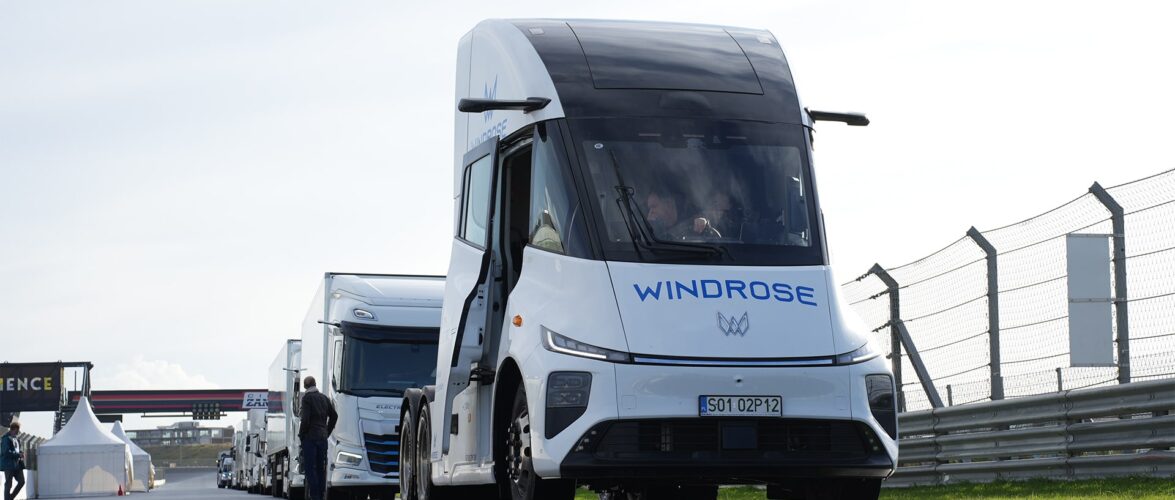
Windrose Technology arrived in 2022 with a pitch that hit every venture capital sweet spot: electrify the diesel-dependent trucking sector, tap China's battery manufacturing edge, and scale production across the US and Europe. Founder Wen Han brought credentials that opened doors, a Stanford MBA and stints at Bridgewater Associates and GSR Ventures, firms known for rigorous analysis and big bets. The company incorporated in the Cayman Islands, then Belgium, while anchoring manufacturing in China to capture supply chain advantages that have made the country the world's largest EV producer.
The ambition was to compete head-on with Tesla's Semi, a vehicle that itself has faced repeated delays and limited production volume. Long-haul electric trucks remain one of the hardest segments to crack, payload and range trade-offs are brutal, charging infrastructure is sparse outside a few corridors, and fleet operators demand proof of total cost of ownership over five to ten years, not just sticker price. Windrose bet it could thread that needle by marrying Chinese battery density with Western market access.
At DailyTechWire, we have tracked dozens of EV hardware startups across Asia over the past three years, and the pattern is consistent: early momentum driven by technical prototypes and policy tailwinds, followed by a capital crunch when production ramp meets real-world logistics. Windrose now appears to be the latest case study in that arc.
Unpaid Wages Surface in the US
Former employees have come forward claiming the company owes them hundreds of thousands of dollars in unpaid wages, a red flag that points to acute cash flow stress rather than routine startup turbulence. While the exact number of affected workers and the timeline of missed payments remain unclear, the scale of the claims suggests the shortfall is not isolated to a single payroll cycle.
Wage disputes of this magnitude typically emerge when a company has exhausted near-term financing options and is unable to close a bridge round or secure purchase orders large enough to unlock working capital lines. In hardware startups, especially those straddling multiple jurisdictions, payroll often becomes the first visible stress point because employees lack the leverage of suppliers who can halt shipments or lenders who can call loans.
The cross-border structure, Cayman incorporation, Belgian registration, Chinese manufacturing, and US operations, may have been designed for tax efficiency and investor appeal, but it also fragments accountability. Employment law varies sharply across these jurisdictions, and workers in one country may find it difficult to pursue claims against an entity registered elsewhere, particularly if the parent holding company has limited assets in the jurisdiction where they worked.
The China Manufacturing Bet and Its Limits
Windrose chose to base production in China for good reason. The country dominates the global battery supply chain, from cathode materials to cell assembly, and hosts a deep bench of contract manufacturers experienced in EV integration. For a startup trying to reach commercial scale quickly, that ecosystem offers speed and cost advantages no other region can match today.
But that choice also exposes the company to the same export and tariff headwinds that have reshaped the EV landscape since 2023. The US Inflation Reduction Act and subsequent policy guidance have tightened rules on battery sourcing for vehicles eligible for federal incentives, and the European Union has opened anti-subsidy investigations into Chinese EVs. A truck built in China and shipped to the US or Europe may face tariff burdens that erase the manufacturing cost advantage, or outright exclusion from subsidy programs that fleet buyers count on to justify the higher upfront cost of electric.
Windrose had announced plans to build factories in the US and other markets, a hedge against trade friction and a signal to local governments and customers. But factory construction requires capital at a scale that few early-stage hardware startups can raise, especially in a higher interest rate environment. If those plans have stalled, the company is left selling a China-made product into markets that are increasingly skeptical of that origin label, regardless of the technology inside.
Why Long-Haul Electric Trucks Remain So Hard
The technical and commercial barriers in this segment are formidable. A Class 8 long-haul truck in the US typically runs 500 to 700 miles per day, and fleet operators expect minimal downtime. Battery packs large enough to match that range add significant weight, cutting into payload capacity and requiring reinforced chassis. Fast charging at the necessary power levels, 350 kW and above, demands infrastructure that does not yet exist along most freight corridors.
Tesla began taking reservations for the Semi in 2017 and delivered its first production units to PepsiCo in late 2022, five years later and in limited volume. Even with Tesla's vertical integration, capital base, and charging network, scaling Semi production has proven slow. For a startup like Windrose, without an established vehicle platform or a captive customer willing to co-invest in charging, the path to volume is narrower.
Fleet economics are unforgiving. Operators model total cost of ownership over the vehicle's working life, weighing purchase price, fuel or electricity cost, maintenance, residual value, and financing. Diesel trucks have known performance envelopes and a mature secondary market. Electric trucks promise lower operating costs per mile, but only if utilization is high, charging is cheap and available, and the battery retains capacity over hundreds of thousands of miles. Any uncertainty in those variables pushes the break-even point further out, and in a capital-constrained environment, fleet buyers defer.
The Funding Environment Has Shifted
Windrose launched at a moment when climate tech was riding a wave of policy support and investor enthusiasm. In 2022, venture and growth equity funds deployed record sums into EV and battery startups across Asia, the US, and Europe. Governments announced subsidy programs, and corporates signed memoranda of understanding for fleet electrification.
That window has narrowed. Rising interest rates have made growth-stage hardware financing more expensive, and later-stage investors are scrutinizing unit economics and path to profitability with more rigor. Chinese EV startups that once commanded billion-dollar valuations have seen funding dry up or down rounds become the norm. In the US and Europe, regulatory uncertainty around incentives and trade policy has made LPs more cautious about capital-intensive, long-cycle bets.
For a company like Windrose, which needs to fund manufacturing scale-up, regulatory certification in multiple markets, and a sales organization capable of winning fleet contracts, the funding gap can open quickly. If the company was counting on a Series B or growth round in 2024 or early 2025 and that round did not materialize or came in below expectations, the cash runway shrinks fast. Payroll, as the least flexible line item, becomes the point of failure.
What Happens Next
The unpaid wage claims put Windrose in a precarious position. If the company cannot settle those obligations promptly, it risks further attrition of the talent needed to execute any turnaround, as well as reputational damage that makes future fundraising and customer acquisition harder. Employees who feel burned are unlikely to stay quiet, and the story spreads quickly in tight-knit engineering and operations communities.
One possible path is a distressed financing round, bringing in new capital at a steep valuation cut in exchange for control and a restructuring plan. Another is an asset sale, licensing the technology or selling the manufacturing setup to a larger player with the balance sheet to absorb the risk. A third, grimmer outcome is insolvency, with creditors and employees joining a queue that may recover cents on the dollar.
The broader lesson is that hardware startups operating across multiple jurisdictions face compounding execution risk. Each additional country adds regulatory, logistical, and financial complexity, and when capital becomes scarce, that complexity turns into friction that can halt momentum entirely. Windrose had a plausible thesis, leverage China's supply chain, target Western markets, and move fast. But plausible and executable are not the same, especially when the macro environment shifts and the cash stops flowing.
For founders and investors in the Asia-Pacific EV ecosystem, Windrose is a reminder that global ambition requires not just a compelling slide deck but also rigorous scenario planning for trade policy shifts, capital market downturns, and the grinding realities of fleet sales cycles. The technology may work, but if the business model cannot survive the valley between prototype and profitability, the technology never reaches the road.