ByteDance Tests Drug Discovery Spinoff as AI-for-Science Ambitions Meet Commercial Reality
The social media giant is separating its pharmaceutical AI unit and seeking outside capital while retaining control - a model that could define how platform companies monetize research infrastructure.
A Controlled Experiment in AI-for-Science Economics
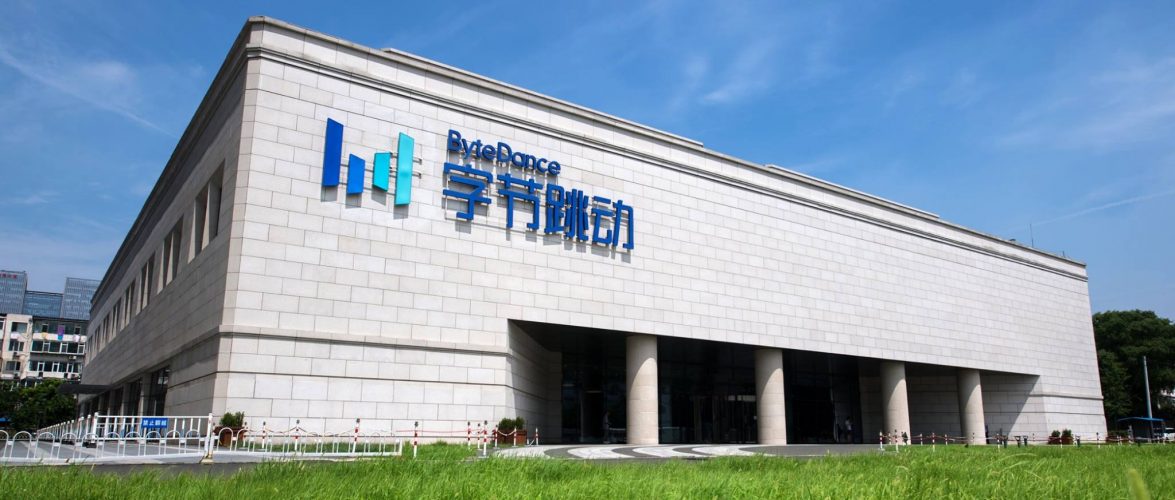
ByteDance has begun separating its artificial intelligence drug discovery operation into an independent entity and is pursuing outside financing, according to people with knowledge of the arrangement. The parent company will retain a controlling stake following the spinoff, and the new venture will inherit the existing team, algorithmic models, technology platform, and pipeline assets developed under ByteDance's roof. Volcano Engine, ByteDance's cloud infrastructure arm, will continue to provide computing resources to the spun-out business.
The move offers a live case study in how platform companies with deep compute resources are attempting to commercialize AI-for-science initiatives that demand patient capital, specialized talent, and regulatory navigation far removed from their core advertising or entertainment businesses. At DailyTechWire, we've tracked similar structural experiments across the region: Alibaba's pharmaceutical AI collaborations through Alibaba Cloud, Tencent's stake in AI-driven materials science ventures, and Baidu's evolving relationship with its biologics partnerships. ByteDance's decision to maintain majority control while inviting external investors suggests a hedge - monetizing infrastructure and expertise without surrendering strategic optionality in a sector where breakthroughs remain years away.
Why Spinoff Instead of Internal Division
Drug discovery sits uncomfortably inside a social media and short-video conglomerate. The timelines are mismatched: a viral feature ships in weeks; a preclinical candidate takes years. The talent pools rarely overlap, and the risk profiles diverge sharply. ByteDance's core business thrives on rapid iteration and user engagement metrics; pharmaceutical development is governed by clinical trial protocols, regulatory submissions, and binary approval events.
Spinning off the unit allows ByteDance to ring-fence the financial exposure and recruit investors with domain expertise in biotechnology and life sciences. External capital also provides a market-based valuation signal, clarifying whether the algorithms and pipelines justify the compute and talent investment. Crucially, retaining a controlling stake means ByteDance can steer strategic decisions, capture upside if a candidate reaches late-stage trials or licensing deals, and preserve access to proprietary models that may have applications beyond drug discovery - protein folding, molecular simulation, and generative chemistry are all adjacent to other AI research threads the company is pursuing.
The arrangement mirrors a pattern emerging across Asia's technology sector: rather than selling outright or shuttering non-core units, platform companies are using partial spinoffs to test commercial viability while maintaining governance and IP linkages. It is a middle path between corporate venture and full divestiture, calibrated for projects that are too strategic to abandon but too capital-intensive to fund indefinitely from operating cash flow.
Compute as Moat and Subsidy
Volcano Engine's ongoing compute support is the spinoff's most valuable inherited asset. Training large-scale molecular models, running virtual screening across compound libraries, and simulating protein-ligand interactions demand GPU clusters and sustained throughput that few pure-play biotechs can afford at formation stage. ByteDance built that infrastructure to serve recommendation engines and generative AI features; repurposing it for drug discovery spreads fixed costs and leverages stranded capacity.
This compute subsidy creates a structural advantage. External investors are effectively buying into a business with access to compute at internal transfer pricing, well below market rates for equivalent cloud resources. It also locks the spinoff into ByteDance's ecosystem, deepening the parent company's influence even as the unit pursues independent fundraising. Over time, the arrangement could evolve into a revenue-sharing model - Volcano Engine books cloud revenue, the spinoff gains predictable compute access, and ByteDance consolidates its position as an infrastructure provider to AI-native life sciences companies.
The risk is dependency. If Volcano Engine faces capacity constraints, regulatory scrutiny, or pricing pressure, the spinoff's cost structure and development timelines could be disrupted. External investors will likely negotiate service-level commitments and explore hybrid or multi-cloud strategies to reduce concentration risk, particularly if the portfolio expands beyond China-based trials and partnerships.
Pipeline and Platform Economics
The spun-out entity inherits both the technology platform - algorithmic tools for target identification, molecule generation, and property prediction - and the existing pipeline of preclinical or discovery-stage candidates. This dual inheritance shapes the investment thesis. Platform revenue, if the company licenses its tools to pharmaceutical partners or contract research organizations, can generate near-term cash flow and derisk the binary outcomes inherent in pipeline development. Pipeline assets, if validated in animal models or early human trials, offer the asymmetric upside that venture investors in biotechnology seek.
ByteDance's approach suggests it views the platform as the durable asset and the pipeline as proof of concept. Pharmaceutical companies are increasingly willing to pay for AI-generated candidate molecules or virtual screening services, provided the tools demonstrably reduce time or cost in hit identification and lead optimization. The economics are attractive: gross margins on software licensing can exceed those of traditional contract research, and the platform scales without the per-project labor intensity of wet-lab work.
Yet platform businesses in drug discovery face a credibility gap. Biotech incumbents and big pharma have seen waves of AI vendors promise faster, cheaper discovery; few have delivered approved drugs. The spun-out unit will need to publish validation data, secure partnerships with recognized pharmaceutical names, and ideally advance at least one internal candidate into clinical trials to prove the models generalize beyond in-silico predictions. External financing provides the runway to build that track record, but it also introduces milestone pressure and the risk of pivoting prematurely if early candidates falter.
Implications for AI-for-Science Investment
ByteDance's partial spinoff may become a template for other platform companies exploring AI applications in materials science, climate modeling, or synthetic biology - domains that require sustained compute, interdisciplinary teams, and patient capital. The structure allows technology conglomerates to monetize research infrastructure without fully committing to sectors outside their expertise, and it gives specialized investors access to compute-advantaged startups that would be prohibitively expensive to bootstrap independently.
For venture firms and corporate investors in Asia, the model presents a trade-off. They gain a partner with deep pockets and infrastructure, but they accept minority governance and dependency on the parent's cloud services. The terms of Volcano Engine's compute support - pricing, exclusivity, capacity guarantees - will be critical to valuation and exit scenarios. If the spinoff succeeds and pursues an IPO, investors will want clarity on whether compute costs step up to market rates or remain subsidized, and whether ByteDance's controlling stake limits strategic options such as acquisition by a pharmaceutical major.
The broader test is whether AI-native drug discovery companies can generate returns that justify the capital intensity and extended timelines. The sector has attracted billions in funding globally over the past five years, but approved drugs remain scarce and the cost per candidate - even with AI acceleration - remains high. ByteDance's decision to invite external investors is a market-facing bet that the unit can compete not just on technology, but on the operational and partnership execution that turns algorithms into therapies.
What Comes Next
The spinoff's success will hinge on three variables: the caliber of external investors it attracts, the commercial traction of its platform, and the clinical progress of its pipeline. If the first financing round draws participation from established life sciences venture firms or pharmaceutical corporate venture arms, it will signal sector confidence in the technology and team. If the platform secures licensing deals or co-development agreements with mid-tier or large pharma partners, it will validate the business model and provide non-dilutive capital. And if at least one pipeline candidate advances into Phase I trials within the next two to three years, it will demonstrate that the models translate from virtual to biological systems.
ByteDance, meanwhile, gains optionality. A successful spinoff enhances Volcano Engine's positioning as infrastructure for AI-for-science workloads, generates financial return on the drug discovery investment, and preserves access to cutting-edge molecular AI research that may inform other projects. A struggling spinoff can be wound down or reabsorbed with limited reputational damage, since the external investors share the risk.
For the wider ecosystem, the experiment is worth watching. If ByteDance's model proves viable, expect similar structures from other regional platform companies sitting on compute surpluses and exploring vertical AI applications. If it stalls, it will reinforce the view that drug discovery, despite its algorithmic surface area, remains a business best left to specialists with decades of regulatory and clinical expertise - and that compute alone is not a sustainable moat.